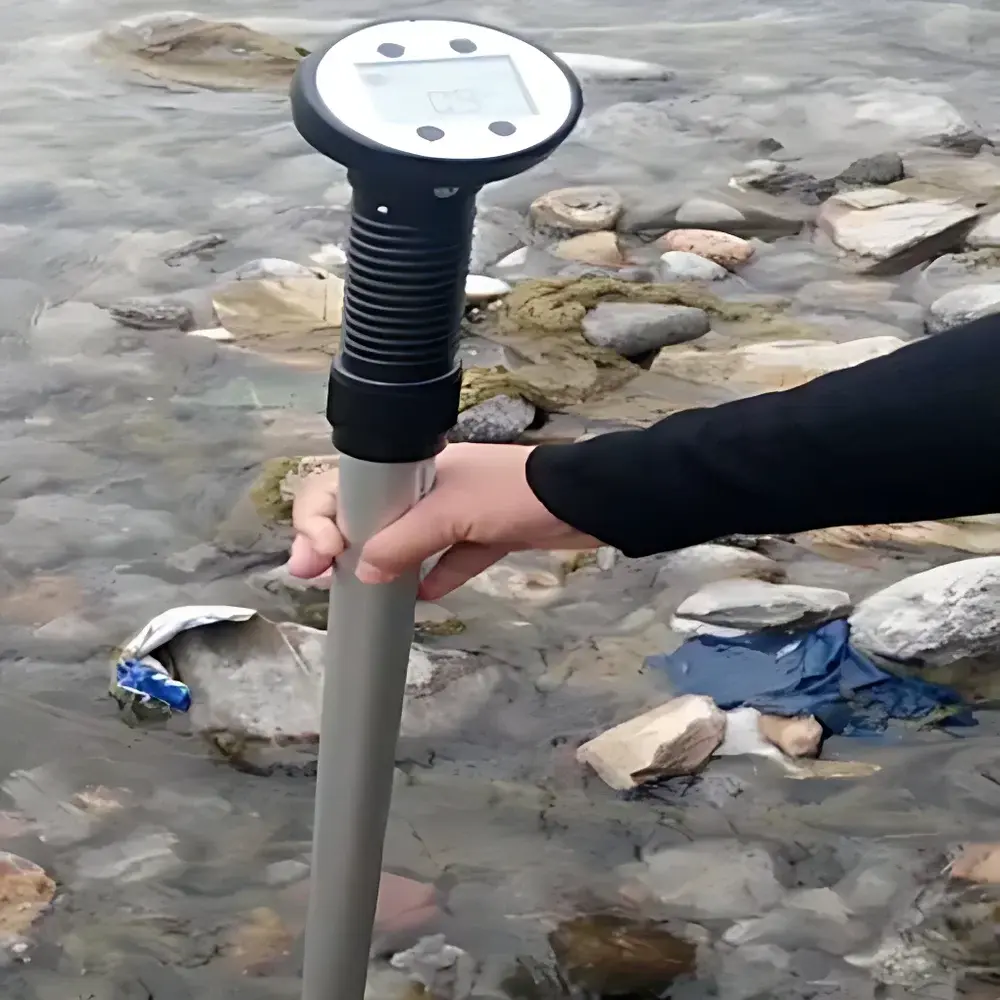
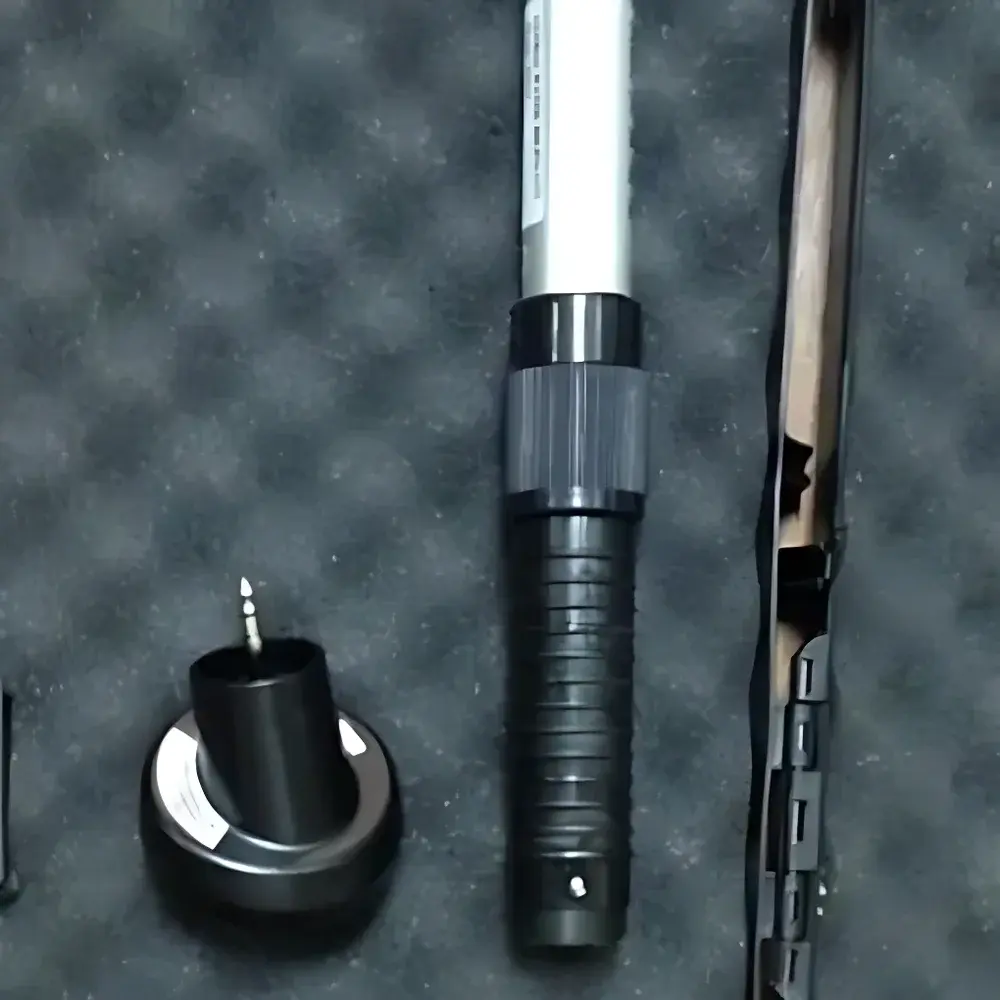
Global Water FP111 Portable Direct-Reading Flow Velocity Meter
| Brand | Global Water |
|---|---|
| Origin | USA |
| Manufacturer Type | Authorized Distributor |
| Product Origin | Imported |
| Model | FP111 |
| Liquid Mass Flow Accuracy | ±0.5% |
| Measurement Range | 0.1–6.0 m/s |
| Accuracy | ±0.03 m/s |
| Display | LCD |
| Sensor Type | Turbine-based Electromagnetic Transducer |
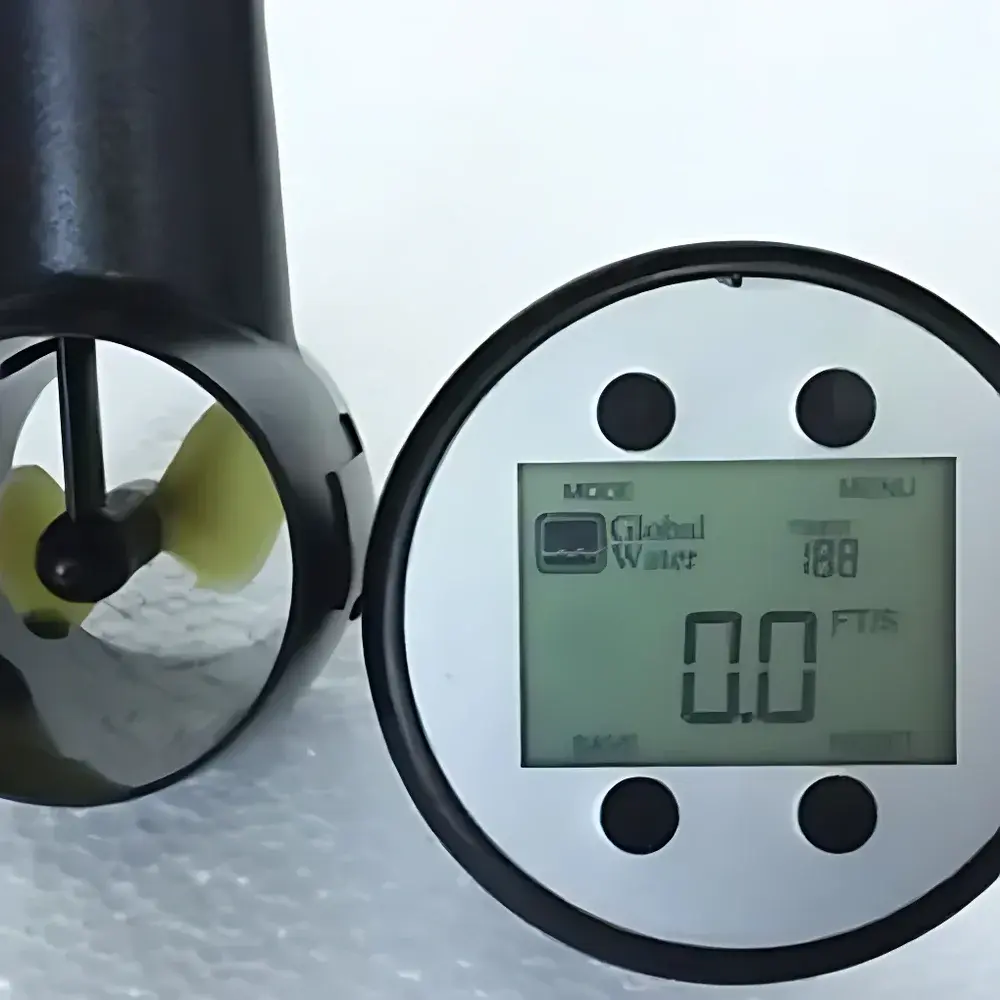
| Probe Housing Diameter | 5 cm |
| Probe Housing Length | 7.5 cm |
| Telescoping Rod Length | 1.12–1.83 m |
| Weight | 0.9 kg |
| Operating Temperature | −20 to +70 °C |
| Power Source | Replaceable CR2032 Coin Cell (Typical Service Life: 1 Year) |
| Units | ft/s or m/s (User-Selectable) |
| Average Velocity Calculation | Real-time Onboard Averaging with Zero-Reset Function |
Overview
The Global Water FP111 Portable Direct-Reading Flow Velocity Meter is a field-deployable, turbine-based velocity sensing instrument engineered for in-situ measurement of open-channel and pipe-flow water velocities. It operates on the principle of electromagnetic pulse generation induced by rotational displacement of a low-friction, axial-flow turbine rotor. As water passes over the turbine blades, rotational speed is linearly proportional to local fluid velocity; each revolution generates a discrete magnetic induction pulse, which the onboard microprocessor converts into calibrated linear velocity (m/s or ft/s) using factory-traceable calibration coefficients. Unlike averaging methods requiring multiple point measurements or time-integrated sampling, the FP111 computes true temporal average velocity directly from continuous pulse counting during user-defined immersion duration—enabling rapid, repeatable, and operator-independent acquisition of representative mean flow velocity. Its design adheres to foundational hydrodynamic measurement conventions outlined in ASTM D3858 (Standard Practice for Measuring Open-Channel Flow with Current Meters) and supports data collection workflows compliant with USGS Field Manual Chapter 8 and ISO 748:2021 (Liquid flow measurement in open channels — Velocity-area method).
Key Features
- Turbine sensor with precision-balanced rotor and low-torque stainless-steel axle for minimal flow disturbance and high rotational fidelity across the full 0.1–6.0 m/s range
- Integrated telescoping aluminum alloy probe handle (1.12–1.83 m), anodized for corrosion resistance and optimized weight distribution (total mass: 0.9 kg)
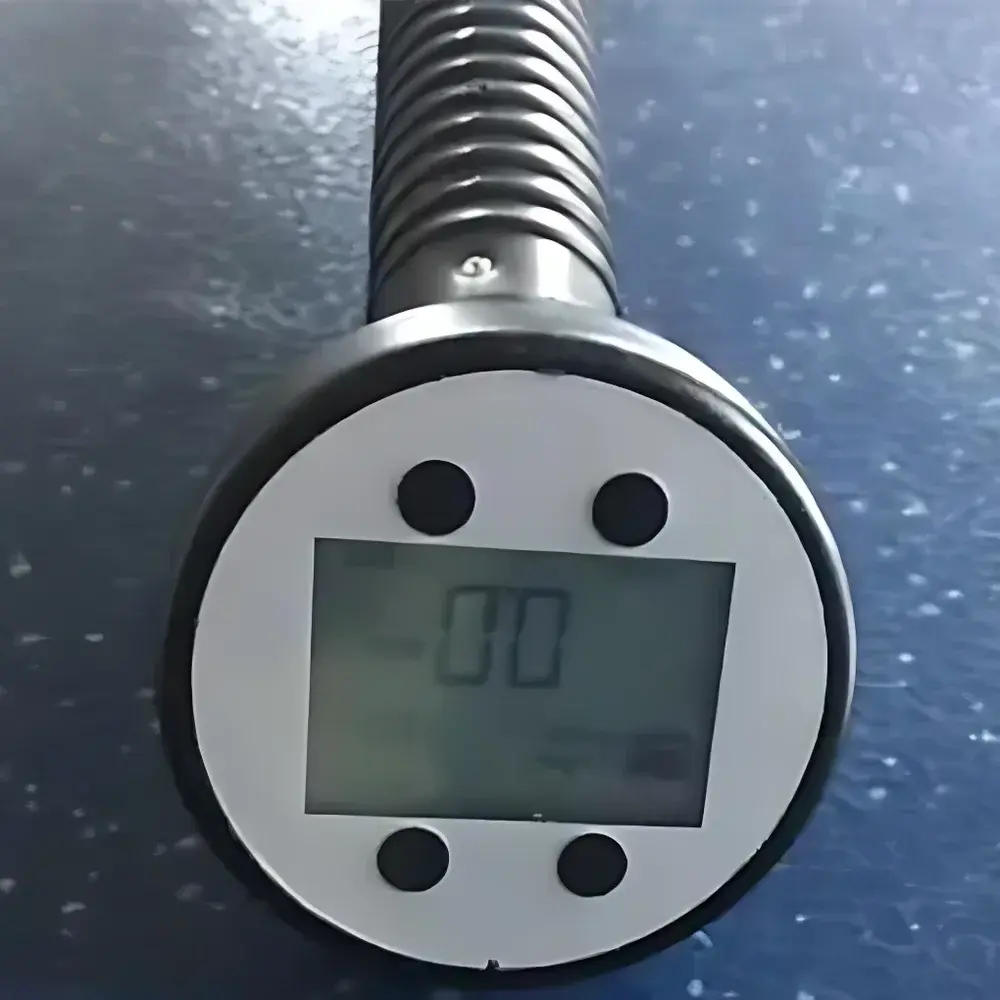
- Backlit LCD display with dual-unit capability (m/s or ft/s), configurable via push-button interface
- Onboard real-time averaging algorithm: initiates upon immersion, locks final mean velocity after stabilization, retains value until manual reset (3-second button press)
- Weathershielded electronics enclosure rated for IP65 environmental protection—operable under rain, dust, and temperature extremes (−20 to +70 °C)
- Modular probe housing (5 cm diameter × 7.5 cm length) designed for easy disassembly and turbine cleaning without tools
- Dedicated sighting telescope with integrated measurement scale for precise depth and positioning alignment in turbulent or shallow flows
- CR2032 lithium coin-cell power system—field-replaceable, with typical battery life exceeding 12 months under standard usage conditions
Sample Compatibility & Compliance
The FP111 is validated for use in natural and engineered liquid systems including rivers, streams, irrigation canals, wastewater effluents, industrial process lines, groundwater monitoring wells, and stormwater conveyances. It is not intended for non-aqueous, highly viscous, or particulate-laden fluids (>1 mm suspended solids concentration may affect turbine response). The instrument meets electromagnetic compatibility requirements per FCC Part 15 Subpart B and conforms to RoHS Directive 2011/65/EU. Calibration traceability follows NIST-traceable standards, and its measurement methodology aligns with regulatory reporting frameworks used by EPA Region 10, Environment Canada’s Water Survey Program, and EU WFD (Water Framework Directive) field monitoring protocols.
Software & Data Management
While the FP111 operates as a standalone, self-contained meter with no external software dependency, all displayed values—including instantaneous velocity, accumulated average, and unit configuration—are retained in volatile memory during operation. For auditability and documentation, users may manually record readings alongside GPS-tagged field notes. When integrated into broader monitoring networks (e.g., paired with Global Water’s SOLAR-LOG data loggers or third-party SCADA interfaces), analog voltage outputs (0–5 V DC) can be configured to transmit real-time velocity signals. All firmware and calibration parameters are sealed against unauthorized modification, supporting GLP-compliant recordkeeping where handwritten logs or digital capture forms include operator ID, location ID, date/time stamp, and instrument serial number.
Applications
- Open-channel discharge estimation using velocity-area method (ASTM D5490)
- Wastewater treatment plant influent/effluent velocity profiling for hydraulic loading verification
- Stream gauging and baseflow separation studies in hydrological modeling
- Leak detection and flow balancing in municipal distribution networks
- Educational field hydrology instruction and student-led watershed assessments
- Regulatory compliance monitoring for NPDES permits and state water quality certification programs
- Post-storm flow characterization in urban runoff and combined sewer overflow (CSO) events
FAQ
What is the minimum measurable velocity, and how is low-flow stability ensured?
The FP111 resolves velocities down to 0.1 m/s with ±0.03 m/s absolute accuracy. Low-flow stability is maintained through turbine geometry optimization (blade pitch, moment of inertia) and signal threshold filtering to suppress noise below 0.05 m/s.
Can the FP111 be used in submerged pipe applications?
Yes—provided the pipe is partially or fully filled and accessible for probe insertion; however, it does not compensate for pressure-driven flow profiles or non-uniform velocity distributions inherent to closed conduits.
Is calibration required before each use?
No. Factory calibration is stable over time and temperature; annual verification against a reference current meter or calibrated flume is recommended per ISO/IEC 17025 guidelines.
How is data integrity preserved during extended field deployments?
The device stores no historical datasets; therefore, integrity relies on procedural controls—users must document readings contemporaneously using standardized field forms that include metadata required for QA/QC review.
Does the FP111 support metric/imperial unit conversion within the same session?
Yes—unit selection is persistent per session and may be changed at any time without resetting the averaging function or losing active display values.