
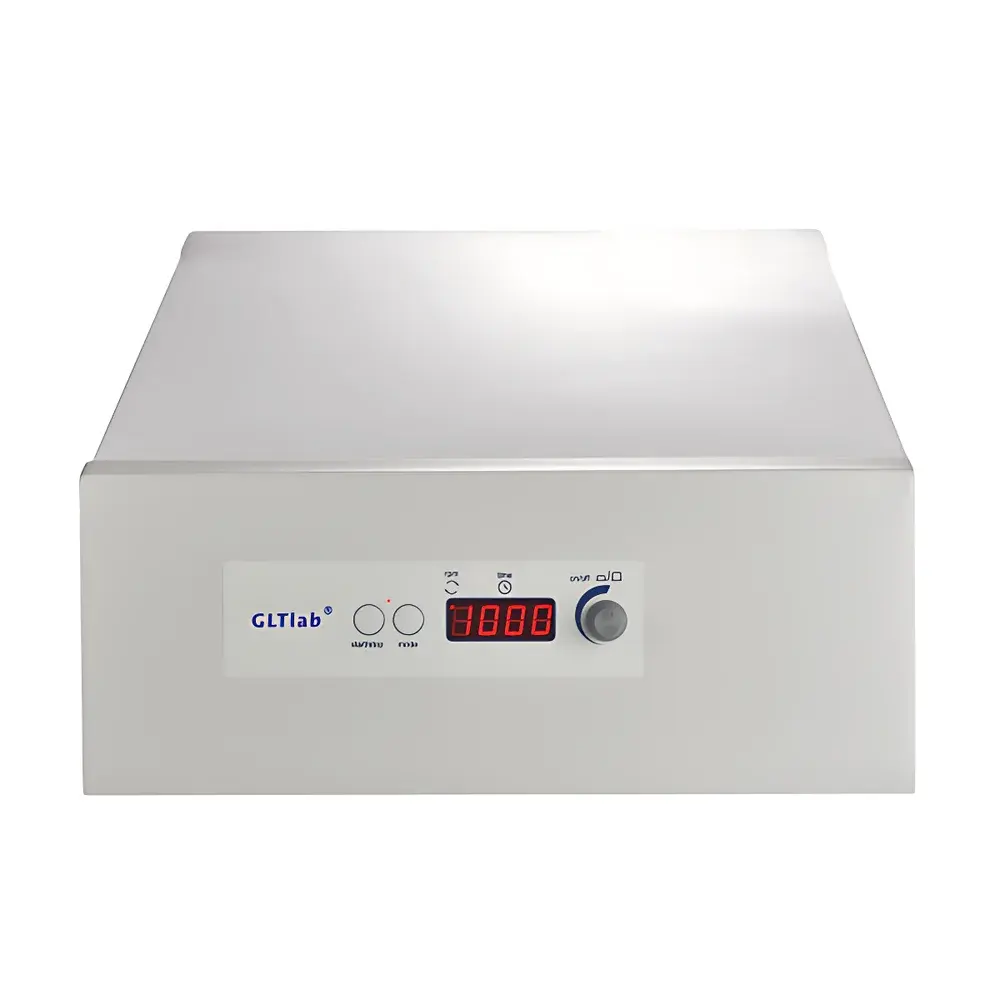
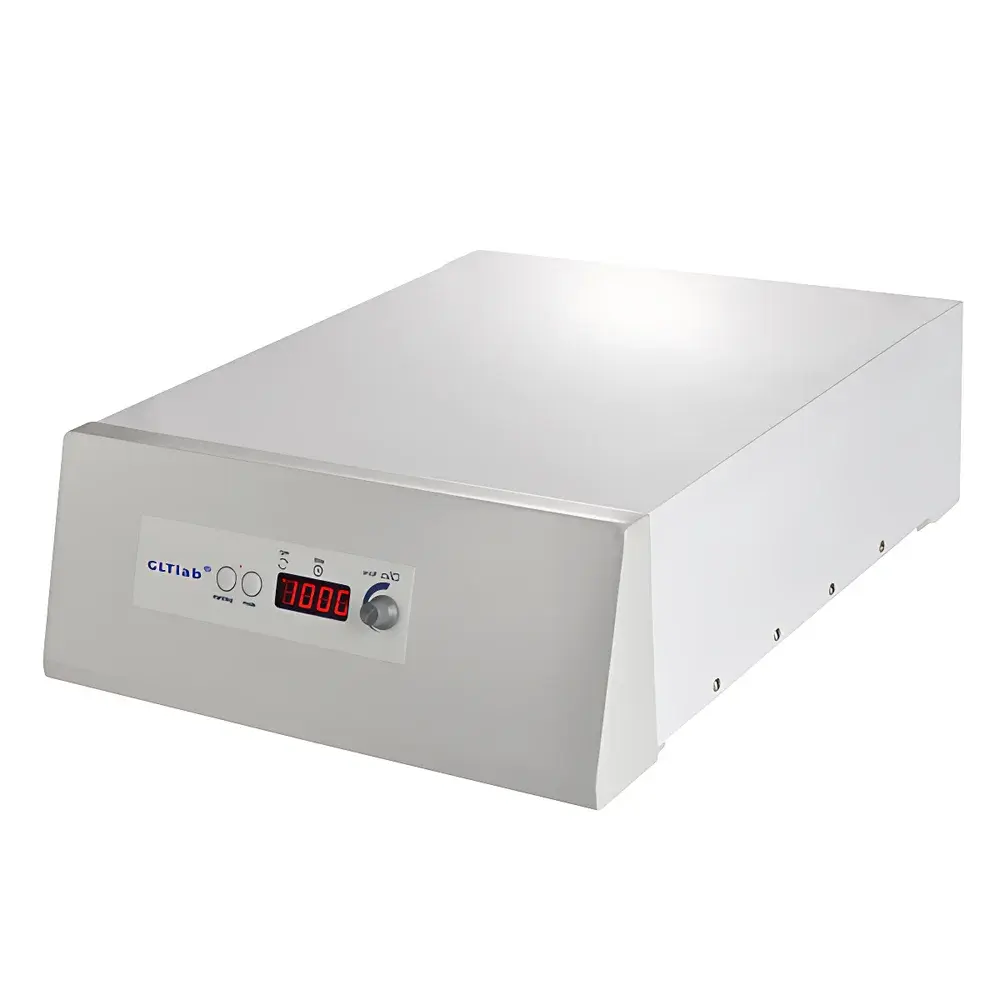
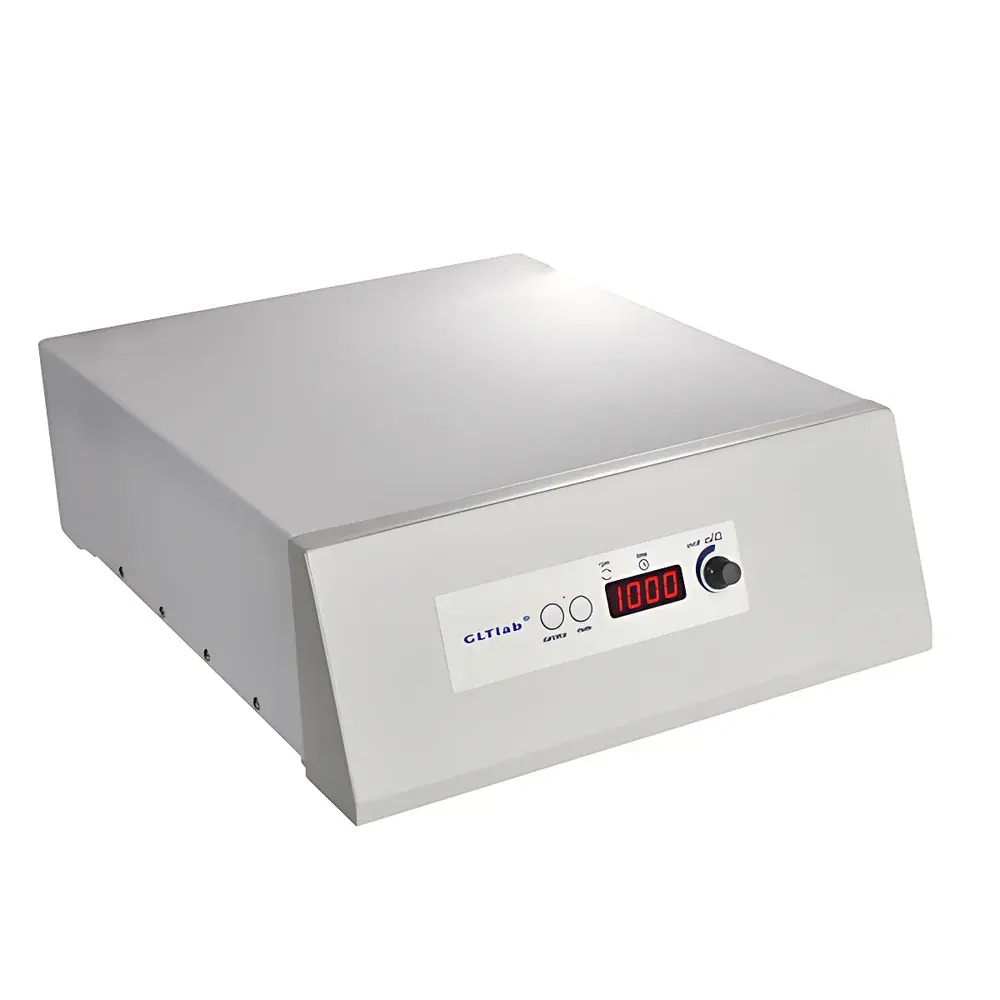
GLTlab SSL-200 High-Capacity Magnetic Stirrer
| Brand | GLTlab |
|---|---|
| Model | SSL-200 |
| Maximum Stirring Volume | 200 L |
| Speed Range | 50–1200 rpm |
| Temperature Control Range | 5–40 °C |
| Plate Material | Ceramic-Coated Stainless Steel (500 × 500 mm) |
| IP Rating | IP56 |
| Input Voltage | 100–240 V AC, 50/60 Hz |
| Power Consumption | 80 W |
| Motor Type | Brushless DC Motor |
| Rated Output | 30 W |
| Max. Stir Bar Length | 150 mm (depth ≤ 24 mm) |
| Operating Humidity | ≤ 80 % RH |
| Dimensions (L×W×H) | 620 × 500 × 165 mm |
| Weight | 14 kg |
| Continuous Operation Time | 9 h |
| Connectivity | Wi-Fi-enabled for remote control via GLTlabLinks software (supports up to 5 units simultaneously) |
| Programmable Profiles | Yes (multi-step speed ramping, time-based scheduling) |
| Optional Features | Analog mode variant available |
Overview
The GLTlab SSL-200 is an industrial-grade, high-capacity magnetic stirrer engineered for reproducible, long-duration mixing of viscous and heterogeneous samples in research laboratories, quality control facilities, and pilot-scale production environments. Unlike conventional benchtop stirrers, the SSL-200 employs a high-torque brushless DC motor coupled with a large-area ceramic-coated stainless steel heating plate (500 × 500 mm), enabling stable rotational coupling with magnetic stir bars even under high-viscosity conditions—up to 200 L working volume. Its operation is grounded in electromagnetic induction principles: a rotating magnetic field generated beneath the plate induces torque on ferromagnetic stir bars immersed in the sample, ensuring contactless drive and eliminating mechanical wear. The integrated Peltier-based temperature regulation system maintains precise thermal control between 5 °C and 40 °C, supporting applications requiring low-temperature homogenization or ambient-stable reaction kinetics.
Key Features
- High-torque brushless DC motor delivering consistent 30 W output across full speed range (50–1200 rpm), optimized for shear-sensitive and high-viscosity media including polymer solutions, slurries, and cell culture suspensions.
- Ceramic-coated stainless steel plate (500 × 500 mm) offering exceptional chemical resistance to acids, bases, and organic solvents—validated per ISO 15730:2002 for surface corrosion performance.
- IP56-rated enclosure ensures protection against dust ingress and water jets, permitting safe use in humid or splash-prone laboratory zones—including fume hood installations.
- Wi-Fi connectivity enables seamless integration into networked lab infrastructures; firmware supports TLS 1.2 encryption and IEEE 802.11 b/g/n protocols for secure remote access.
- GLTlabLinks software provides centralized management of up to five SSL-200 units, supporting multi-stage programmable profiles (e.g., ramp-up → hold → ramp-down), real-time RPM/temperature logging, and export-compliant CSV data dumps.
- Modular design accommodates optional add-ons: digital timer module (0.1–999 min), analog control interface (0–10 V / 4–20 mA), and industrial automation gateways for Modbus RTU/TCP or OPC UA integration into MES/SCADA systems.
Sample Compatibility & Compliance
The SSL-200 is validated for use with glass, borosilicate, and polypropylene vessels ranging from 500 mL beakers to 200 L jacketed reactors. Stir bar compatibility extends to standard PTFE-coated magnets up to 150 mm in length (max immersion depth 24 mm). The device complies with IEC 61010-1:2010 for electrical safety in laboratory equipment, EN 61326-1:2013 for EMC performance, and meets RoHS 2011/65/EU and REACH SVHC requirements. Its temperature control subsystem adheres to ASTM E2251-22 for thermal uniformity verification (±1.5 °C across plate surface at 25 °C setpoint). For regulated environments, audit-trail functionality in GLTlabLinks supports 21 CFR Part 11 compliance when deployed with user authentication and electronic signature modules.
Software & Data Management
GLTlabLinks is a Windows/macOS-compatible desktop application that transforms the SSL-200 into a networked node within a digitally traceable workflow. It records timestamped RPM, plate temperature, and operational status at user-defined intervals (1 s to 10 min resolution). All logs are stored locally with SHA-256 hash integrity verification and support automated backup to network drives or cloud storage (AWS S3, Azure Blob). Exported datasets include metadata headers compliant with ISA-88 and ISA-95 standards, facilitating direct import into LIMS platforms such as LabVantage or Thermo Fisher SampleManager. Firmware updates are delivered via signed OTA packages with dual-boot recovery to prevent corruption during deployment.
Applications
- Biopharmaceutical process development: uniform mixing of monoclonal antibody formulations in 100–200 L bioreactor seed trains under controlled temperature.
- Materials science: dispersion of nanomaterials (e.g., graphene oxide, metal oxides) in high-viscosity polymer matrices prior to rheological characterization.
- Environmental testing labs: homogenization of sediment-water slurries for EPA Method 1664B oil & grease extraction workflows.
- Academic research: long-term kinetic studies requiring unattended, programmable agitation over 8+ hour durations with thermal stabilization.
- QC/QA release testing: standardized mixing protocols for viscosity standardization, dissolution media preparation (USP ), and buffer equilibration per ISO 17025-accredited procedures.
FAQ
Does the SSL-200 support external temperature probes for vessel-integrated feedback control?
Yes—via optional PT100 input port (DIN 43760), enabling closed-loop PID control using vessel-bottom or immersion probe signals.
Can GLTlabLinks generate PDF reports compliant with GLP documentation requirements?
Yes—the software includes configurable report templates with automatic inclusion of operator ID, instrument serial number, calibration due date, and digital signatures.
Is the ceramic coating resistant to hydrofluoric acid exposure?
No—while highly resistant to HCl, HNO₃, NaOH, and common organics, the ceramic layer is not HF-compatible; alternative PTFE-coated plates are available upon request.
What is the mean time between failures (MTBF) under continuous 200 L load operation?
Based on accelerated life testing per IEC 62380, MTBF exceeds 25,000 hours at 75 % rated torque and ambient temperature ≤ 30 °C.
Are firmware updates backward-compatible with older SSL-200 hardware revisions?
Yes—all firmware releases maintain binary compatibility with units manufactured since Q3 2021; legacy units require bootloader update only once.



