
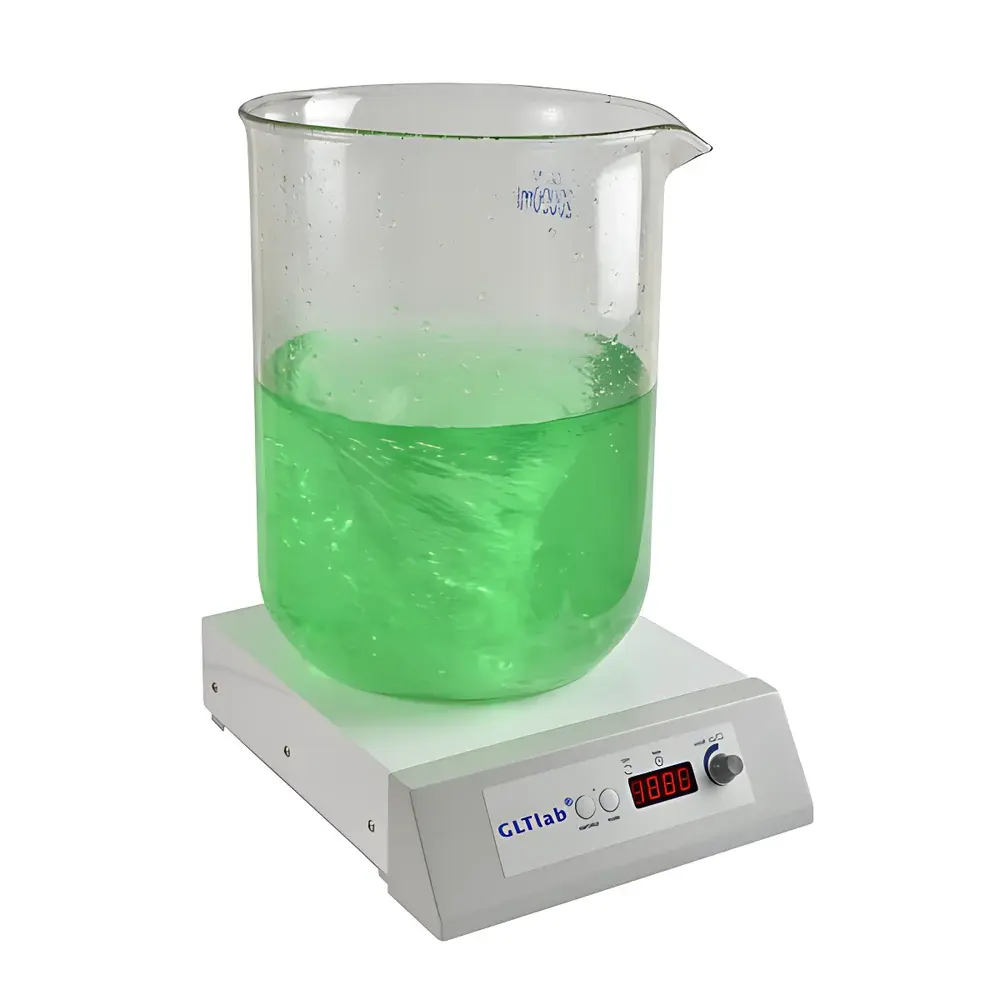
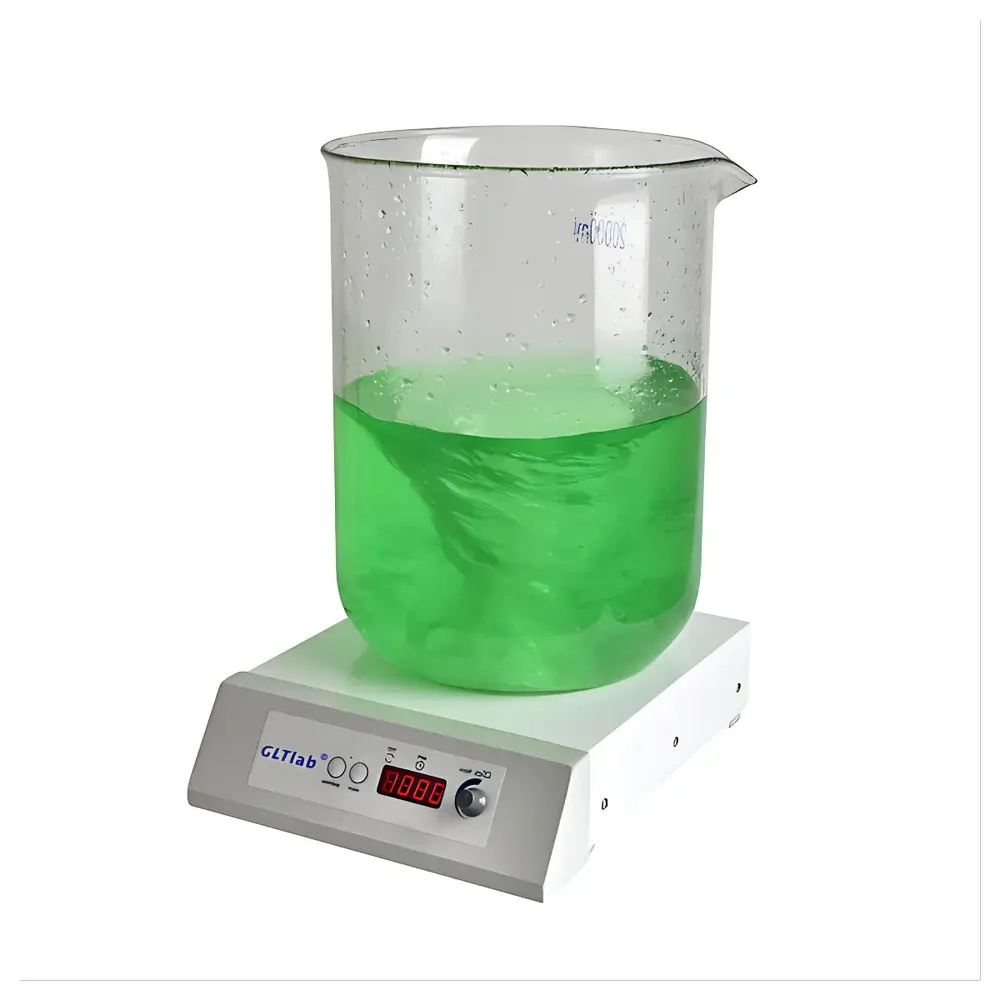
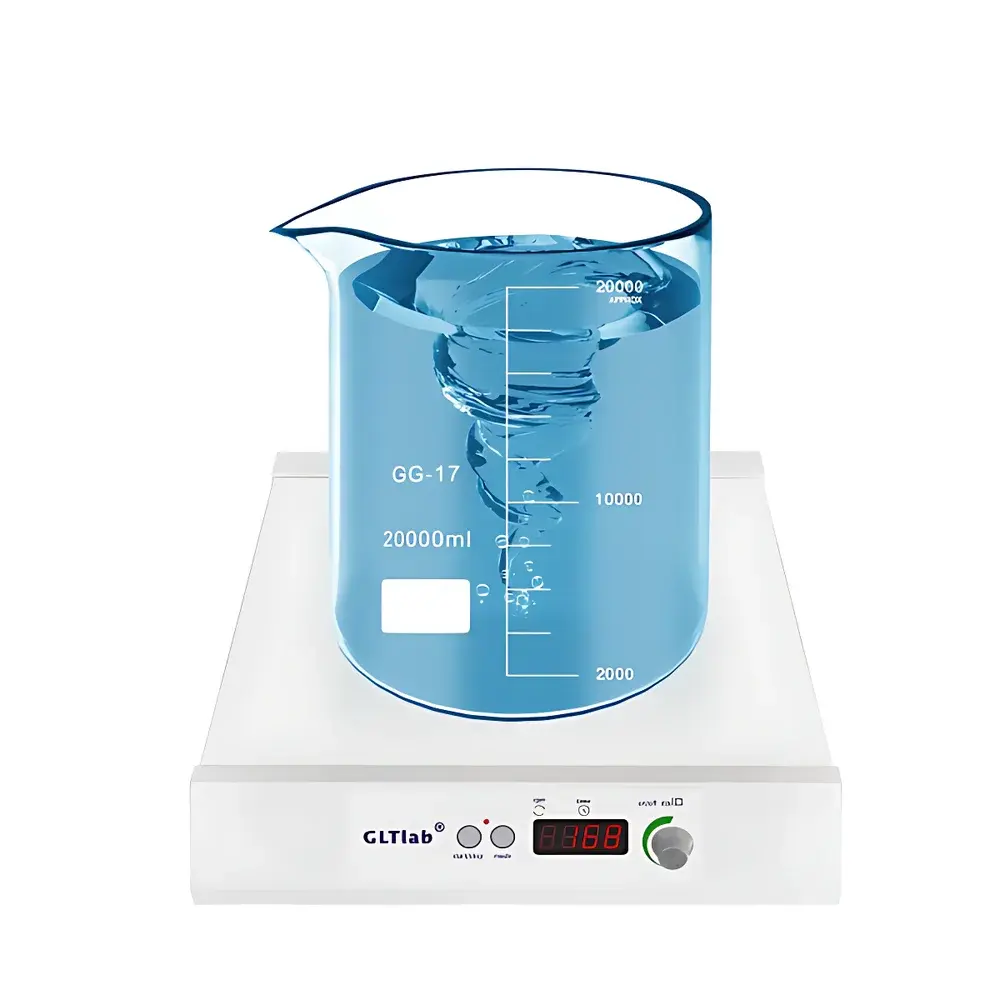
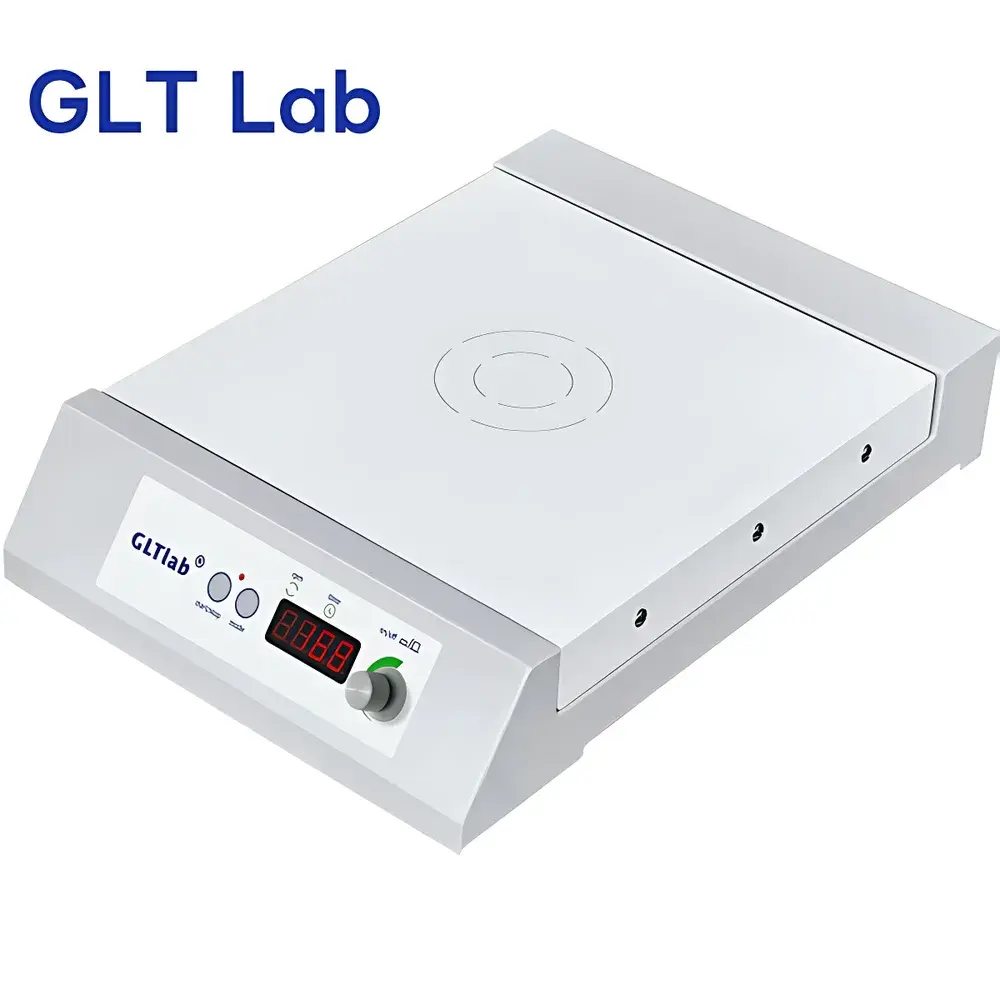
GLTLab SSL-50 50-Liter Heavy-Duty Magnetic Stirrer
| Brand | GLTLab |
|---|---|
| Origin | Guangdong, China |
| Manufacturer Type | Direct Manufacturer |
| Product Category | Domestic |
| Model | SSL-50 |
| Instrument Type | Magnetic Stirrer |
| Maximum Stirring Volume | 50 L |
| Speed Range | 100–1500 rpm |
| Temperature Control | Ambient Only |
| Housing Material | Stainless Steel |
| Display | LED Digital |
| Control | Microprocessor-Based Digital Control |
| Continuous Operation | Up to 9 hours |
| Noise Level | Low-Noise Design |
| Top Plate | 304 Stainless Steel |
| Interface | RS232 (Optional Computer Connectivity) |
Overview
The GLTLab SSL-50 is a high-capacity, microprocessor-controlled magnetic stirrer engineered for reproducible, large-volume mixing in demanding laboratory and pilot-scale applications. Unlike conventional benchtop stirrers, the SSL-50 employs a high-strength neodymium magnet array coupled with a precision-engineered drive motor to generate consistent torque across its full 100–1500 rpm operational range—enabling stable suspension and uniform rotation of standard PTFE-coated stir bars even in viscous or heterogeneous 50-liter batches. Its core design adheres to fundamental principles of magnetic coupling: rotational energy is transferred contactlessly from the internal rotating magnet assembly beneath the stainless steel top plate to the stir bar immersed in the vessel, eliminating mechanical wear, seal degradation, or contamination risk associated with shaft-driven systems. The unit operates exclusively at ambient temperature—making it suitable for isothermal mixing protocols where external heating introduces thermal gradients or decomposition risks.
Key Features
- Robust 304 stainless steel housing and top plate for chemical resistance, structural rigidity, and long-term corrosion resilience in wet or solvent-rich environments.
- High-torque dual-magnet drive system optimized for consistent stirring performance in volumes up to 50 L—validated using ISO 8573-compliant air-free water and 30% glycerol/water solutions.
- LED digital display with real-time rpm readout and programmable speed retention—no manual recalibration required after power interruption.
- Microprocessor-based closed-loop speed control ensures ±3 rpm stability over extended operation (≥9 hours), minimizing drift during kinetic studies or multi-step synthesis.
- Low-noise brushless DC motor architecture (<52 dB(A) at 1 m distance), compliant with ISO 7779 acoustic emission standards for shared laboratory spaces.
- RS232 serial interface (optional) supports integration into automated lab workflows via LabVIEW, Python, or custom SCADA systems—enabling remote parameter setting, logging, and audit-trail generation.
Sample Compatibility & Compliance
The SSL-50 accommodates standard round-bottom flasks (up to 100 L capacity, when used with external support stands), jacketed reactors, and open beakers with diameters ≤350 mm. It is compatible with all commercially available PTFE- or glass-coated stir bars rated for ≥15 cm length and ≥10 mm diameter. While not equipped with integrated heating, its ambient-only operation aligns with ASTM E2913-21 guidelines for non-thermal mixing validation and avoids thermal artifacts in pH-sensitive, enzymatic, or photochemical processes. The device meets CE safety directives (2014/30/EU EMC & 2014/35/EU LVD), RoHS 2011/65/EU material restrictions, and conforms to IEC 61010-1:2010 for laboratory electrical equipment safety.
Software & Data Management
When configured with the optional RS232 interface, the SSL-50 supports ASCII-based command protocols for bidirectional communication. Speed setpoints, runtime duration, and operational status can be logged externally with timestamping—supporting 21 CFR Part 11-compliant electronic records when paired with validated third-party data acquisition software. No proprietary software is bundled; instead, GLTLab provides documented API specifications and sample scripts (Python/PySerial) to facilitate integration into existing LIMS or ELN platforms. Audit trails include operator ID (via external authentication), start/stop timestamps, and deviation alerts for speed instability exceeding ±5 rpm over 60 s intervals—meeting GLP documentation requirements for method validation reports.
Applications
- Chemical Process Development: Homogenization of multi-phase reaction mixtures (e.g., Suzuki couplings in aqueous/organic biphasic systems) under inert atmosphere in glovebox-integrated reactors.
- Biopharmaceutical Manufacturing Support: Buffer and media preparation for upstream bioreactor seed train expansion—ensuring consistent osmolality and dissolved oxygen pre-equilibration without shear-induced protein denaturation.
- Environmental Sample Preparation: Standardized agitation of EPA Method 3510C-compliant extraction vessels during solid-phase extraction of PFAS compounds from wastewater sludge matrices.
- Materials Science Synthesis: Controlled co-precipitation of metal oxide nanoparticles (e.g., Fe₃O₄@SiO₂) where laminar flow regimes and absence of localized hot spots are critical to monodispersity.
- Food & Beverage R&D: Reproducible blending of emulsions (e.g., plant-based dairy alternatives) for rheological profiling prior to high-pressure homogenization trials.
FAQ
Does the SSL-50 include a built-in heating function?
No. The SSL-50 is a non-heating magnetic stirrer designed specifically for ambient-temperature mixing applications. For temperature-controlled experiments, it must be used in conjunction with an external heating mantle, water bath, or jacketed reactor system.
What is the maximum recommended viscosity for stable 50 L operation?
The unit maintains reliable stir bar engagement up to 1,200 mPa·s (measured per ISO 2555) using a 15 cm × 10 mm stir bar in a cylindrical vessel with aspect ratio ≥1.5.
Is the stainless steel top plate resistant to strong acids or alkalis?
Yes—the 304 stainless steel surface resists short-term exposure to ≤30% HCl, ≤50% H₂SO₄, and ≤40% NaOH. Extended contact with halide-containing solutions requires post-use rinsing to prevent pitting corrosion.
Can the SSL-50 be integrated into a GMP-regulated manufacturing environment?
Yes—when deployed with validated RS232 logging, defined SOPs, and periodic performance verification (per USP Analytical Instrument Qualification), it supports GMP Annex 11 compliance for mixing process steps.
What stir bar dimensions are recommended for optimal torque transfer at 50 L scale?
A minimum 15 cm × 10 mm elliptical PTFE-coated stir bar is recommended. For high-viscosity or dense suspensions, a dual-magnet “cross” configuration (e.g., IKA RW 20 Digital reference geometry) improves vortex stability and bottom-layer homogenization.



