
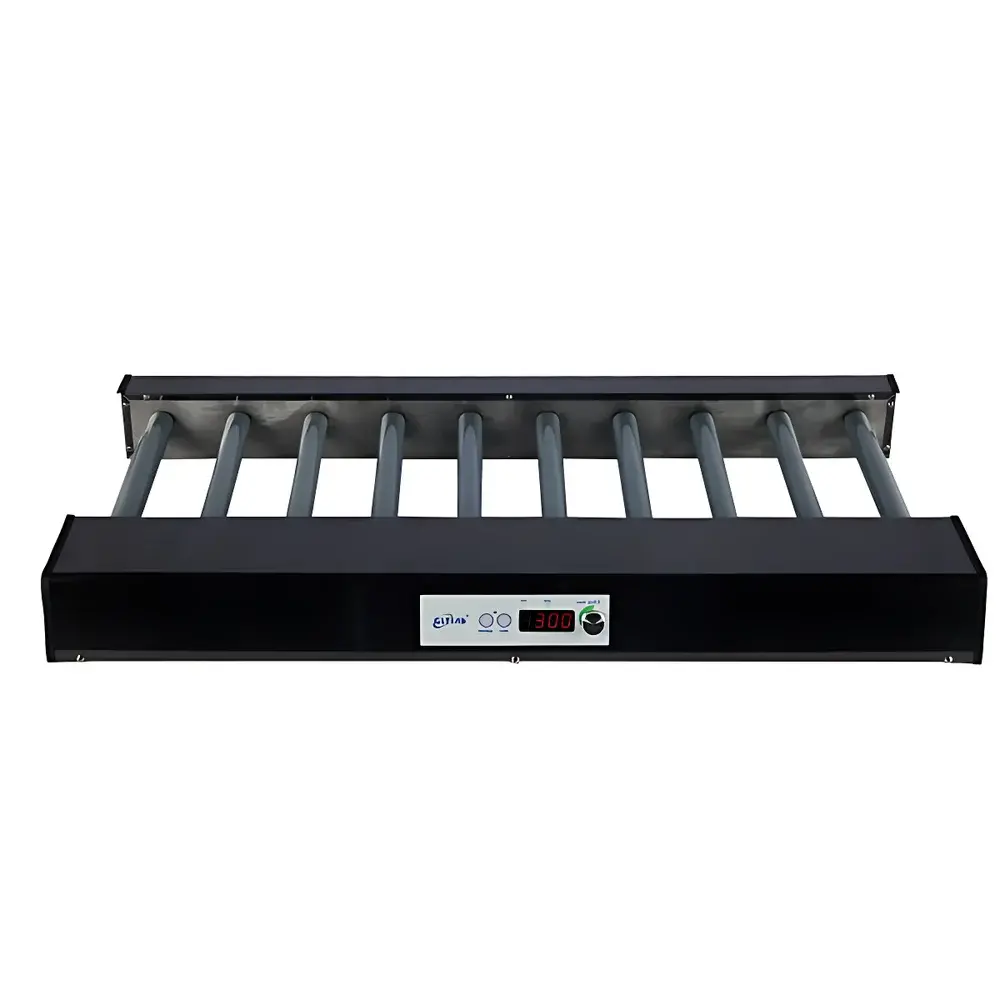
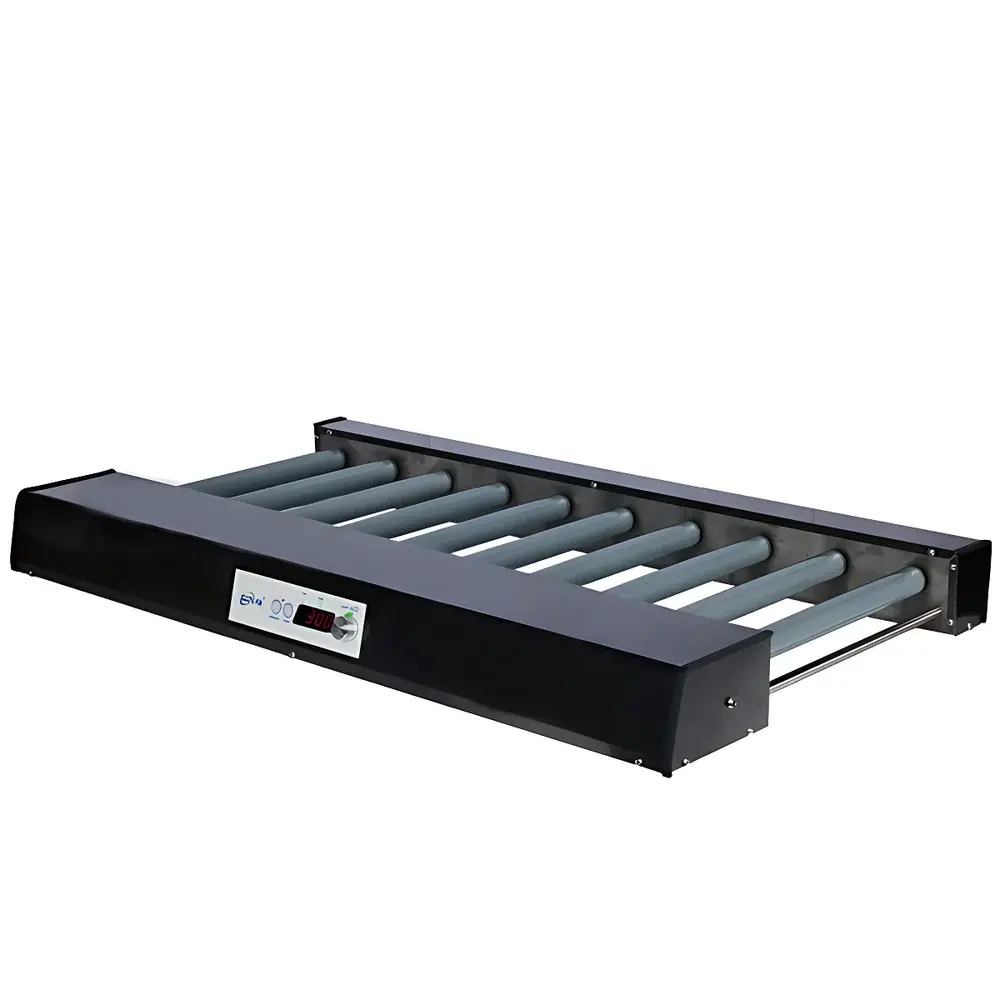
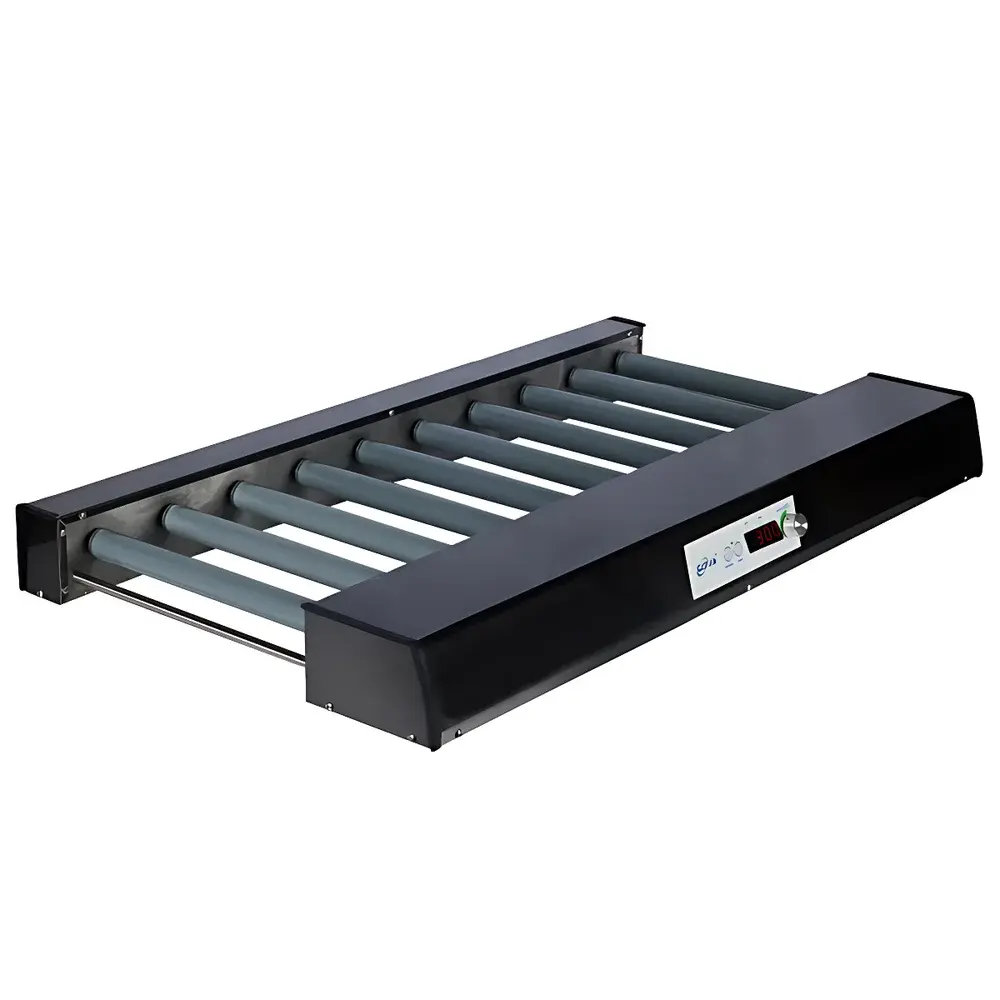
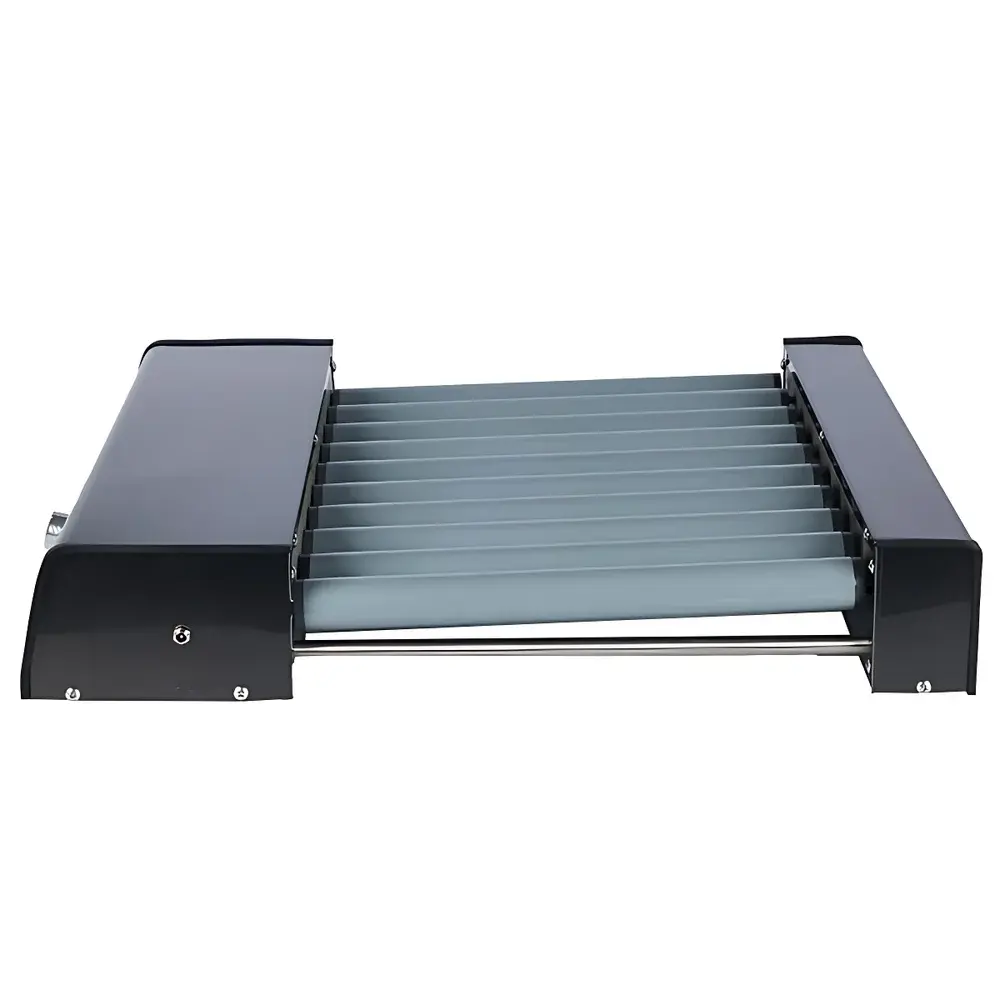
GLTLab TR10-1000 Large-Scale CNC Roller Mixer
| Brand | GLTLab |
|---|---|
| Origin | Guangdong, China |
| Manufacturer Type | Direct Manufacturer |
| Country of Origin | China |
| Model | TR10-1000 |
| Capacity | 5 L per roller (5 rollers total) |
| Roller Quantity | 10 |
| Roller Length | 50 cm |
| Roller Diameter Range | 45–100 mm |
| Roller Spacing | 8 cm |
| Speed Control | Digital, Adjustable (0–60 rpm typical range for industrial roller mixers) |
| Timer Range | 1–200 hours |
| Rotation Mode | Bidirectional (forward/reverse), programmable direction reversal interval: 1–15 min |
| Load Capacity | 10–50 kg |
| Construction Material | 304 Stainless Steel |
| Display | LED digital interface |
| Customization | Available for roller configuration, mounting, and control logic |
Overview
The GLTLab TR10-1000 is a heavy-duty, CNC-controlled roller mixer engineered for continuous, low-shear homogenization of viscous and sediment-prone formulations across industrial R&D and production environments. Unlike orbital shakers or vortex mixers, this system operates on the principle of controlled rotational tumbling—where cylindrical containers rotate along a fixed horizontal axis at precisely regulated speed, direction, and dwell time. This motion induces gentle yet effective axial and circumferential displacement of contents, minimizing air entrapment and particle aggregation while ensuring uniform dispersion of pigments, thickeners, resins, and suspended solids. Designed for sustained operation over extended cycles (up to 200 hours), the TR10-1000 supports process-critical applications in coatings manufacturing, where batch-to-batch consistency and pigment deagglomeration directly impact film integrity, gloss, and color fidelity.
Key Features
- 10 independently aligned stainless steel rollers (304 grade), each 50 cm long, spaced at 8 cm center-to-center to accommodate heterogeneous vessel geometries—from standard 500 mL glass bottles to custom 5 L polymer jerricans.
- Programmable bidirectional rotation with adjustable reversal intervals (1–15 minutes), enabling optimized shear history for thixotropic systems and preventing sediment stratification in high-density suspensions.
- Digital LED interface with real-time RPM display, elapsed time tracking, and non-volatile memory for up to 10 user-defined protocols—including ramp profiles and multi-stage mixing sequences.
- Robust structural frame fabricated entirely from electropolished 304 stainless steel, rated for continuous load capacity of 10–50 kg across all rollers, with reinforced bearing housings for vibration-dampened operation.
- CNC-machined roller shafts with precision-ground surfaces ensure concentricity tolerance ≤ ±0.05 mm, minimizing eccentric wobble and guaranteeing reproducible torque transfer across diverse container weights and fill levels.
Sample Compatibility & Compliance
The TR10-1000 accommodates vessels with outer diameters ranging from 45 mm to 100 mm and lengths up to 450 mm, supporting industry-standard DIN, ASTM D1210, and ISO 8781-compliant containers used in paint, ink, cosmetic emulsion, and ceramic glaze testing. Its mechanical design conforms to IEC 61000-6-2 (electromagnetic immunity) and IEC 61000-6-4 (emission) standards. While not certified for cleanroom use (ISO Class 5+), its sealed drive train and absence of lubricant pathways make it suitable for GMP-aligned pilot-scale blending in non-sterile pharmaceutical excipient preparation, food-grade stabilizer dispersion, and QC lab validation of coating rheology stability per ASTM D2196 and ISO 2556.
Software & Data Management
The TR10-1000 operates as a standalone instrument with embedded firmware; no external PC or proprietary software is required for basic operation. However, optional RS-485/Modbus RTU interface enables integration into centralized MES or LIMS platforms for audit-trail logging of run parameters (start time, duration, direction sequence, final RPM). All timer and speed settings are retained after power loss, satisfying basic ALCOA+ data integrity requirements for non-regulated environments. For GLP-compliant labs, optional USB data logger modules provide timestamped CSV exports compliant with 21 CFR Part 11 Annex 11 principles when paired with validated third-party acquisition software.
Applications
- Coatings & Paints: Accelerated pigment wetting and resin dispersion during let-down; post-mill stabilization of waterborne acrylics and solvent-based alkyds; viscosity drift monitoring over 72–168 h aging cycles.
- Cosmetics: Homogenization of oil-in-water emulsions (e.g., sunscreens, foundations), suspension of UV filters (ZnO, TiO₂), and stabilization of thickened hyaluronic acid gels without foaming.
- Food & Nutraceuticals: Uniform blending of powdered functional ingredients (vitamins, probiotics) into carrier oils or syrups; rehydration of hydrocolloid blends (xanthan/guar) prior to thermal processing.
- Ceramics & Advanced Materials: Slurry deagglomeration for tape casting slurries; dispersion of nano-sized ZrO₂ or SiC particles in ethanol-based media; pre-firing homogenization of electrode pastes for solid oxide fuel cells.
FAQ
What is the maximum recommended rotational speed for optimal pigment dispersion in latex paints?
Typical operating range is 15–45 rpm; higher speeds may induce cavitation in low-viscosity systems and compromise particle integrity. Speed selection must be empirically validated per formulation using ASTM D1210 fineness-of-grind testing.
Can the TR10-1000 be integrated into an automated production line?
Yes—via optional dry-contact relay outputs and Modbus RTU protocol, enabling synchronization with PLC-controlled filling stations, barcode-triggered recipe loading, and OEE tracking.
Is calibration traceable to NIST or other national metrology institutes?
Roller speed and timer functions are factory-verified against traceable quartz-referenced frequency standards; full calibration certificates (per ISO/IEC 17025) are available upon request with additional lead time.
Does the unit support validation documentation packages for FDA-regulated facilities?
While the base model is not 21 CFR Part 11-certified, IQ/OQ protocols and risk assessments (per ASTM E2500) can be supplied for installation under client-owned validation frameworks.
What maintenance intervals are recommended for continuous 24/7 operation?
Bearing inspection and grease replenishment every 6 months; belt tension check quarterly; roller surface cleaning after each batch using IPA or compatible solvents to prevent cross-contamination.



