
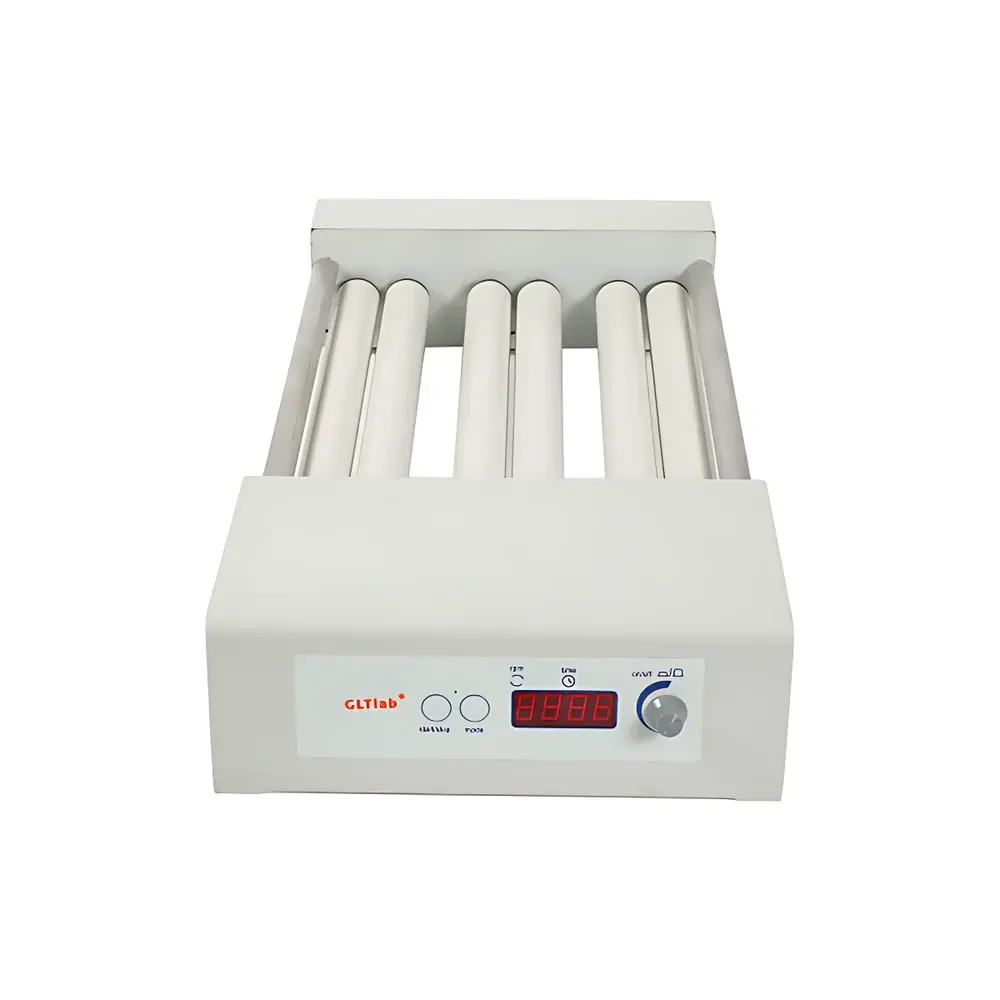
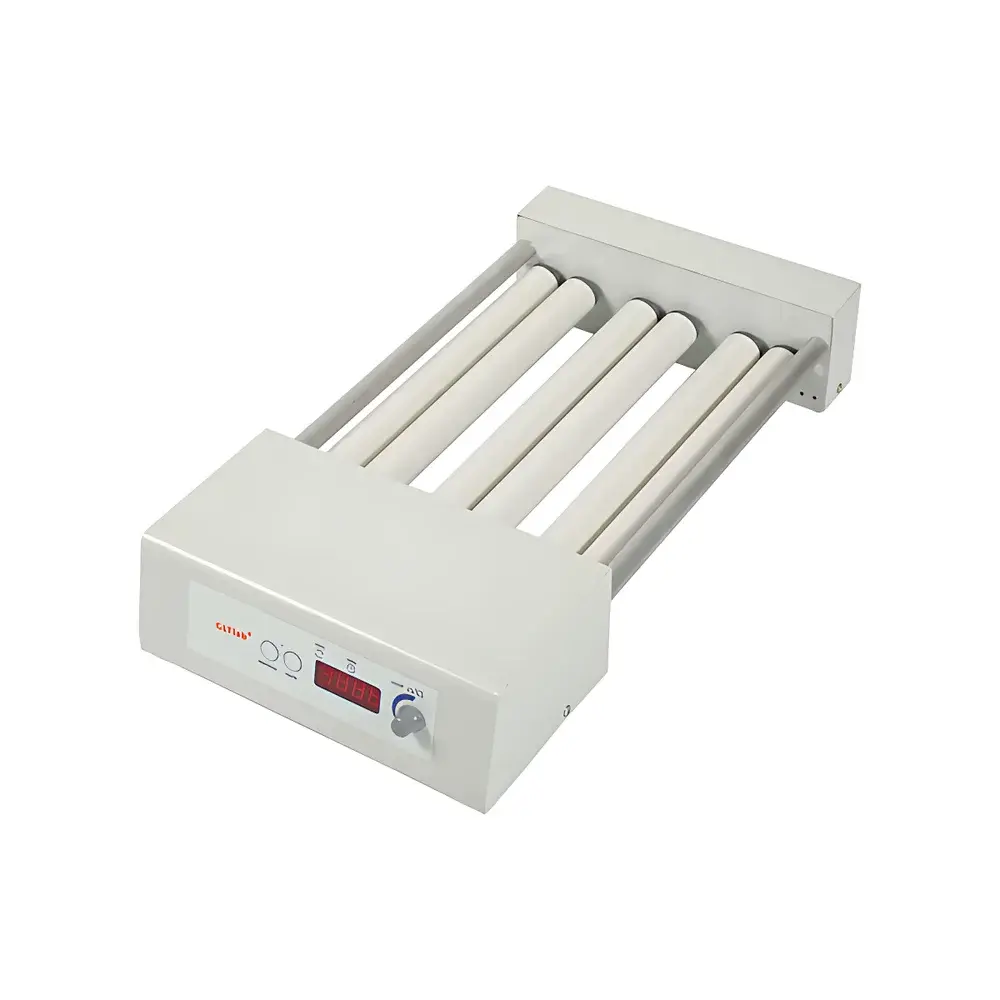
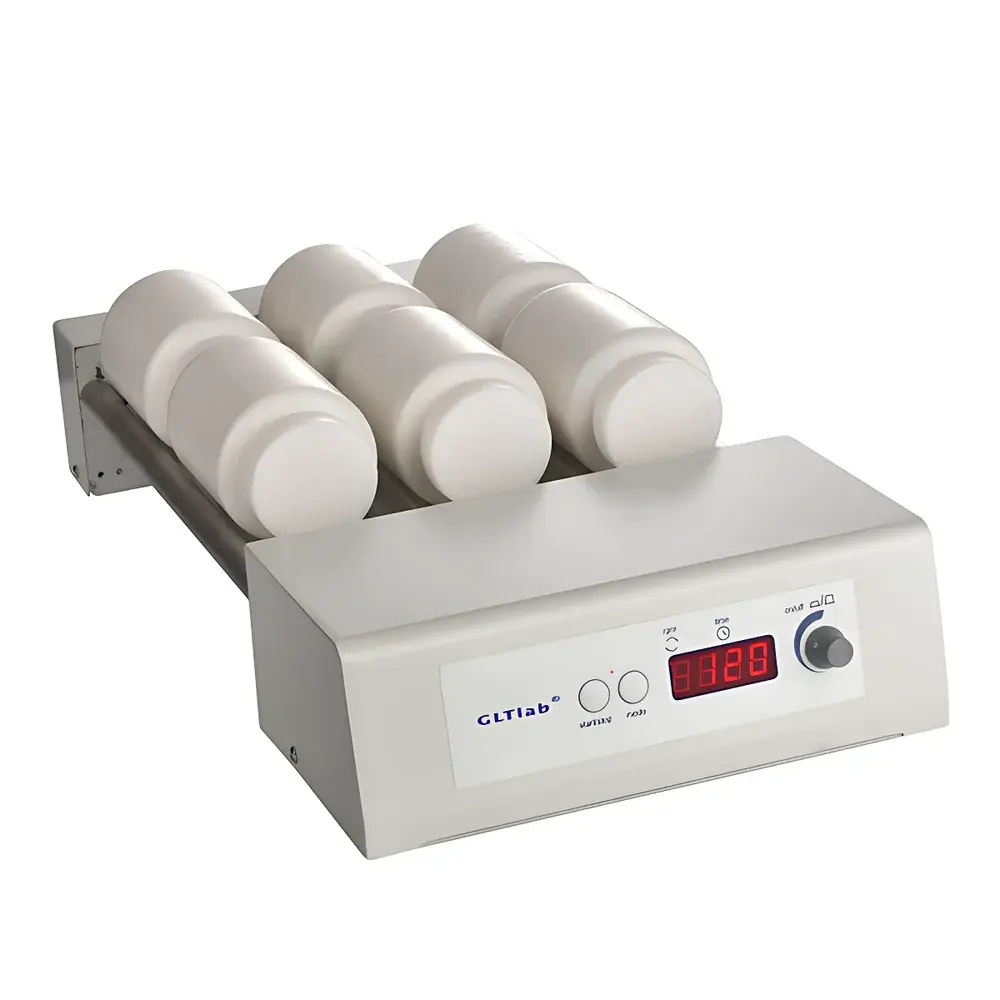
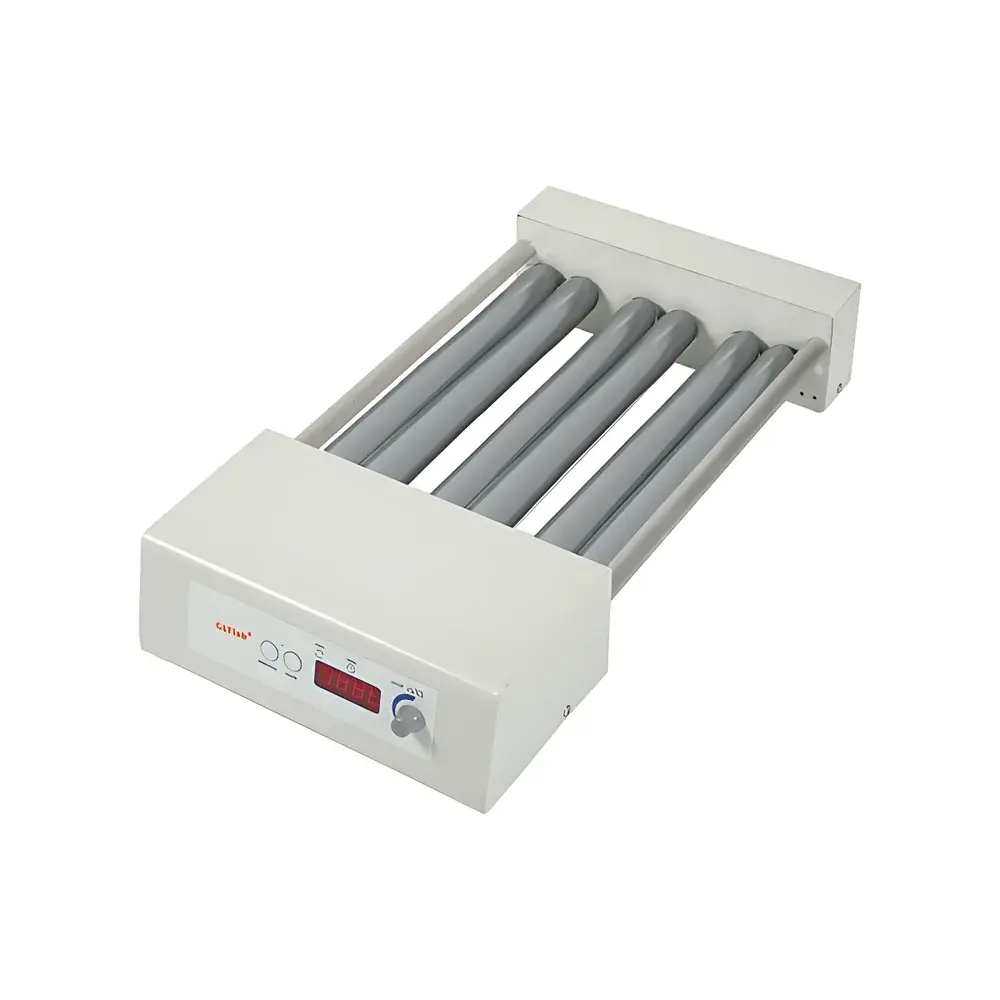
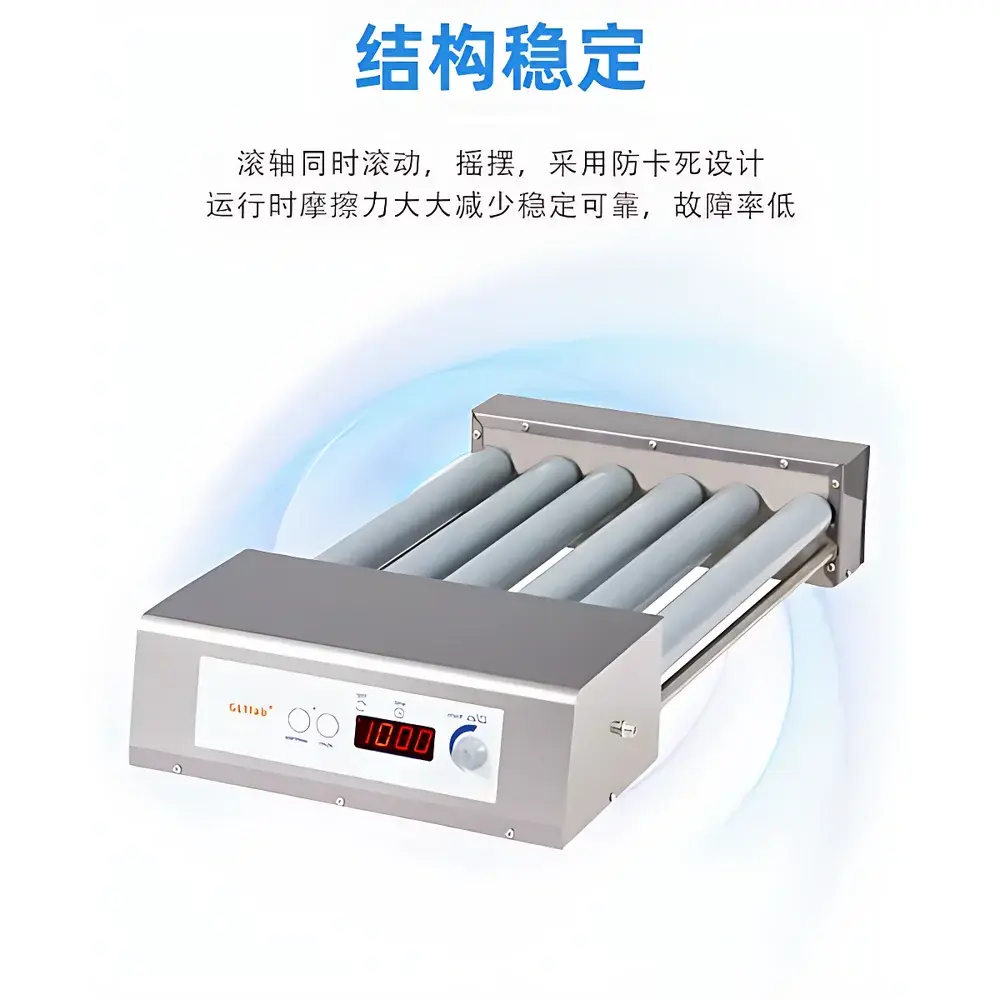
GLTLab TR6 Pro 6-Axis Rolling Mixer
| Brand | GLTLab (Guoli Tian) |
|---|---|
| Model | TR6 Pro |
| Origin | Guangdong, China |
| Manufacturer Type | Direct Manufacturer |
| Country of Origin | China |
| Dimensions (W×D×H) | 556 × 286 × 98 mm |
| Maximum Load Capacity | 10 kg |
| Drive Voltage | 12 V DC, 5 A |
| Speed Range | 5–1000 rpm |
| Control Interface | Digital LED Display |
| Rolling Mode | Unidirectional & Programmable Bidirectional Rotation |
| Construction Material | Optional Stainless Steel Frame |
| Power Supply | External 12 V DC Adapter |
Overview
The GLTLab TR6 Pro 6-Axis Rolling Mixer is an engineered laboratory and pilot-scale mixing solution designed for high-reproducibility, low-shear homogenization of viscous, heterogeneous, or shear-sensitive materials. Based on the principle of controlled orbital rolling—where multiple parallel rollers rotate synchronously at precisely adjustable speeds—the TR6 Pro generates gentle yet effective axial displacement and tumbling motion to ensure uniform dispersion without introducing excessive shear stress, foaming, or thermal degradation. Unlike vortex mixers or overhead stirrers, this device operates without direct impeller contact, making it ideal for applications requiring contamination-free handling, sealed-vessel processing, or long-duration agitation under inert or controlled atmospheres. Its compact footprint and low-voltage DC drive architecture support safe operation in regulated environments including cleanrooms, battery R&D labs, and GLP-compliant quality control facilities.
Key Features
- Six independently aligned stainless-steel rollers (340 × 30 mm each), configured for parallel, synchronized rotation with programmable bidirectional reversal intervals
- Digital LED interface enabling precise speed setting from 5 to 1000 rpm in 1-rpm increments, with real-time feedback and memory retention for repeat protocols
- Robust mechanical design supporting continuous operation under full 10 kg load capacity; roller shafts engineered for minimal runout (<0.05 mm) and long-term torsional stability
- Modular base construction compatible with optional stainless-steel housing (AISI 304), meeting ISO 14644-1 Class 7 cleanroom compatibility requirements for particulate control
- Low-noise, brushless DC motor system operating at 12 V / 5 A, eliminating electromagnetic interference and enabling integration into sensitive instrumentation racks or fume hoods
- Non-slip roller surface treatment (micro-textured anodized aluminum or electropolished stainless steel) ensures consistent grip across vials, bottles, and custom jigs (e.g., 50 mL centrifuge tubes, 100 mL glass jars, or 250 mL pouches)
Sample Compatibility & Compliance
The TR6 Pro accommodates a wide range of container formats—including conical tubes, cylindrical bottles, syringes, and flexible pouches—without requiring clamps or adapters. It supports both static and dynamic mixing configurations: samples may be placed horizontally for axial rolling or angled (±15°) for enhanced gravitational cascading. The device complies with IEC 61010-1:2010 for electrical safety in laboratory equipment and meets RoHS Directive 2011/65/EU for hazardous substance restrictions. While not certified for medical device manufacturing per ISO 13485, its traceable calibration log and stable speed control enable alignment with internal SOPs for ASTM D445 (kinematic viscosity preparation), USP (uniformity of dosage units), and battery slurry homogenization protocols referenced in IEEE 1625 and GB/T 36276–2018.
Software & Data Management
The TR6 Pro operates as a standalone instrument with no embedded firmware or cloud connectivity. All operational parameters are set manually via front-panel controls; however, the digital display logs runtime and speed settings for manual protocol documentation. For laboratories requiring audit-ready records, external data logging is supported via optional TTL-triggered pulse output (available on request), compatible with LabVIEW, MATLAB, or PLC-based SCADA systems. When deployed in GMP-regulated environments, users may implement 21 CFR Part 11–compliant electronic signatures through integrated LIMS platforms that capture timestamped operator IDs, batch numbers, and deviation flags during routine use.
Applications
- Battery materials R&D: Homogenizing cathode/anode slurries (e.g., NMC, LFP, silicon-carbon composites) with PVDF binders and conductive carbon additives—ensuring particle deagglomeration and binder network continuity prior to coating
- Pharmaceutical formulation: Maintaining suspension stability of insoluble APIs in oral suspensions or topical gels; preventing sedimentation during stability studies per ICH Q5C
- Adhesives & coatings: Blending high-viscosity epoxy resins, UV-curable acrylates, or silicone elastomer precursors without air entrapment
- Clinical diagnostics: Preventing coagulation in whole blood or plasma samples stored in EDTA/K2EDTA tubes during transport or pre-analytical holding (CLSI H20-A2 compliant)
- Materials science: Dispersing nanofillers (e.g., graphene oxide, CNTs) in polymer melts or thermoset prepolymers under inert gas blanket conditions
FAQ
What is the maximum recommended vessel diameter for stable operation on the TR6 Pro?
Vessels up to 80 mm in outer diameter (e.g., standard 100 mL glass bottles) are fully supported when centered on the rollers. Larger diameters may reduce rotational symmetry and require custom mounting fixtures.
Can the TR6 Pro operate continuously for 24 hours?
Yes—its thermal management system and brushless motor design allow uninterrupted operation at ≤80% of maximum rated speed (i.e., ≤800 rpm) without duty-cycle limitations.
Is the roller surface autoclavable?
Stainless-steel roller options are compatible with steam sterilization at 121°C for 20 minutes; anodized aluminum rollers are not autoclavable and should be cleaned with 70% ethanol or isopropanol.
Does the TR6 Pro include validation documentation?
Factory calibration certificates (speed accuracy ±2 rpm, load verification at 10 kg) are provided with each unit. IQ/OQ documentation templates are available upon request for installation and operational qualification under GxP frameworks.
How does bidirectional reversal improve mixing efficiency?
Programmable direction reversal disrupts laminar flow patterns and prevents radial segregation in dense suspensions—particularly critical for high-solid-content battery slurries where settling velocity exceeds 10 µm/s.



