
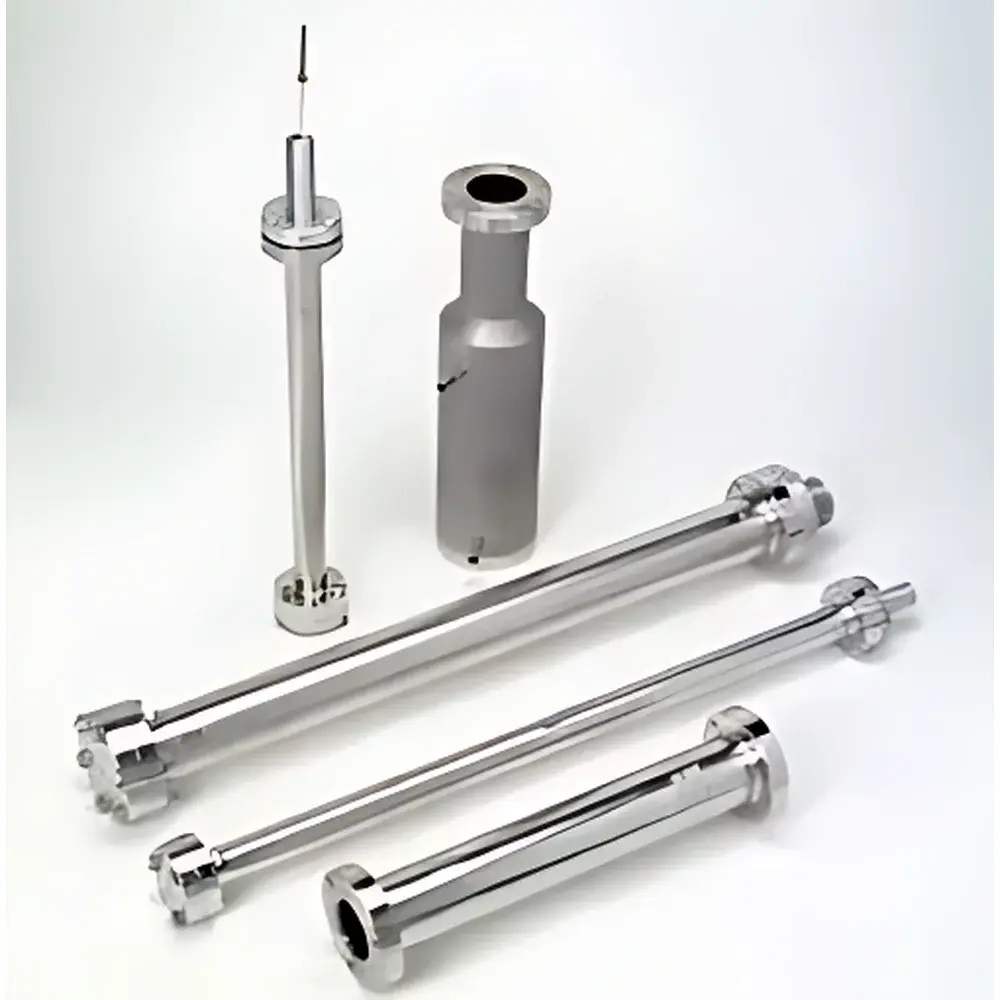
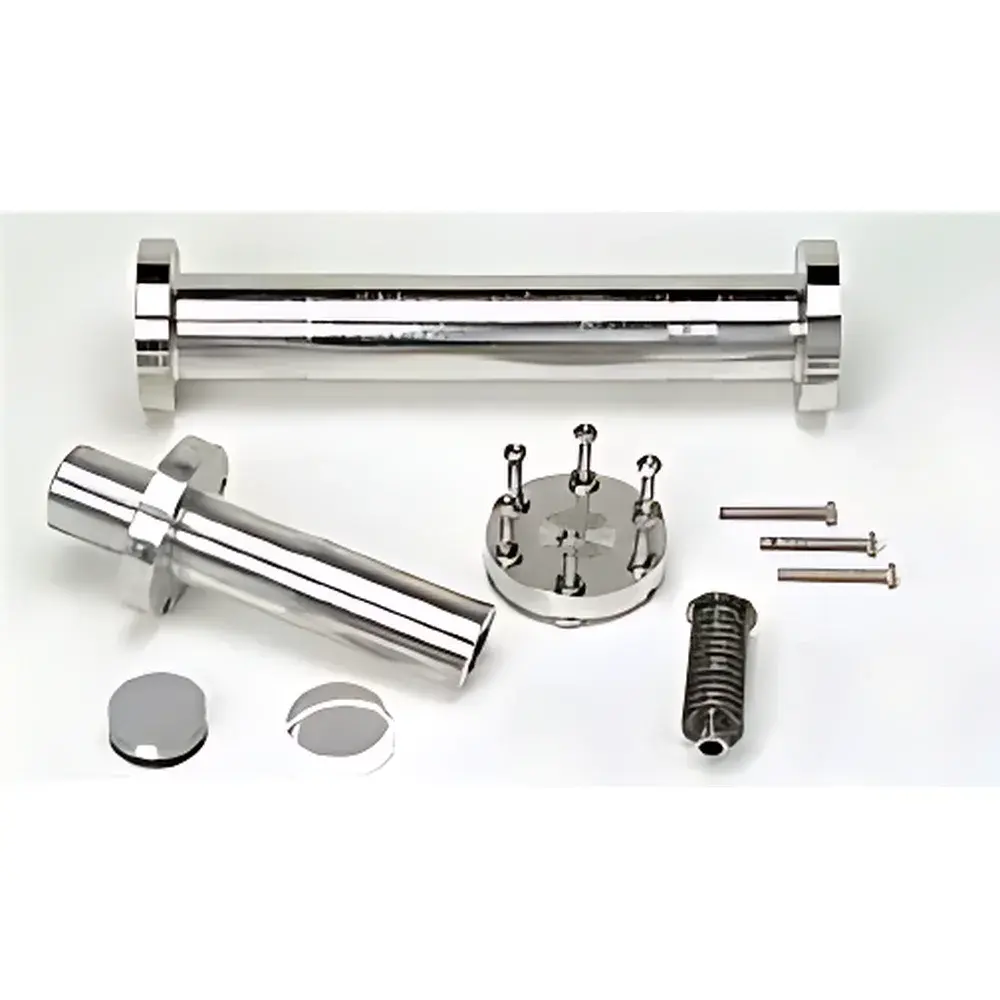
GRACE MODcol® SPRING™ Axial Compression Column System
| Brand | GRACE |
|---|---|
| Origin | USA |
| Manufacturer Type | Authorized Distributor |
| Origin Category | Imported |
| Model | MODcol® |
| Instrument Type | Static Axial Compression System |
| Design Principle | Spring-Actuated Constant-Pressure Bed Consolidation |
| Column Independence | Self-Contained (No External Hydraulic Source Required) |
| Fill Material Compatibility | ≥5 µm Particles (Silica, Polymer, Soft Gel) |
| Optional Configurations | Water-Jacketed Temperature Control, Prepacked (VYDAC®), or User-Packable with MODcol MULTIPACER® |
Overview
The GRACE MODcol® SPRING™ Axial Compression Column System is an engineered static compression solution designed for preparative and industrial-scale high-performance liquid chromatography (HPLC). Unlike conventional dynamic axial compression (DAC) systems that rely on external hydraulic actuators, servo-controlled pistons, or pneumatic pressure sources, the SPRING™ system employs a mechanically passive, spring-loaded internal mechanism to maintain continuous, uniform axial force on the packed bed throughout operation. This principle—based on Hooke’s law and calibrated elastic deformation—ensures constant bed density without real-time pressure feedback loops or external power dependency. The column operates as a self-contained unit post-packing, eliminating integration requirements with pressurization hardware or control cabinets. Its design addresses two fundamental challenges in large-bore preparative chromatography: bed settling-induced void formation and long-term performance drift due to particle attrition or solvent-induced swelling/shrinkage. By dynamically compensating for incremental bed contraction via controlled spring extension, the SPRING™ system preserves interparticle contact integrity, minimizes extra-column band broadening, and sustains consistent plate counts over extended operational cycles.
Key Features
- Static, spring-actuated axial compression: Delivers stable, maintenance-free bed consolidation without hydraulic fluid, air supply, or electrical input.
- True plug-and-play operation: Fully functional immediately after packing—no tethering to external compressors, controllers, or power sources required.
- Fault-tolerant architecture: Maintains rated compression force during power outages, facility pressure drops, or operator interface failures—critical for GMP-aligned continuous manufacturing environments.
- Modular scalability: Available in 25 mm, 50 mm, and 100 mm internal diameters with customizable lengths; compatible with standard column hardware interfaces (e.g., ISO-KF, DIN, or custom flange sets).
- Thermal integration option: Optional full-length water-jacketed housing enables precise temperature regulation (±0.5 °C) across the entire bed length—essential for method transfer between analytical and preparative scales or thermally sensitive separations.
- Fill-material agnosticism: Validated with silica-based, polymeric, and soft-gel stationary phases ≥5 µm in particle size—including VYDAC®-packed configurations—and supports supercritical fluid chromatography (SFC) when paired with high-pressure-rated piston assemblies.
Sample Compatibility & Compliance
The MODcol® SPRING™ system accommodates all commercially available spherical and irregular particulate packings meeting minimum particle size thresholds (≥5 µm), including acidic/basic silica, hybrid organic-inorganic matrices, methacrylate-based polymers, and agarose derivatives. It complies with mechanical safety expectations outlined in ISO 13849-1 (Category 3, PL d) for pressure-retaining components and conforms to ASME B31.3 process piping stress criteria for cyclic loading scenarios. While not intrinsically certified for hazardous area use, its non-electric, non-pneumatic actuation makes it suitable for Class I Div 2 or ATEX Zone 2 installations when housed within appropriate enclosures. Documentation packages support FDA 21 CFR Part 11-compliant audit trails when integrated with validated LIMS or CDS platforms—particularly relevant for pharmaceutical purification workflows governed by ICH Q5A(R2) and Q7 guidelines.
Software & Data Management
As a hardware-only static compression platform, the SPRING™ column does not incorporate embedded firmware, sensors, or digital communication protocols. All operational parameters—including initial spring preload, maximum allowable operating pressure (determined by column body rating), and thermal jacket flow rates—are defined at commissioning and recorded in hard-copy or PDF-based Installation Qualification (IQ) documentation. Users retain full control over data governance: chromatographic output is captured exclusively through externally connected detectors (UV-Vis, MS, CAD, ELSD) and processed via validated third-party software (e.g., Empower™, Chromeleon™, or OpenLab CDS). This architecture aligns with ALCOA+ principles—ensuring data attributable, legible, contemporaneous, original, accurate, complete, consistent, enduring, and available—without introducing proprietary black-box dependencies.
Applications
- Multi-kilogram-scale purification of therapeutic peptides and oligonucleotides under cGMP conditions.
- Chiral resolution of racemic small-molecule APIs using polysaccharide-based chiral stationary phases.
- Biopolymer fractionation (e.g., mAb aggregates, plasmid isoforms) requiring low-shear, low-backpressure operation.
- SFC-based purification of heat-labile natural products where column temperature stability directly impacts enantioselectivity.
- Method development bridging from analytical UHPLC to pilot-scale prep-HPLC without re-optimization of bed compression dynamics.
FAQ
Does the SPRING™ column require periodic recalibration or spring replacement?
No. The helical compression spring is selected for fatigue life exceeding 10,000 compression-extension cycles under nominal load conditions. GRACE provides documented spring material certifications (ASTM A228, AMS 5106) and recommends visual inspection only during routine column maintenance—not scheduled replacement.
Can the SPRING™ system be retrofitted into existing DAC column manifolds?
Not directly. Its self-contained mechanical design eliminates hydraulic ports and actuator mounts; integration requires physical replacement of the column assembly rather than adapter-based retrofitting.
Is VYDAC® prepacked SPRING™ column data compliant with regulatory submissions?
Yes—provided full traceability of lot-specific packing reports, column performance qualification (PQ) data (e.g., asymmetry factor, plate count, pressure drop vs. flow rate), and environmental monitoring logs are retained per ICH M4Q(R2) requirements.
What is the maximum recommended operating pressure for 100 mm ID SPRING™ columns?
400 bar (5,800 psi) for stainless steel housings with standard end-fittings; higher ratings available upon request with Hastelloy® or titanium construction.
How does temperature cycling affect spring performance?
Calibrated springs operate within −20 °C to +60 °C ambient ranges. Thermal expansion of the spring material is compensated during factory preload calibration; no derating is necessary within this envelope.
Related Products





