
Grant BT-MOD1 Oil Aging Tester for Turbine Lubricants
| Origin | UK |
|---|---|
| Manufacturer Type | Authorized Distributor |
| Origin Category | Imported |
| Model | BT-MOD1 |
| Pricing | Available Upon Request |
Overview
The Grant BT-MOD1 Oil Aging Tester is a precision-engineered thermal oxidation stability instrument designed specifically for accelerated aging evaluation of aviation turbine lubricants, hydraulic fluids, and synthetic hydrocarbon-based oils. It operates on the principle of controlled, isothermal oxidative degradation under defined air flow and temperature conditions—directly aligned with the methodology stipulated in UK Defence Standard 05-50 Part 61 (formerly DEF STAN 05-50 Part 61), which governs testing of synthetic lubricants for gas turbine engines. This standard mandates rigorous thermal stress protocols—including specified sample geometry, airflow dynamics via calibrated oxidation tubes, and strict temperature uniformity requirements—to simulate long-term in-service oxidative degradation in a condensed timeframe. The BT-MOD1 replicates the critical environmental parameters required for compliance with test methods referenced in Standards 1, 3, 9, 14, and Annexes A, A.1, and A.2 of the same specification, making it an essential tool for R&D laboratories, OEM engine qualification facilities, and third-party contract testing labs serving defence, aerospace, and high-reliability industrial sectors.
Key Features
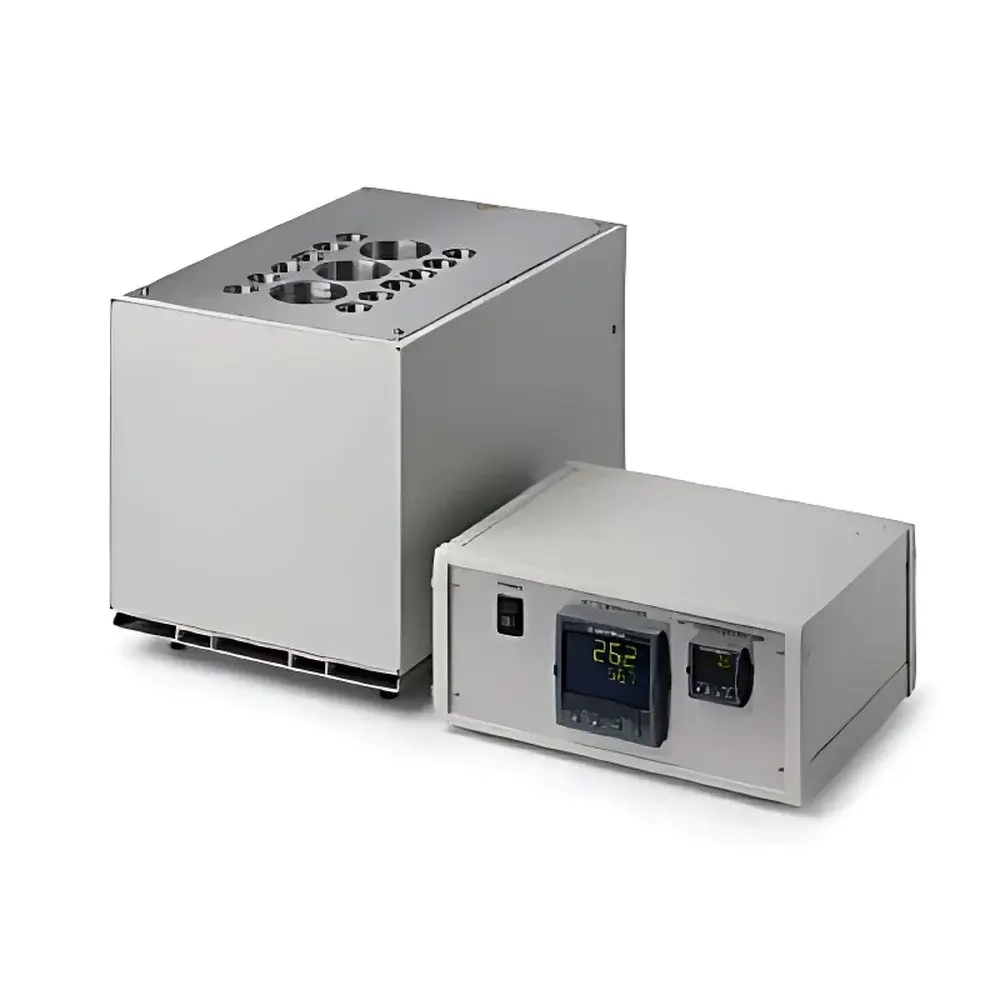
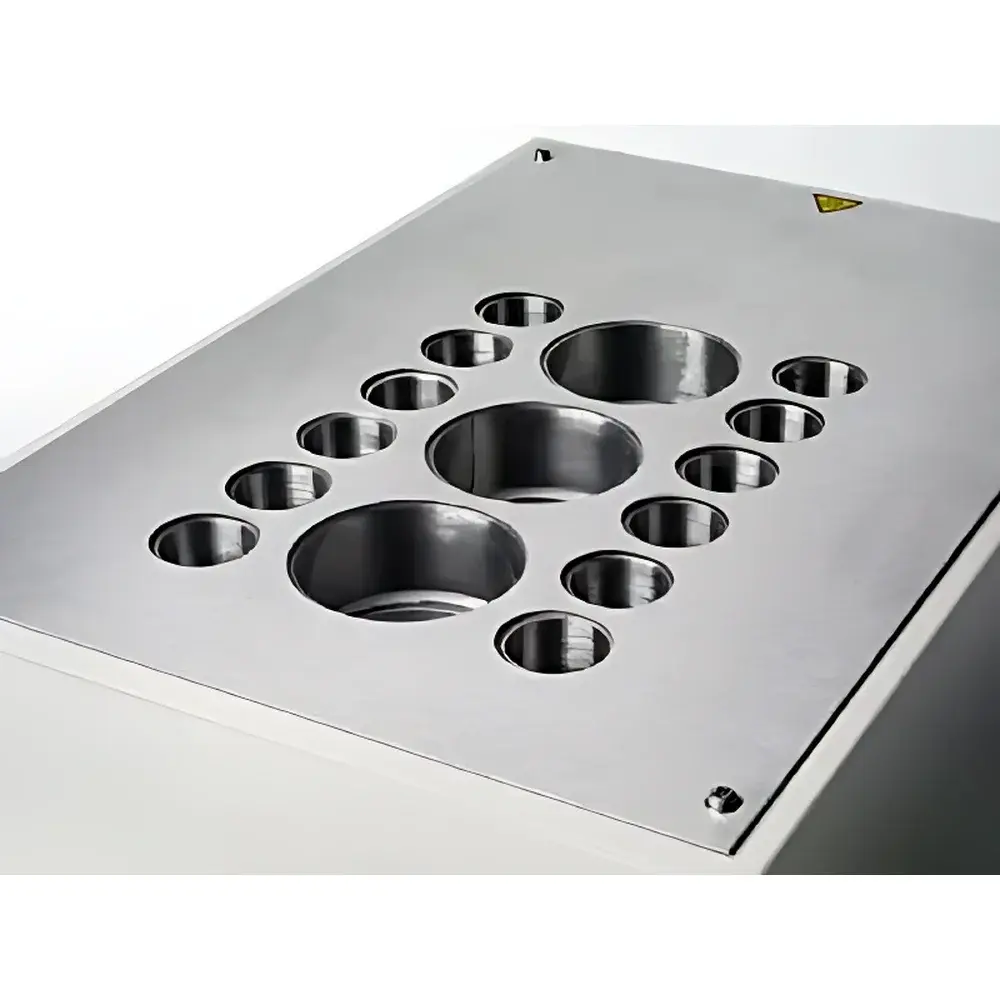
- Triple-zone modular heating system supporting three 57 mm × 140 mm deep test vessels—or configurable for twelve 28.5 mm × 140 mm air-cooled oxidation tubes with integrated forced-air blowpipes per DEF STAN 05-50 Part 61 requirements
- Digital PID temperature controller with ±0.1 °C display resolution and ≤±0.5 °C intra-module thermal uniformity across full operating range (ambient +10 °C to 450 °C)
- Integrated over-temperature cut-off with visual alarm (flashing red LED) and automatic power disconnection—compliant with IEC 61000-6-2 and EN 61010-1 safety standards
- Robust stainless-steel heated block architecture with optimized thermal mass and insulation, ensuring high repeatability of time–temperature profiles between runs
- LED front-panel interface with dual-display: real-time measured temperature and user-setpoint; intuitive rotary encoder for rapid parameter entry
- 230 V AC, 50/60 Hz input with 2500 W rated heating capacity—designed for stable operation in ambient environments from 10 °C to 35 °C
Sample Compatibility & Compliance
The BT-MOD1 accommodates standardised sample formats mandated by military and aerospace lubricant specifications: sealed glass or metal vessels for bulk oil aging, as well as open-tube configurations with calibrated air flow for oxidation induction testing. Its design satisfies mechanical and procedural requirements outlined in DEF STAN 05-50 Part 61, including tube geometry tolerances, airflow velocity validation points, and thermal gradient limits within the heating zone. While not a certified GLP/GMP platform per se, its digital control architecture supports audit-ready operation when paired with external logging systems compliant with FDA 21 CFR Part 11 (electronic records and signatures) and ISO/IEC 17025 documentation practices. It is routinely deployed in laboratories accredited to ISO/IEC 17025 for petroleum product testing and participates in inter-laboratory proficiency schemes coordinated by the UK Ministry of Defence and NATO AEP-80 working groups.
Software & Data Management
The BT-MOD1 operates as a standalone hardware platform without embedded firmware-based data logging. However, its analog output (0–10 V DC proportional to temperature) and digital relay status signals are compatible with third-party data acquisition systems (e.g., LabVIEW, MATLAB, or Eurotherm 2408 controllers) for time-stamped temperature profiling, alarm event capture, and automated report generation. Users may integrate it into LIMS environments via RS-232 or optional USB-to-serial adapters, enabling traceable test record linkage to sample IDs, operator credentials, and calibration metadata. All control parameters—including setpoint, ramp rate, dwell time, and alarm thresholds—are manually configured and retained in non-volatile memory following power cycles.
Applications
- Accelerated oxidation stability assessment of MIL-PRF-23699, MIL-PRF-6081, and SAE AS5780-compliant synthetic turbine oils
- Comparative evaluation of antioxidant package efficacy during formulation development
- Pre-qualification screening of new base stocks (e.g., polyol esters, alkylated aromatics, PAOs) for gas turbine service life prediction
- Supporting ASTM D943 (RBOT), ASTM D2272 (RBOI), and ISO 12132 test method adaptations where controlled air-flow oxidation under elevated temperature is required
- Contract testing services for MoD, Rolls-Royce, Safran Aircraft Engines, and BAE Systems under QMS-aligned reporting frameworks
FAQ
What standards does the BT-MOD1 directly support?
It is engineered to meet the physical and operational requirements of UK Defence Standard 05-50 Part 61, including referenced test methods 1, 3, 9, 14, and Annexes A/A.1/A.2.
Can the unit be used for ASTM D943 or D2272 testing?
While not pre-configured for those specific methods, its thermal stability, airflow control capability, and vessel compatibility allow method adaptation under laboratory-developed SOPs validated per ISO/IEC 17025.
Is calibration certification included with delivery?
A factory-issued calibration certificate traceable to UKAS-accredited reference standards is available upon request; annual recalibration is recommended for compliance-critical applications.
Does the system support remote monitoring or network connectivity?
No native Ethernet or Wi-Fi interface is provided; integration requires external DAQ hardware and software configuration.
What maintenance is required for long-term reliability?
Routine cleaning of heating block surfaces, periodic verification of thermocouple accuracy, and inspection of air-path components (tubes, gaskets, blowpipe nozzles) are advised every 200 operational hours.





