
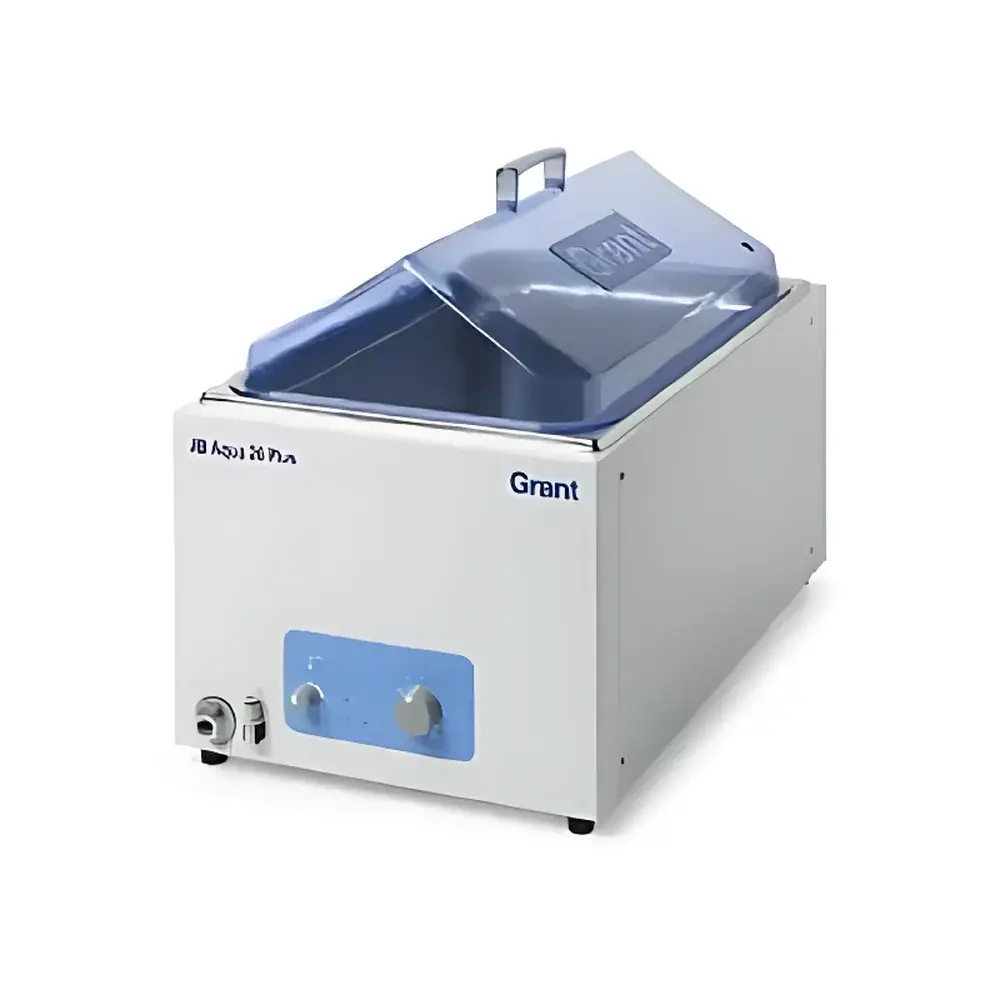
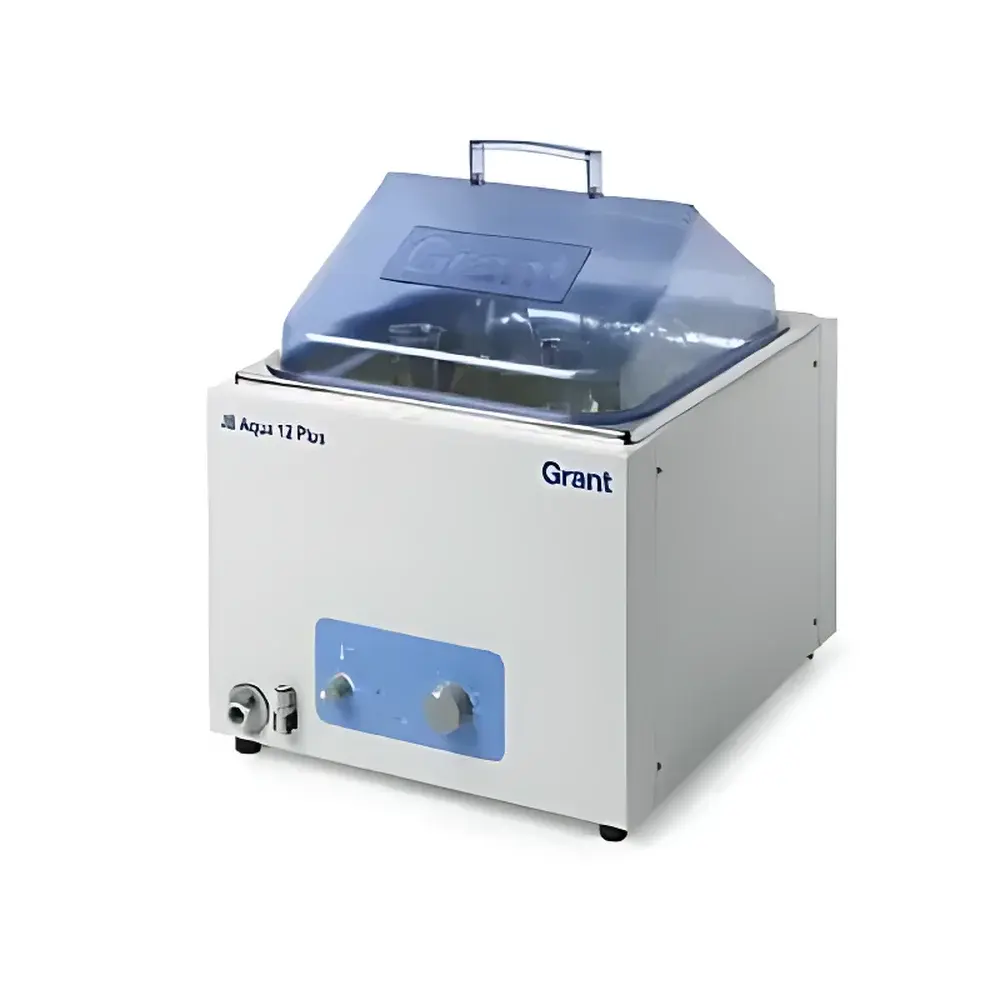
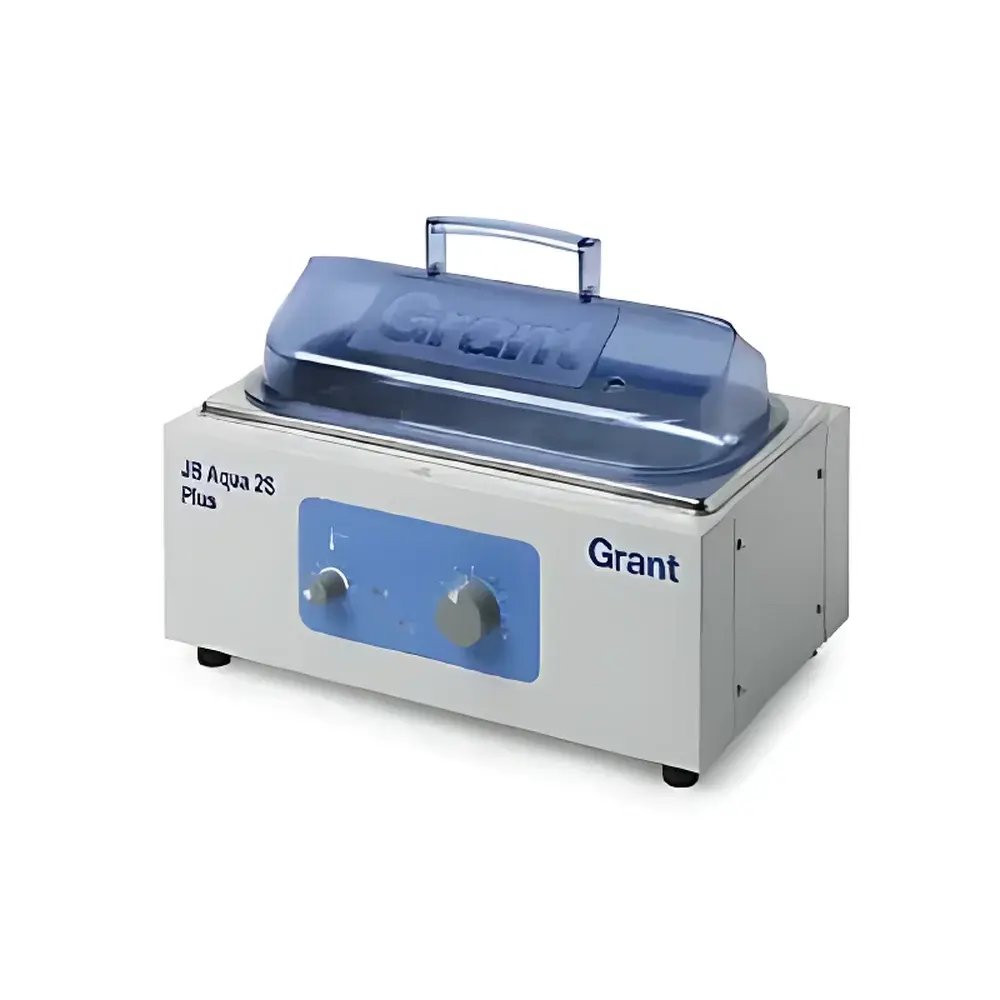
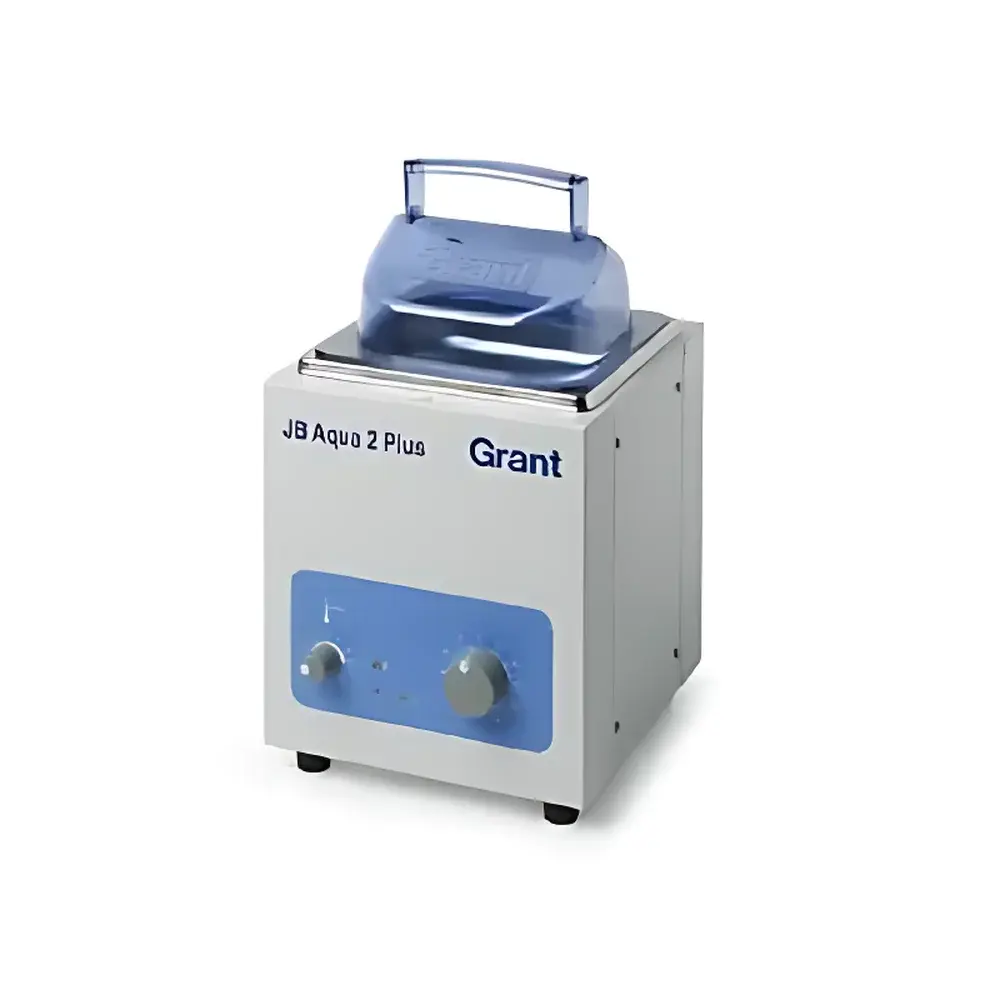
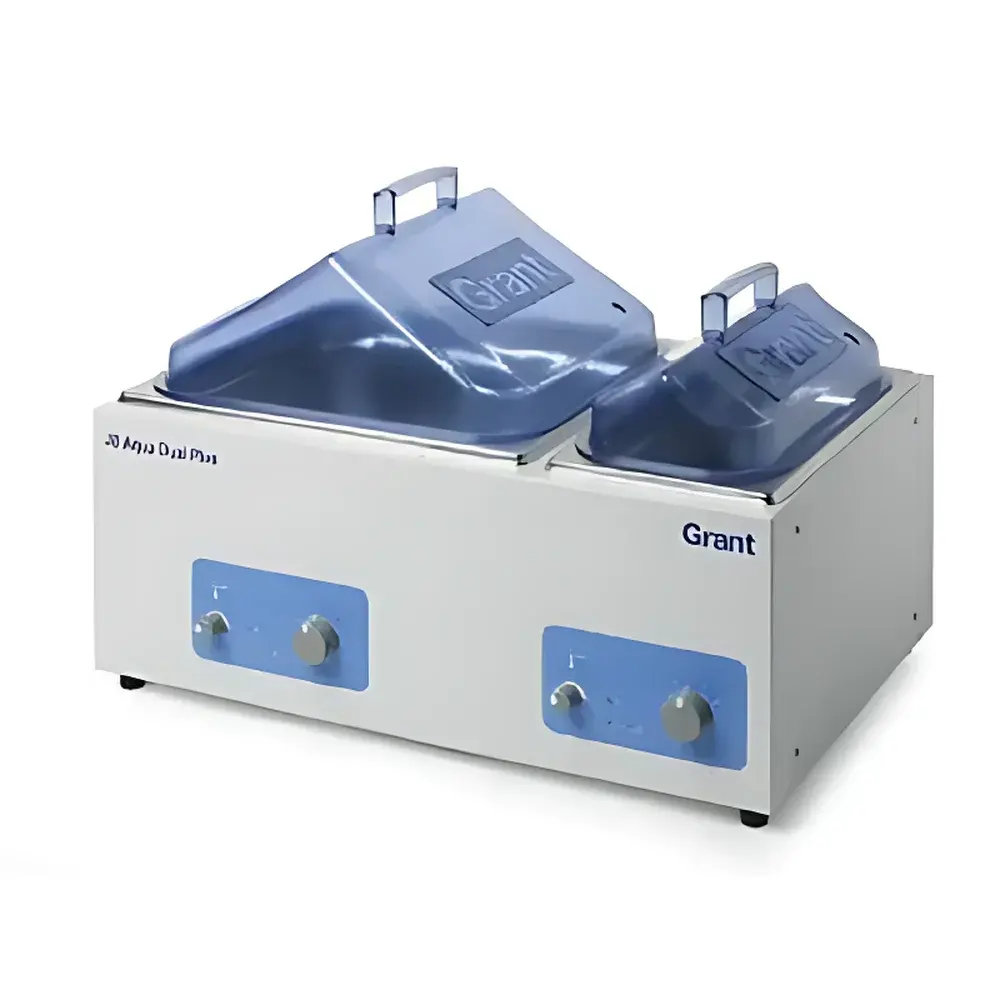
Grant JB Aqua Plus Economical Circulating Water Bath
| Brand | Grant |
|---|---|
| Origin | UK |
| Model | JB Aqua Plus |
| Temperature Range | Ambient +5°C to 98°C |
| Stability | ±1.0°C |
| Setpoint Resolution | 0.1°C |
| Control Type | Analog Dial |
| Heating Power | 0.13–2.1 kW (model-dependent) |
| Chamber Volume | 2–34 L (single) or 5+12 L (dual) |
| Construction | Stainless Steel Interior & Exterior |
| Safety Features | Adjustable Over-Temperature Cut-Off, Dry-Run Protection |
| Standard Accessories | Polycarbonate Dome Lid, Insulated Base |
| Drain Valve | Optional on JB Aqua 12 Plus, 18 Plus, 26 Plus, 34 Plus, and Dual Plus models |
| Compliance | CE-marked, designed per IEC 61010-1 for laboratory use |
Overview
The Grant JB Aqua Plus Economical Circulating Water Bath is a precision-engineered, entry-level temperature-controlled bath system designed for routine laboratory applications requiring stable thermal environments from ambient +5°C up to 98°C. Utilizing resistive heating elements combined with passive convection and optional circulation (via external pump compatibility), the JB Aqua Plus maintains thermal uniformity across its stainless steel tank through optimized heat distribution and low-thermal-mass insulation. Its analog dial interface provides intuitive, tactile setpoint adjustment with 0.1°C resolution—ideal for users prioritizing operational simplicity without sacrificing repeatability. Engineered in the UK and CE-marked to IEC 61010-1, this series meets fundamental safety and electromagnetic compatibility requirements for general-purpose lab use in academic, QC, and industrial settings.
Key Features
- Robust 304 stainless steel construction—both interior tank and exterior housing—for long-term corrosion resistance and ease of decontamination.
- Analog temperature control with calibrated rotary dial, enabling rapid, tool-free setpoint changes between 10°C and 99°C.
- Multi-layer safety architecture: adjustable high-limit cut-off switch, dry-run protection sensor, and automatic power disengagement upon thermal anomaly detection.
- Standard polycarbonate dome lid (blue, transparent) minimizes evaporation and improves energy efficiency—mandatory for operation above 60°C per manufacturer guidelines.
- Insulated base reduces conductive heat loss to bench surfaces and enhances overall thermal stability.
- Select models (JB Aqua 12 Plus and larger) include an integrated drain valve for rapid, spill-free fluid exchange—introduced in 2010 to support high-throughput workflows.
- Modular accessory ecosystem—including tube racks (J2 series), elevated platforms (RS series), custom lids (AQL/LU/LF), and sample trays (AQBT/SBT)—enables application-specific configuration without third-party modification.
Sample Compatibility & Compliance
The JB Aqua Plus accommodates a wide range of sample formats—from microcentrifuge tubes (0.5 mL to 2.0 mL) to standard test tubes (10–30 mm diameter) and flasks—via interchangeable J2-series racks. Its open-bath geometry supports immersion of probes, sensors, reaction vessels, and enzymatic assay plates. All units comply with CE marking requirements under Directive 2014/30/EU (EMC) and 2014/35/EU (LVD), and are constructed per IEC 61010-1:2010 for safety in laboratory electrical equipment. While not certified to GLP or ISO/IEC 17025 out-of-the-box, the system’s documented thermal stability (±1.0°C), traceable analog calibration, and audit-ready mechanical design support integration into validated workflows where formal qualification is performed by end users per internal SOPs.
Software & Data Management
The JB Aqua Plus operates as a standalone analog instrument with no embedded digital controller, firmware, or data logging capability. This architecture eliminates software validation overhead and ensures deterministic behavior—critical in regulated environments where change control and cybersecurity risks must be minimized. Temperature monitoring and recording are accomplished externally using calibrated PT100 probes connected to independent data loggers (e.g., Grant Squirrel series) or SCADA systems. For labs requiring electronic records compliant with FDA 21 CFR Part 11, the analog interface necessitates manual entry into LIMS or ELN platforms, supported by user-defined calibration logs and maintenance records maintained per institutional GLP/GMP policies.
Applications
- Enzyme activity assays and protein denaturation studies requiring precise incubation at 37°C, 65°C, or 95°C.
- Cell culture reagent warming, media pre-equilibration, and cryovial thawing protocols.
- Viscosity reference baths for rotational viscometers and capillary rheometers.
- Calibration of liquid-in-glass thermometers and digital probe standards across the 10–99°C range.
- Accelerated stability testing of pharmaceutical excipients and cosmetic formulations.
- Support of ASTM D92 (flash point), ASTM D1500 (color), and ISO 3104 (kinematic viscosity) sample conditioning steps.
FAQ
Is the JB Aqua Plus suitable for GMP-regulated environments?
Yes—when operated within its specified thermal stability window (±1.0°C) and supported by documented calibration, preventive maintenance, and user-defined SOPs. Its analog-only design avoids software validation requirements.
Can it be used with oil or other non-aqueous fluids?
No—this unit is engineered exclusively for water-based media. Use of oils, glycols, or solvents may damage seals, accelerate corrosion, and void safety certifications.
What is the maximum recommended operating temperature without a lid?
Operation above 60°C requires the standard polycarbonate dome lid to prevent excessive evaporation, thermal drift, and potential scald hazards.
Are drainage fittings included across all models?
Drain valves are factory-installed only on JB Aqua 12 Plus, 18 Plus, 26 Plus, 34 Plus, and Dual Plus variants. Smaller models (2 Plus, 5 Plus) require external siphoning or manual decanting.
Does Grant provide NIST-traceable calibration certificates?
Grant supplies factory calibration verification reports; NIST-traceable certification must be obtained through authorized third-party metrology providers per user-specific quality system requirements.



