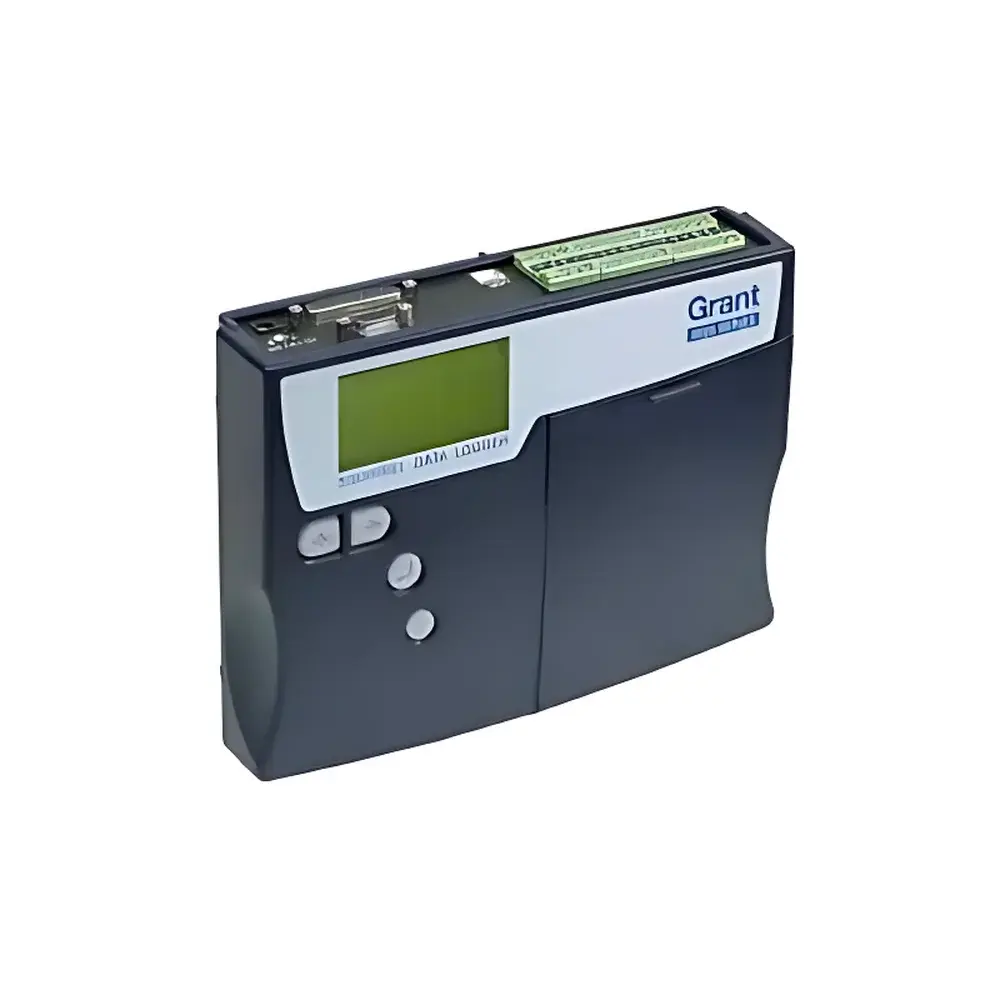
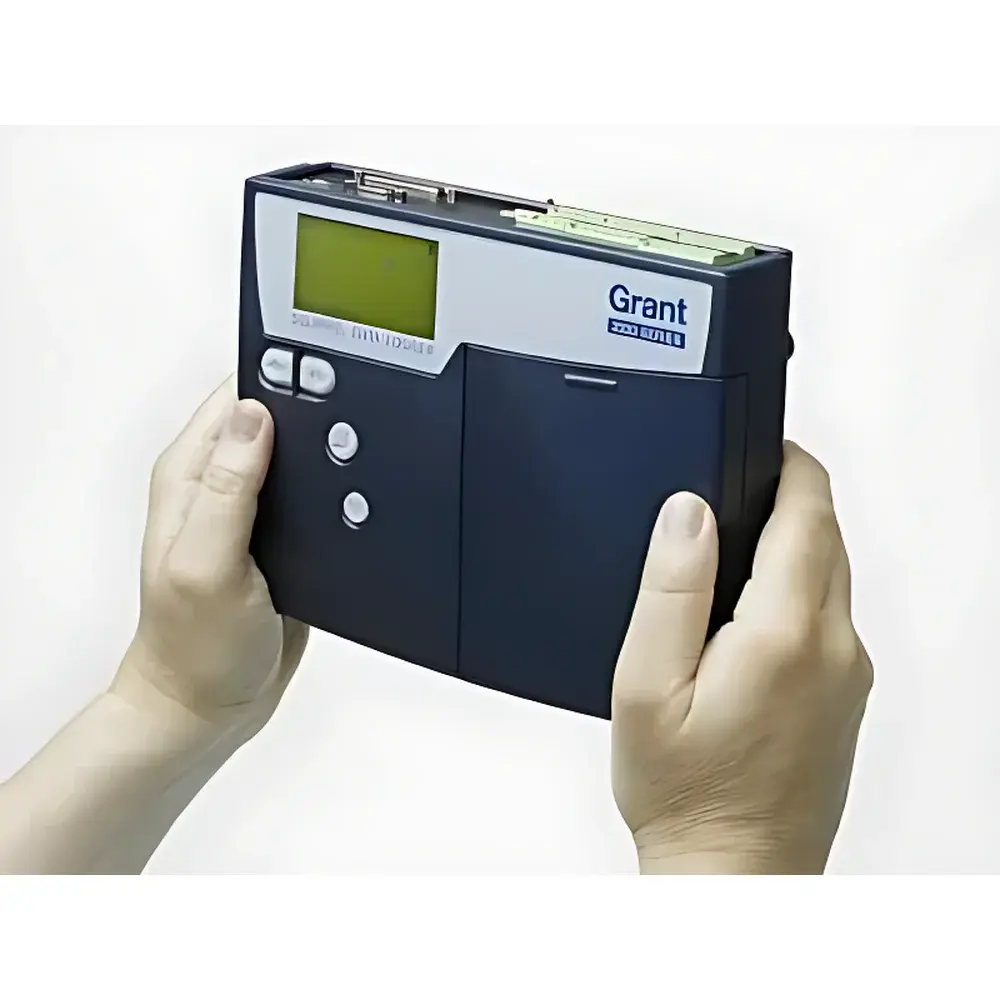
Grant Squirrel SQ2020 Universal Data Acquisition Unit
| Brand | Grant |
|---|---|
| Origin | UK |
| Model | SQ2020 |
| Analog Input Channels | 8 differential or 16 single-ended |
| ADC Resolution | 24-bit sigma-delta |
| Sampling Rate | up to 100 Hz (on 2 channels, SQ2020-2F8 only) |
| Internal Memory | 128 MB (up to 14 million readings) |
| Expandable Storage | MMC/SD card (up to 1 GB) |
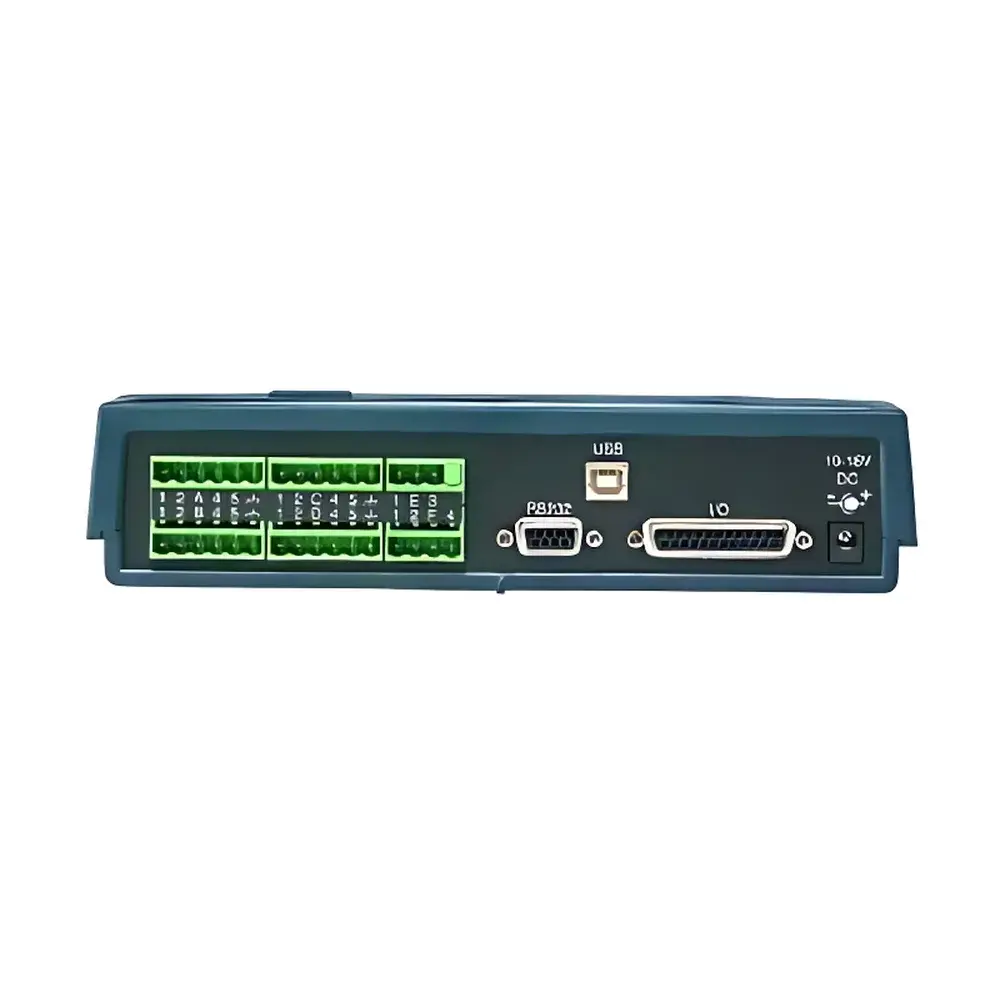
| Communication Interfaces | USB 1.1/2.0, RS232 (auto-baud up to 115.2 kbps), Ethernet (SQ2020-2F8 only, 10/100Base-T TCP/IP) |
| Display | 128 × 64 dot-matrix graphical LCD |
| Power | 6 × AA alkaline batteries or 10–18 VDC external supply |
| Operating Temperature | −30 °C to +65 °C, ≤95% RH non-condensing |
| Compliance | CE, RoHS, EN 61326-1 (EMC for industrial environments) |
Overview
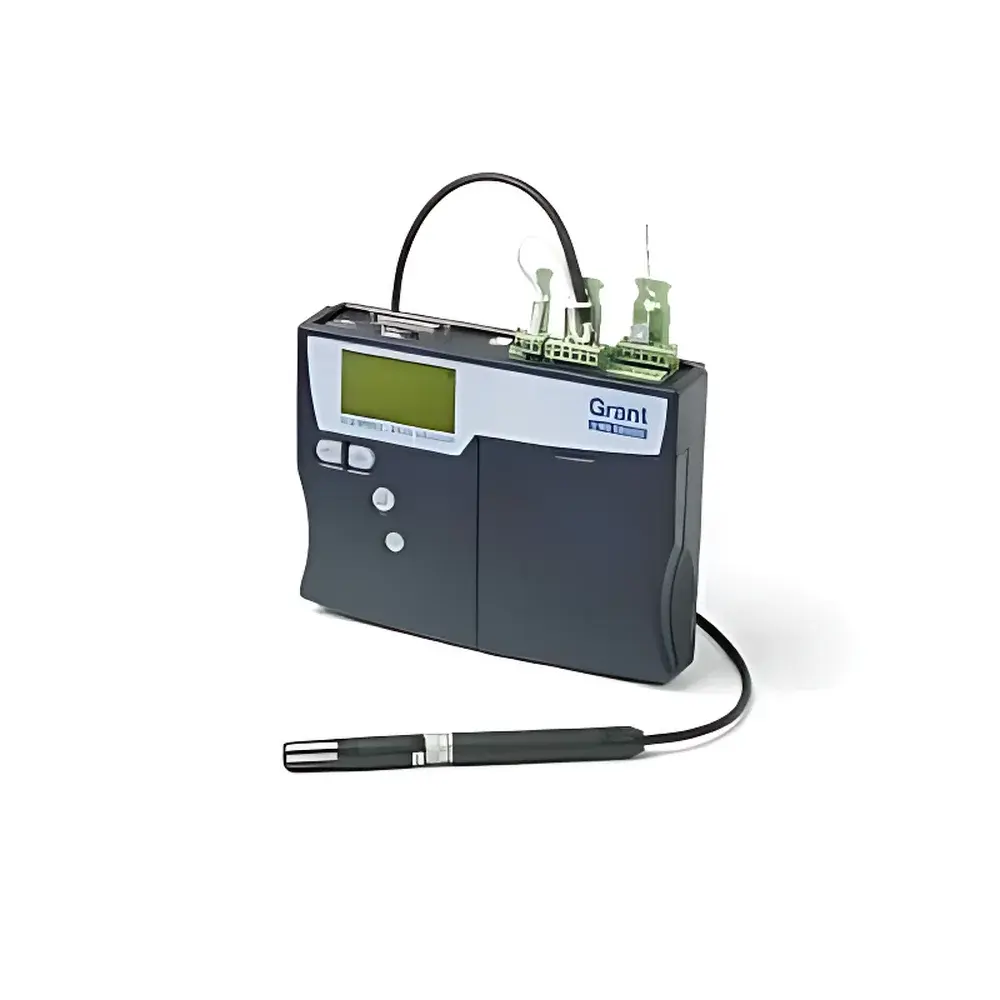
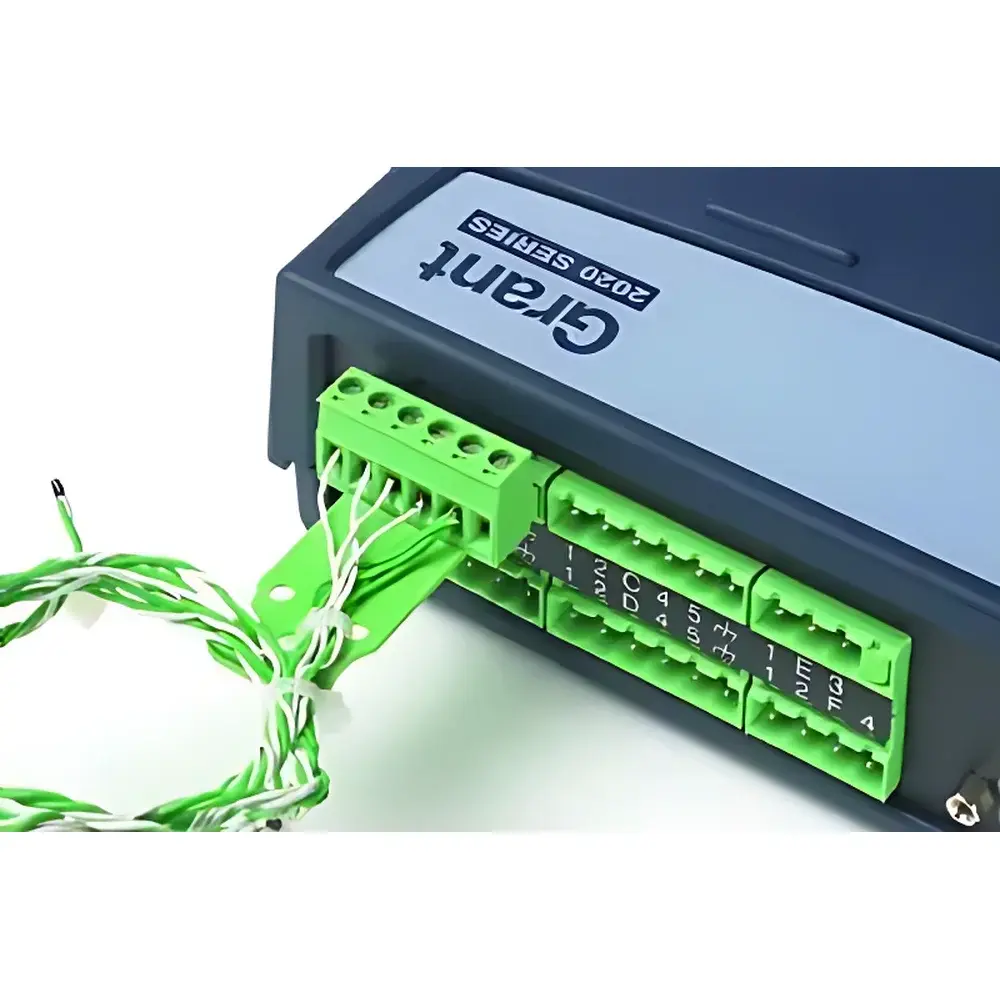
The Grant Squirrel SQ2020 Universal Data Acquisition Unit is a high-integrity, field-deployable data logger engineered for precision measurement and long-term unattended operation across laboratory, industrial process, and environmental monitoring applications. Built upon a dual-processor architecture with multiple synchronized 24-bit sigma-delta analog-to-digital converters (ADCs), the SQ2020 delivers true simultaneous sampling across mixed-signal inputs — enabling rigorous temporal correlation between dynamic physical parameters such as temperature, pressure, voltage, current, and resistance. Its modular input configuration supports both standard and sensor-specific signal conditioning without external hardware, including direct interfacing with thermocouples (K, J, T, R, S, B, N, C, D types), Pt100/Pt1000 RTDs (2-, 3-, or 4-wire, up to four sensors on the 2F8 variant), thermistors (U/Y-type, custom curves), 4–20 mA transmitters, and low-level mV signals. Designed for deployment in demanding environments, the unit operates reliably from −30 °C to +65 °C and meets EN 61326-1 for electromagnetic compatibility in industrial settings.
Key Features
- True simultaneous sampling architecture with independent ADCs per channel group — eliminates phase skew in multi-parameter time-series analysis
- Configurable analog input modes: 8 differential or 16 single-ended channels; optional 3-/4-wire RTD support (SQ2020-2F8 only)
- High-resolution 24-bit sigma-delta conversion with ±0.05% of reading + 0.025% of range accuracy (at 25 °C) and 100 dB common-mode rejection
- Flexible sampling strategy: programmable per-channel rates from 0.1 Hz to 100 Hz (2-channel burst mode on 2F8); 20 Hz maximum on SQ2020-1F8
- Onboard computing engine: up to 16 derived (virtual) channels using arithmetic, statistical, and conditional functions applied to raw inputs
- Integrated 128 × 64 graphical LCD with intuitive 4-button keypad — enables full configuration, real-time value display, and alarm status review without PC connectivity
- Dual storage architecture: 128 MB non-volatile internal memory (capacity: ~14 million timestamped readings) + hot-swappable MMC/SD card (up to 1 GB) for archival or configuration transfer
- Robust I/O expansion: 4 open-drain FET outputs (18 V, 0.1 A), 8 digital status inputs or 1×8-bit binary interface, plus dual high-speed pulse counters (64 kHz) and dual low-speed counters (100 Hz)
Sample Compatibility & Compliance
The SQ2020 accommodates a broad spectrum of passive and active sensors without requiring external signal conditioners. It natively supports thermocouple types K, J, T, R, S, B, N, C, and D across their full specified ranges (e.g., K: −200 °C to +1372 °C; B: +250 °C to +1820 °C). For resistance-based sensing, it accepts 2-wire RTDs (Pt100/Pt1000) across −200 °C to +850 °C, and extends to 3-/4-wire configurations on the 2F8 model for improved lead-wire error compensation. Voltage inputs span ±0.075 V to ±25 V full scale; current inputs (via included 10 Ω shunts) cover −30 mA to +30 mA and 4–20 mA loops. All analog measurements adhere to ISO/IEC 17025 traceability principles when used with calibrated reference standards. The device carries CE marking and complies with EN 61326-1 (industrial EMC), RoHS Directive 2011/65/EU, and low-voltage directive 2014/35/EU. While not certified for SIL or ATEX environments, its robust isolation and overvoltage protection (±30 V on analog inputs, reverse-polarity and overvoltage protection on DC supply) support integration into validated GxP systems under user-defined risk assessment.
Software & Data Management
Configuration, data retrieval, and post-processing are managed via SquirrelView — a Windows-based application supplied with every unit. SquirrelView provides full read/write access to onboard memory, real-time telemetry visualization, alarm setup, and scheduled logging profiles. It supports export to CSV, Excel, and XML formats, preserving metadata including timestamps, channel names, units, and calibration coefficients. Optional SquirrelView Plus adds advanced features: automated report generation (PDF/HTML), SQL database archiving, FTP/SFTP scheduled upload, email alerting on threshold violation, and 21 CFR Part 11-compliant audit trail (user login, parameter change history, data export logs) when deployed with Windows domain authentication and encrypted local storage. All firmware updates and configuration templates can be loaded directly from SD card — eliminating dependency on host PC during field reconfiguration. Data integrity is ensured through cyclic redundancy checks (CRC-32) on all stored records and write-verification protocols during SD card transfers.
Applications
- Continuous environmental monitoring: temperature/humidity profiling in cleanrooms, cold chain validation (pharmaceutical logistics), and HVAC system commissioning
- Industrial process validation: thermal mapping of ovens, autoclaves, and sterilizers per ISO 13485 and FDA guidance
- Research-grade instrumentation: synchronised acquisition of strain gauge outputs, thermocouple arrays, and load cell signals in mechanical testing labs
- Energy efficiency audits: real-time power consumption tracking via 4–20 mA current loop interfaces with flow meters and motor controllers
- Long-term structural health monitoring: embedded sensor networks measuring vibration, corrosion potential, and concrete curing temperature
- Education and training platforms: modular DAQ system for teaching instrumentation fundamentals, signal conditioning, and data integrity practices
FAQ
Does the SQ2020 support Modbus or other industrial fieldbus protocols?
No — the SQ2020 does not implement native Modbus RTU/TCP, Profibus, or CANopen. It communicates via ASCII-based serial commands over RS232/USB or TCP/IP socket connections. Third-party SCADA systems may integrate via custom drivers using its documented command set.
Can I use the SQ2020 in hazardous areas?
The unit is not intrinsically safe nor ATEX/IECEx certified. It must be installed in non-hazardous zones or within appropriately rated enclosures if deployed near flammable atmospheres.
Is calibration certificate included with purchase?
A factory calibration report (traceable to UKAS-accredited standards) is provided. Full ISO/IEC 17025 calibration with uncertainty budgets is available as a paid service through Grant’s accredited metrology lab.
How is time synchronization handled across distributed units?
Each SQ2020 maintains an internal real-time clock with ±2 ppm accuracy. The 2F8 model supports NTP synchronization over Ethernet; RS232/USB-connected units may be time-stamped via host PC clock sync during data download.
What is the maximum cable length supported for 4-wire RTD measurements?
For optimal accuracy, total loop resistance should remain below 10 Ω per lead. With typical 24 AWG copper (0.084 Ω/m), this corresponds to ≤60 m one-way distance. Shielded twisted-pair cabling is recommended for noise immunity.