
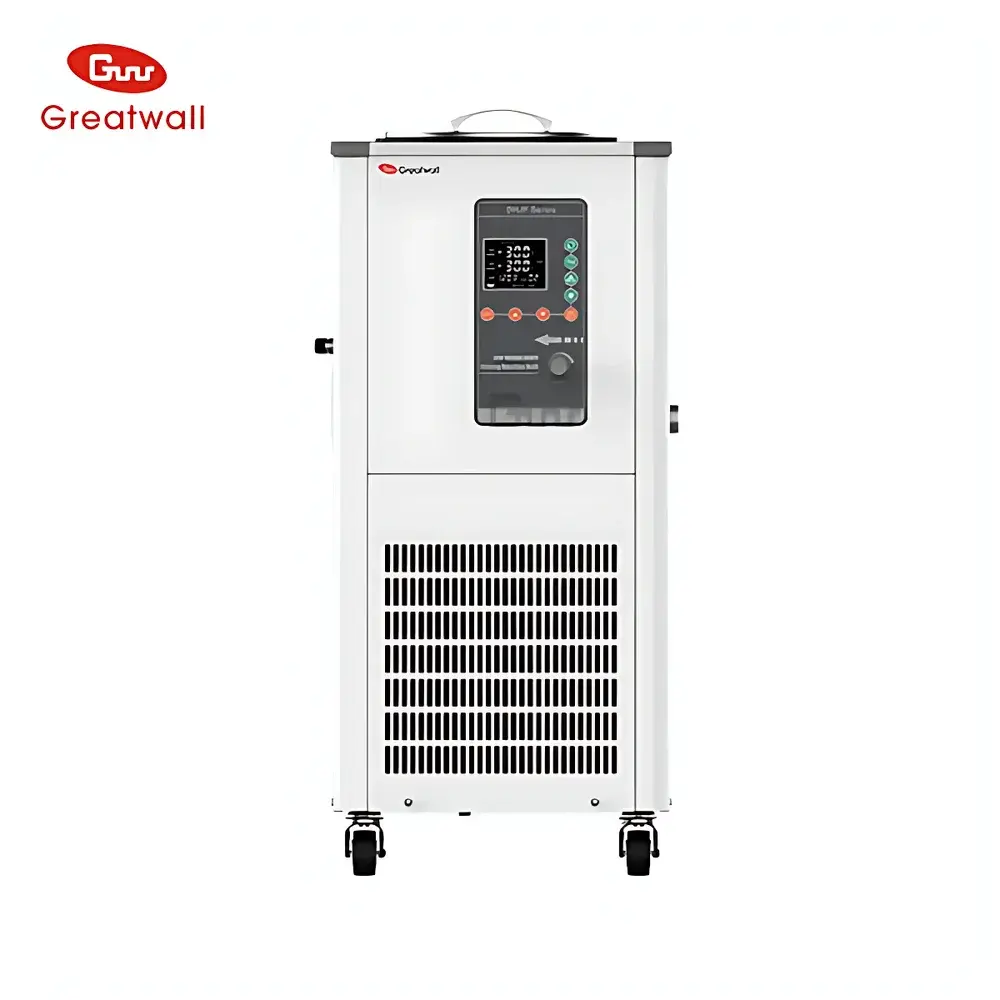
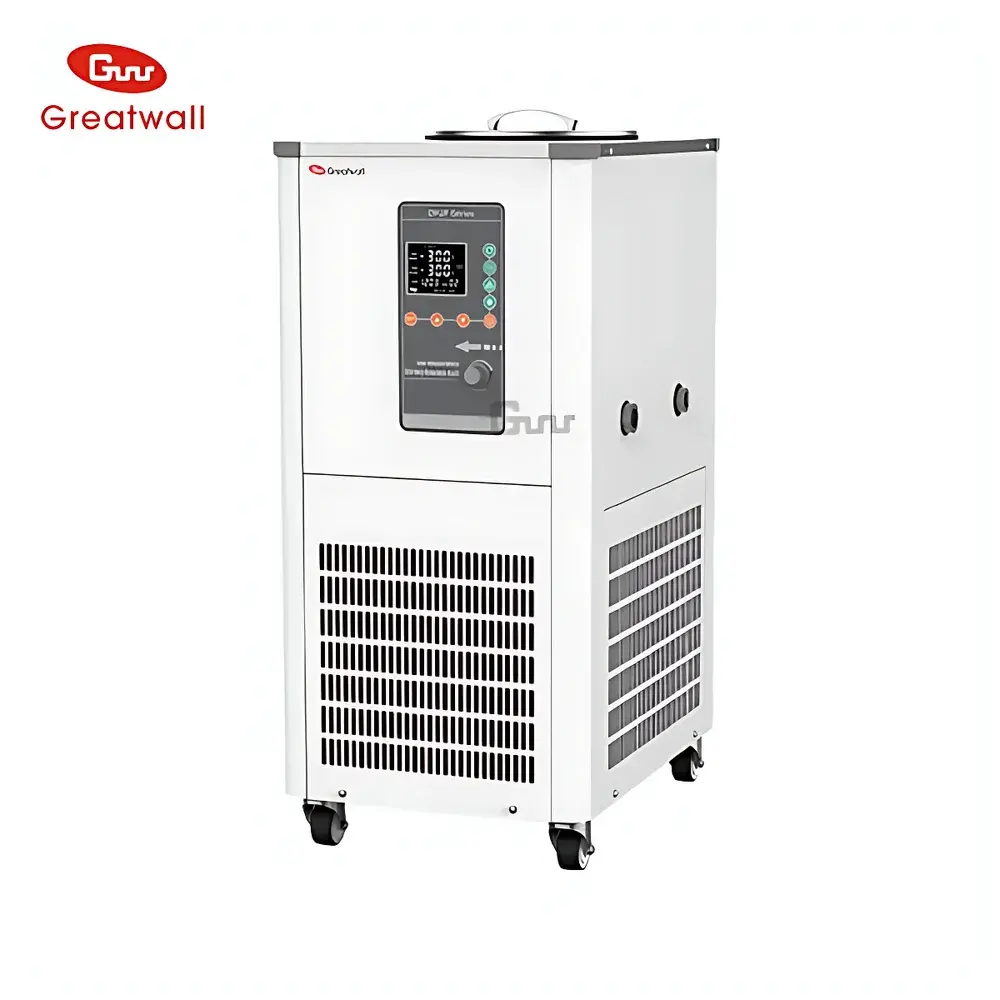
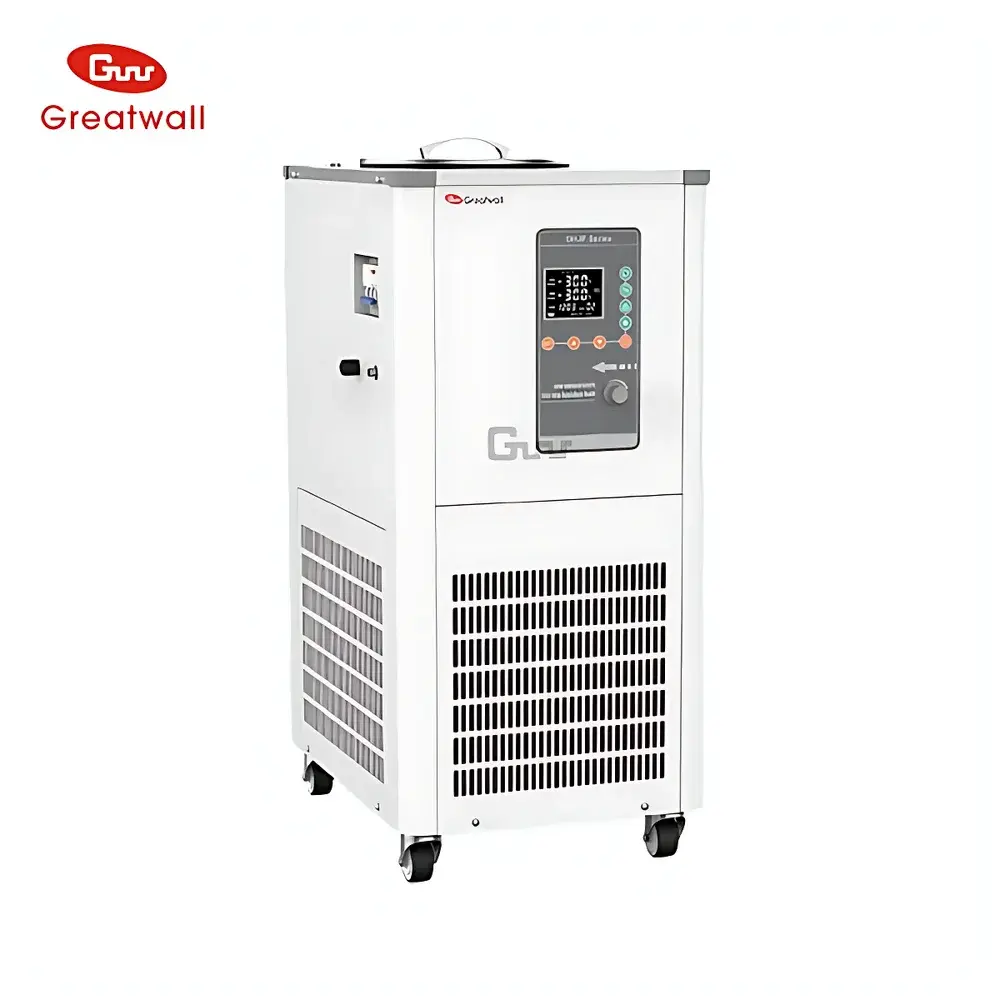
The Great Wall DHJF-3010 Low-Temperature Constant-Temperature Stirring Bath
| Brand | The Great Wall |
|---|---|
| Origin | Henan, China |
| Manufacturer Type | Direct Manufacturer |
| Equipment Type | Circulating Constant-Temperature Bath |
| Circulation Mode | Internal & External Circulation |
| Temperature Control | Dual-mode (Refrigeration & Heating) |
| Bath Volume | 10 L |
| Temperature Range | −30 °C to +99 °C |
| Temperature Stability | ±0.5 °C |
| Power Supply | 220 V~, 50 Hz |
Overview
The Great Wall DHJF-3010 Low-Temperature Constant-Temperature Stirring Bath is an integrated laboratory thermal management system engineered for precise temperature control and active mixing in demanding chemical synthesis, biochemical assay, and physical property characterization workflows. Operating on a dual-mode thermoelectric and compressor-based refrigeration architecture coupled with resistive heating elements, the unit maintains stable setpoint temperatures across a broad operational range—from cryogenic cooling at −30 °C to near-boiling conditions at +99 °C. Its core function is to serve either as a self-contained reaction bath—directly immersing flasks, test tubes, or jacketed reactors—or as an external thermal source/sink via its dual-port circulation system. This enables seamless integration with rotary evaporators, spectrophotometer sample compartments, calorimeters, or other externally jacketed equipment requiring regulated heat transfer. The system implements closed-loop PID temperature regulation with real-time feedback from a calibrated Pt100 sensor mounted within the bath fluid, ensuring high reproducibility and minimal overshoot during ramping or steady-state operation.
Key Features
- Integrated magnetic stirring mechanism with adjustable speed (0–1200 rpm), enabling simultaneous temperature control and homogeneous mixing of both bath medium and internal reaction vessels via coupling with standard PTFE-coated stir bars.
- Modular insulated lid with telescoping aperture adjustment—reduces solvent evaporation, minimizes ambient thermal exchange, and accommodates vessels ranging from 10 mL vials to 2 L round-bottom flasks.
- Dual-function circulation pump supporting internal recirculation (for uniform bath homogeneity) and external closed-loop delivery (up to 15 L/min flow rate, 0.3 MPa max pressure) to auxiliary instrumentation.
- Robust stainless-steel bath tank (304 grade) with corrosion-resistant coating, rated for use with water, ethanol/water mixtures, silicone oils, and low-toxicity heat-transfer fluids (e.g., ethylene glycol solutions).
- Comprehensive safety architecture including dry-run protection for heating elements, over-temperature cutoff (±5 °C deviation threshold), refrigerant pressure monitoring, and ground-fault circuit interruption (GFCI)-compliant power interface.
Sample Compatibility & Compliance
The DHJF-3010 supports glassware commonly used in synthetic and analytical laboratories—including borosilicate Pyrex® and Duran® flasks, condensers, reflux assemblies, and probe-based sensors—without thermal stress-induced failure when operated within specified temperature gradients. Its mechanical design conforms to IEC 61010-1:2010 safety standards for electrical equipment for measurement, control, and laboratory use. While not certified for Class I Division 1 hazardous locations, it meets general-purpose lab installation requirements under national electrical codes (NEC Article 500). The unit is suitable for environments operating under GLP-compliant protocols where documented temperature traceability, calibration intervals, and maintenance logs are maintained; however, it does not include factory-installed 21 CFR Part 11 audit trail functionality unless retrofitted with optional data-logging firmware and secure user authentication modules.
Software & Data Management
The DHJF-3010 operates via an embedded microcontroller with a backlit LCD interface supporting manual setpoint entry, real-time display of actual vs. target temperature, stirring speed, and system status flags (e.g., “Cooling Active”, “Heating Active”, “Alarm”). Optional RS485/Modbus RTU communication allows integration into centralized Lab Information Management Systems (LIMS) or SCADA platforms for remote monitoring and scheduled parameter logging. When paired with third-party software such as LabVIEW™ or MATLAB® via USB-to-serial adapters, users may implement custom PID tuning, multi-step temperature ramps, and time-stamped data export in CSV format. Calibration certificates traceable to NIM (National Institute of Metrology, China) are available upon request for ISO/IEC 17025-aligned quality systems.
Applications
- Controlled-rate crystallization studies in pharmaceutical intermediate purification.
- Enzyme kinetics assays requiring strict thermal stabilization between 4 °C and 40 °C.
- Catalytic hydrogenation reactions performed under inert atmosphere with cryogenic cooling pre-conditioning.
- Calibration of thermocouples, RTDs, and infrared pyrometers against NIST-traceable reference baths.
- Thermal cycling validation of polymer composite curing profiles in materials science labs.
- Support of low-temperature NMR sample prep by maintaining deuterated solvent baths at −20 °C prior to insertion.
FAQ
What types of heat-transfer fluids are compatible with the DHJF-3010?
Water, 30–50% aqueous ethylene glycol solutions, and low-viscosity silicone oils (up to 50 cSt at 25 °C) are recommended. Avoid chlorinated solvents, strong acids/bases, or fluids with flash points below 60 °C.
Can the unit maintain temperature stability during external circulation to a rotary evaporator?
Yes—when configured with insulated tubing and flow rates ≤8 L/min, the system sustains ±0.5 °C stability at the bath outlet under steady-state load, provided ambient temperature remains between 15–30 °C.
Is the magnetic stirrer powerful enough to rotate stir bars inside thick-walled jacketed reactors?
It delivers torque sufficient for standard 30 mm stir bars in vessels up to 1 L capacity with wall thickness ≤1.5 mm; for larger or heavily insulated reactors, an external overhead stirrer is advised.
Does the DHJF-3010 support programmable temperature ramps?
Not natively—the base controller supports only single-setpoint operation. Ramp functionality requires external programmable logic controllers (PLCs) or PC-based automation interfacing via Modbus.
What is the typical service interval for refrigerant recharge or compressor maintenance?
Under continuous operation at moderate loads (<70% duty cycle), preventive maintenance—including refrigerant pressure verification and condenser coil cleaning—is recommended every 18 months per manufacturer guidelines.
Related Products



