
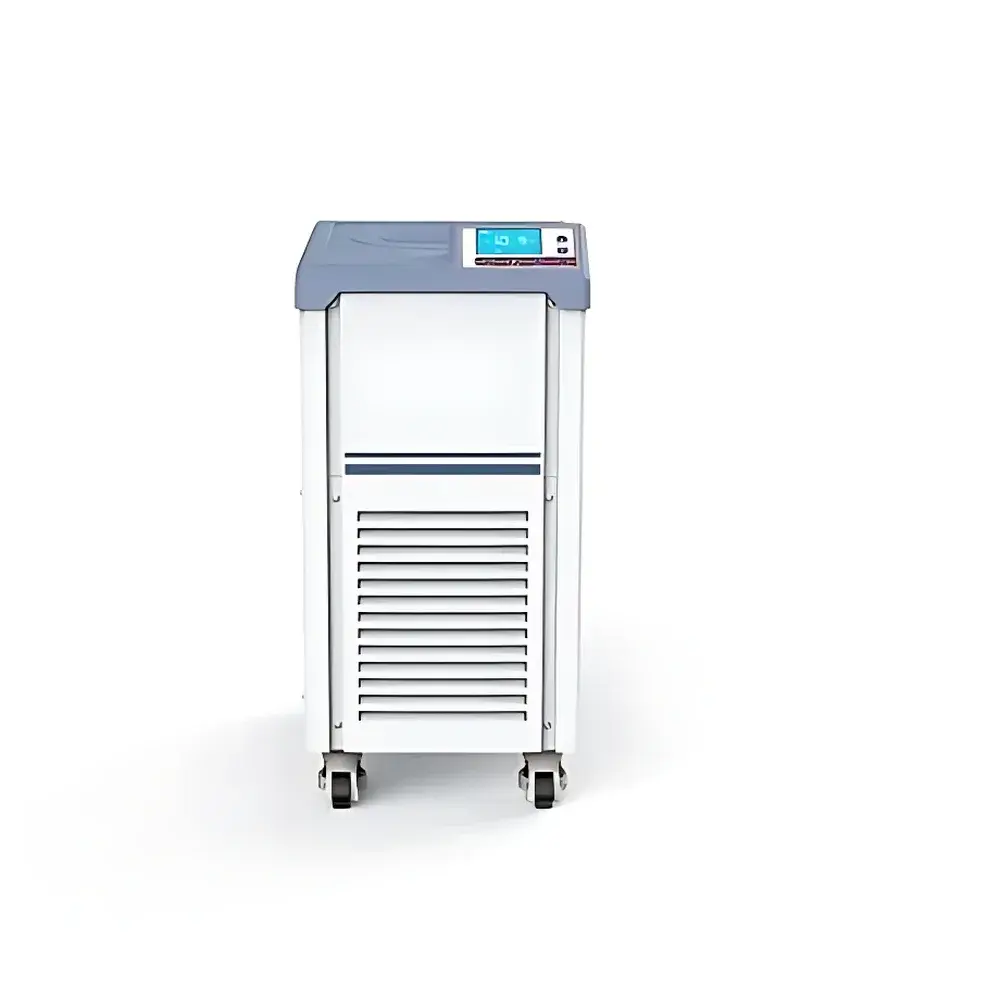
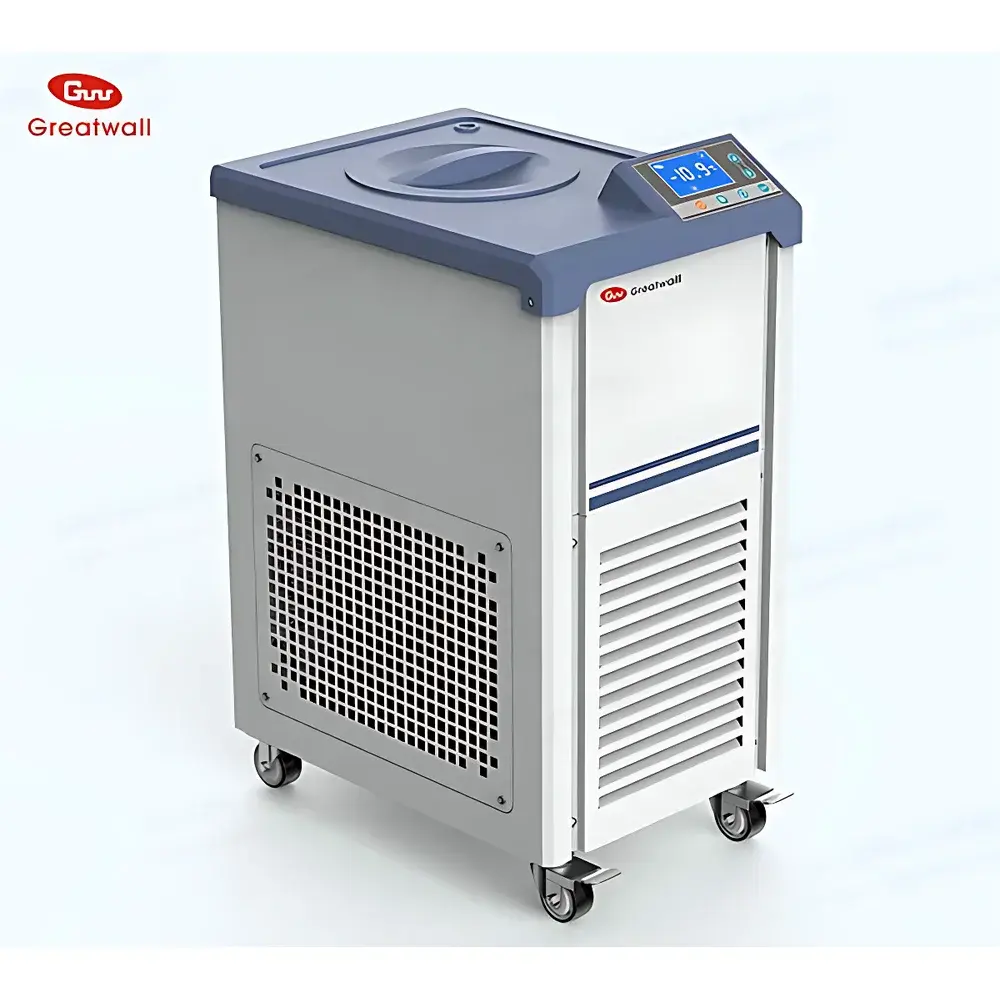
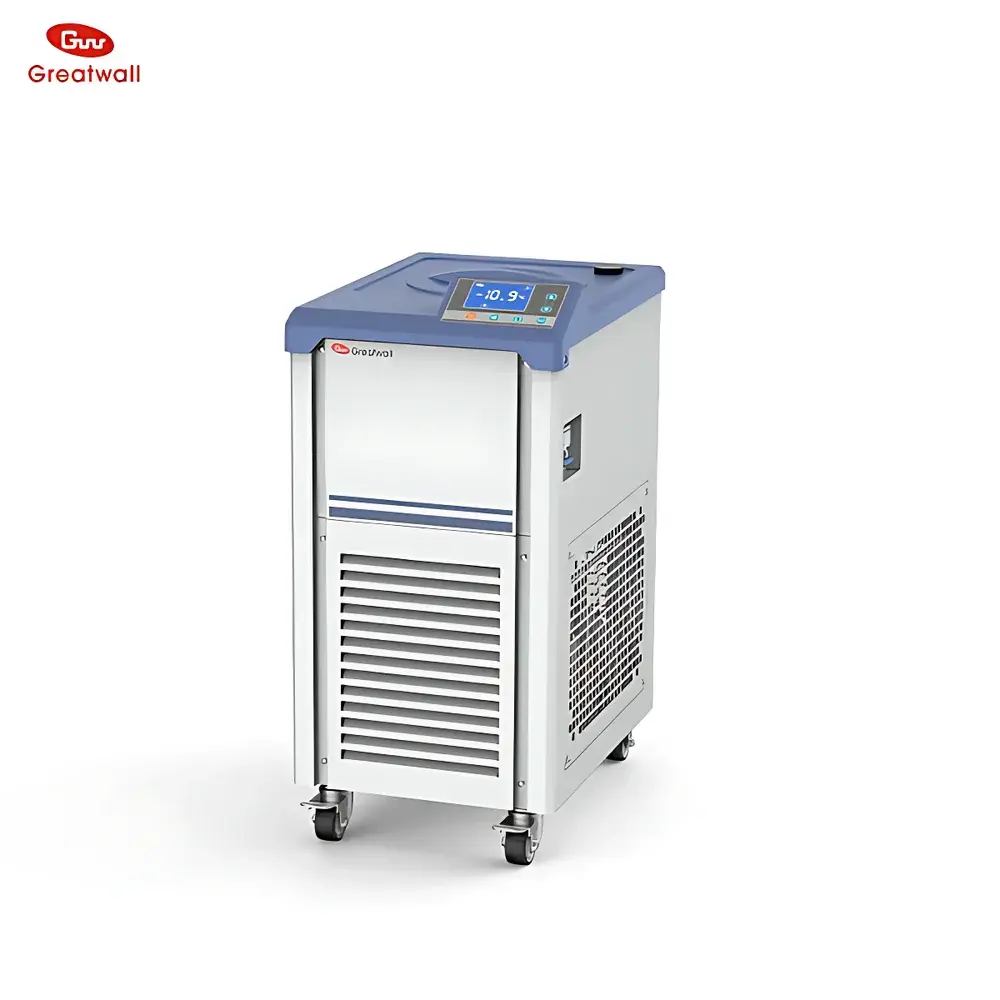
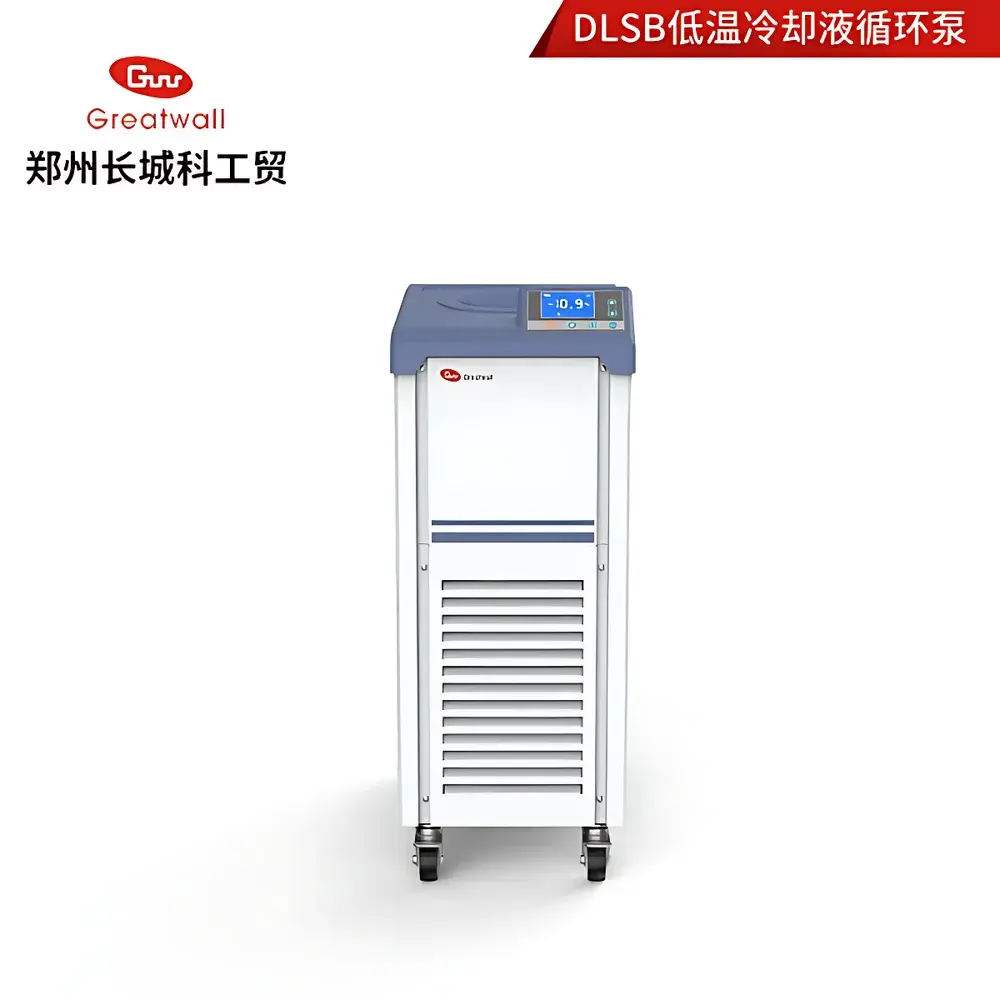
Great Wall DLSB-5/20D Vertical Low-Temperature Circulating Chiller
| Brand | Great Wall |
|---|---|
| Origin | Henan, China |
| Manufacturer Type | Direct Manufacturer |
| Product Category | Domestic |
| Model | DLSB-5/20D |
| Instrument Type | Vertical |
| Temperature Stability | ±2 °C |
| Temperature Setting Accuracy | ±2 °C |
| Bath Volume | 5 L |
| Heating Power | 635 W |
| Overall Weight | 41 kg |
| Dimensions (W×D×H) | 335 mm × 473 mm × 684 mm |
| Circulating Medium | Ethanol |
| Refrigerant | R404A (CFC-free) |
| Compressor | Hermetic Piston Compressor (Embraco) |
| Condenser | Air-Cooled Finned-Tube with Oxygen-Free Copper Coils |
| Evaporator | 304 Stainless Steel Coil-in-Bath Type |
| Pump | 304 Stainless Steel Shielded Low-Temperature Circulation Pump |
| Max. Flow Rate | 22 L/min |
| Max. Pressure | 1.1 bar |
| Protection Features | Delay Start, Overcurrent, Overheat, High-Pressure, Ground Fault |
| IP Rating | IP20 |
| Ambient Operating Range | 5–35 °C, ≤70% RH |
| Power Supply | 220 V~, 50 Hz |
| Communication Interface | RS485, MODBUS RTU Protocol |
| Controller | LCD Display with 0.1 °C Resolution, CE Certified |
Overview
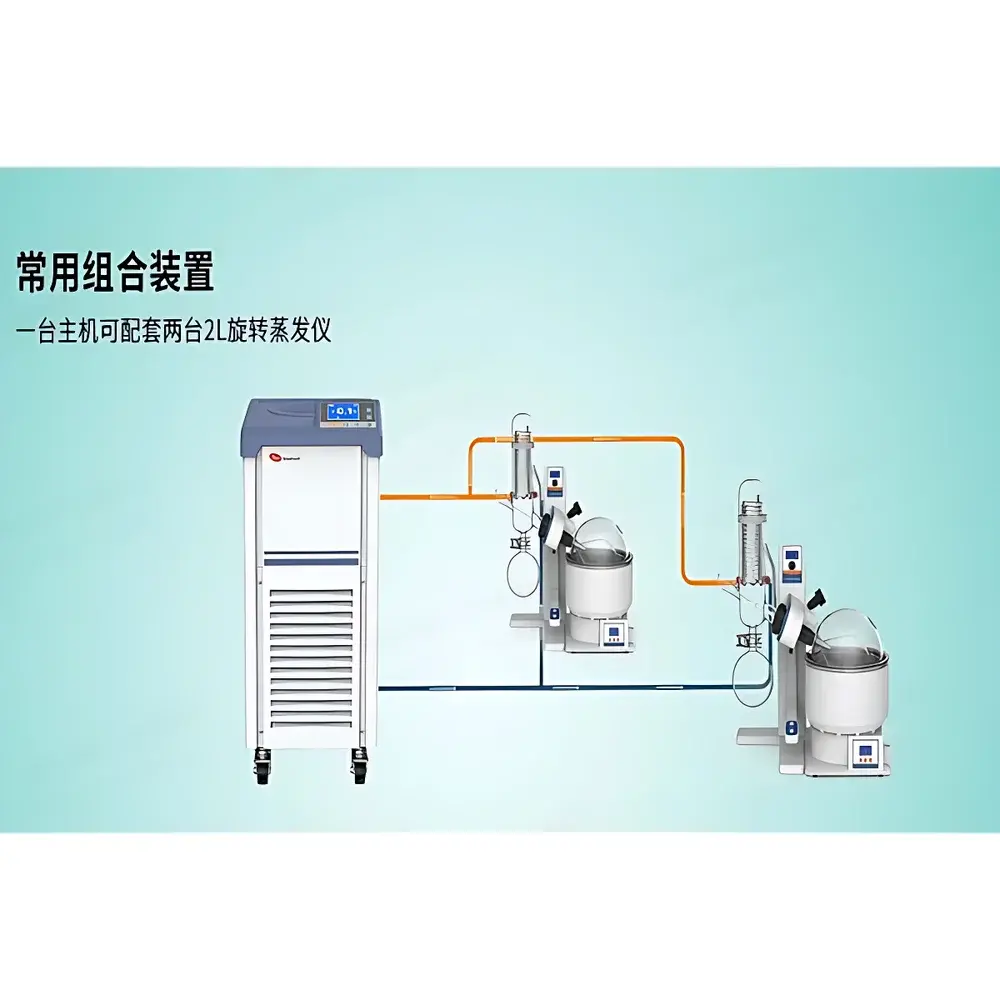
The Great Wall DLSB-5/20D Vertical Low-Temperature Circulating Chiller is an engineered thermal management solution designed for precise temperature control in laboratory-scale chemical synthesis, rotary evaporation, and reactor cooling applications. It operates on a closed-loop vapor-compression refrigeration cycle, utilizing a hermetically sealed Embraco piston compressor, air-cooled finned-tube condenser with oxygen-free copper heat exchange tubing, and an integrated 304 stainless steel coil-type evaporator submerged directly within the bath reservoir. This architecture ensures efficient heat transfer while eliminating risk of evaporator damage during cryogenic operation—even under partial freezing conditions of ethanol-based coolant. The chiller maintains stable operating temperatures between –20 °C and +25 °C, with a nominal minimum no-load temperature of –20 °C and temperature stability of ±2 °C across the working range. Its design prioritizes mechanical robustness, long-term operational reliability, and compatibility with standard lab infrastructure—including 1–2 units of 2 L rotary evaporators or 1–5 L jacketed reactors—without requiring external water cooling or chilled water supply lines.
Key Features
- Hermetic Embraco piston compressor for extended service life, low acoustic emission (<65 dB(A)), and consistent refrigeration performance under variable load conditions.
- Air-cooled condenser with proprietary expanded-tube brazing technology and high-efficiency oxygen-free copper coils, enabling superior thermal dissipation without dependency on facility water systems.
- Submerged 304 stainless steel coil evaporator integrated into the bath tank—designed to withstand localized freezing of ethanol coolant without structural compromise or refrigerant leakage.
- Stainless steel (AISI 304) circulation pump with electromagnetic shielding, rated for continuous operation at –20 °C and compatible with organic solvents including ethanol, methanol, and ethylene glycol–water mixtures.
- LCD controller with Pt100 sensor input, 0.1 °C display resolution, intuitive menu navigation, and CE-certified electrical safety compliance per EN 61010-1.
- Standard RS485 interface supporting MODBUS RTU protocol for integration into centralized lab monitoring systems, SCADA platforms, or LIMS-controlled environments.
- Comprehensive multi-layer protection system including delayed startup, overcurrent cutoff, high-pressure shutdown, ground fault detection, and thermal overload sensing—fully documented in the technical manual for GLP/GMP traceability.
Sample Compatibility & Compliance
The DLSB-5/20D is validated for use with common low-viscosity, non-corrosive heat transfer fluids, primarily anhydrous ethanol (CAS 64-17-5), though other miscible coolants such as methanol or 30/70 ethylene glycol/water blends may be employed within specified concentration limits. All wetted components—including bath tank, evaporator, pump housing, and fluid pathways—are fabricated from AISI 304 stainless steel, ensuring resistance to oxidation and solvent-induced stress cracking. The unit complies with IEC 61000-6-3 (EMC Emission) and IEC 61000-6-2 (Immunity), and its controller meets CE marking requirements under the Low Voltage Directive (2014/35/EU) and EMC Directive (2014/30/EU). While not certified to ISO/IEC 17025 or FDA 21 CFR Part 11 out-of-the-box, its MODBUS-enabled data logging capability supports audit-ready integration when paired with compliant third-party software platforms adhering to ALCOA+ principles.
Software & Data Management
The embedded controller provides local setpoint adjustment, real-time temperature readout, and status indication for all safety interlocks. For remote supervision, the RS485 port enables bidirectional communication with host systems using standard MODBUS RTU registers (e.g., holding register 40001 for current bath temperature, 40002 for setpoint, 40003 for pump status). Users may configure polling intervals, alarm thresholds, and event-triggered data capture via external HMI or Python-based scripts. When deployed in regulated environments, timestamped operational logs—including start/stop cycles, temperature deviations exceeding ±1.5 °C, and fault code generation—can be exported for inclusion in equipment qualification (IQ/OQ/PQ) documentation packages. No proprietary software installation is required; interoperability is ensured through open industrial protocol support.
Applications
This chiller serves as a primary cold source in synthetic chemistry workflows where exothermic reaction control, condenser reflux maintenance, or cryogenic trapping is required. Typical use cases include: temperature-sensitive Grignard or organolithium reactions conducted in jacketed glass reactors; solvent removal via rotary evaporation under reduced pressure with condenser cooling down to –15 °C; low-temperature crystallization studies; calibration of thermocouples and RTDs in metrology labs; and auxiliary cooling for analytical instrumentation such as FTIR spectrometers or UV-Vis detectors requiring thermal stabilization. Its compact footprint and vertical orientation optimize benchtop space utilization in teaching labs, QC/QA facilities, and pilot-scale development suites.
FAQ
What is the recommended coolant for optimal performance at –20 °C?
Anhydrous ethanol is the manufacturer-recommended circulating medium for full-range operation. Its freezing point (–114 °C) and thermal conductivity ensure stable flow and efficient heat extraction at –20 °C without pump cavitation or viscosity-related pressure drop.
Can this unit be used with water-glycol mixtures?
Yes—ethylene glycol/water solutions up to 30% v/v are compatible, though maximum achievable temperature is limited to –15 °C due to elevated freezing point and reduced heat capacity.
Is the controller capable of recording temperature history?
No internal data logging memory is provided; however, continuous external logging is supported via MODBUS RTU polling at user-defined intervals (e.g., every 10 seconds) using industry-standard SCADA or LabVIEW-compatible drivers.
Does the unit require annual maintenance?
While no scheduled refrigerant servicing is needed under normal operation, biannual inspection of condenser fins for dust accumulation, verification of pump seal integrity, and validation of Pt100 sensor calibration against NIST-traceable references are recommended per ISO/IEC 17025 Annex A.3 guidelines.
What safety certifications does the DLSB-5/20D hold?
It carries CE marking demonstrating conformity with EN 61010-1 (Safety Requirements for Electrical Equipment for Measurement, Control, and Laboratory Use) and EN 61326-1 (EMC for Laboratory Equipment), verified by TÜV Rheinland test reports available upon request.



