
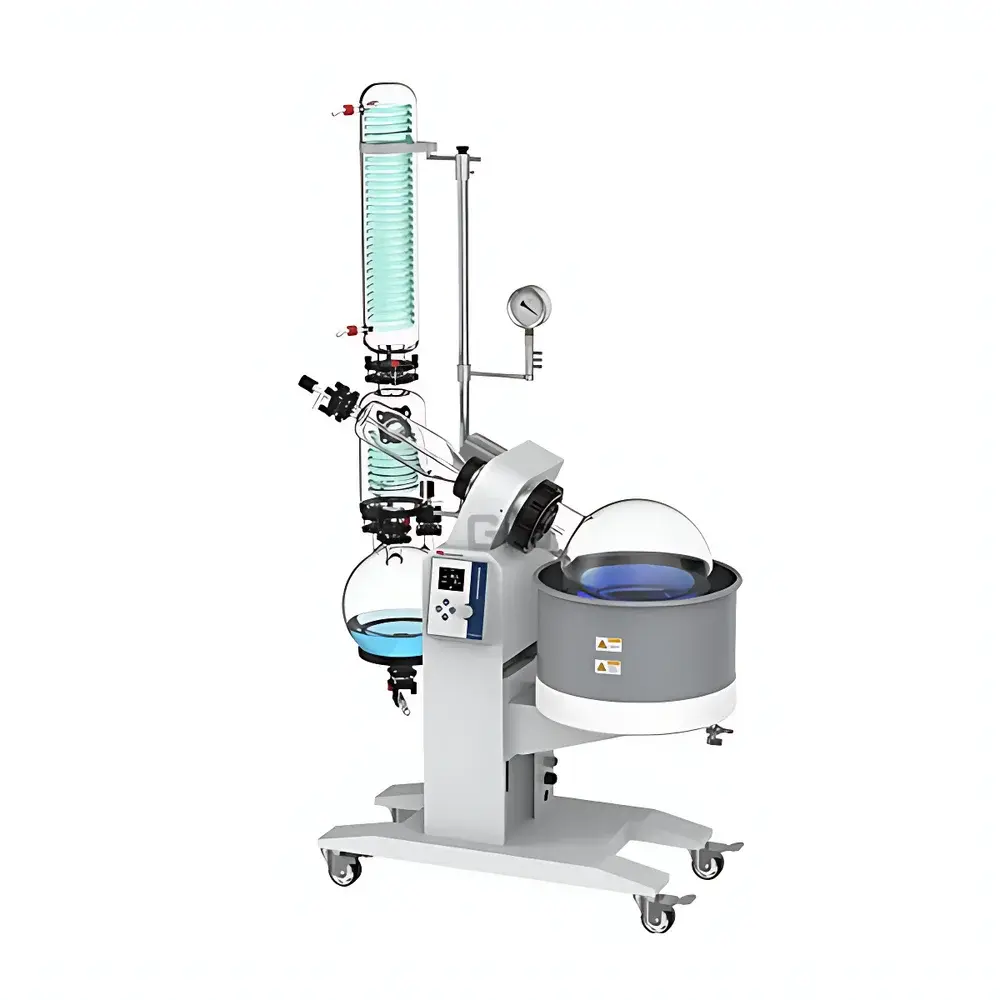
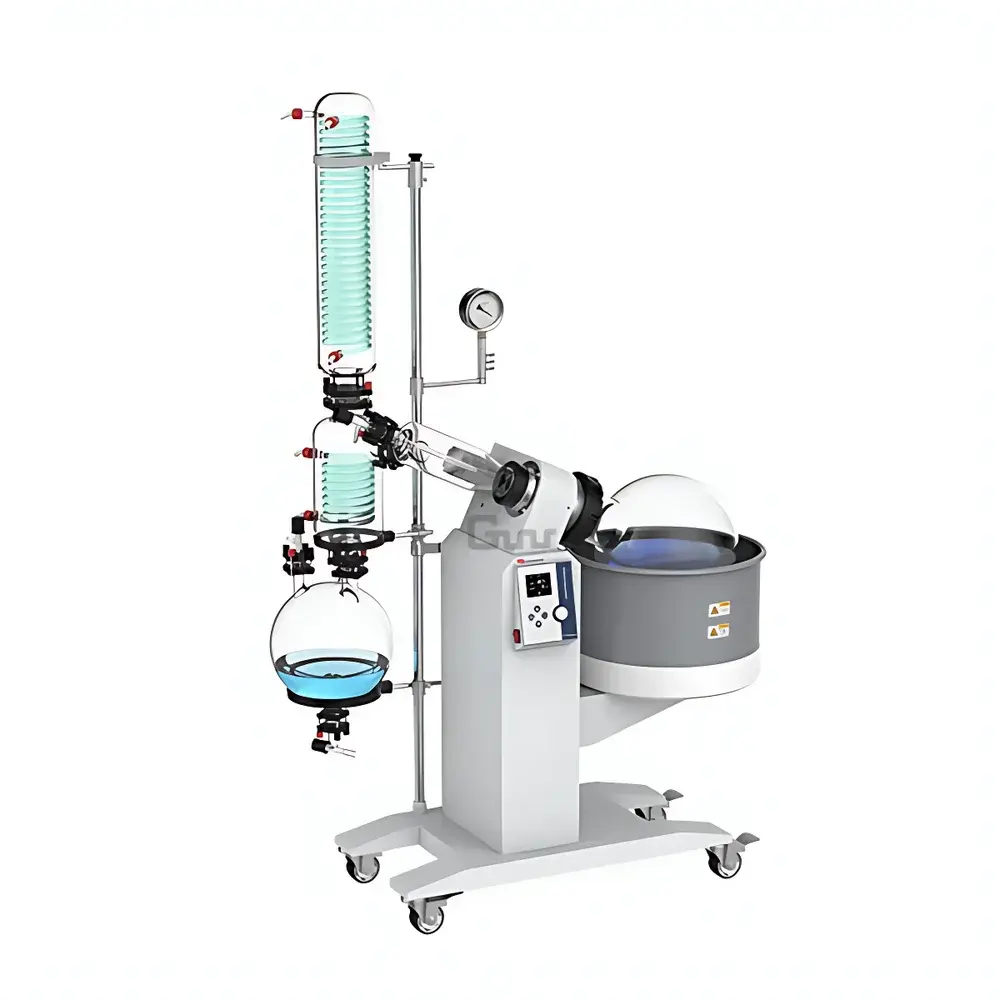
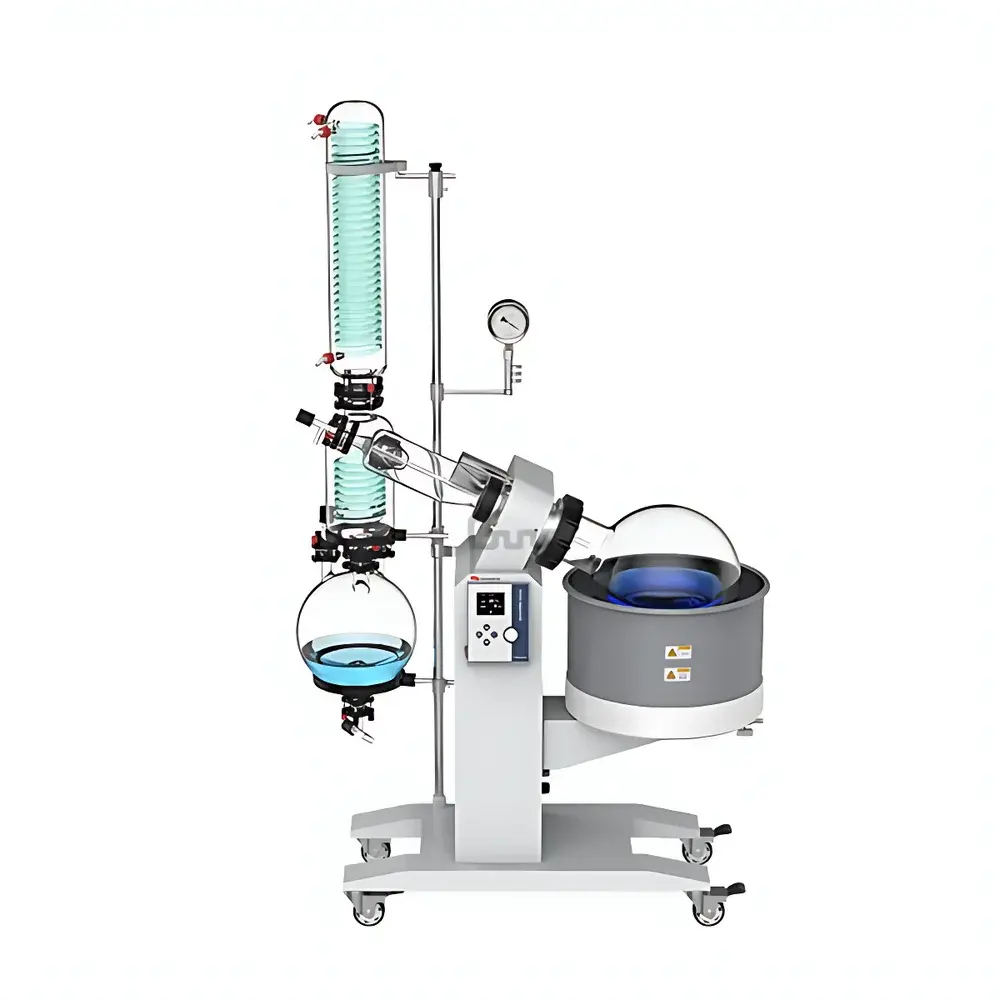
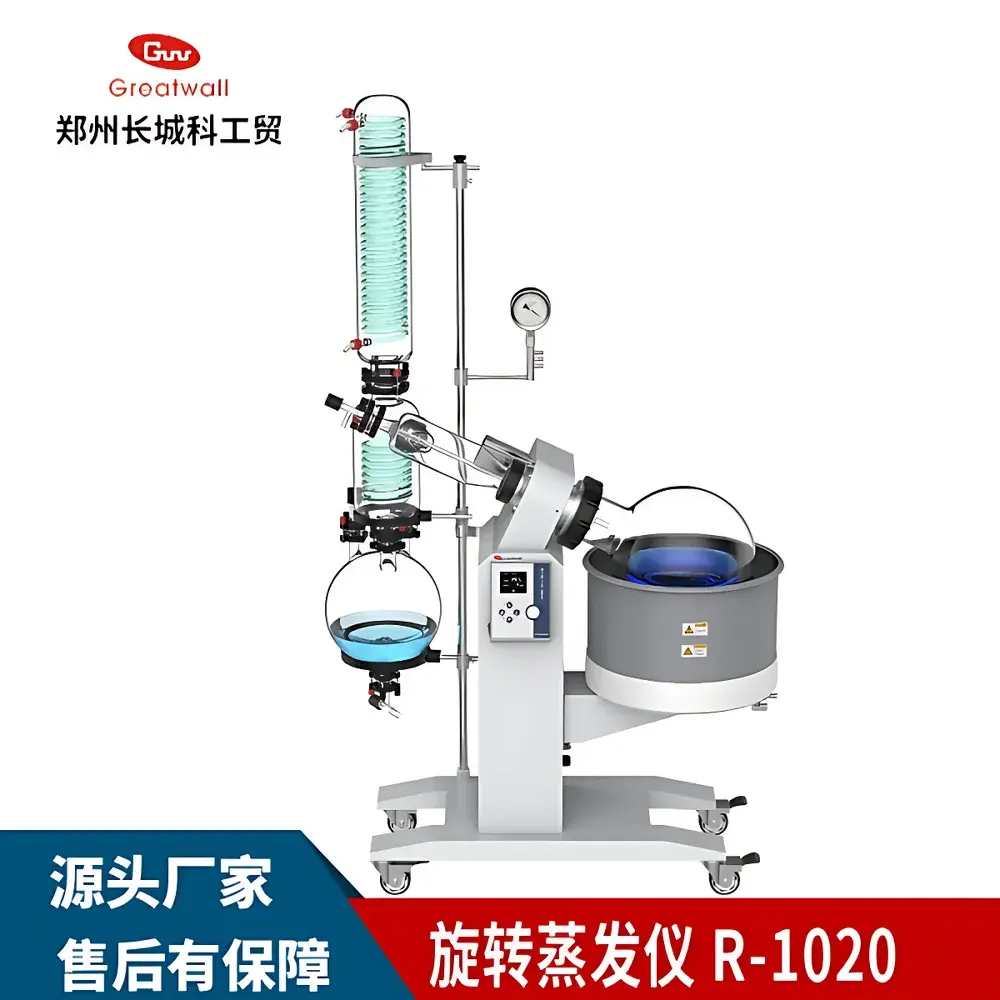
Great Wall R1020 Rotary Evaporator
| Brand | Great Wall |
|---|---|
| Origin | Henan, China |
| Manufacturer Type | Direct Manufacturer |
| Model | R1020 |
| Capacity | 20 L |
| Temperature Control Range | Ambient +5°C to 95°C |
| Temperature Control Accuracy | ±1.5°C |
Overview
The Great Wall R1020 Rotary Evaporator is an industrial-scale benchtop system engineered for reliable, continuous solvent removal and compound concentration in pilot- and mid-scale laboratory environments. Operating on the principle of reduced-pressure distillation—where rotation increases surface area, vacuum lowers boiling points, and controlled bath heating supplies precise thermal energy—the R1020 delivers consistent performance across biopharmaceutical purification, fine chemical synthesis, natural product extraction, and food-grade ingredient recovery. Designed for integration with external vacuum pumps (typically ≤10 mbar ultimate vacuum) and recirculating chillers (e.g., −10°C to 20°C coolant supply), the system forms a complete, modular evaporation platform compliant with standard lab infrastructure requirements. Its 20 L rotating flask capacity supports batch processing volumes suitable for process development, quality control sample preparation, and small-batch manufacturing validation under GLP-aligned workflows.
Key Features
- High-integrity sealing architecture: Dual-seal design using PTFE and fluorocarbon elastomer gaskets ensures vacuum integrity without vacuum grease; system pressure rise rate ≤2 kPa/h under static vacuum conditions.
- Automated collection valve: Enables uninterrupted distillation during solvent transfer—even with a single receiving flask—by switching condensate flow paths without manual intervention or process interruption.
- Borosilicate glass 3.3 construction: All major glass components—including rotary flask, condenser, vapor duct, and three-way buffer flask—are manufactured from DIN/ISO-compliant borosilicate 3.3 (e.g., Pyrex®-equivalent), offering thermal shock resistance up to 160°C, low coefficient of thermal expansion (3.3 × 10⁻⁶/K), and high chemical inertness against acids, alkalis, and organic solvents.
- Electrically actuated bath lift: Motor-driven vertical adjustment of the heating bath allows safe, repeatable positioning relative to the rotating flask—critical for reproducible heat transfer and operator ergonomics.
- Triple-path condenser with main + auxiliary cooling zones: Optimized internal geometry and extended surface area enhance condensation efficiency, particularly for low-boiling or high-volatility solvents (e.g., dichloromethane, ethyl acetate, pentane), achieving >92% typical solvent recovery rates under standardized test conditions.
- PTFE-coated discharge valve: Chemically resistant, non-leaching valve assembly enables full drainage of collected distillate without cross-contamination or residue retention—essential for multi-solvent campaigns and cGMP-compatible cleaning protocols.
- Quick-connect flange joints: ISO-KF–style glass-to-glass interfaces eliminate ground-glass grinding and torque-dependent assembly; reduce setup time by ~40% versus traditional taper-joint systems.
- Integrated safety systems: Overtemperature cutoff (activated at ≥105°C), mechanical brake for instant flask stoppage, and insulated bath housing with silicone rubber protective sleeve minimize thermal hazard exposure per IEC 61010-1 risk assessment guidelines.
Sample Compatibility & Compliance
The R1020 accommodates a broad range of sample matrices—including aqueous buffers, ethanol/water extracts, ethyl acetate–based reaction mixtures, and DMSO-dissolved APIs—provided vapor-phase compatibility with borosilicate glass and PTFE surfaces is maintained. It conforms to general-purpose laboratory equipment standards including CE marking (2014/30/EU EMC Directive and 2014/35/EU LVD), ISO 9001:2015 certified manufacturing, and design alignment with ASTM E2656–22 (Standard Guide for Selection and Use of Rotary Evaporators). While not intrinsically rated for Class I Div 1 hazardous locations, optional explosion-proof motor upgrades are available upon request for solvent-handling applications requiring ATEX/IECEx compliance.
Software & Data Management
The R1020 operates via a dedicated microprocessor-based controller with backlit LCD interface supporting simultaneous digital display of bath temperature (°C), rotation speed (rpm), and real-time vacuum status (via optional external gauge input). Parameter settings—including ramp profiles, hold times, and speed/temperature interlocks—are stored in non-volatile memory with timestamped logging capability. Although the base unit does not include network connectivity, its analog 0–10 V and 4–20 mA output ports enable integration into centralized LabVantage or DeltaV SCADA systems for audit-trail generation and 21 CFR Part 11–compliant electronic recordkeeping when paired with validated third-party data acquisition modules.
Applications
- Concentration of thermolabile biomolecules (e.g., peptides, oligonucleotides) under mild vacuum and sub-boiling conditions.
- Removal of residual solvents from API intermediates prior to crystallization or lyophilization—supporting ICH Q3C compliance.
- Extraction and fractionation of botanical oils and essential compounds using ethanol or supercritical CO₂-derived crude extracts.
- Recovery and reuse of high-purity solvents (e.g., THF, acetonitrile) in synthetic chemistry labs to reduce operational costs and environmental impact.
- Preparative-scale dehydration of food emulsions and dairy concentrates while preserving volatile flavor compounds.
FAQ
What is the maximum recommended vacuum level for optimal operation?
The system is designed for stable operation at ≤10 mbar absolute pressure; deeper vacuums may compromise condenser efficiency and increase bumping risk.
Can the R1020 be used with corrosive solvents such as concentrated HCl or HF?
No—while PTFE valves and borosilicate glass resist many organics and dilute acids, hydrofluoric acid and fuming sulfuric acid are incompatible and will etch glass and degrade seals.
Is calibration documentation provided with the unit?
Yes—each shipment includes a factory-verified calibration certificate for the temperature sensor (traceable to NIM, China) and rotational encoder, valid for 12 months from date of dispatch.
Does the unit support remote start/stop via digital I/O?
Yes—dry-contact terminals are provided for external PLC-triggered operation, enabling synchronization with vacuum pump sequencing or chiller activation.
What maintenance intervals are recommended for long-term reliability?
Seal inspection every 500 operating hours; bath oil replacement annually or after 2000 hr cumulative use; full visual inspection of glassware pre-use per ISO 17025 internal checklist requirements.



