
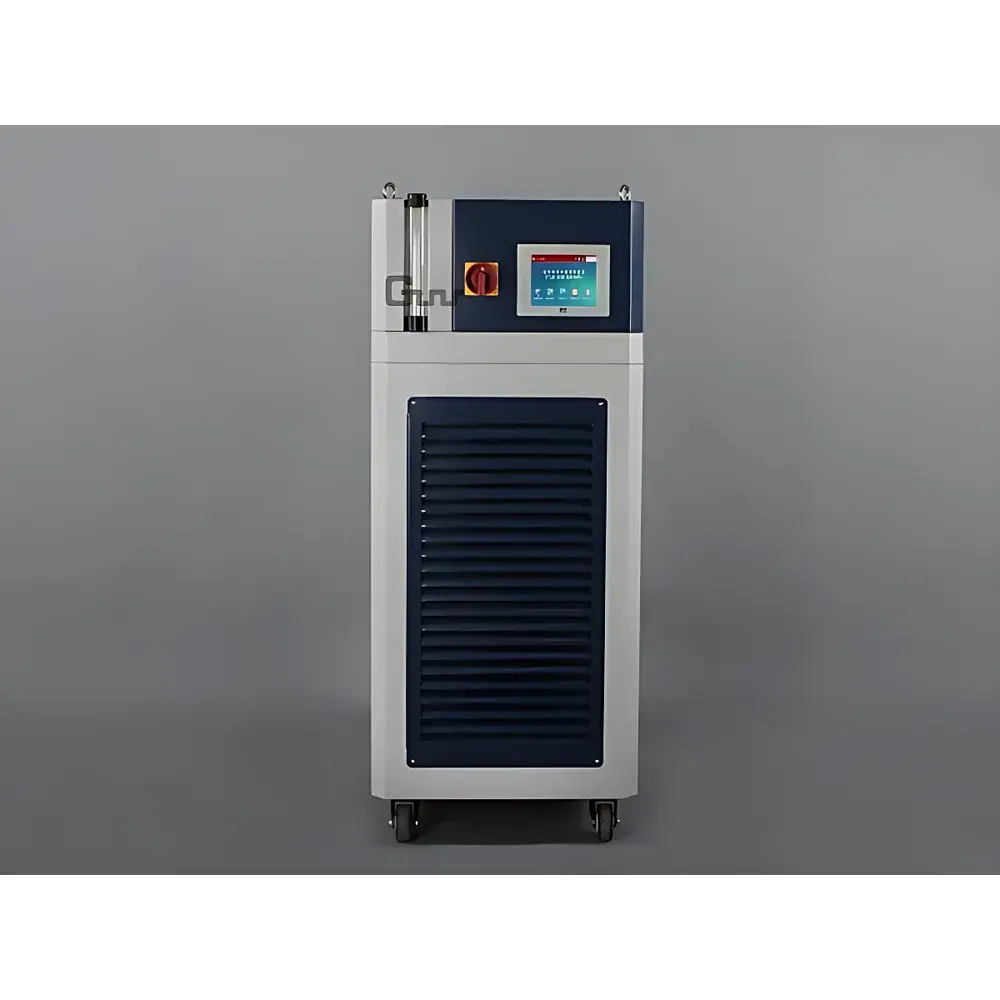
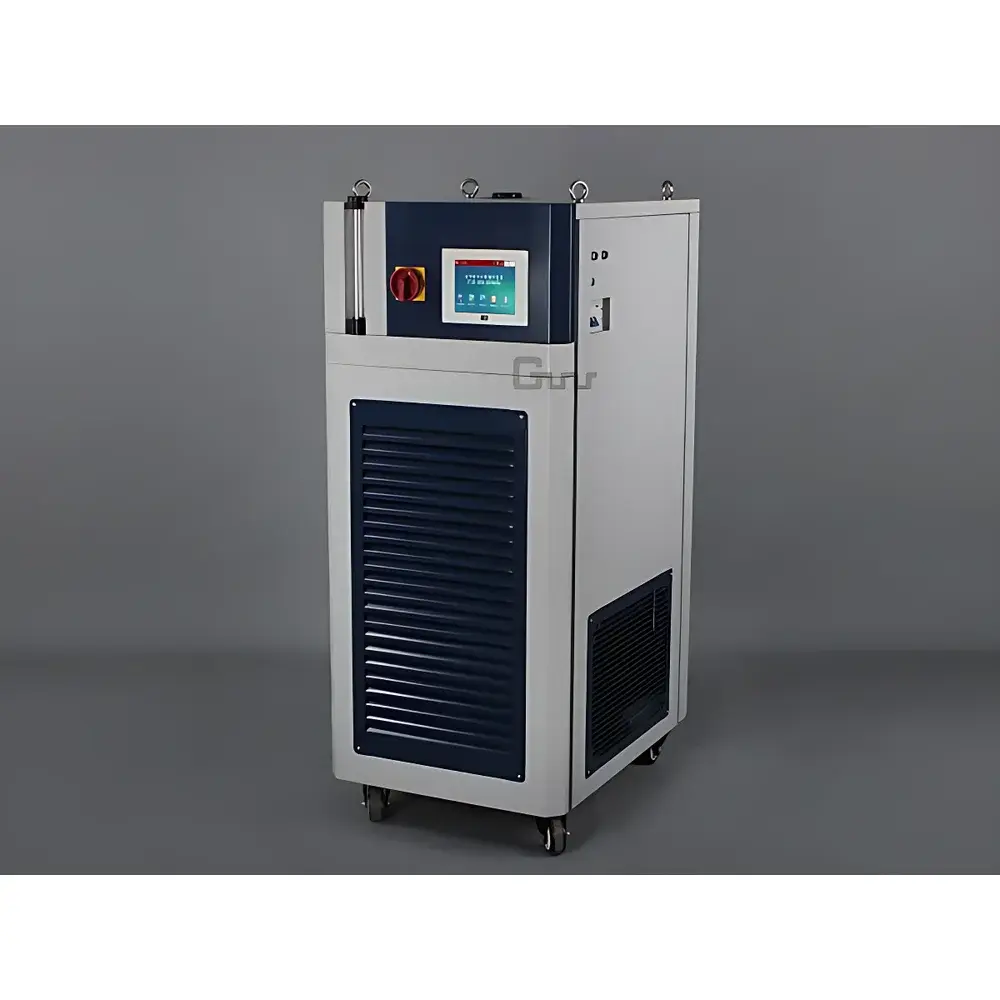
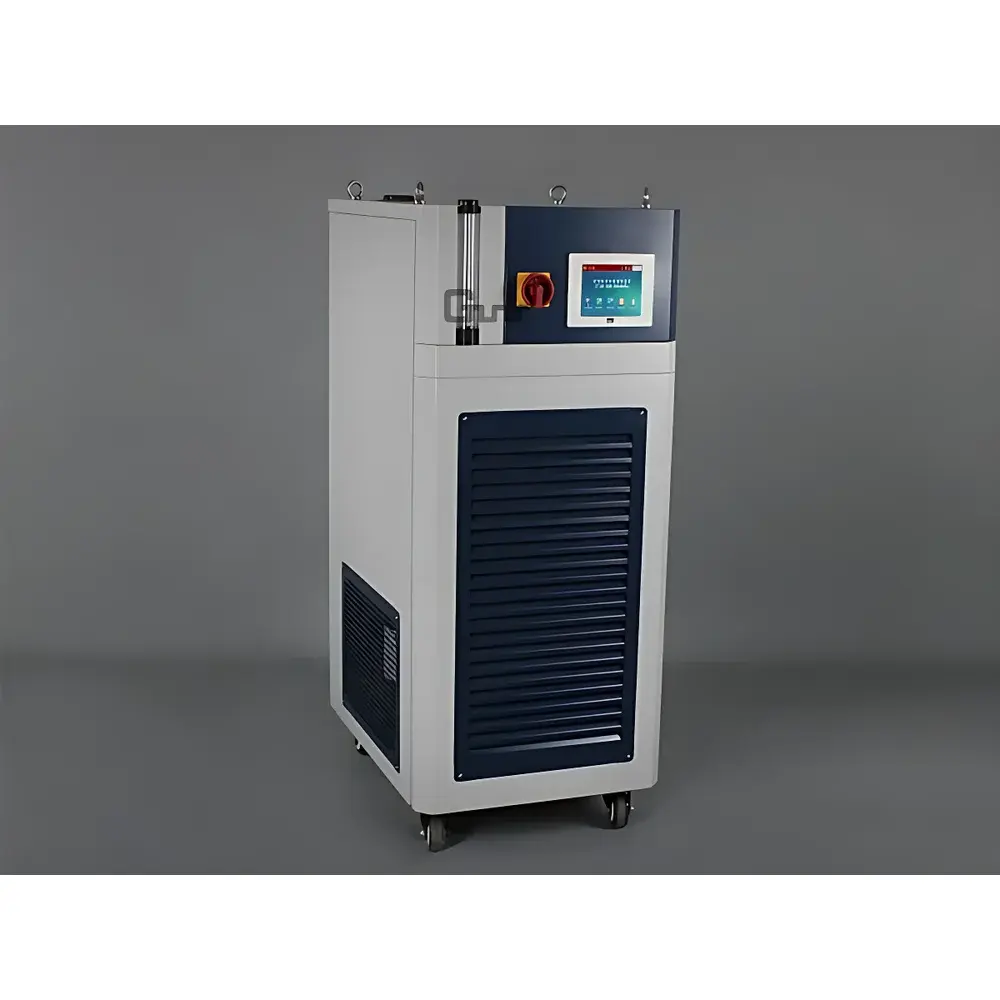
The Great Wall ZT-100-200-30HEX Closed-Loop Cryogenic & Heating Circulator
| Brand | The Great Wall |
|---|---|
| Origin | Henan, China |
| Manufacturer Type | OEM Manufacturer |
| Country of Origin | China |
| Model | ZT-100-200-30HEX |
| Temperature Range | -30 °C to +200 °C |
| Temperature Stability | ±0.5 °C |
| Refrigerant | R404A |
| Cooling Capacity | 8.2 kW at 200 °C, 6.2 kW at -10 °C, 4.5 kW at -20 °C, 2.5 kW at -30 °C |
| Heating Power | 12 kW |
| Circulation Pump Power | 1.5 kW |
| Flow Rate | 40 L/min |
| Max Pressure | 1.2 bar |
| Reservoir Volume | 45 L |
| Total Power Consumption | 18 kW |
| Dimensions (W×D×H) | 1050 × 1560 × 1800 mm |
| Weight | 750 kg |
| Display | 7-inch TFT color touchscreen with explosion-proof touch mouse |
| Control Interface | MODBUS RTU via RS-485 |
| Programmable Profiles | 120 programs × 100 segments |
| Safety Certifications | Compliant with GB3836.1–3:2010 and JB/T2379 |
| Construction Materials | SUS304 reservoir & piping |
| Ambient Operating Conditions | 5–35 °C, ≤70% RH |
Overview
The Great Wall ZT-100-200-30HEX is an industrial-grade closed-loop cryogenic and heating circulator engineered for precise, stable thermal control of external process loads—particularly jacketed reactors, calorimeters, and pilot-scale synthesis systems. It operates on a dual-mode thermodynamic architecture combining vapor-compression refrigeration and electric resistance heating within a single integrated loop. Unlike open-bath chillers or standalone heaters, this system maintains a sealed, pressurized circulation path for heat-transfer fluids (HTFs), eliminating evaporation loss, oxidation, and contamination risks associated with atmospheric exposure. Its operational envelope spans -30 °C to +200 °C with ±0.5 °C temperature stability under dynamic load conditions—achievable through coordinated modulation of compressor output, expansion valve superheat, and multi-zone electric heating elements. The unit is designed for continuous duty in controlled laboratory and pilot plant environments where reproducible thermal profiles, long-term fluid integrity, and intrinsic safety are critical requirements.
Key Features
- High-efficiency Emerson hermetic scroll compressor with dual-flex design, low-vibration operation, and DU bearing construction for extended service life (IP44 terminal enclosure)
- AISI 316 stainless steel plate-type evaporator rated for -160 °C to +200 °C, offering compact footprint (20–30% weight vs. shell-and-tube), low fouling coefficient, and corrosion resistance to common HTFs including silicone oils and synthetic heat-transfer fluids
- Danfoss thermostatic expansion valve (TEV) with field-replaceable cartridge design—no line cutting required during maintenance; adjustable superheat ensures consistent refrigerant flow across wide ambient and setpoint ranges
- Dedicated pre-cooling stage using air-cooled finned heat exchanger enables rapid ramp-down from elevated temperatures to ambient without overloading the main refrigeration circuit—reducing energy consumption and thermal stress
- Explosion-proof (Ex d IIB T4 Gb) electric heating assembly compliant with GB3836.1–3:2010 and JB/T2379; flange-mounted for secure integration into hazardous-area process skids
- Magnetic-drive circulation pump with SUS304 wetted parts and integrated backflow prevention; coupled with insulated SUS304 piping and expansion tank with level monitoring for safe thermal expansion compensation
- 7-inch TFT color HMI with explosion-proof capacitive touch interface, supporting both constant-setpoint and multi-segment programmable temperature profiles (up to 120 programs × 100 steps)
Sample Compatibility & Compliance
The ZT-100-200-30HEX is compatible with non-corrosive, low-viscosity heat-transfer fluids suitable for operation between -45 °C and +220 °C—including polyalkylene glycols (PAGs), methylsilicones, and high-stability mineral oils. Fluid selection must ensure no phase separation, polymerization, or viscosity drift under sustained thermal cycling. All wetted materials—including reservoir, piping, valves, and heat exchangers—are constructed from SUS304 or AISI 316 stainless steel to prevent leaching or galvanic degradation. The system complies with Chinese national explosion-protection standards (GB3836 series) and incorporates certified Ex-rated components—including motors, solenoid valves, pressure switches, and control enclosures—as documented in its type-examination report. While not inherently compliant with ATEX or IECEx out-of-the-box, its modular design allows retrofitting to meet regional directives when integrated with site-specific certification protocols. For GLP/GMP-regulated applications, audit trails and parameter lockout may be implemented via optional MODBUS-integrated SCADA interfaces.
Software & Data Management
The embedded controller supports real-time graphical display of temperature curves for both internal reservoir and user-defined external load points (via optional PT100 input). All setpoints, ramp rates, hold times, and alarm events are timestamped and stored locally for ≥30 days. Data export is supported via USB drive (CSV format) or MODBUS RTU over RS-485 for integration into LIMS or MES platforms. The HMI firmware includes configurable password levels (operator, engineer, administrator), parameter change logging, and alarm history with cause-code tagging. While native FDA 21 CFR Part 11 compliance is not embedded, the system architecture permits third-party validation packages for electronic record integrity, signature authentication, and audit trail retention—making it suitable for regulated pharmaceutical and fine chemical development workflows.
Applications
- Temperature-controlled reaction kinetics studies in jacketed glass or stainless-steel reactors (e.g., hydrogenations, Grignard additions, polymerizations)
- Calorimetric testing requiring high-fidelity thermal coupling between sensor block and sample cell
- Material testing under thermal cycling (e.g., coefficient of thermal expansion, glass transition analysis)
- Stabilization of analytical instrumentation (e.g., NMR probe cooling, GC oven pre-conditioning)
- Pilot-scale crystallization processes demanding sub-zero nucleation followed by controlled warming ramps
- Thermal validation of sterilization cycles and autoclave simulation rigs
FAQ
What heat-transfer fluids are recommended for operation at -30 °C?
Low-pour-point silicone oils (e.g., DC-200 series) or specialized PAG-based fluids with pour points below -40 °C and kinematic viscosity <50 cSt at -30 °C are preferred. Avoid ethylene glycol/water mixtures due to freezing risk and corrosion potential.
Can the unit operate continuously at 200 °C without degradation?
Yes—provided the selected HTF is thermally stable at 200 °C (verified via ASTM D6743 oxidation induction time), and the system is maintained per manufacturer-specified oil change intervals and filter replacement schedules.
Is remote monitoring supported natively?
The standard RS-485 MODBUS RTU interface enables integration with building management systems (BMS) or PLC networks; however, Ethernet/WiFi connectivity requires external gateway hardware.
Does the system include automatic defrost functionality?
No—this model employs air-cooled condensation and does not require active defrost cycles. Frost accumulation on the evaporator is prevented by precise superheat control and dry nitrogen purge capability during shutdown.
What maintenance intervals are recommended for the scroll compressor?
Compressor oil analysis every 2,000 operating hours; full oil and filter replacement every 8,000 hours or biannually—whichever occurs first—using OEM-specified POE lubricant.



