
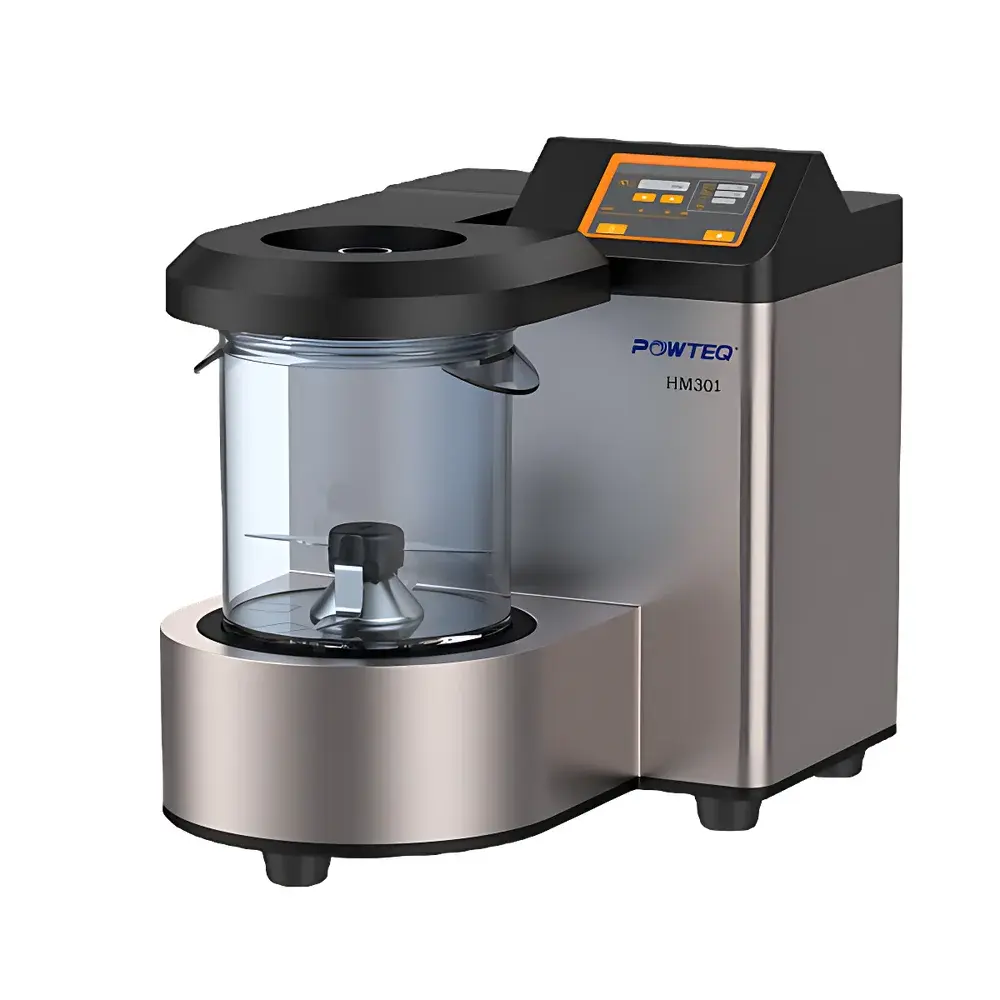
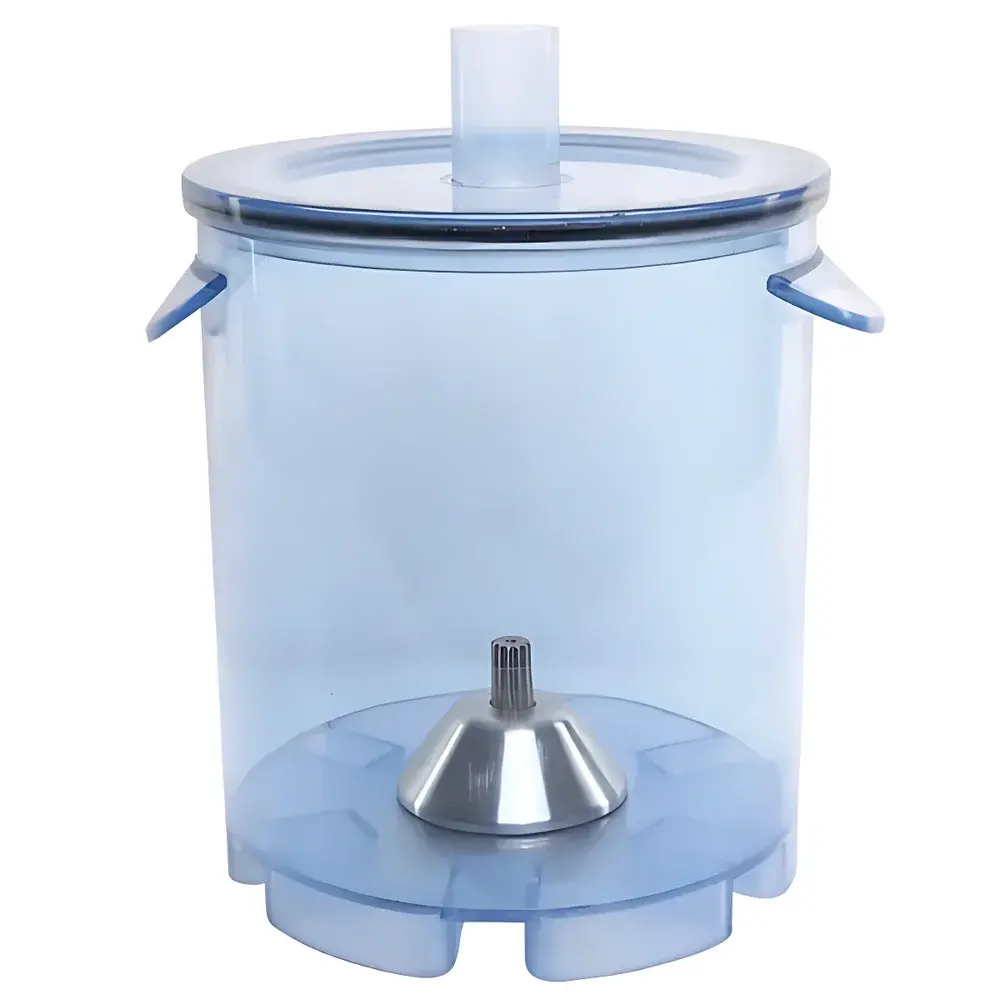
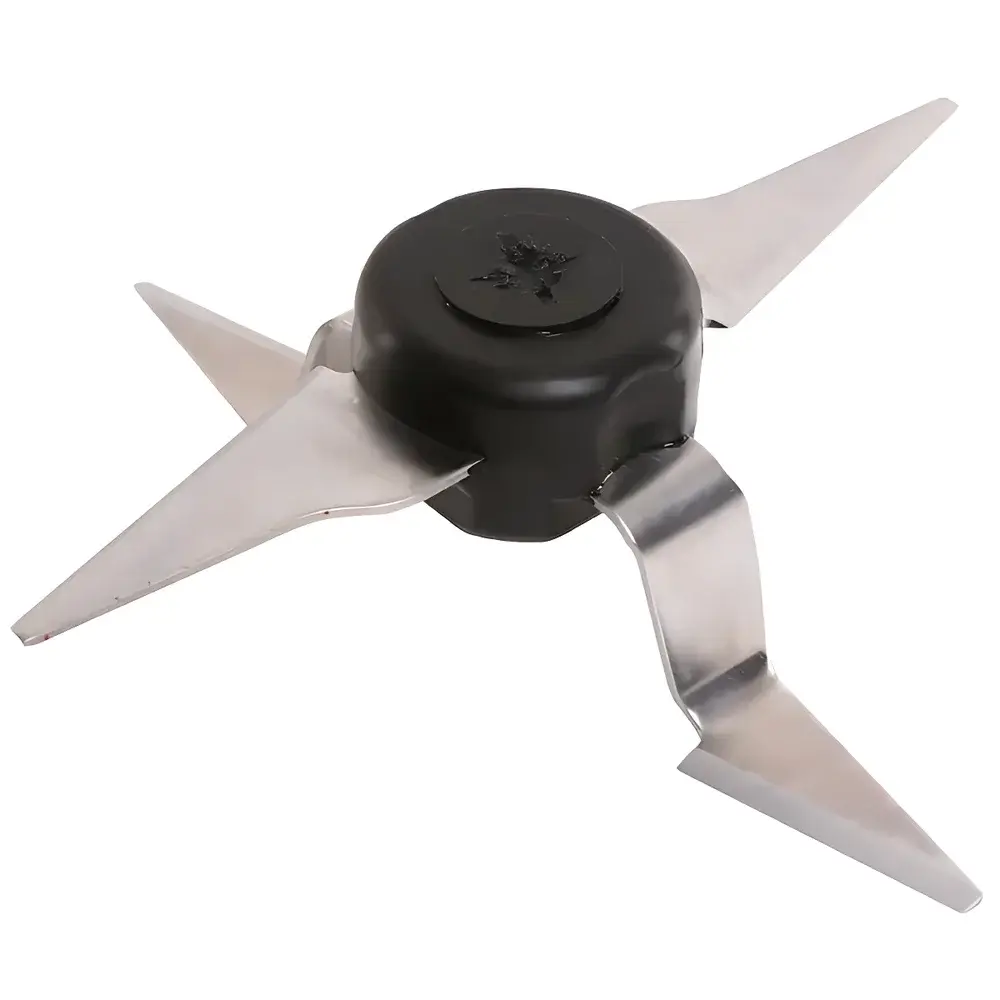
Grindemann HM301 High-Capacity Blade Grinder
| Brand | Grindemann |
|---|---|
| Model | HM301 |
| Type | Laboratory Blade Grinder |
| Origin | Beijing, China |
| Manufacturer | Grindemann Instruments Co., Ltd. |
| Power Supply | 220 V, 50 Hz |
| Rated Power | 1.5 kW |
| Speed Range | 500–4000 rpm (digitally adjustable) |
| Time Setting | 0:01–5:59 min:sec (digital display) |
| Feed Size | < 130 mm |
| Output Particle Size | < 300 µm |
| Batch Capacity | 4 L |
| Blade Configuration | 4-piece straight stainless-steel blades, dual-layer arrangement |
| Drive Mode | Intermittent / Forward / Reverse |
| Safety | Electromagnetic lid lock |
| Display | 5-inch LED touch screen |
| Data Storage | Up to 10 user-defined grinding protocols |
| Grinding Modes | Dry, wet, and cryogenic grinding |
| Dimensions (W×D×H) | 303 × 575 × 485 mm |
| Net Weight | 39 kg |
| Compliance | CE-marked design principles |
Overview
The Grindemann HM301 High-Capacity Blade Grinder is an engineered solution for rapid, reproducible size reduction and homogenization of soft, fibrous, elastic, oily, hydrated, or dry biological and food-grade materials. Based on high-shear blade impact mechanics—where rotational kinetic energy is transferred via precisely aligned stainless-steel cutting edges to induce controlled fragmentation—the HM301 delivers consistent sub-300 µm particle distributions in a single batch. Its architecture prioritizes mechanical robustness, thermal management under extended operation, and operational safety through integrated electromagnetic interlocking. Designed for routine use in analytical preparation workflows, the instrument supports pre-analytical standardization required by ISO 5725 (accuracy and precision of measurement methods), ASTM D297 (rubber and elastomer testing), and AOAC 991.21 (food sample homogenization). The HM301 is not intended for hard, abrasive, or mineral samples; its performance envelope is defined by organic matrix compliance.
Key Features
- 1.5 kW brushless motor delivering stable torque across 500–4000 rpm, enabling precise control over shear intensity and heat generation
- Dual-layer, four-blade stainless-steel rotor assembly optimized for volumetric throughput and uniform energy distribution—reducing particle size heterogeneity and minimizing sample adhesion
- Electromagnetic lid interlock system compliant with IEC 61000-6-2/6-4 immunity standards, preventing accidental opening during operation
- Three operational modes: continuous forward rotation, reverse rotation (for de-clogging), and programmable intermittent pulsing to manage exothermic reactions in sensitive matrices
- Onboard memory stores up to 10 user-defined protocols—including speed, duration, and mode—supporting method traceability per FDA 21 CFR Part 11 requirements when paired with validated LIMS integration
- 5-inch capacitive touch interface with real-time digital feedback on speed, elapsed time, and active protocol ID—designed for gloved operation in laboratory environments
- Modular accessory compatibility: optional cryo-jackets, PTFE-coated bowls, and food-grade stainless-steel containers certified to NSF/ANSI 51 standards
Sample Compatibility & Compliance
The HM301 accommodates heterogeneous soft-to-medium density samples including fresh animal tissues (e.g., murine liver, chicken bone fragments, whole fish), botanical matter (leaves, seeds, sprouts), pharmaceutical solids (herbal powders, compressed tablets), and processed foods (frozen fruits, confectionery, nut meats, cured meats). It accepts feed particles up to 130 mm in longest dimension and consistently achieves output distributions ≤300 µm (D90), suitable for subsequent extraction, digestion, or instrumental analysis (e.g., HPLC, ICP-MS, NIR). All wet-grinding operations require compatible liquid-phase solvents compatible with stainless-steel wetted surfaces. The system meets general electrical safety requirements per IEC 61010-1 and incorporates dust containment features aligned with EN 60335-1 for laboratory equipment. While not intrinsically explosion-proof, it may be operated within ventilated fume hoods when processing volatile organic matrices.
Software & Data Management
The HM301 operates as a standalone instrument with embedded firmware supporting audit-trail-capable parameter logging. Each grinding cycle records timestamp, selected protocol ID, actual speed (±10 rpm), duration (±0.1 sec), and mode—exportable via USB to CSV for integration into ELN or LIMS platforms. No proprietary software installation is required; however, Grindemann provides optional API documentation for OEM-level integration with laboratory automation middleware. Firmware updates are delivered via signed firmware packages verified using SHA-256 checksums, ensuring integrity in regulated environments. Data retention follows ALCOA+ principles (Attributable, Legible, Contemporaneous, Original, Accurate, Complete, Consistent, Enduring, Available) when exported and archived externally.
Applications
- Agricultural labs: Homogenization of cereal grains, feed pellets, and forage samples prior to mycotoxin screening or nutritional profiling
- Pharmaceutical R&D: Preparation of herbal extracts, tablet content uniformity testing, and dissolution sample conditioning
- Food safety laboratories: Subsampling of composite meat, seafood, and confectionery batches for pathogen enrichment or pesticide residue analysis
- Academic life sciences: Rapid lysis of plant tissues for RNA isolation, tissue pulverization for proteomic digestion, and embryo homogenization for metabolite profiling
- Environmental monitoring: Processing of sludge, compost, or aquatic macrophyte samples for heavy metal digestion and speciation analysis
FAQ
Can the HM301 process frozen or cryogenically cooled samples?
Yes—when used with optional cryo-adapted bowls and pre-chilled blades, the HM301 supports cryogenic grinding down to –80°C, preserving thermolabile compounds and inhibiting enzymatic degradation.
Is the instrument suitable for regulatory submissions under GLP or GMP?
The HM301’s protocol memory, digital parameter logging, and electromagnetic safety interlock support GLP-compliant operation; full GMP validation requires site-specific IQ/OQ/PQ documentation performed by qualified personnel.
What maintenance intervals are recommended for the blade assembly?
Blades should be inspected visually after every 200 cycles or 50 hours of cumulative runtime; replacement is advised when edge rounding exceeds 50 µm or surface pitting is observed under 10× magnification.
Does the HM301 meet RoHS or REACH substance restrictions?
All structural and wetted components comply with EU RoHS Directive 2011/65/EU and REACH Annex XVII restrictions on lead, cadmium, mercury, hexavalent chromium, PBBs, and PBDEs.
Can third-party grinding vessels be used?
Only Grindemann-certified accessories are validated for dimensional tolerance, material compatibility, and electromagnetic lock engagement; non-certified vessels void safety certification and warranty coverage.



