
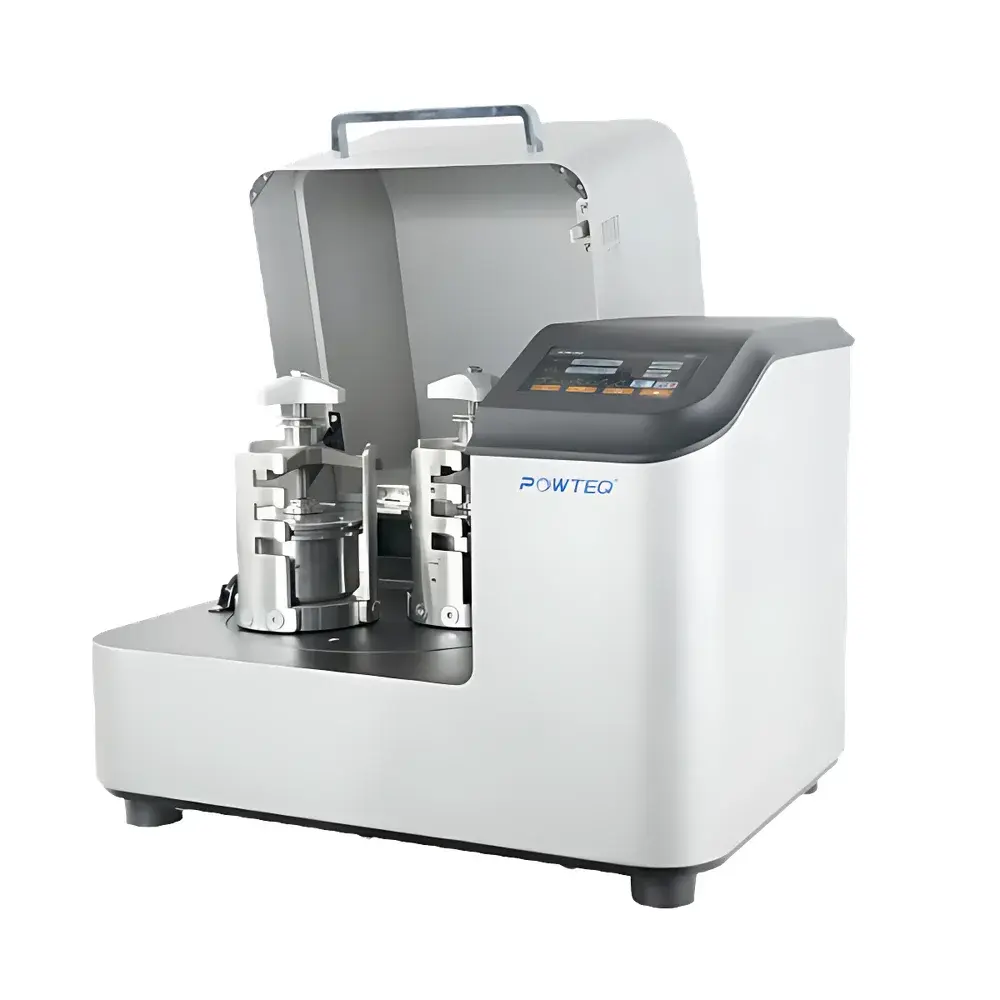
Grinder BM20 Planetary Ball Mill
| Brand | Grinder |
|---|---|
| Origin | Beijing, China |
| Manufacturer Type | Direct Manufacturer |
| Region of Origin | Domestic (China) |
| Model | BM20 |
| Instrument Type | Planetary Ball Mill |
| Sample Suitability | Hard, Brittle, Fibrous, and Soft Materials |
| Maximum Feed Size | < 10 mm |
| Final Particle Size | < 0.1 µm (down to nanoscale in colloidal grinding) |
| Batch Volume Options | 50 / 80 / 125 / 250 mL |
| Operating Speed Range | 50–650 rpm |
| Speed Ratio (Sun Wheel | Jar Rotation): 1 : −2 (customizable from 1:1 to 1:−3.5) |
| Grinding Time Range | 0–999 min (with cycle count: 1–99) |
| Effective Sun Wheel Diameter | 290 mm |
| Safety Features | Interlocked safety door, ergonomic design, automatic ventilation cooling system |
| Control Interface | 7-inch LED touchscreen display |
| Drive System | Maintenance-free, high-torque DC motor with speed stabilization under full load |
| Jar Material Options | Stainless steel, tungsten carbide, agate, zirconia, polyethylene, PTFE (12–500 mL capacity range) |
| Programmable Start Delay | Yes |
| Energy Input Control | Yes |
| Compliance | Designed for GLP-compliant laboratories |
Overview
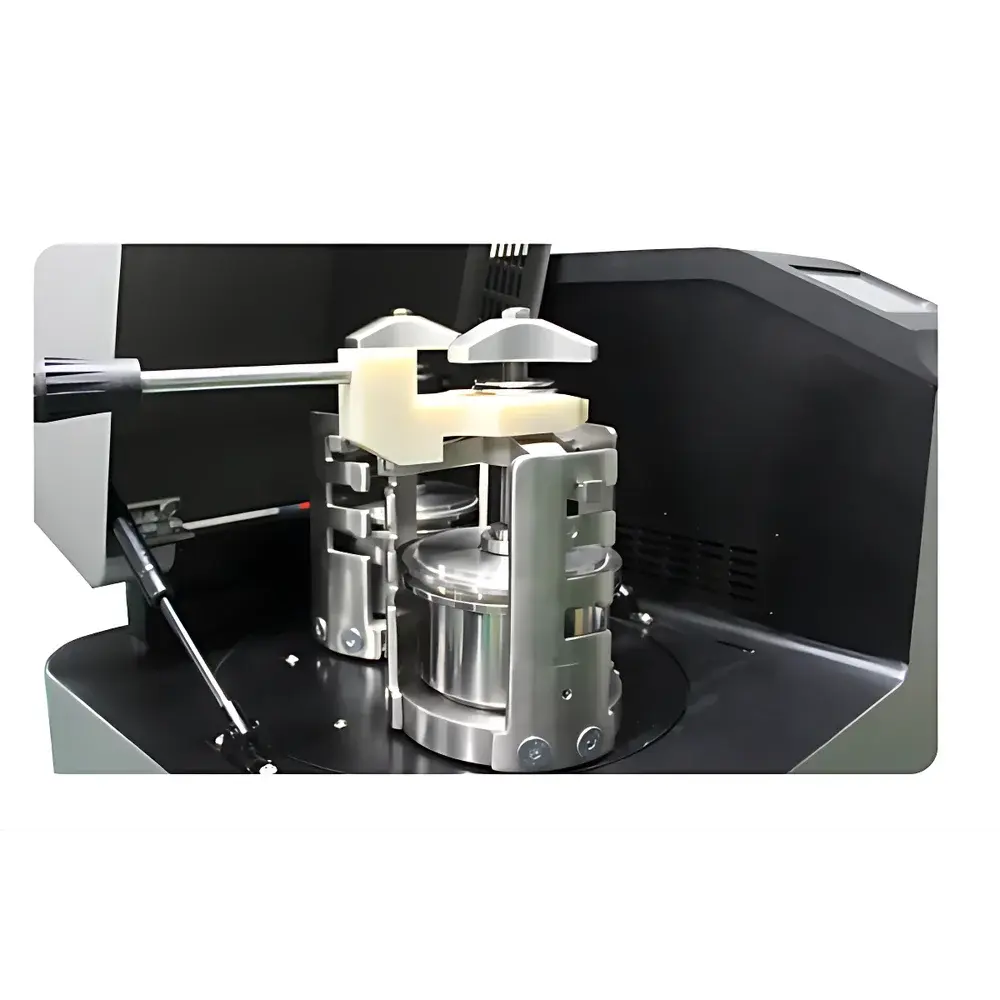
The Grinder BM20 Planetary Ball Mill is an engineered solution for high-energy, high-precision comminution of diverse solid materials in research, quality control, and industrial R&D environments. Based on the planetary motion principle—where grinding jars rotate on their own axes while simultaneously revolving around a central sun wheel in counter-direction—the BM20 generates intense impact, shear, and friction forces. This dual rotational kinematics ensures homogeneous energy distribution across the sample volume, enabling reproducible particle size reduction down to sub-100 nm levels. Unlike conventional shaker or vibratory mills, the BM20’s precisely controlled centrifugal acceleration (up to ~45 g, depending on jar radius and speed) allows consistent mechanical activation for applications ranging from routine powder homogenization to mechanochemical synthesis of alloys and nanocomposites. Its dual-platform configuration supports parallel processing of two independent samples under identical or differentiated parameters—critical for method development, comparative studies, and statistical validation.
Key Features
- Dual independent grinding stations with synchronized or asynchronous operation modes
- 7-inch high-resolution LED touchscreen interface with intuitive parameter navigation and real-time status feedback
- Maintenance-free, brushless DC drive system delivering stable rotational speed across full load and extended runtime (≥72 h continuous operation verified)
- Automatic anti-jam reverse rotation function prevents media locking and ensures uniform wear distribution
- Integrated forced-air ventilation system actively cools grinding jars during prolonged cycles, minimizing thermal degradation of heat-sensitive compounds
- Ergonomic safety door with electromagnetic interlock halts all motion instantly upon opening—compliant with IEC 61000-6-2 and EN 61000-6-4 EMC standards
- Programmable start delay and multi-step cycle sequencing enable unattended overnight or weekend operation
- Energy input regulation via speed/time profiling ensures batch-to-batch reproducibility (RSD < 3% for D50 across 10 consecutive runs under identical settings)
Sample Compatibility & Compliance
The BM20 accommodates a broad spectrum of sample types—including hard metals (e.g., Fe, Al alloys), brittle ceramics (SiC, alumina), fibrous biomass (cellulose, lignin), soft polymers, and biological tissues—without requiring pre-crushing beyond the 10 mm feed limit. Its compatibility with six jar material options (stainless steel, tungsten carbide, agate, zirconia, PTFE, and polyethylene) enables contamination-free processing for trace-metal analysis (e.g., ASTM D5683), pharmaceutical milling (USP ), or catalyst preparation. All operational logs—including speed, time, direction, temperature alerts, and door-open events—are timestamped and stored locally, supporting 21 CFR Part 11–aligned data integrity when paired with optional network-enabled software modules. The instrument meets structural safety requirements per ISO 12100 and is designed for integration into GLP/GMP workflows requiring documented calibration, preventive maintenance, and change control records.
Software & Data Management
While the BM20 operates autonomously via its onboard controller, it supports optional USB and RS-232 connectivity for external data export (CSV format) and remote parameter synchronization. The embedded firmware records every grinding session—including jar ID (if RFID-enabled jars are used), total energy input (J/g), peak RPM, and thermal event flags—enabling retrospective analysis of process drift. For regulated environments, optional PC-based software provides electronic signature capability, user access tiers (admin/operator), and audit trail generation compliant with ISO/IEC 17025 clause 7.11. Raw data files are cryptographically hashed to ensure immutability prior to archival.
Applications
The BM20 serves as a foundational tool in advanced materials synthesis (mechanochemical alloying of Ni–Al, Ti–C composites), geochemical sample preparation (homogenization of rock powders for XRF or ICP-MS), pharmaceutical solid-state screening (polymorph induction, amorphization of APIs), environmental matrix digestion (soil, fly ash, battery black mass), and nanomaterial production (graphene oxide exfoliation, metal–organic framework milling). Its ability to achieve colloidal dispersion without surfactants makes it suitable for ceramic slurry formulation and pigment deagglomeration in coatings R&D.
FAQ
What is the maximum recommended continuous runtime for the BM20?
The BM20 is rated for uninterrupted operation up to 999 minutes per cycle, with validated performance stability over 72-hour cumulative runtime under nominal load conditions.
Can the BM20 be used for cryogenic grinding?
Yes—when equipped with stainless steel or tungsten carbide jars and operated with liquid nitrogen-cooled adapters (optional accessory), it supports cryo-milling of thermolabile organics and elastomers.
Is jar material selection critical for analytical accuracy?
Absolutely—agate and zirconia jars eliminate metallic contamination for trace elemental analysis; PTFE jars prevent adsorption of polar analytes in environmental testing.
How does the BM20 ensure repeatability between labs?
Through standardized speed ratio (1:−2 default), calibrated sun wheel geometry (290 mm diameter), and energy-normalized protocols—enabling cross-laboratory method transfer per ISO 13320 Annex B guidelines.
Does the BM20 support regulatory compliance for pharmaceutical development?
Yes—its programmable parameters, electronic log retention, and optional audit trail software align with ICH Q5C, USP , and FDA guidance on equipment qualification for drug substance manufacturing.



