
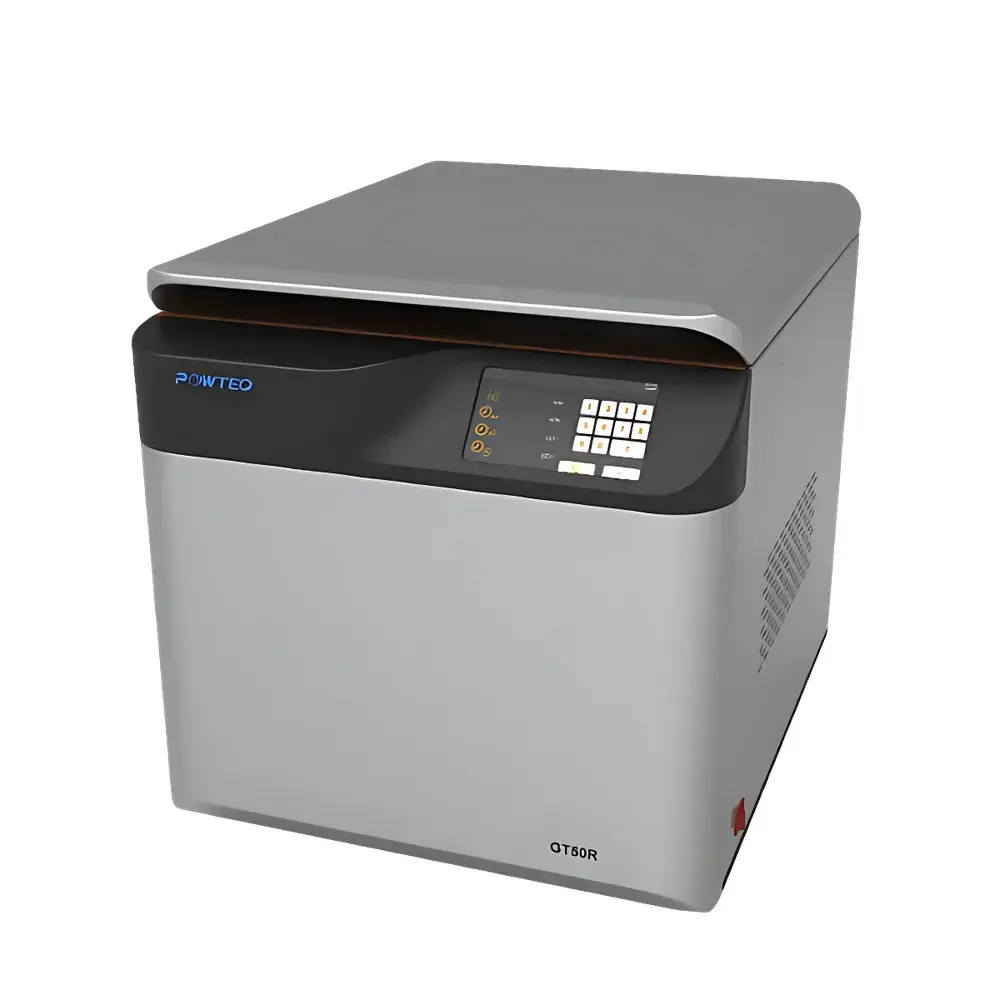
GRINDER GT50R High-Throughput Cryogenic Tissue Grinder
| [Brand | GRINDER |
|---|---|
| Origin | Beijing, China |
| Manufacturer Type | Direct Manufacturer |
| Instrument Type | Ball Mill |
| Sample Type | Soft Biological Tissues |
| Feed Size | <10 mm |
| Final Particle Size | <5 µm |
| Operating Temperature Range | –50 °C to +25 °C |
| Temperature Control Accuracy | ±0.5 °C |
| Vertical Oscillation Frequency | 180–1800 rpm |
| Processing Time per Sample | 1–120 s (programmable) |
| Tube Capacity | 0.2–50 mL (including microcentrifuge tubes and cryovials) |
| Max. Acceleration/Deceleration Time | ≤2 s |
| Display | 5-inch LED Touchscreen (multilingual UI) |
| Data Storage | >20 user-defined protocols with timestamped audit trail |
| Compliance | CE-marked |
| Dimensions (W×D×H) | 700 × 555 × 600 mm |
| Weight | 75 kg] |
Overview
The GRINDER GT50R High-Throughput Cryogenic Tissue Grinder is an engineered solution for rapid, reproducible, and contamination-free mechanical disruption of biological samples under precisely controlled low-temperature conditions. Based on vertical-axis oscillatory ball milling—where high-frequency reciprocating motion induces kinetic energy transfer between grinding media and sample—the GT50R achieves efficient cell lysis, tissue homogenization, and subcellular component release while minimizing thermal degradation. Its integrated compressor-based cryogenic system maintains sample temperatures as low as –50 °C throughout processing, effectively suppressing nuclease and protease activity to preserve nucleic acid integrity and native protein conformation. Designed for laboratories performing routine high-volume sample preparation in genomics, transcriptomics, and proteomics workflows, the GT50R supports both single-tube and multi-sample parallel processing without cross-contamination.
Key Features
- Vertical oscillation architecture with pulse-driven brushless motor ensures consistent energy input, low mechanical noise, and long-term operational stability.
- Compressor-based cooling system delivers real-time temperature control from –50 °C to ambient, with precision maintained within ±0.5 °C—critical for RNA integrity and epigenetic marker preservation.
- Dual electronic safety interlocks prevent operation unless the lid is fully sealed, meeting IEC 61000-4-2 ESD and EN 61000-3-2 harmonic emission standards.
- Programmable touchscreen interface (5-inch LED, multilingual) stores >20 customizable protocols with timestamped execution logs—fully compliant with GLP documentation requirements.
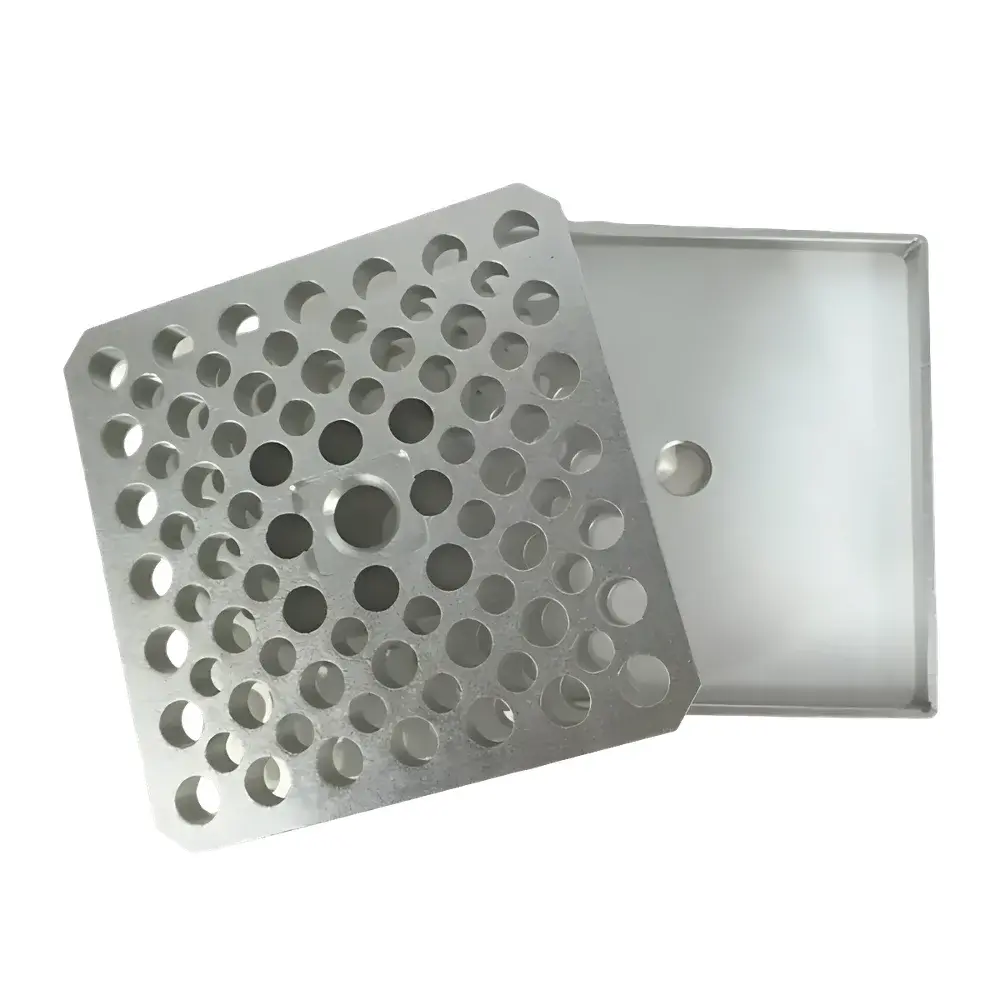
- Universal adapter system accommodates tubes from 0.2 mL PCR strips to 50 mL conical centrifuge vessels; all adapters feature precision-machined grooves for secure tube retention during high-rpm operation.
- Optimized vibration damping and symmetrical motor-compressor layout minimize structural resonance, enabling stable performance even at maximum speed (1800 rpm).
- Zero-crossing motor control enables acceleration and deceleration within ≤2 seconds—reducing mechanical stress on tubes and improving protocol repeatability across batches.
Sample Compatibility & Compliance
The GT50R accepts diverse biological matrices including plant tissues (roots, leaves, seeds), animal organs (liver, muscle, brain), microbial cultures (yeast, Gram-positive/negative bacteria, spores), and environmental samples (soil, sediment, fungal hyphae). It is routinely employed in QuEChERS-based pesticide residue extraction, API isolation from botanicals, and forensic tissue digestion. All contact surfaces are constructed from medical-grade stainless steel (AISI 316L) and comply with ISO 10993-5 cytotoxicity testing. The instrument meets CE marking requirements for electromagnetic compatibility (EN 61326-1) and low-voltage directive (2014/35/EU). For regulated environments, its audit-trail-capable software supports 21 CFR Part 11–aligned user authentication and electronic signature workflows when integrated with LIMS platforms.
Software & Data Management
The embedded firmware supports parameter locking, user-level access control (admin/operator/guest), and export of CSV-formatted run reports—including date/time stamp, temperature profile, speed ramping curve, and cycle count. Protocols can be imported/exported via USB flash drive or Ethernet-connected network share. Optional API integration allows remote initiation and status polling via HTTP REST endpoints—enabling synchronization with automated liquid handling systems or sample tracking databases. Historical data remains retained onboard for ≥12 months, satisfying internal QA review cycles and external inspection readiness (e.g., ISO/IEC 17025 accreditation audits).
Applications
- High-yield DNA/RNA extraction from fibrous or polysaccharide-rich plant tissues prior to NGS library construction.
- Rapid lysis of tough-walled microbes (e.g., Mycobacterium, Saccharomyces cerevisiae) for metagenomic profiling.
- Pre-analytical sample homogenization in clinical biobanking—ensuring uniform analyte distribution across replicates.
- Cellular fractionation support for co-immunoprecipitation and chromatin immunoprecipitation (ChIP) workflows.
- QuEChERS-compatible grinding of food matrices prior to LC-MS/MS analysis of veterinary drug residues and mycotoxins.
- Preparation of homogenates for ELISA, Western blotting, and enzymatic activity assays requiring native protein conformation.
FAQ
What types of grinding media are compatible with the GT50R?
Stainless steel, tungsten carbide, zirconia, and ceramic beads (1–8 mm diameter) are supported; material selection depends on sample hardness and downstream compatibility (e.g., zirconia for RNA work to avoid metal ion interference).
Can the GT50R process samples in standard 96-well plates?
No—it is optimized for individual tube-based processing; however, optional 24-position deep-well block adapters enable semi-parallel processing with full tube isolation.
Is method validation documentation available for regulatory submissions?
Yes—GRINDER provides IQ/OQ documentation templates, temperature mapping reports, and repeatability studies (n=6 per matrix) aligned with ASTM D7216 and ISO 5725 guidelines.
How does the GT50R prevent aerosol generation during grinding?
All grinding occurs inside sealed, pressure-rated tubes with O-ring gaskets; the instrument’s vacuum-assisted lid seal further mitigates airborne particle release during opening.
What maintenance intervals are recommended for long-term reliability?
Compressor oil and filter replacement every 12 months; motor bearing inspection every 24 months; calibration verification of temperature sensor and tachometer annually using NIST-traceable references.



