
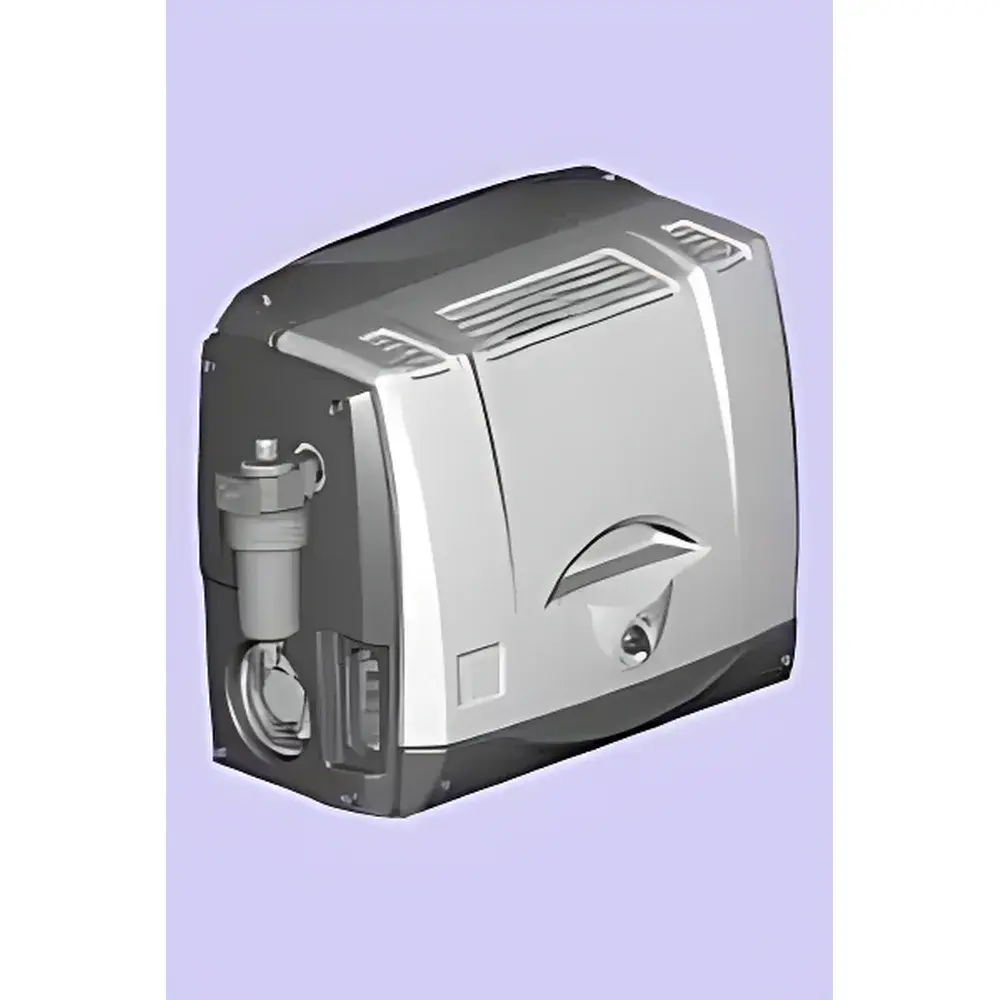
N-GT Series Ultra-High-Purity Zero Air Generator
| Origin | Imported |
|---|---|
| Manufacturer Type | Authorized Distributor |
| Model | N-GT Series |
| Pricing | Available Upon Request |
Overview
The N-GT Series Ultra-High-Purity Zero Air Generator is an engineered solution for laboratories and analytical facilities requiring certified zero air compliant with stringent international standards for trace gas analysis, calibration, and instrument purge applications. Designed around a five-stage catalytic purification architecture, the system transforms compressed ambient air into analytically pure zero air through sequential oxidation, adsorption, drying, and sub-micron filtration. Its core principle relies on high-temperature platinum-catalyzed oxidation (≥350 °C) to convert hydrocarbons (HC) and carbon monoxide (CO) into CO₂ and H₂O, followed by pressure-swing adsorption (PSA) drying to achieve ultra-low dew points, and selective chemisorption to remove NOₓ, SO₂, and ozone. The resulting output meets or exceeds requirements for EPA Method TO-14/TO-15, ASTM D6196, ISO 8573-1 Class 1:1:1 (for particles, water, and oil), and USP for instrumental gas purity in pharmaceutical QC environments.
Key Features
- Five-stage purification train: (1) Pre-filtration (5 µm particulate + bulk moisture removal), (2) High-temperature Pt-catalyzed oxidation of HC/CO, (3) Dual-bed PSA dryer achieving ≤−60 °C dew point, (4) Chemisorptive scrubber for NOₓ, SO₂, and O₃ (with annual replacement recommendation), (5) Final 0.5 µm particulate filter (99.99% retention efficiency)
- Configurable flow rates: 1.5, 3.0, 6.0, 15.0, and 30.0 L/min (standard conditions), each model designated as N-GT1500, N-GT3000, N-GT6000, N-GT15000, and N-GT30000 respectively
- Integrated 6 L high-pressure storage tank (rated to 6 bar) enabling transient flow support up to 3 L/min without compressor demand modulation
- Factory-calibrated dual-stage pressure regulation: inlet range 4.5–10 bar (limited to 7 bar via internal relief), outlet adjustable up to 5 bar for external cylinder filling
- Robust stainless-steel construction for catalyst chambers and dryer beds; all wetted materials compliant with ISO 10100 for clean gas systems
- Thermal management ensures stable output temperature at ambient +15 °C, minimizing condensation risk in downstream analyzers
- Low maintenance design with scheduled service intervals: annual replacement of pre-filter, final particulate filter, and NOₓ scrubber; triennial replacement of oxidation catalyst
Sample Compatibility & Compliance
The N-GT Series accepts instrument-grade compressed air (oil-free, ≤40 °C inlet temperature, ≤80% RH) with maximum inlet impurity tolerances of 100 ppm HC, 100 ppm CO, 500 ppm CO₂, and 50 ppm NOₓ. Output specifications are validated per ISO 8573-1:2010 for particle count (Class 1), water content (Class 1, ≤−70 °C dew point), and total oil content (Class 1, <0.01 mg/m³). Residual gas concentrations comply with EPA Trace-Level Calibration Gas Specifications: HC <0.1 ppm, CO <0.1 ppm, CO₂ <5 ppm, NOₓ <0.1 ppm. The system supports GLP/GMP workflows through documented maintenance logs and traceable component replacement records.
Software & Data Management
While the N-GT Series operates as a stand-alone hardware platform without embedded microprocessor control, it supports full integration into laboratory-wide monitoring networks via optional analog 4–20 mA or digital RS-485 interfaces (available as factory-installed options). These enable real-time logging of inlet/outlet pressure, thermal status of catalyst bed, and operational uptime—data compatible with LabVantage, Thermo Fisher SampleManager, and Agilent OpenLab CDS. All maintenance actions—including filter and scrubber replacements—are documented using standardized service tags aligned with FDA 21 CFR Part 11 audit trail requirements when paired with validated electronic logbook systems.
Applications
- Calibration gas generation for GC-FID, GC-ECD, and PTR-MS systems requiring ultra-low background hydrocarbon interference
- Purge gas supply for FTIR spectrometers, cavity ring-down spectroscopy (CRDS), and laser-based trace gas analyzers
- Carrier and makeup gas for EPA Method 8260/8270 volatile organic compound (VOC) analysis
- Baseline stabilization in ambient air monitoring stations (e.g., regulatory PM₂.₅ and ozone monitors)
- Reference gas source in pharmaceutical stability testing chambers per ICH Q1 guidelines
- Zero-air supply for cleanroom environmental monitoring and particle counter verification
FAQ
What compressed air quality is required for optimal N-GT performance?
Oil-free, desiccated air with ≤40 °C inlet temperature, ≤80% relative humidity, and no liquid water carryover. A certified ISO 8573-1 Class 0 oil-free compressor is strongly recommended.
Is the catalyst replacement mandatory every three years?
Yes—catalyst activity degrades over time due to sintering and trace poisoning. Triennial replacement ensures sustained HC/CO removal below 0.1 ppm, as verified by periodic third-party gas chromatographic validation.
Can the N-GT operate continuously without interruption?
Yes—designed for 24/7 operation with thermal safety cutoffs and pressure interlocks. Mean time between failures (MTBF) exceeds 12,000 hours under nominal load conditions.
Does the system meet FDA 21 CFR Part 11 requirements?
The base unit is Part 11–ready when integrated with compliant data acquisition software; electronic audit trails, user authentication, and electronic signatures are managed externally via validated LIMS or CDS platforms.
What is the expected lifetime of the NOₓ scrubber under typical lab use?
One year under continuous operation at ≤15 L/min flow; service life extends to three years in low-throughput applications (<3 L/min average), though annual verification via NOₓ-specific electrochemical sensor is advised.
Related Products



