
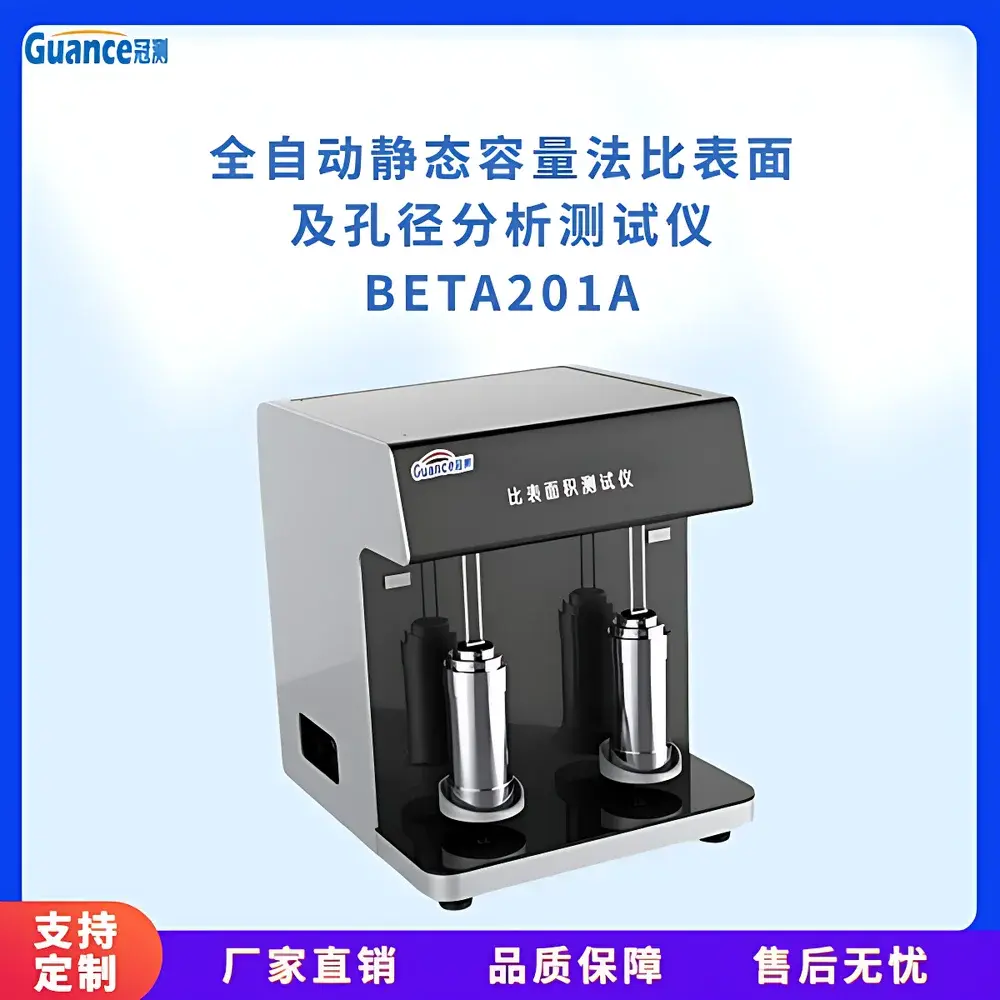
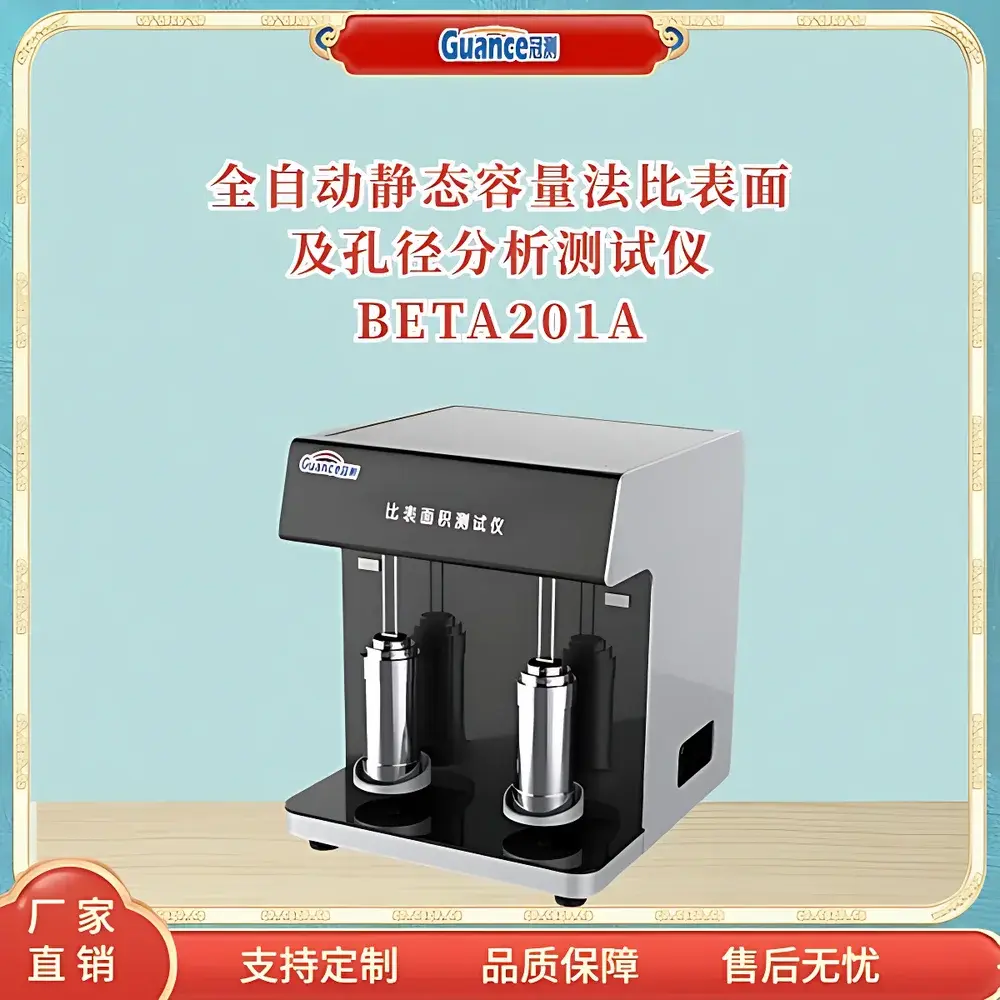
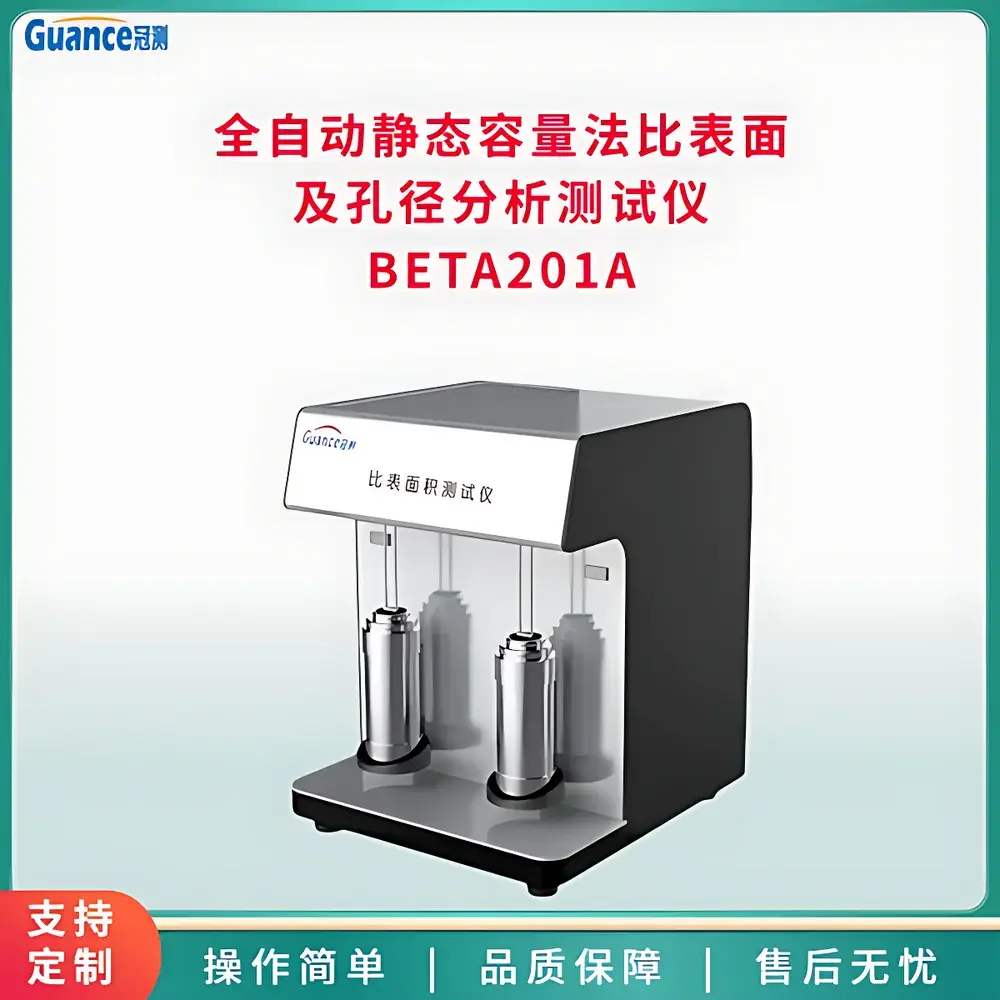
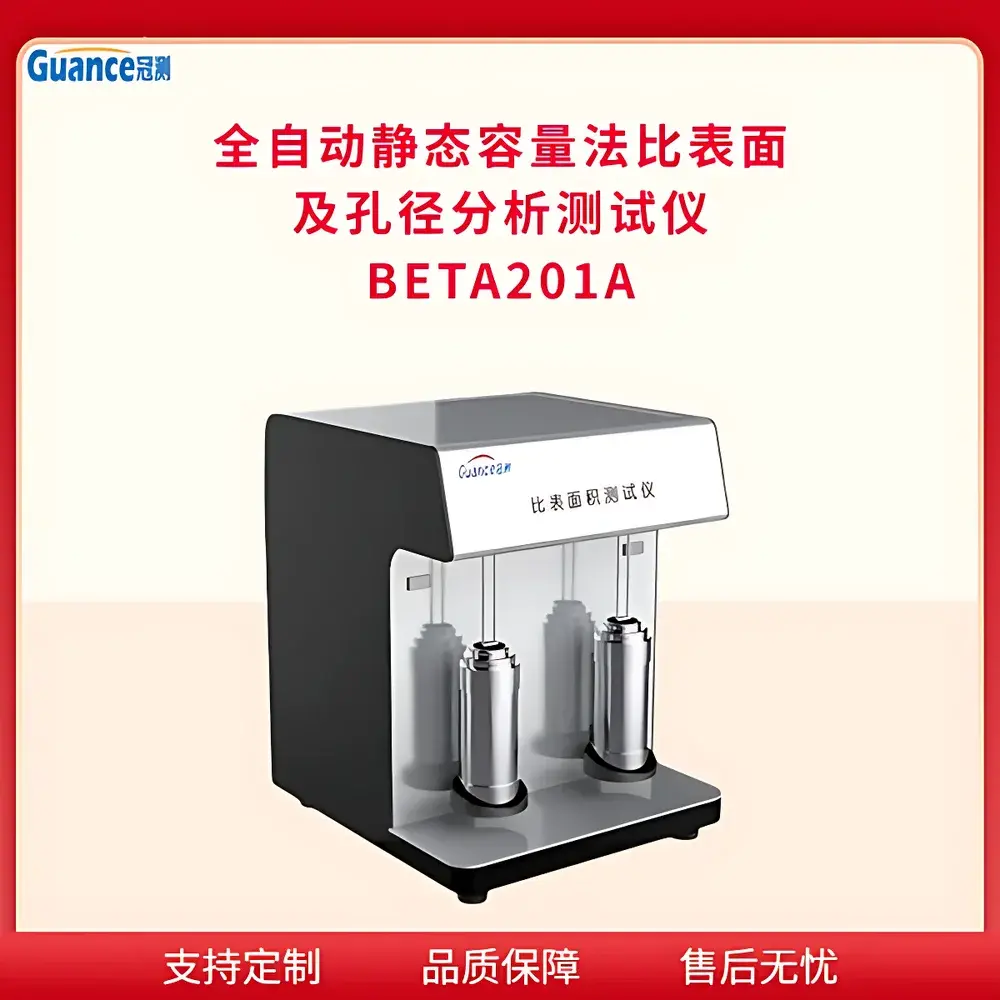
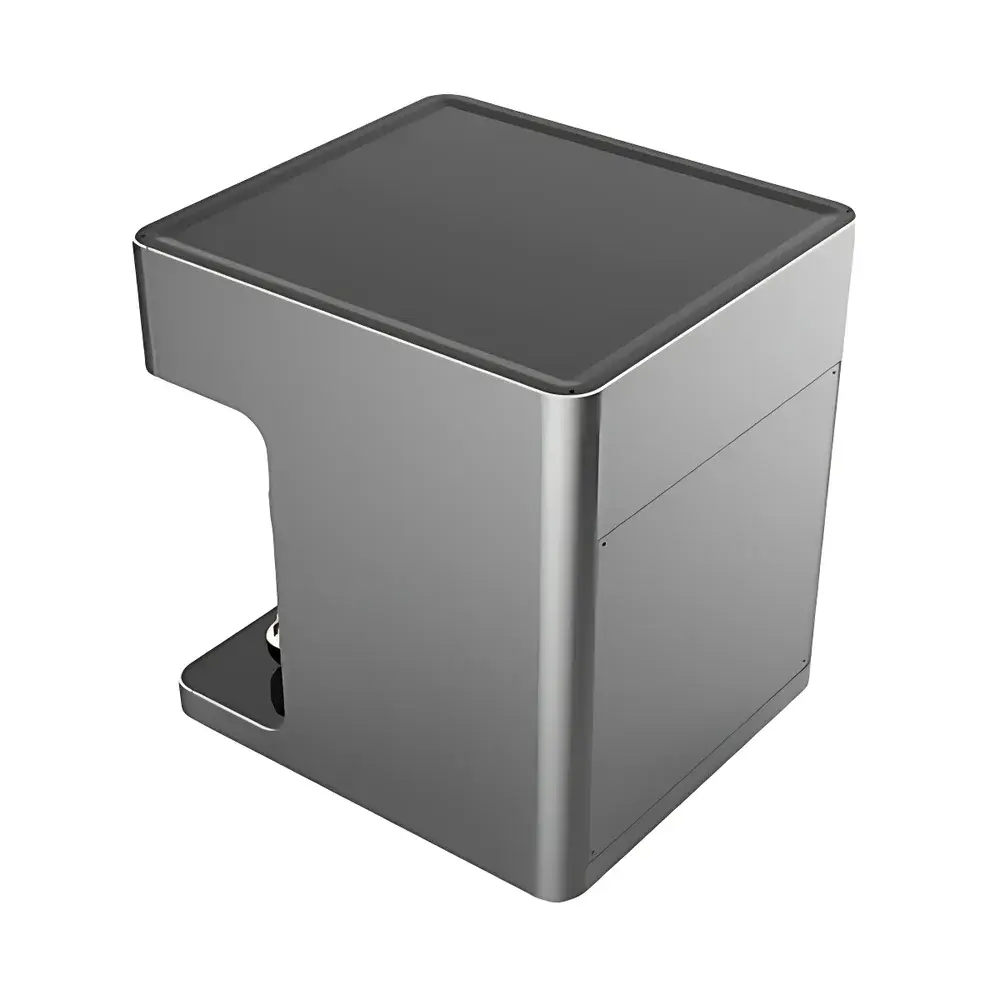
GuanCe BETA201A.4 Specific Surface Area and Pore Size Analyzer
| Brand | GuanCe Instruments |
|---|---|
| Origin | Beijing, China |
| Manufacturer Type | Authorized Distributor |
| Product Category | Domestic |
| Model | BETA201A.4 |
| Instrument Type | Specific Surface Area and Pore Size Analyzer |
| Measurement Principle | Static Volumetric Method (with optional dynamic mode support) |
| Analysis Stations | 1 |
| Surface Area Range | 0.0001 m²/g (using Kr adsorption) to unlimited |
| Pressure Range | 0–133 kPa |
| Repeatability | < ±1% |
| Operating Ambient Temperature | Up to 400 °C |
| Temperature Control Accuracy | ±0.1% |
| Vacuum System Base Pressure | ≤1×10⁻⁸ Pa (≤7.5×10⁻¹¹ Torr) |
Overview
The GuanCe BETA201A.4 Specific Surface Area and Pore Size Analyzer is a high-precision, fully automated instrument engineered for quantitative characterization of porous and powdered materials using the static volumetric gas adsorption method—primarily nitrogen (N₂), but also compatible with argon (Ar), krypton (Kr), carbon dioxide (CO₂), hydrogen (H₂), oxygen (O₂), methane, and other non-corrosive gases. It operates on the fundamental principles of physical adsorption isotherm measurement at cryogenic temperatures (typically 77 K for N₂), enabling calculation of specific surface area via BET and Langmuir theories, pore size distribution across micropores (0.35–2 nm), mesopores (2–50 nm), and macropores (50–500 nm) using BJH, DFT (including NLDFT), HK, SF, DR, t-plot, and αs-plot models, as well as total pore volume, micropore volume, and solid density. Designed for research-grade reproducibility (< ±1% RSD), the system integrates advanced vacuum architecture, dual-pressure transducers, and in-situ thermal desorption—all within a single station—ensuring metrological integrity compliant with ISO 9277, ASTM D3663, and IUPAC recommendations for physisorption analysis.
Key Features
- Single-station configuration optimized for high-accuracy, low-drift measurements under ultra-high vacuum conditions (≤1×10⁻⁸ Pa), achieved via all-stainless-steel vacuum manifold, metal-sealed joints, silver-plated internal surfaces, and dual-layer vacuum shielding.
- Dual-capacitance pressure transducers: one dedicated to real-time P₀ measurement (P/P₀ up to 0.9995) and the other for sample isotherm acquisition—ensuring thermodynamic consistency and eliminating cross-contamination between reference and sample lines.
- Integrated thermal desorption and analysis station with three-way valve architecture: enables simultaneous heating and analysis without exposing the analytical manifold to desorption byproducts, preserving long-term sensor stability and calibration fidelity.
- Intelligent vacuum management system: automatically cycles the vacuum pump during low-risk phases of the measurement sequence, reducing acoustic noise, power consumption, and mechanical wear while maintaining required vacuum integrity throughout multi-hour isotherms.
- Large-capacity liquid nitrogen Dewar (70-hour hold time) with isothermal jacket and optional auto-refill capability—supporting unattended operation for extended pore distribution analyses (e.g., full DFT isotherms requiring >100 data points).
- No helium dependency: N₂-only operation reduces consumable cost and logistical complexity without compromising accuracy—calibration and P₀ determination are performed using built-in reference techniques independent of He pycnometry.
- Full remote operability via Ethernet interface: supports centralized control of multiple instruments over LAN/WAN, remote diagnostics, firmware updates, and audit-trail-enabled session logging aligned with GLP/GMP documentation requirements.
Sample Compatibility & Compliance
The BETA201A.4 accommodates diverse sample geometries—including powders (e.g., activated carbons, MOFs, battery cathodes), granules (zeolites, catalysts), monoliths (ceramic filters), fibers (carbon nanotubes), and thin films—within standardized glass sample tubes (6 mm OD). Its thermal desorption module supports programmed heating up to 400 °C with ±0.1% temperature stability, enabling rigorous outgassing of moisture, solvents, and weakly bound surface species prior to adsorption. All hardware and software modules comply with ISO/IEC 17025 traceability frameworks; pressure sensors are NIST-traceable, and vacuum integrity is verified per ASTM E581. Data acquisition meets FDA 21 CFR Part 11 criteria when configured with electronic signatures and audit trails.
Software & Data Management
The proprietary GuanCeAdsorb v5.x software provides dual-language UI (English/Chinese), modular workflow templates, and extensible method libraries—allowing users to define custom protocols for specialized materials (e.g., hydrophobic MOFs, hydrated clays). Raw isotherm data are acquired at 24-bit resolution across up to 1,024 pressure points, stored in vendor-neutral HDF5 format. Post-processing includes batch comparison of isotherms, overlay of pore distribution curves from different models (BJH vs. NLDFT), and statistical reporting of repeatability across replicate runs. Export options include PDF reports (with embedded metadata, timestamps, and operator ID), Excel-compatible CSV files, and XML exports for LIMS integration. All user actions—including parameter edits, calibration events, and emergency recoveries—are timestamped and logged for regulatory review.
Applications
This analyzer serves critical QC and R&D functions across academia and industry: battery material developers use it to correlate cathode/anode specific surface area with cycle life; pharmaceutical formulators assess mesoporosity of excipients for controlled-release kinetics; catalysis researchers quantify active site accessibility in supported metal oxides; environmental scientists characterize soil and sediment pore structure for contaminant transport modeling; and nanomaterial producers validate synthetic consistency of silica aerogels or carbon black grades. Its Kr adsorption capability extends reliable surface area quantification below 0.1 m²/g—essential for dense ceramics, metals, and low-surface-area polymers where N₂ fails to yield measurable uptake.
FAQ
What gases can be used for analysis besides nitrogen?
N₂, Ar, Kr, CO₂, H₂, O₂, CH₄, C₄H₁₀, NH₃, and other non-corrosive gases—subject to appropriate safety interlocks and calibrated transducer ranges.
Is helium required for free space calibration?
No. The system employs an integrated P₀ reference tube and dual-transducer architecture to eliminate reliance on He pycnometry.
Can the instrument operate unattended overnight?
Yes. With the standard 70-hour Dewar and optional auto-refill module, full DFT or multipoint BET analyses can run without intervention.
How is data integrity ensured during power failure?
The system implements atomic write operations and journaling file system protocols—ensuring partial isotherms are recoverable upon restart without loss of vacuum history or pressure metadata.
Does the software support 21 CFR Part 11 compliance?
Yes—when deployed with Windows Active Directory authentication, electronic signatures, and enabled audit trail logging, it satisfies predicate rule requirements for regulated environments.



