
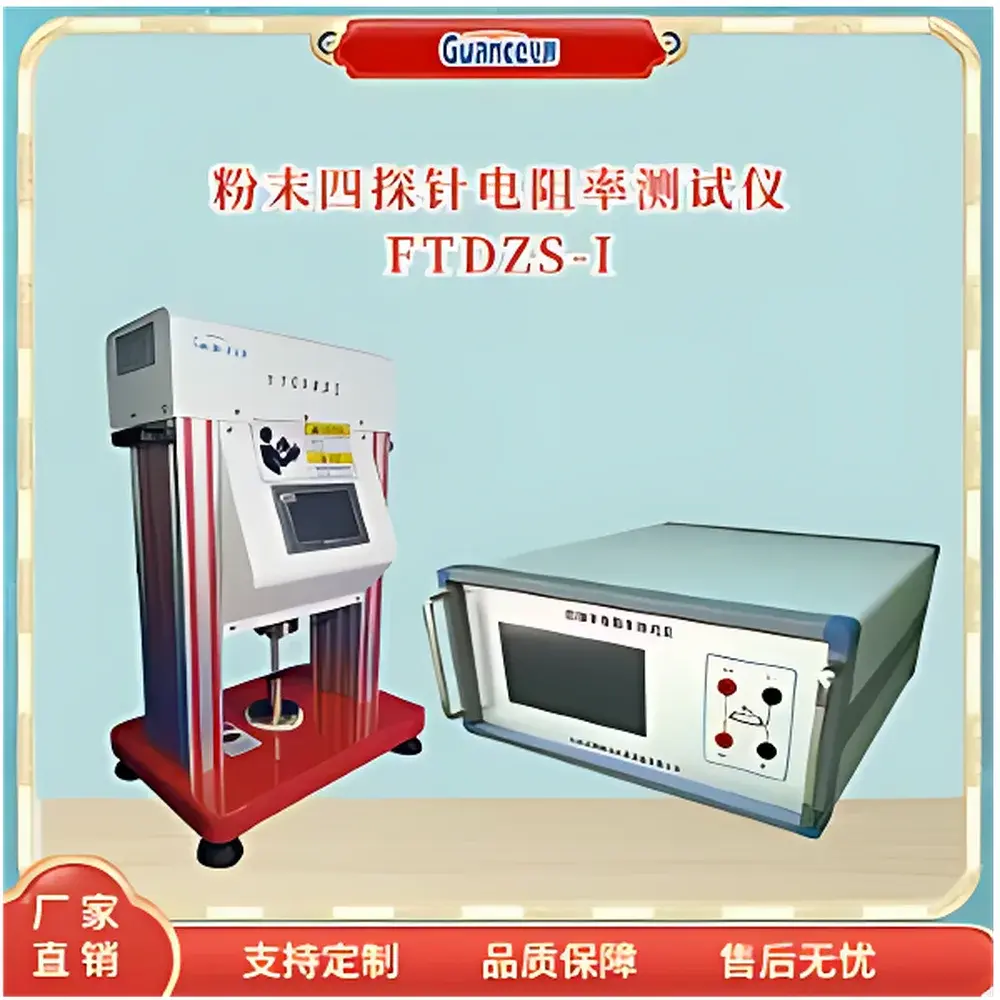
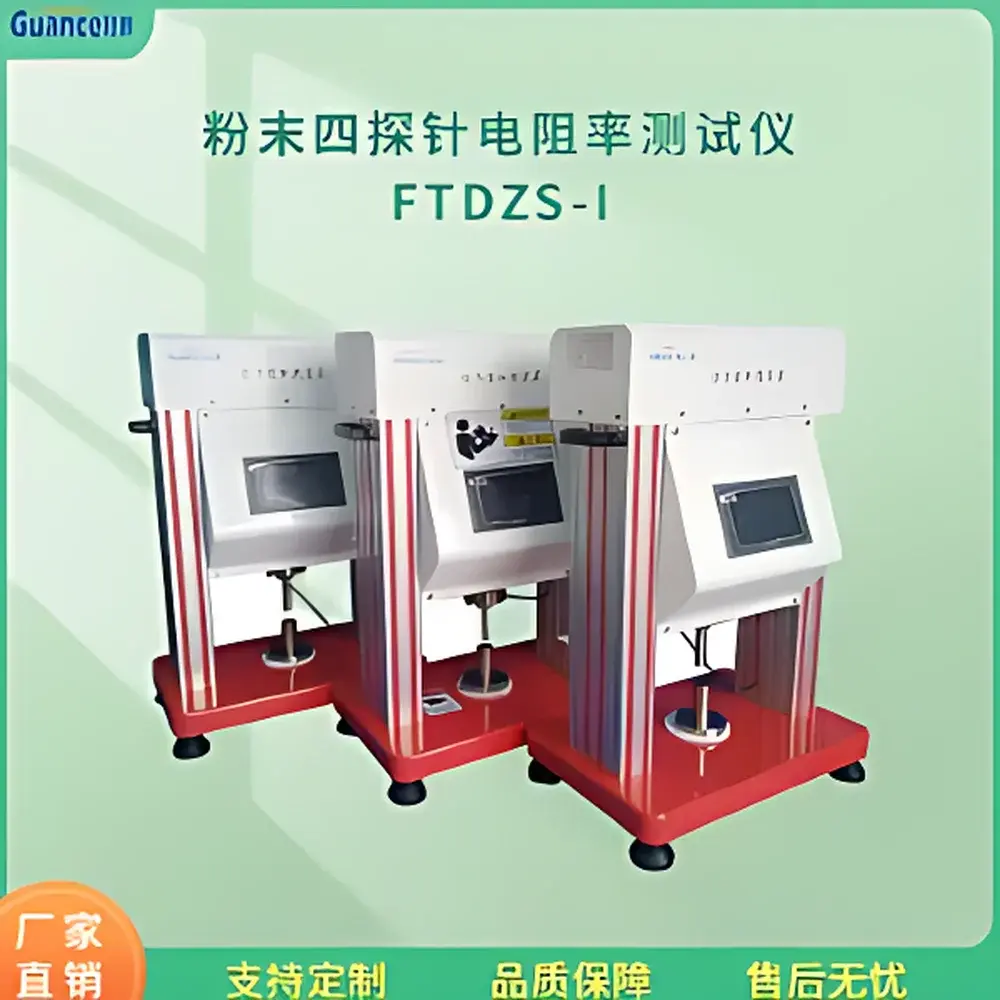
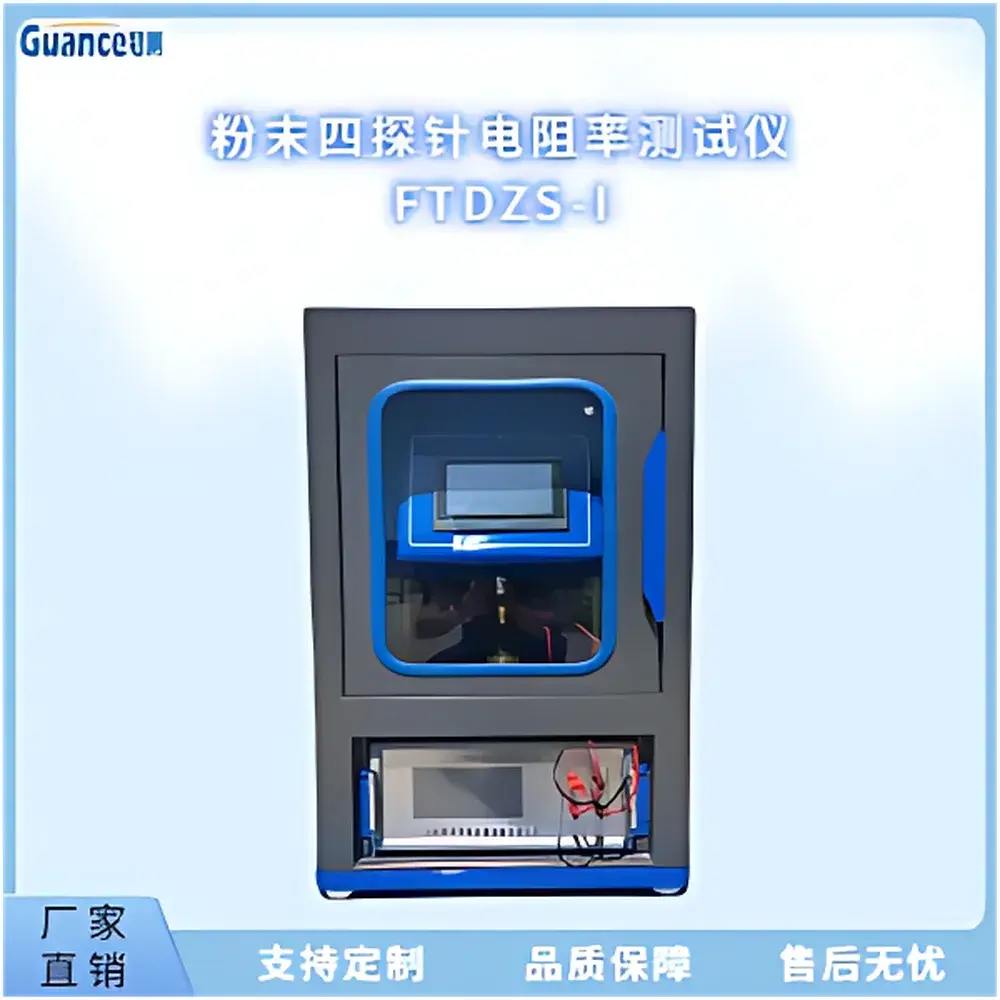
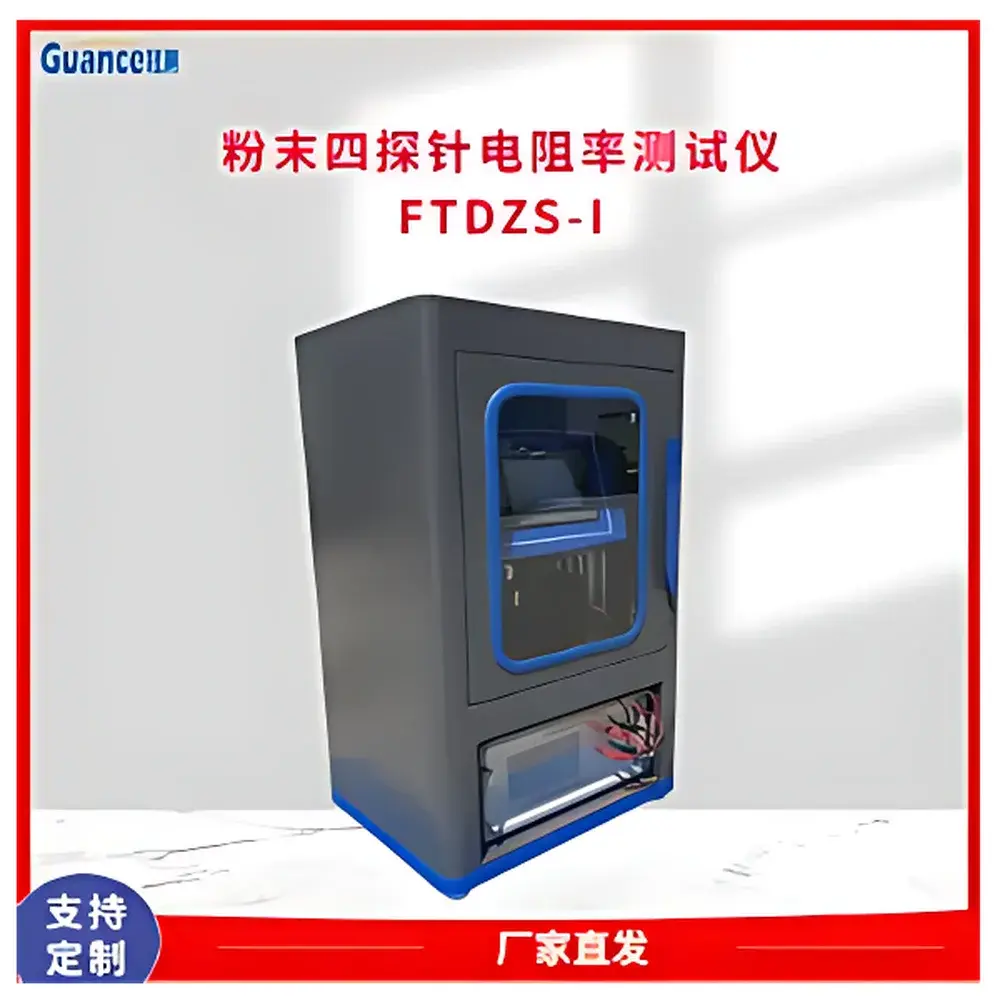
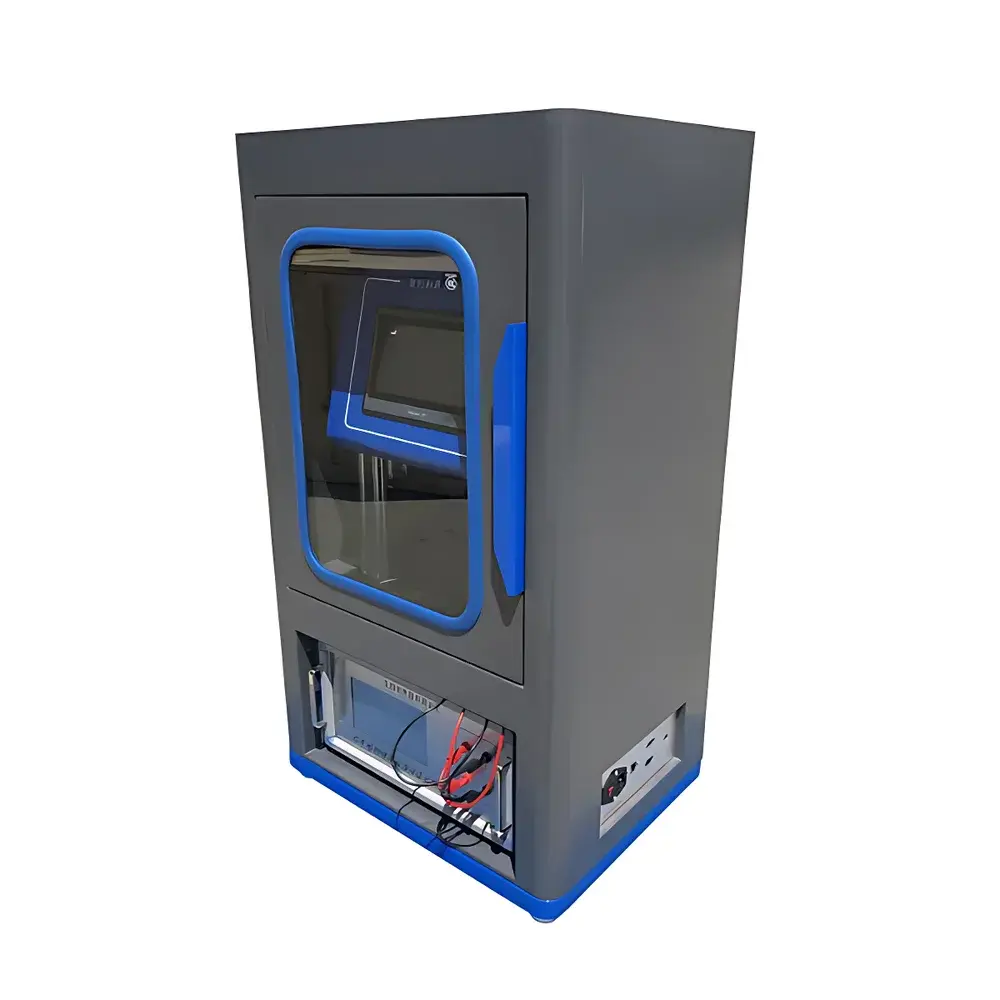
GuanCe FTDZS-I Four-Point Probe Powder Resistivity Tester
| Brand | GuanCe Instruments |
|---|---|
| Origin | Beijing, China |
| Manufacturer Type | Authorized Distributor |
| Regional Classification | Domestic (China) |
| Model | FTDZS-I |
| Price | USD 2,100 (FOB Beijing) |
Overview
The GuanCe FTDZS-I Four-Point Probe Powder Resistivity Tester is a dedicated benchtop instrument engineered for precise and repeatable measurement of electrical resistivity in granular and powdered materials under controlled compaction conditions. Unlike bulk solid or thin-film measurements, powder resistivity is highly sensitive to particle packing density, interparticle contact area, and surface oxidation—factors that necessitate standardized mechanical consolidation prior to testing. The FTDZS-I implements the four-point (Kelvin) probe method, eliminating lead resistance and contact potential errors inherent in two-point configurations. A regulated DC constant-current source (±0.1% stability over 8 hours) drives current through the outer pair of probes, while a high-resolution digital voltmeter (6½-digit resolution, input impedance >10 GΩ) measures the voltage drop across the inner probe pair. This configuration ensures accurate determination of volume resistivity (ρ, in Ω·cm) according to ASTM D374, ISO 3915, and GB/T 3048.7, with results traceable to NIM (National Institute of Metrology, China) calibration standards.
Key Features
- Four-point collinear probe array with tungsten-carbide tips (tip diameter: 1.2 mm, spacing: 2.0 mm), designed for minimal indentation and consistent penetration depth across varied powder densities
- Integrated programmable compaction system: applies calibrated axial pressure (0–10 MPa, ±0.5% full scale) via servo-controlled piston; pressure profile stored and reproducible per test sequence
- Touchscreen HMI (7-inch capacitive display) with intuitive workflow navigation, real-time graphical feedback of voltage/current transients, and on-screen pass/fail criteria based on user-defined resistivity thresholds
- Modular architecture: main unit houses precision current source (0.1 µA–100 mA range, 0.05% accuracy), low-noise voltmeter, and embedded ARM Cortex-M7 controller; test fixture includes interchangeable sample cups (diameters: 13 mm, 20 mm, 30 mm) with integrated force sensors
- Thermal drift compensation: internal temperature sensor monitors probe head ambient (±0.1 °C), enabling automatic correction of resistivity values using material-specific temperature coefficients (e.g., Cu: +0.393 %/°C)
- CE-compliant electromagnetic compatibility (EN 61326-1) and safety certification (EN 61010-1); operating temperature range: 15–30 °C, RH ≤ 70% non-condensing
Sample Compatibility & Compliance
The FTDZS-I accommodates powders ranging from fine metallurgical carbides (<1 µm median particle size) to coarse graphite anode materials (up to 100 µm). Sample mass requirements are 0.5–5 g depending on cup geometry and target density. It supports standardized test protocols including ASTM D374-22 (Standard Test Methods for Dielectric Strength of Solid Electrical Insulating Materials), ISO 3915:2015 (Electrical Resistance of Conductive Plastics), and Chinese national standard GB/T 3048.7-2007 (Test Methods for Electrical Properties of Electric Cables and Wires – Part 7: Resistivity of Conductive Materials). All firmware and calibration certificates comply with GLP documentation requirements, including audit trails for operator ID, date/time stamp, pressure setpoint, current level, and raw voltage readings—fully compatible with FDA 21 CFR Part 11 electronic record integrity provisions when deployed in regulated QC environments.
Software & Data Management
Data acquisition and reporting are managed via GuanCe’s proprietary PC-based software suite (v3.2, Windows 10/11 compatible). The application enables batch test sequencing, statistical process control (SPC) charting (X̄-R, Cp/Cpk), and export to CSV, PDF, or XML formats compliant with LIMS integration (via ODBC drivers). Each test record embeds digital signatures, instrument serial number, calibration expiration date, and environmental metadata (temperature/humidity logged at start/end). Optional cloud synchronization (AWS-hosted secure instance) provides remote access for multi-site laboratories, with role-based permissions and encrypted TLS 1.3 transmission.
Applications
- Quality control of lithium-ion battery cathode/anode powders (LiCoO₂, NMC, graphite, silicon composites)
- R&D evaluation of conductive additives (carbon black, graphene nanoplatelets, CNTs) in polymer composites
- Production monitoring of sintered metal powders (stainless steel, tungsten, copper) prior to MIM processing
- Characterization of refractory ceramics (SiC, AlN) and conductive oxides (ITO, FTO) used in thick-film electronics
- Validation of anti-static properties in pharmaceutical excipients and toner formulations per ISO 18587
FAQ
What compaction pressure ranges does the FTDZS-I support, and how is pressure calibrated?
The system delivers 0–10 MPa with NIST-traceable load cell calibration performed annually; factory certificate included with each unit.
Can the instrument measure resistivity of hygroscopic or air-sensitive powders?
Yes—optional glove-box integration kit (ISO Class 5 compatible) allows operation under argon or nitrogen atmosphere with feed-through ports for probe cabling.
Is the four-point probe array replaceable, and what is its service life?
Probe assemblies are field-replaceable; typical lifespan exceeds 50,000 compressions under 5 MPa loading, with wear indicators visible via integrated microscope port.
Does the software support automated compliance reporting for ISO/IEC 17025 accredited labs?
Yes—preconfigured report templates include uncertainty budgets per GUM (JCGM 100:2008), measurement traceability maps, and instrument maintenance logs required for accreditation audits.



