
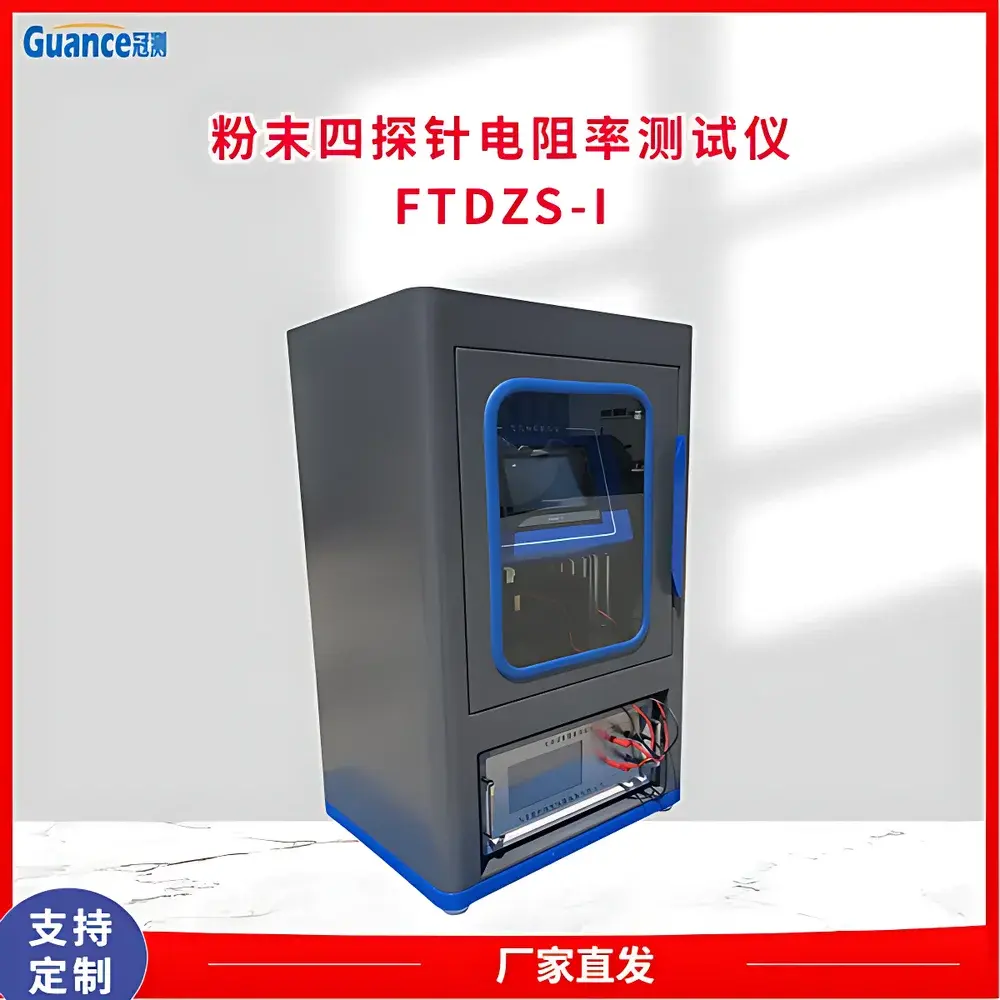
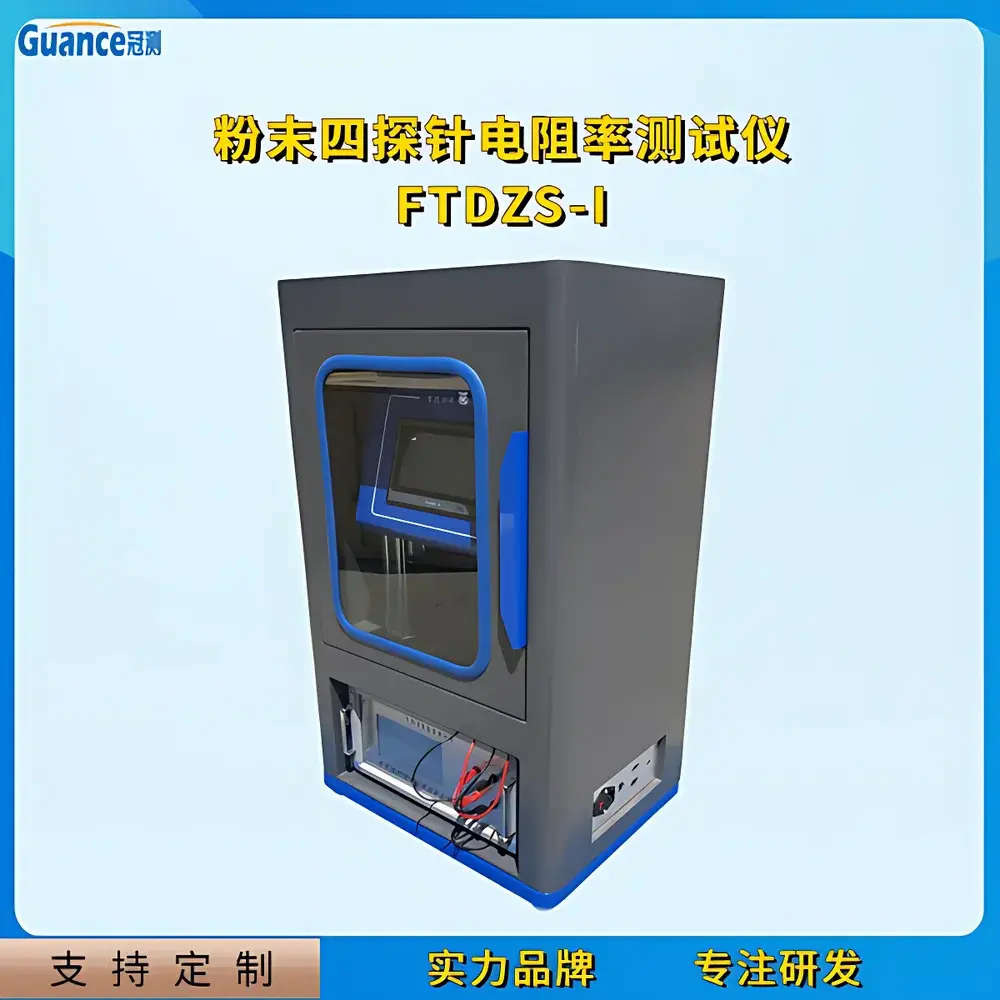
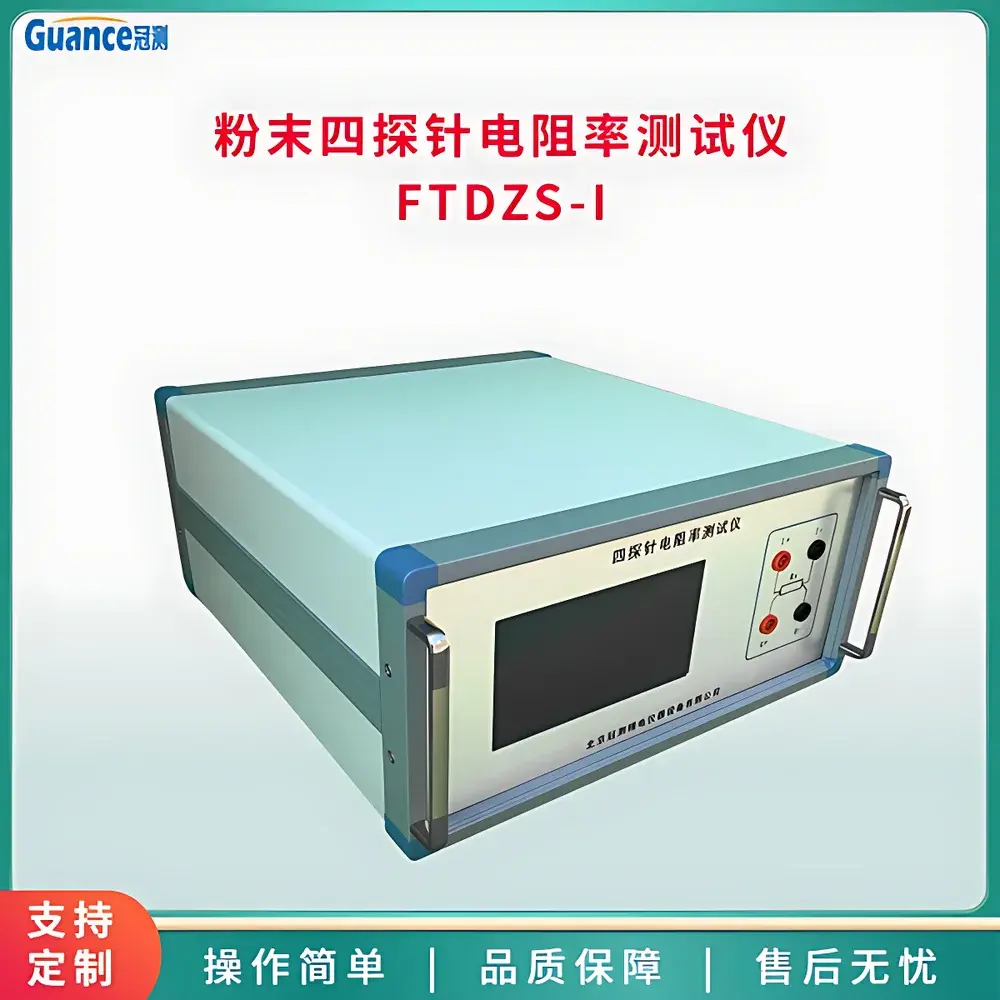
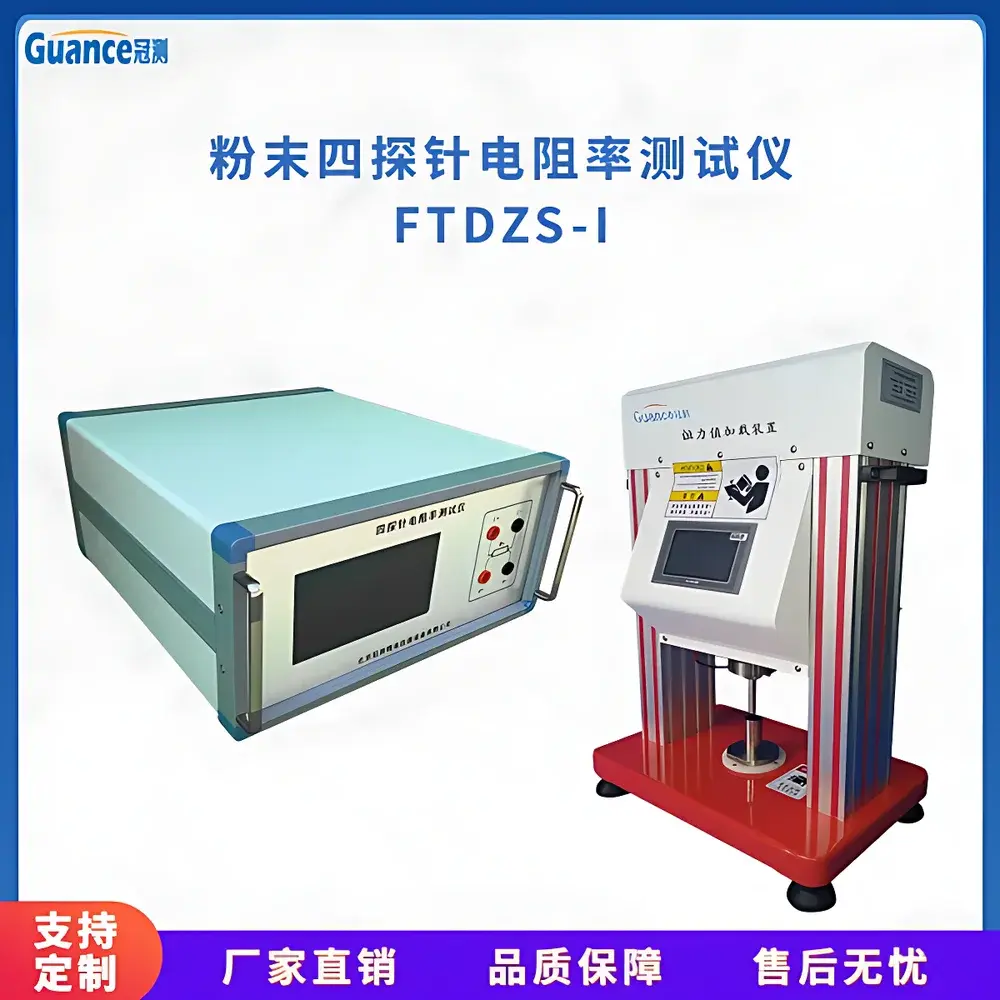
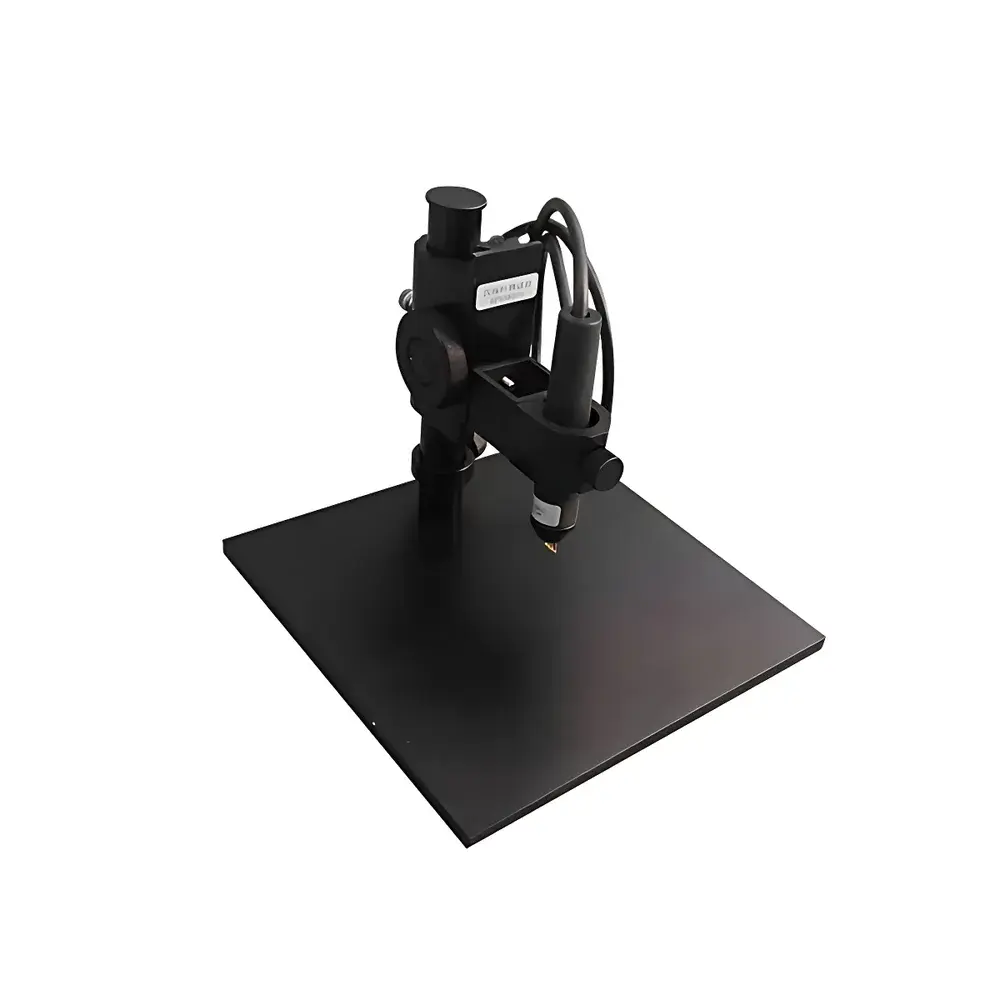
GuanCe FTDZS-I Four-Point Probe Powder Resistivity Tester
| Brand | GuanCe |
|---|---|
| Model | FTDZS-I |
| Measurement Principle | Four-Point Collinear Probe Method (DC) |
| Sample Form | Free-Flowing or Compacted Powders |
| Applied Pressure | Adjustable via Mechanical Loading Fixture (Compliant with ASTM D3764 & ISO 3252) |
| Voltage Resolution | ≤1 µV |
| Current Source Stability | ±0.05% over 1 h |
| Compliance | Meets GB/T 3048.2–2007, ASTM F1711–22, IEC 62607-4-2 |
| Data Output | Touchscreen Interface with USB Print Support |
| Power Supply | AC 220 V ±10%, 50 Hz |
| Dimensions (W×D×H) | 320 × 300 × 150 mm |
| Weight | 8.2 kg |
Overview
The GuanCe FTDZS-I Four-Point Probe Powder Resistivity Tester is a precision DC resistivity measurement system engineered specifically for granular and powdered materials. It operates on the established four-point collinear probe principle—where two outer probes inject a known constant current while two inner probes measure the resulting voltage drop—thereby eliminating contact resistance and lead wire errors inherent in two-point methods. This configuration ensures high reproducibility for bulk resistivity (ρ) calculation using the standard geometric correction factor for powder compaction geometry. Unlike solid-state or thin-film measurements, powder resistivity is highly sensitive to particle packing density, interparticle contact area, and surface oxidation state; therefore, the FTDZS-I integrates a calibrated mechanical loading fixture to apply standardized axial pressure during measurement, enabling repeatable evaluation under controlled consolidation conditions (e.g., tap density, vibrated density, or uniaxial press). The instrument is designed for laboratory-based quality control, R&D screening, and material specification verification across conductive, semiconductive, and carbonaceous powders—including metal alloys, graphite, lithium-ion battery cathode/anode precursors, conductive polymers, and refractory ceramics.
Key Features
- Four-terminal DC measurement architecture with independent current source and nanovolt-level voltage sensing circuitry
- Integrated mechanical compression stage with calibrated load range (0–100 N), traceable to national metrology standards
- Capacitive touchscreen interface supporting real-time parameter configuration, live resistance monitoring, and ρ-value auto-calculation based on sample height and electrode spacing
- High-stability constant-current source (10 µA to 100 mA, programmable in 1 µA increments) with thermal drift compensation
- Compact benchtop design (320 × 300 × 150 mm) optimized for integration into QC labs, battery material development suites, and metallurgical testing environments
- USB-host port for direct thermal printer output; no external PC required for routine reporting
Sample Compatibility & Compliance
The FTDZS-I accommodates powders ranging from 1 µm to 500 µm in median particle size, with minimum sample mass of 2.5 g for reliable interparticle conduction pathways. It supports both loose-fill and mechanically compacted configurations per ASTM D3764 (Standard Test Method for Electrical Resistivity of Compacted Metal Powders) and ISO 3252 (Metallic powders — Determination of electrical resistivity). Measurement protocols align with GB/T 3048.2–2007 (Electrical properties of electric cables — Part 2: Test methods for electrical resistance) and IEC 62607-4-2 (Nanomanufacturing — Material specifications — Part 4-2: Carbon nanotube dispersions — Electrical resistivity). All firmware logic and calibration routines are documented for GLP/GMP audit readiness, including timestamped operator ID logging and non-editable result records.
Software & Data Management
While the FTDZS-I operates autonomously via its embedded Linux-based HMI, it supports optional data export via USB mass storage mode (CSV format) for post-processing in Excel, MATLAB, or statistical analysis platforms. Each test record includes: date/time stamp, applied load (N), measured voltage (µV), injected current (mA), calculated resistivity (Ω·cm), sample height (mm), and user-defined batch ID. No proprietary software installation is required. Firmware updates are delivered via signed binary files validated through SHA-256 checksums—ensuring integrity in regulated environments subject to FDA 21 CFR Part 11 requirements for electronic records.
Applications
- Quality assurance of conductive fillers in polymer composites (e.g., nickel-coated graphite, carbon black)
- Resistivity profiling of electrode powders during battery cathode manufacturing (NMC, LFP, silicon anodes)
- Process validation of sintering aids and binder removal in powder metallurgy feedstocks
- Research-grade characterization of doped semiconductor powders (SiC, GaN) under variable compaction states
- Carbon material certification for EDM electrodes, fuel cell catalyst supports, and thermal interface materials
FAQ
Does the FTDZS-I comply with ASTM or ISO standards for powder resistivity measurement?
Yes—it is explicitly designed to support ASTM D3764 and ISO 3252 test procedures, including prescribed probe spacing, current ranges, and pressure application methodology.
Can the instrument measure resistivity of hygroscopic or air-sensitive powders?
It can, provided samples are loaded and tested inside a glovebox-compatible sample cup (optional accessory); the base unit itself is not sealed but has no internal gas-sensitive components.
Is calibration traceable to national standards?
Yes—factory calibration uses NIST-traceable shunt resistors and certified force transducers; a full calibration certificate is supplied with each unit.
What is the minimum particle size the system can reliably characterize?
For statistically representative results, particles should exceed 0.5 µm in diameter; submicron agglomerates require dispersion pre-treatment to avoid tunneling artifacts.
Does the system support automated sequence testing for production lot sampling?
Not natively—the touchscreen interface requires manual initiation per sample—but custom script-based automation can be implemented via the USB-CDC serial interface (protocol documentation available under NDA).



