
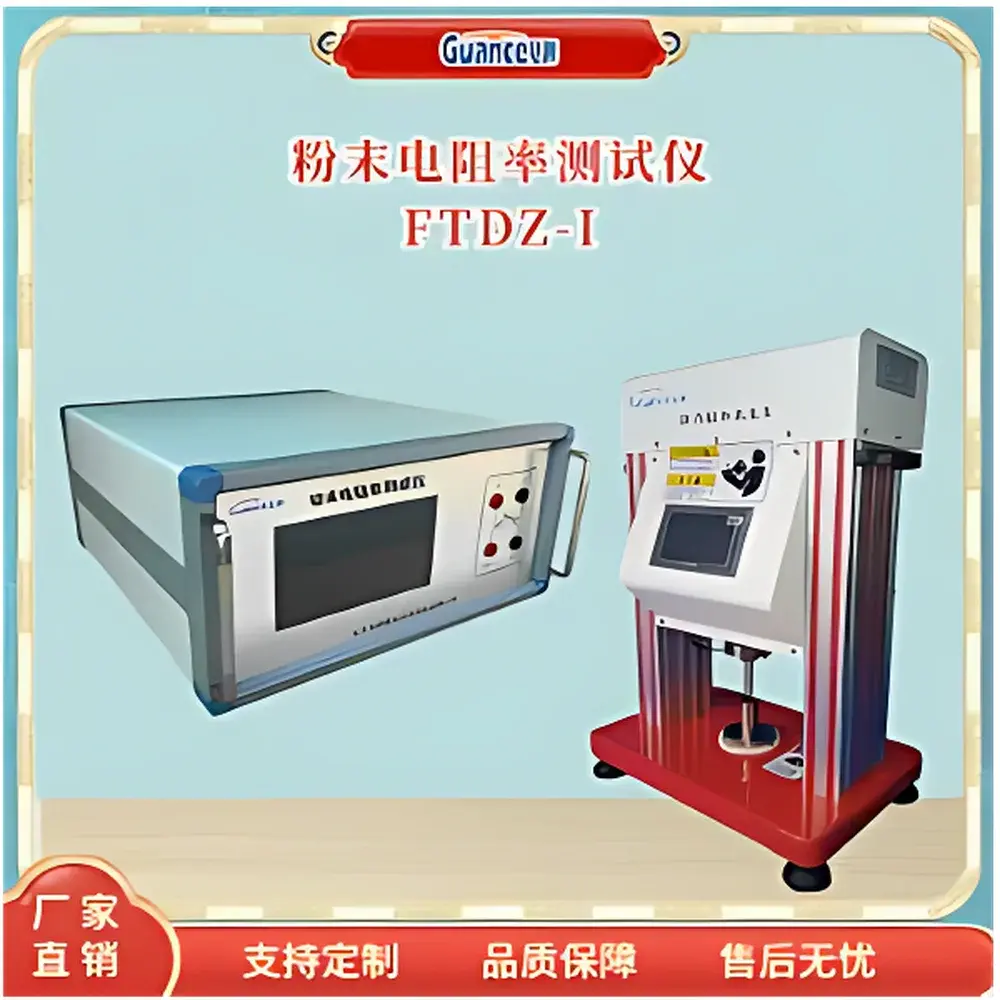
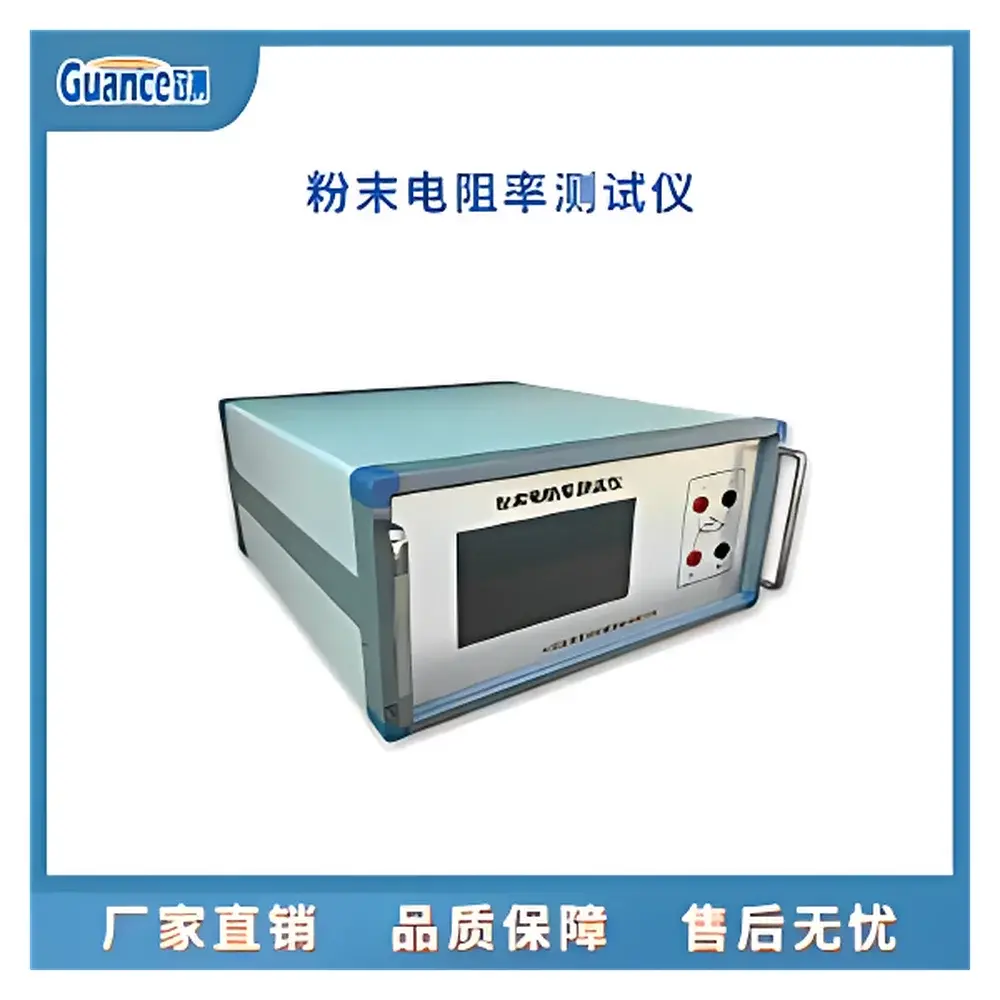
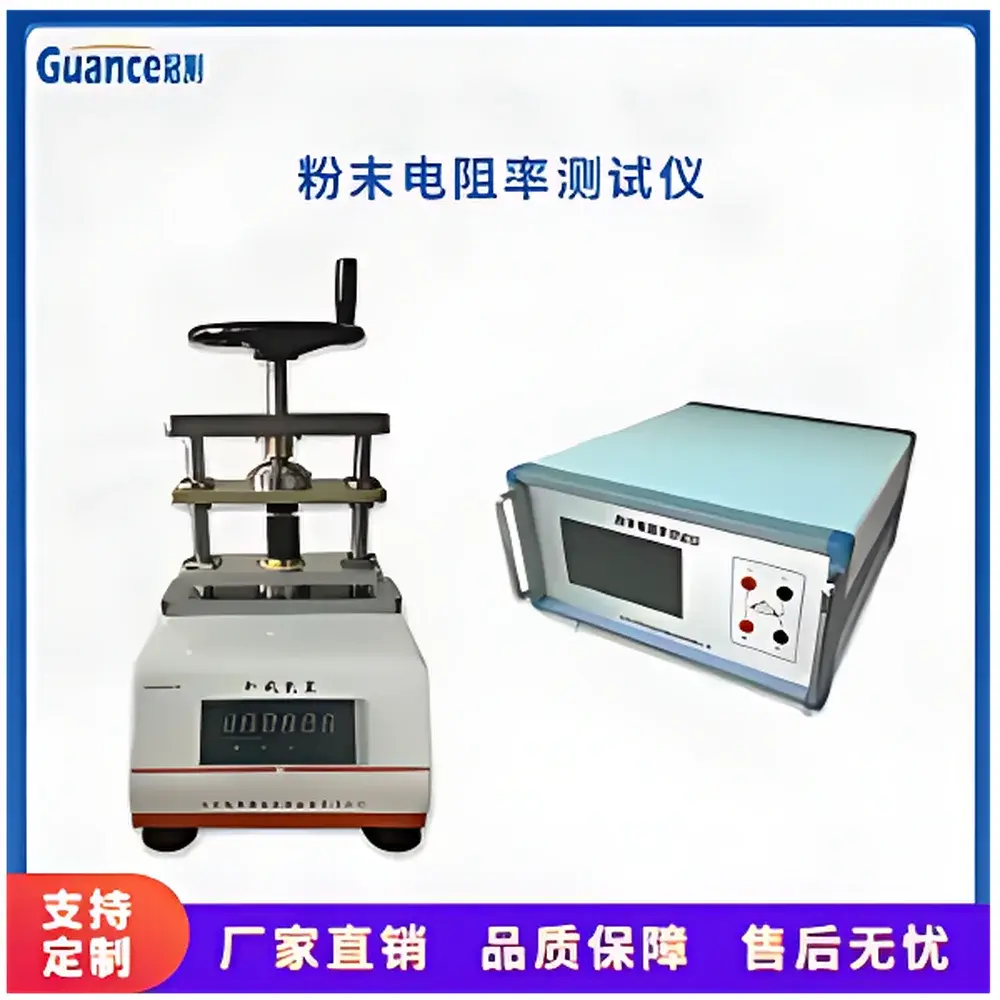
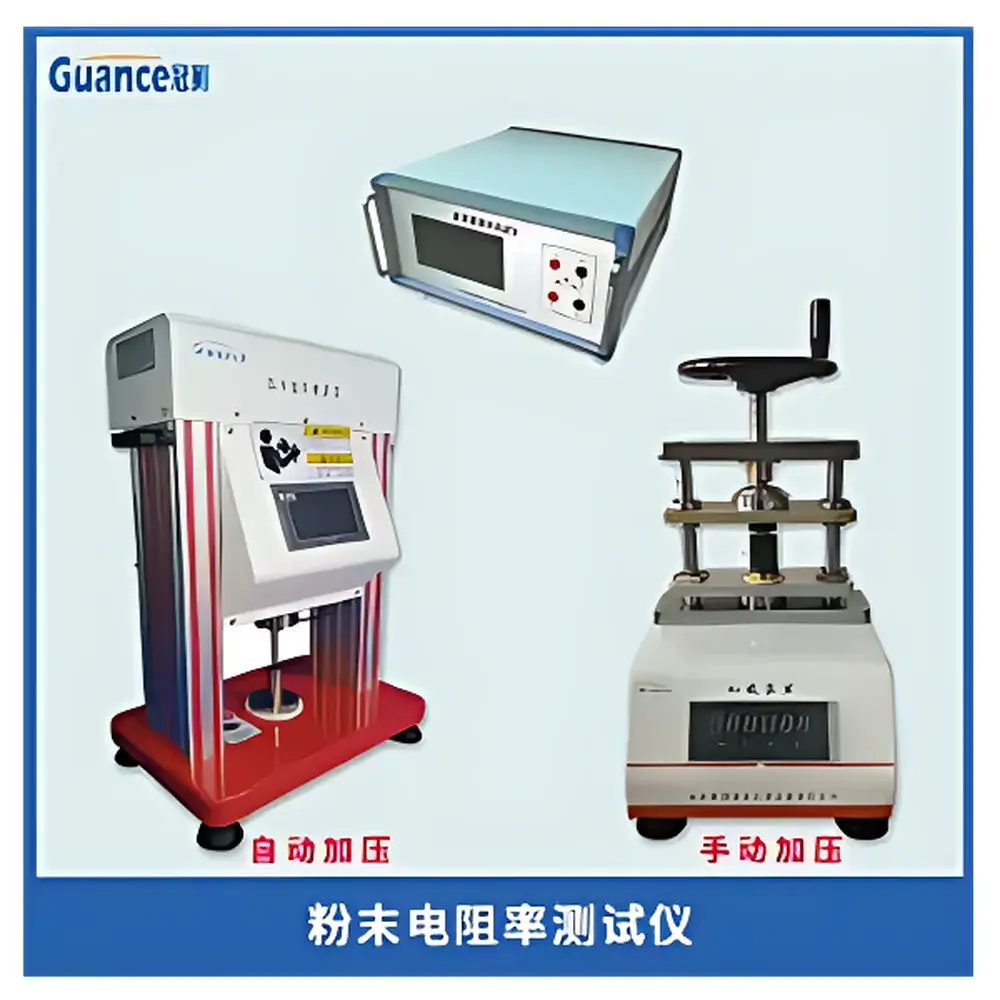
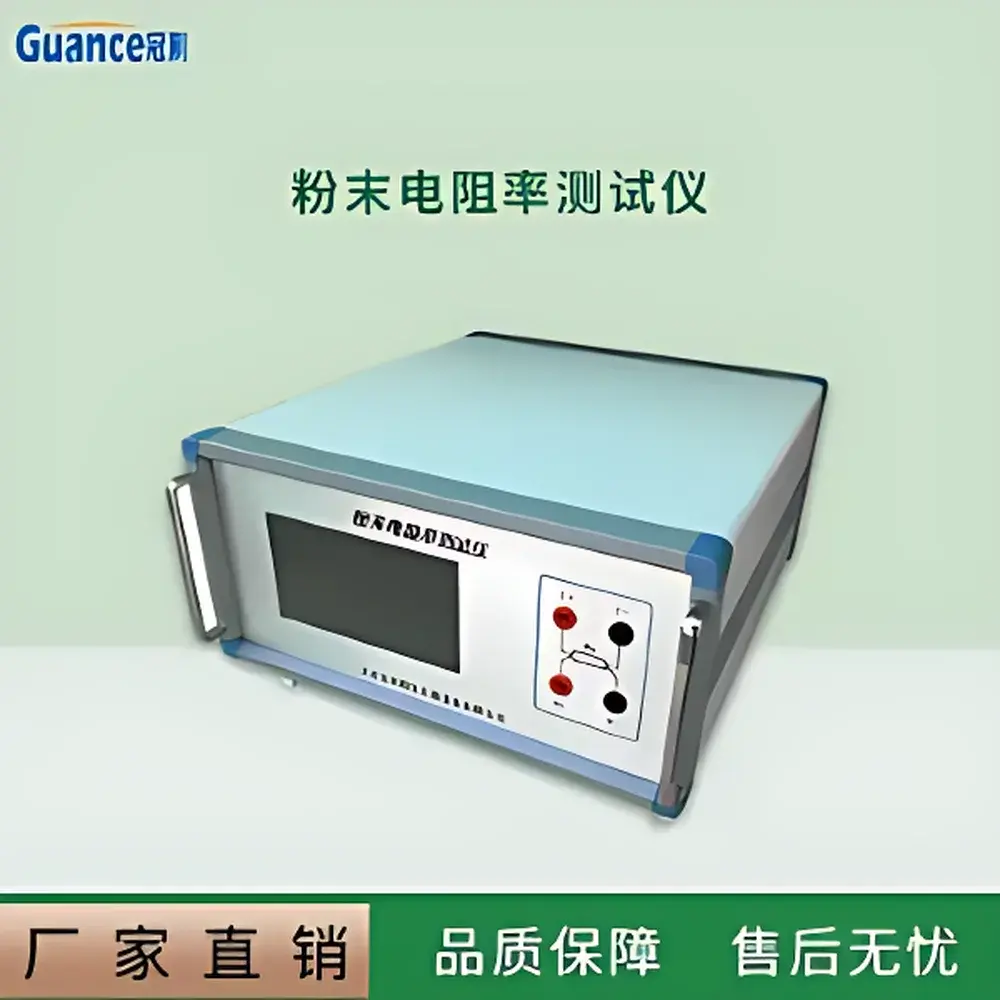
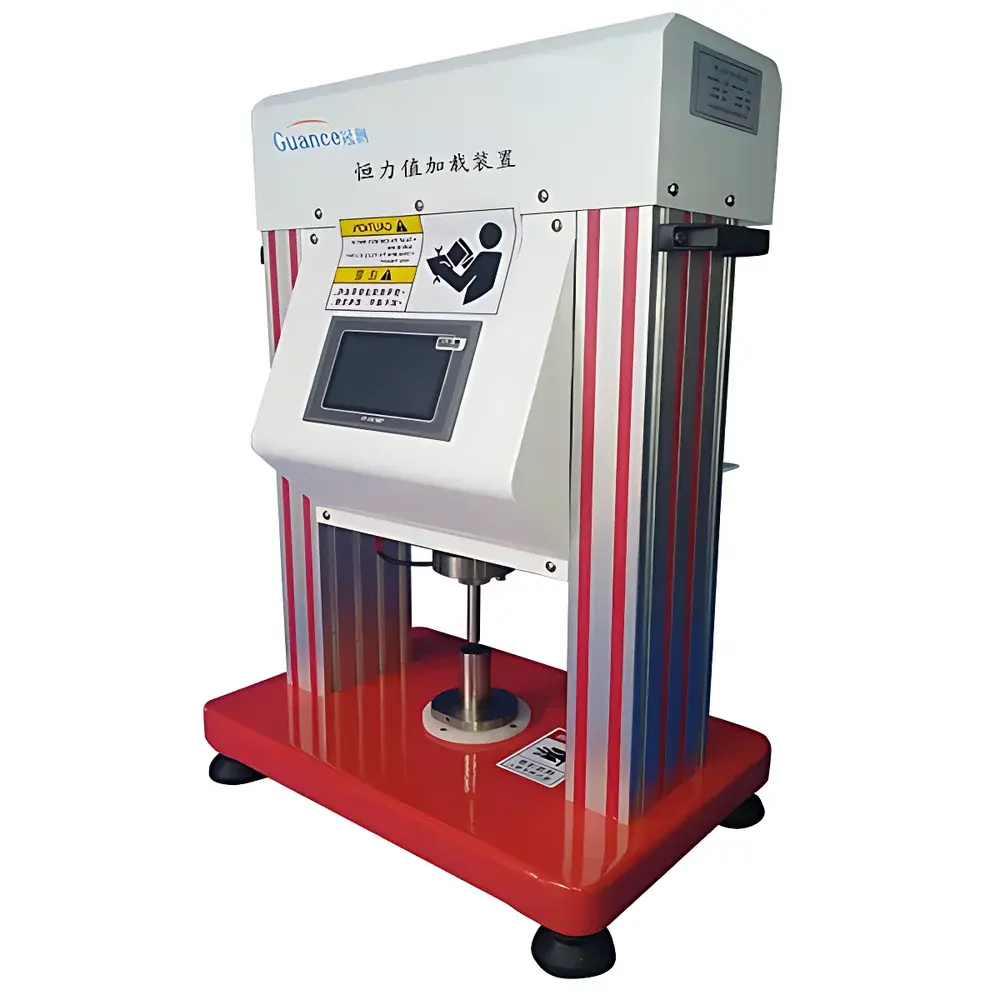
GuanCe Instruments FTDZ-I2 Powder Resistivity Tester
| Brand | GuanCe Instruments |
|---|---|
| Origin | Beijing, China |
| Manufacturer Type | Authorized Distributor |
| Origin Category | Domestic (China-made) |
| Model | FTDZ-I2 |
| Price | USD 2,500 (FOB Beijing) |
Overview
The GuanCe Instruments FTDZ-I2 Powder Resistivity Tester is a dedicated DC four-terminal (Kelvin) resistivity measurement system engineered for precise determination of volume resistivity in granular and powdered materials under controlled compaction conditions. It operates on the principle of constant-current DC excitation with high-impedance voltage sensing—eliminating contact resistance errors inherent in two-probe configurations. The instrument applies a defined axial compressive force to a standardized cylindrical powder column confined within a calibrated die cavity, enabling reproducible density-state measurements aligned with ASTM D3764 (Standard Test Method for Electrical Resistivity of Powdered Materials), ISO 3951-1 (Sampling procedures for inspection by variables), and the referenced Chinese national and industry standards including GB/T 24525–2009, GB/T 24521–2009, and YS/T 587.6–2006. This architecture ensures traceable, metrologically sound data essential for quality control in carbon anode production, battery electrode R&D, metallurgical powder processing, and advanced ceramic formulation.
Key Features
- Four-terminal (Kelvin) DC resistivity measurement circuit with <1 µV resolution voltage sensing and ±0.05% full-scale current stability (1 mA–100 mA range)
- Integrated electromechanical compression module delivering programmable axial pressure from 0.5 MPa to 5.0 MPa (adjustable in 0.1 MPa increments), compliant with standard test dies per GB/T 24525
- 7-inch industrial-grade capacitive touchscreen HMI with intuitive calibration workflow, real-time resistance/ρ display, and built-in pass/fail threshold logic
- Modular test fixture design accommodating interchangeable stainless-steel dies (Φ12.7 mm and Φ25.4 mm diameters) with precision-ground parallel platens and integrated force transducer feedback
- Automated zero-offset compensation and thermal EMF suppression algorithms ensuring long-term baseline stability at ambient temperatures (15–30 °C)
- Compact benchtop footprint (320 × 280 × 360 mm) with CE-compliant EMC shielding and reinforced chassis for laboratory durability
Sample Compatibility & Compliance
The FTDZ-I2 supports powders with particle size distributions ranging from 1 µm to 500 µm and bulk densities between 0.2 g/cm³ and 3.5 g/cm³. It is validated for use with graphite powders, calcined petroleum coke, acetylene black, silicon carbide, metal alloy powders (e.g., Ni, Co, Fe), and conductive polymer composites. All measurement protocols align with GLP documentation requirements: each test record includes timestamp, operator ID, applied pressure, measured height/diameter, current/voltage values, calculated resistivity (Ω·cm), and statistical deviation (n = 3 replicates). Full compliance is maintained with GB/T 24525–2009, YS/T 587.6–2006, and harmonized testing principles of IEC 62607-4-2 (Nanomanufacturing – Key control characteristics – Part 4-2: Electrical properties – Volume resistivity of nanopowders).
Software & Data Management
Data acquisition and reporting are managed via embedded firmware with USB 2.0 host interface for direct export of CSV-formatted test logs. Optional PC software (GuanCe LabLink v2.1) provides extended functionality: automated report generation per ISO/IEC 17025 templates, audit trail with user-level access control (admin/operator/guest), calibration certificate management with expiry alerts, and trend analysis across batches using Cpk/Ppk metrics. Raw data files include embedded metadata tags for pressure history, environmental temperature/humidity (via optional external sensor input), and instrument serial-number traceability—fully supporting FDA 21 CFR Part 11 compliance when deployed in regulated manufacturing environments.
Applications
- Quality assurance of calcined petroleum coke used in aluminum smelting anodes
- R&D evaluation of conductive additives (e.g., carbon black, graphene nanoplatelets) in lithium-ion battery cathode slurries
- Process validation of sintering behavior in tungsten carbide and stainless steel MIM feedstocks
- Resistivity mapping of pyrolytic carbon coatings on nuclear graphite components
- Batch release testing of acetylene black (GB/T 3782–2016) and specialty graphite powders per IEC 60252-1
- Correlation studies between powder packing density, interparticle contact resistance, and effective conductivity in composite electrodes
FAQ
What compaction pressure ranges does the FTDZ-I2 support, and how is pressure calibrated?
The system delivers 0.5–5.0 MPa axial pressure with NIST-traceable load cell calibration certified annually; pressure is displayed in real time on the HMI with ±0.02 MPa repeatability.
Is the instrument compatible with ASTM D3764 or only Chinese standards?
Yes—it implements the core methodology of ASTM D3764 (constant-force compaction, four-terminal geometry, resistivity calculation ρ = R·A/L), with die dimensions and procedural logic fully cross-referenced to both ASTM and GB/T frameworks.
Can raw voltage/current data be exported for third-party analysis?
Yes—CSV exports include timestamped V, I, L, A, P, and derived ρ values; no proprietary binary formats are used.
Does the system require external grounding or special power conditioning?
No—integrated line filtering and isolated analog front-end meet IEC 61326-1 Class A EMC requirements; standard 100–240 VAC, 50/60 Hz input suffices.
How is probe contact resistance minimized during measurement?
Through true four-terminal configuration: separate current-injection electrodes and high-impedance voltage-sensing electrodes eliminate lead and contact resistance contributions from the final resistivity calculation.



