
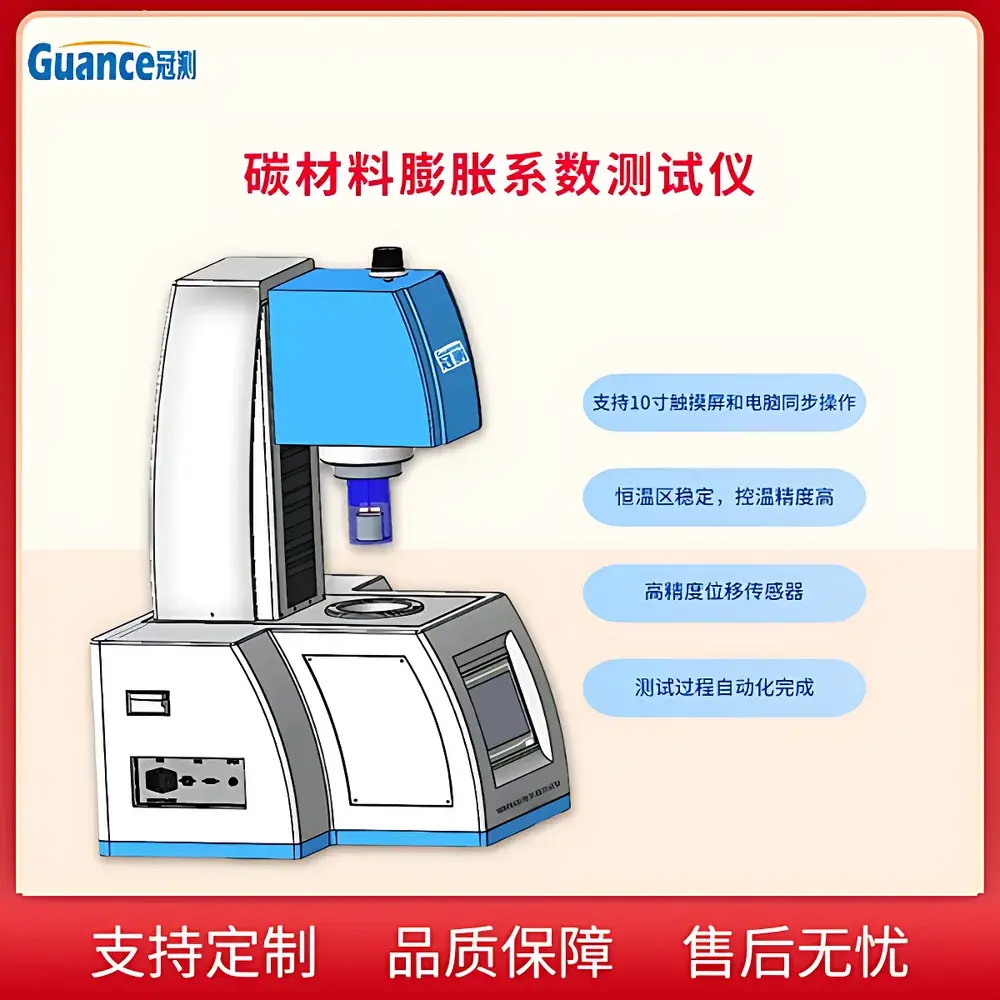
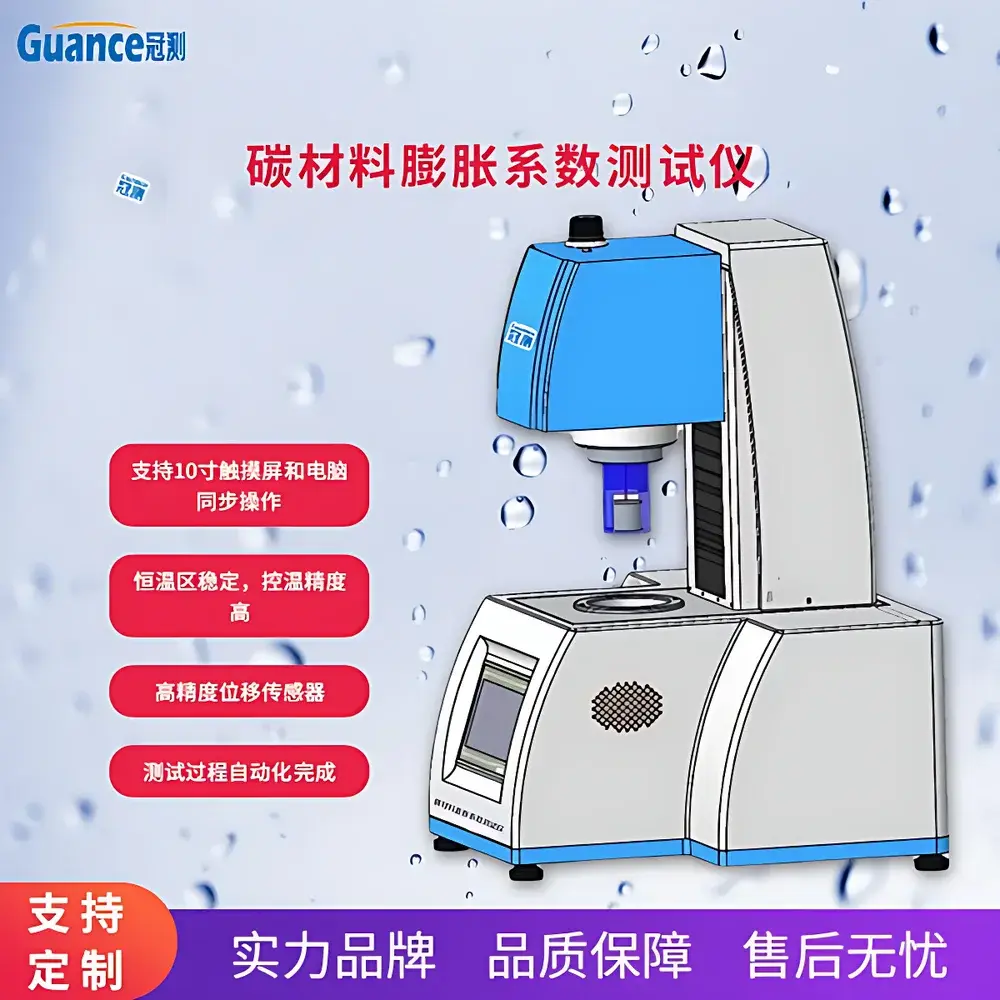
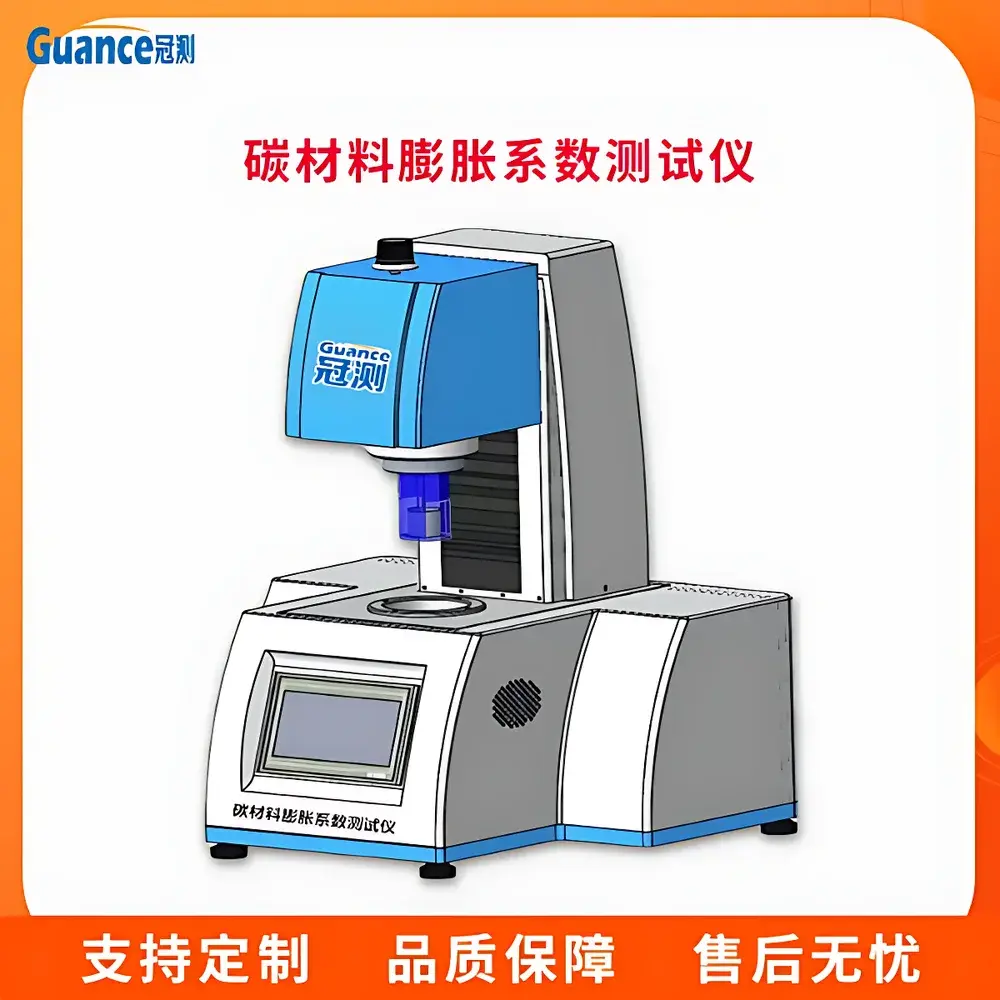
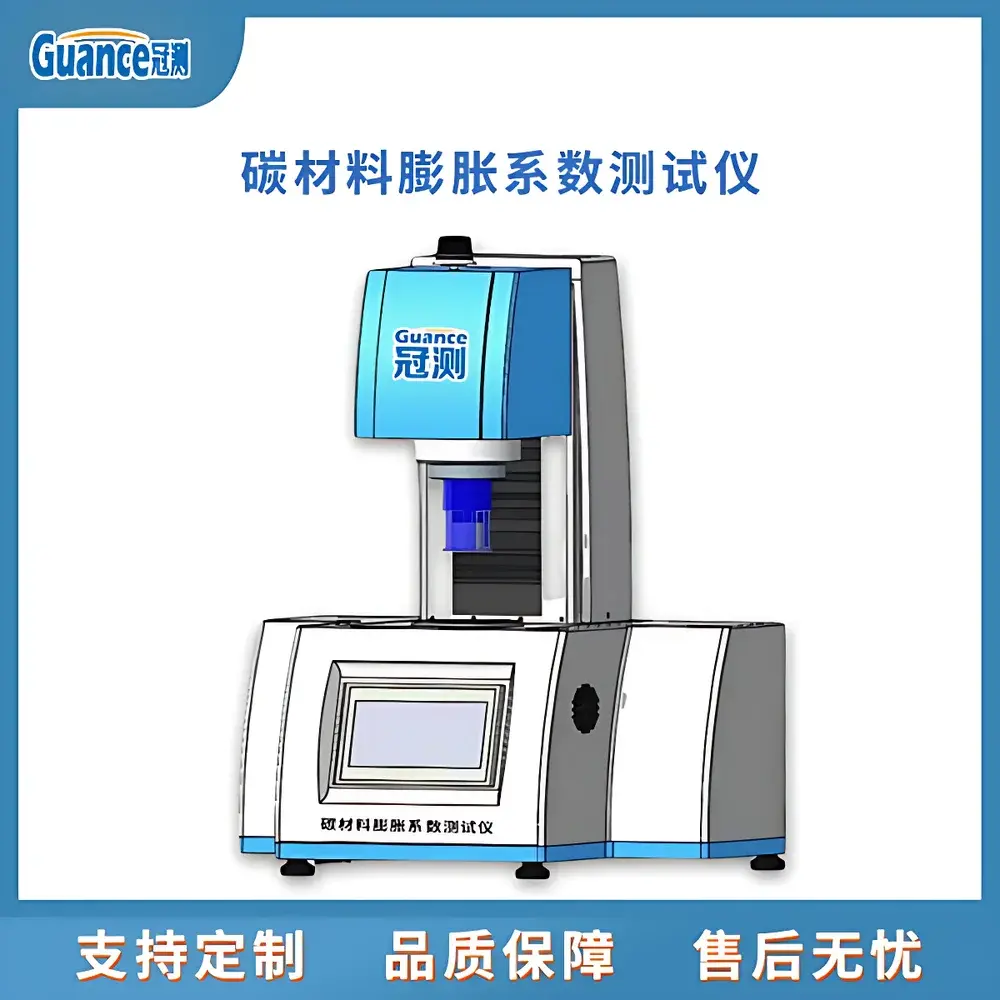
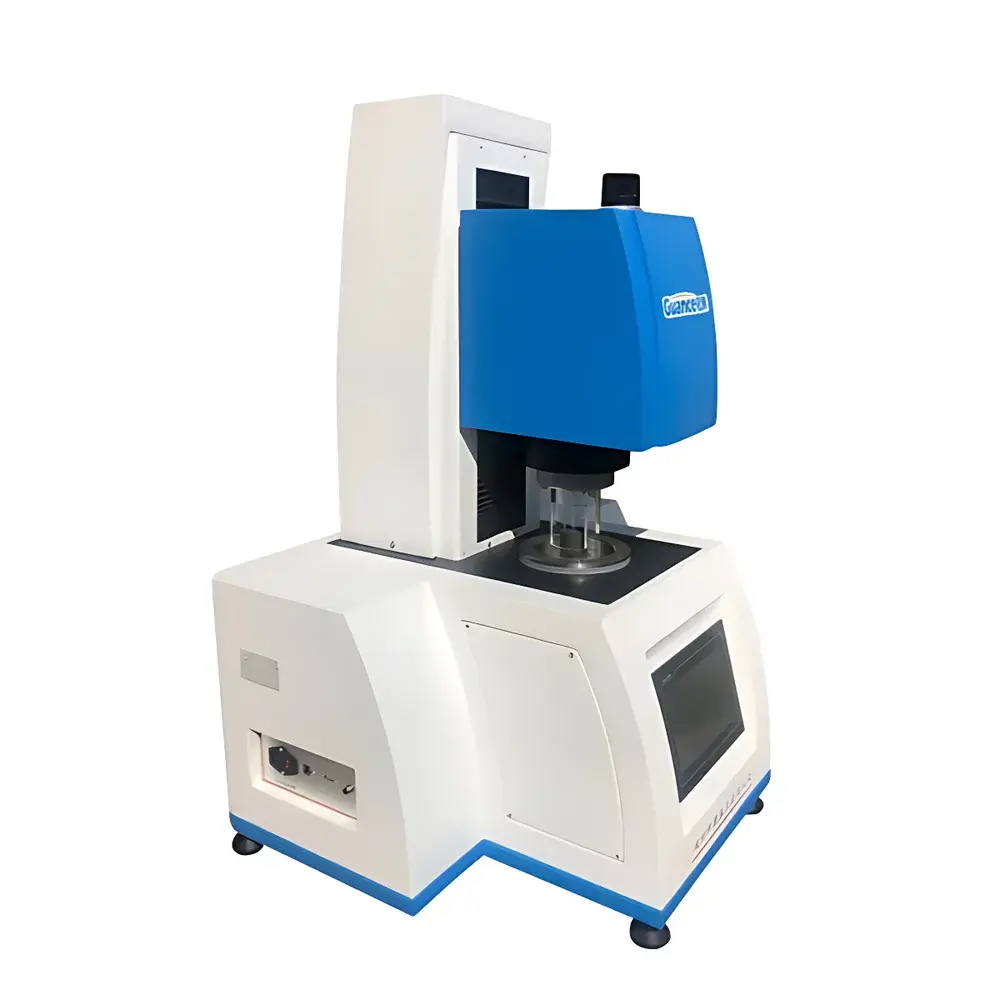
GuanCe Instruments GCTKP-700C High-Temperature Linear Thermal Dilatometer for Anode Carbon Blocks
| Brand | GuanCe Instruments |
|---|---|
| Origin | Beijing, China |
| Model | GCTKP-700C |
| Temperature Range | Ambient to 700 °C |
| Heating Rate | Programmable (0–10 °C/min typical) |
| Displacement Range | 0–1 mm |
| Displacement Resolution | ±0.001 mm |
| Sample Dimensions | Ø50 mm × 60 mm or ≥5 mm cross-section × ≥50 mm length |
| Atmosphere Control | 0–50 kPa (gauge), compatible with inert/N₂/air/vacuum |
| Power Supply | 220 V / 50 Hz |
| Rated Power | 1.7 kW |
| Thermocouple | Type K (0–1000 °C, Class 0.1 accuracy) |
| Gas Flow Meter | 0–80 L/min |
| Dimensions (W×D×H) | 810 × 700 × 1150 mm |
| Weight | 150 kg |
Overview
The GuanCe Instruments GCTKP-700C is a precision linear thermal dilatometer engineered for the standardized determination of the coefficient of linear thermal expansion (CTE) in carbonaceous materials used in aluminum electrolysis and graphite electrode manufacturing. It operates on the principle of contact-based high-resolution displacement measurement under controlled thermal ramping, utilizing a calibrated micrometric sensor coupled with a high-stability furnace system. The instrument conforms to ISO 14420:2005, GB/T 3074.4–2016, YS/T 63.4–2006, and YS/T 764–2011—key international and national standards governing CTE testing of baked anodes, shaped carbon products, and prebaked anodes. Designed specifically for the demanding thermal characterization of anode carbon blocks, cathode carbon, ramming pastes, and graphite electrodes, the GCTKP-700C delivers traceable, repeatable data across ambient to 700 °C, supporting quality assurance, process optimization, and R&D validation in primary aluminum production facilities and carbon material laboratories.
Key Features
- High-precision displacement measurement using a low-drift, temperature-compensated linear variable differential transformer (LVDT) sensor with ±0.001 mm resolution and full-scale range of 0–1 mm
- Uniform-heating furnace with vacuum-formed ceramic fiber insulation and resistive heating elements, delivering stable isothermal zones and minimal axial/radial thermal gradients
- Multi-stage PID temperature controller with real-time feedback from dual Type K thermocouples (furnace wall and sample vicinity), achieving thermal stability within ±1 °C at setpoint
- Integrated atmosphere management system including pressure transducer (0–50 kPa), mass flow controller (0–80 L/min), and sealed quartz tube chamber for reproducible oxidative, inert, or reduced environments
- PLC-based embedded control architecture with dual-mode operation: intuitive 7-inch industrial touchscreen HMI for local setup and monitoring, plus Ethernet-enabled PC software for advanced scripting, data logging, and remote supervision
- Rugged mechanical construction: cold-rolled steel frame, electrostatically applied corrosion-resistant powder coating, and vibration-damped optical baseplate to minimize environmental interference
Sample Compatibility & Compliance
The GCTKP-700C accommodates cylindrical or prismatic specimens conforming to standard sampling protocols defined in GB/T 1427, YS/T 62.1–62.4, and YS/T 63.1. Valid specimen geometries include Ø50 mm × 60 mm cylinders or any solid carbon sample with minimum cross-sectional dimension ≥5 mm and length ≥50 mm. The system supports both absolute expansion and differential expansion modes, enabling direct calculation of average linear CTE (αL) over user-defined temperature intervals (e.g., 20–300 °C for anode qualification per YS/T 63.4, or ambient–600 °C for ultra-high-power graphite electrodes). All measurement procedures comply with GLP-aligned data integrity requirements: time-stamped raw displacement/temperature logs, audit-trail-enabled parameter changes, and exportable ASCII/CSV datasets suitable for FDA 21 CFR Part 11–compliant review workflows when integrated with validated laboratory information management systems (LIMS).
Software & Data Management
The dedicated GCTKP Control Suite (v3.2+) provides ISO/IEC 17025-aligned data acquisition, processing, and reporting capabilities. Real-time visualization includes synchronized plots of displacement vs. temperature, derivative (dL/dT) curves for inflection point analysis, and automatic CTE calculation via linear regression over configurable sub-ranges. Software features include programmable multi-step thermal profiles (ramp-hold-cool sequences), calibration curve import/export (NIST-traceable LVDT and thermocouple calibrations), batch report generation compliant with ASTM E228 and ISO 11359-2 templates, and password-protected user roles (Operator, Technician, Administrator). Data files are stored with embedded metadata (operator ID, sample ID, atmospheric conditions, calibration certificate IDs) and support digital signature verification for regulatory submissions.
Applications
- Determination of mean linear CTE for prebaked anodes in aluminum smelting plants per ISO 14420 and YS/T 764
- Quality control of graphite electrode batches used in electric arc furnaces (EAFs), verifying dimensional stability up to 700 °C
- Thermal expansion screening of cathode carbon blocks, side blocks, and ramming pastes during carbon material development
- Research into microstructural effects on thermal strain behavior in graphitized carbons and composite electrodes
- Validation of thermal modeling inputs for electrolytic cell design and lifetime prediction of carbon components
- Supporting certification testing for ISO 9001 and ASME BPVC Section VIII compliance documentation
FAQ
What standards does the GCTKP-700C directly support?
It is configured and validated for GB/T 3074.4–2016, YS/T 63.4–2006, ISO 14420:2005, and YS/T 764–2011, with optional firmware modules available for ASTM E228 and ISO 11359-2 alignment.
Can the instrument operate under vacuum or reactive gas atmospheres?
Yes—it supports pressure-controlled environments from full vacuum (0 kPa) to 50 kPa gauge, with compatibility for N₂, Ar, air, CO₂, and forming gas mixtures via external gas supply integration.
Is third-party calibration certification included?
Each unit ships with factory calibration certificates for displacement sensor (±0.001 mm), thermocouple (Type K, 0–1000 °C), and pressure transducer (0–50 kPa), all traceable to CNAS-accredited reference standards.
How is data integrity ensured for regulated environments?
The system enforces electronic audit trails, user authentication, immutable raw data storage, and export formats compatible with 21 CFR Part 11–compliant LIMS and eDMS platforms.
What maintenance is required for long-term measurement stability?
Annual recalibration of LVDT and thermocouple sensors is recommended; ceramic insulation and heating elements are rated for >10,000 h of operation at ≤700 °C with routine visual inspection and cleaning of the quartz tube chamber.



