
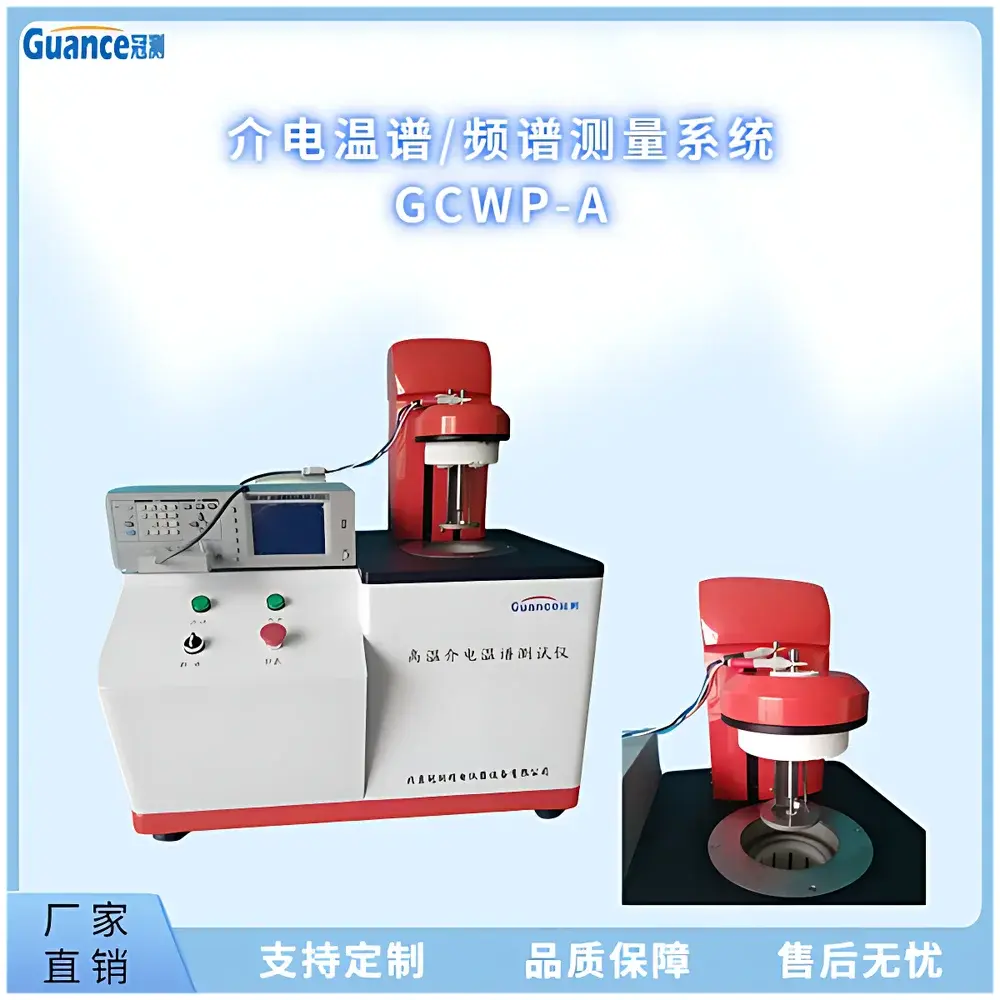
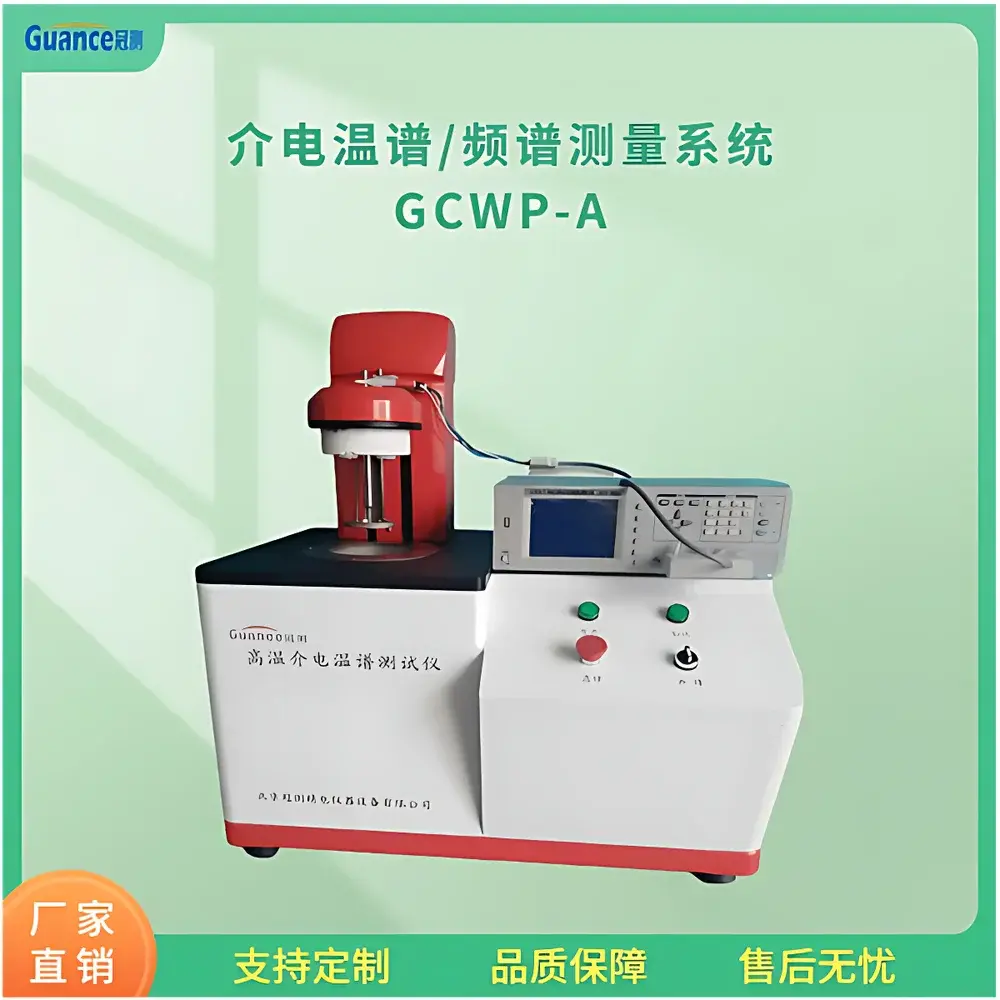
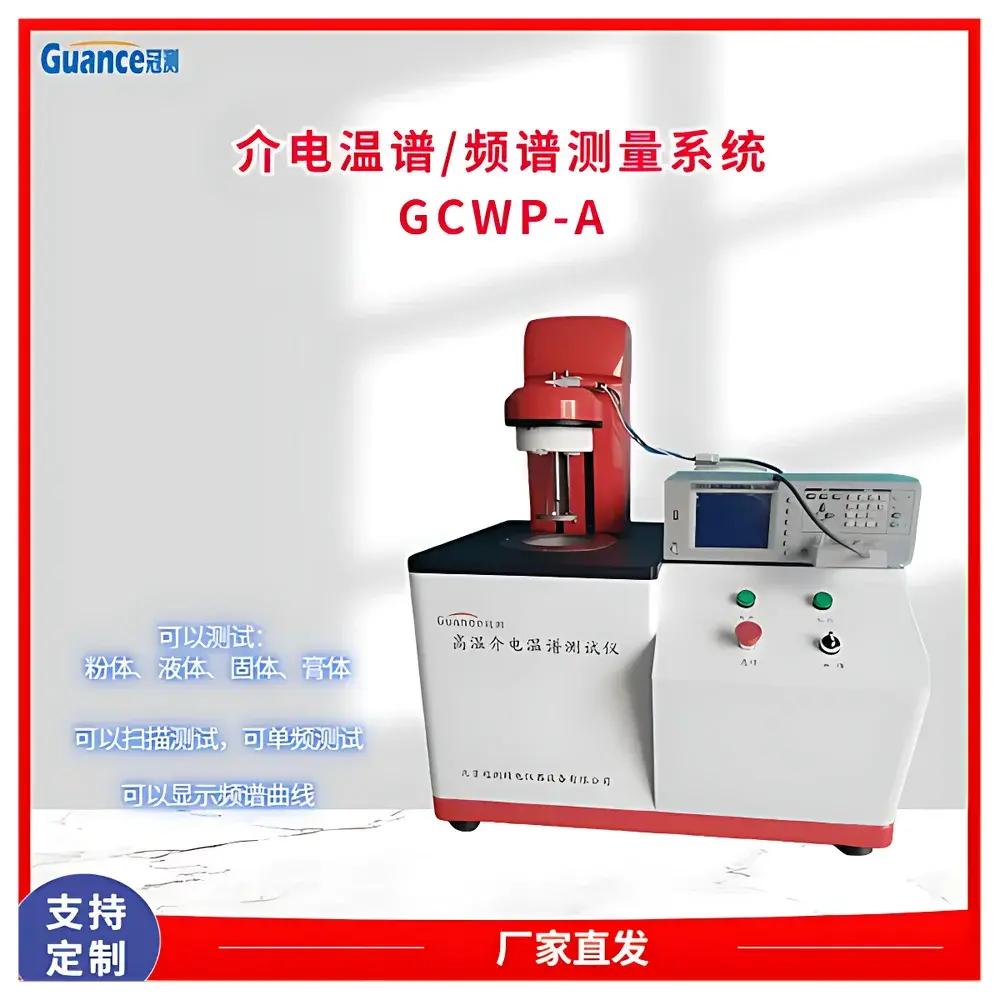
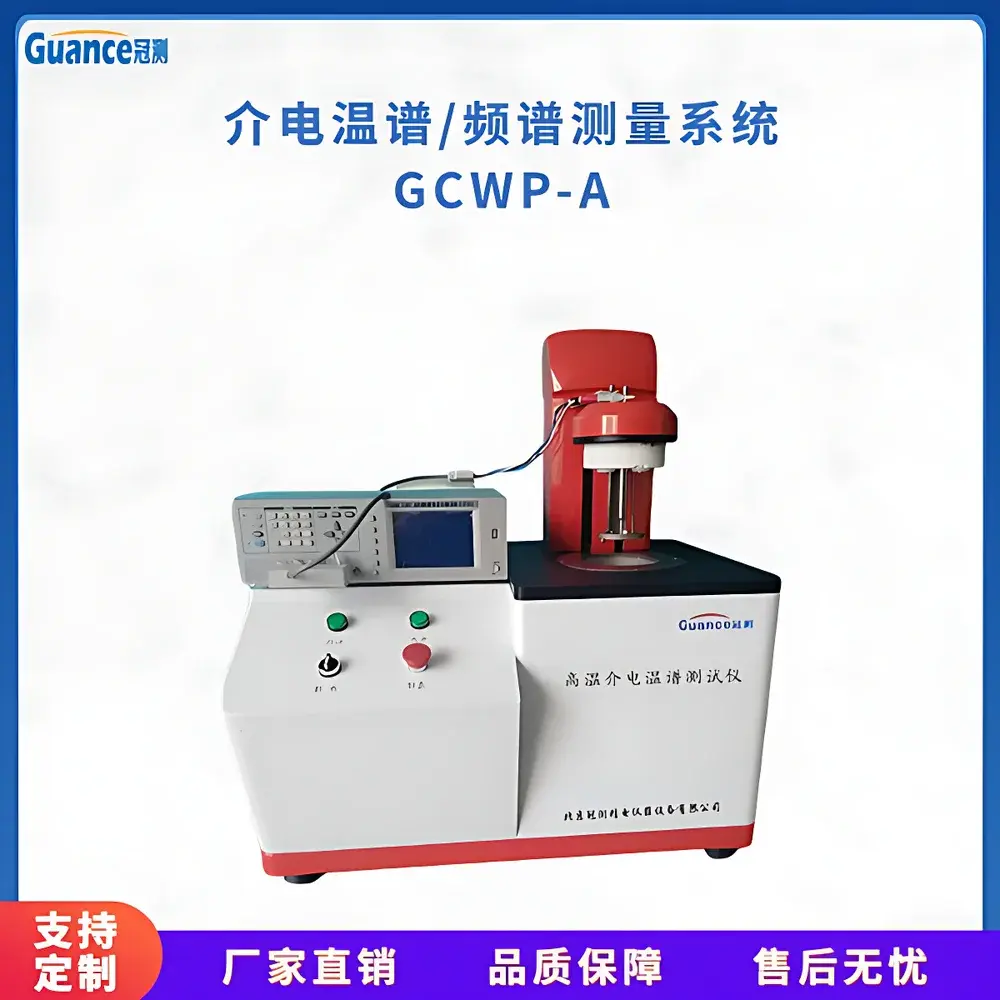
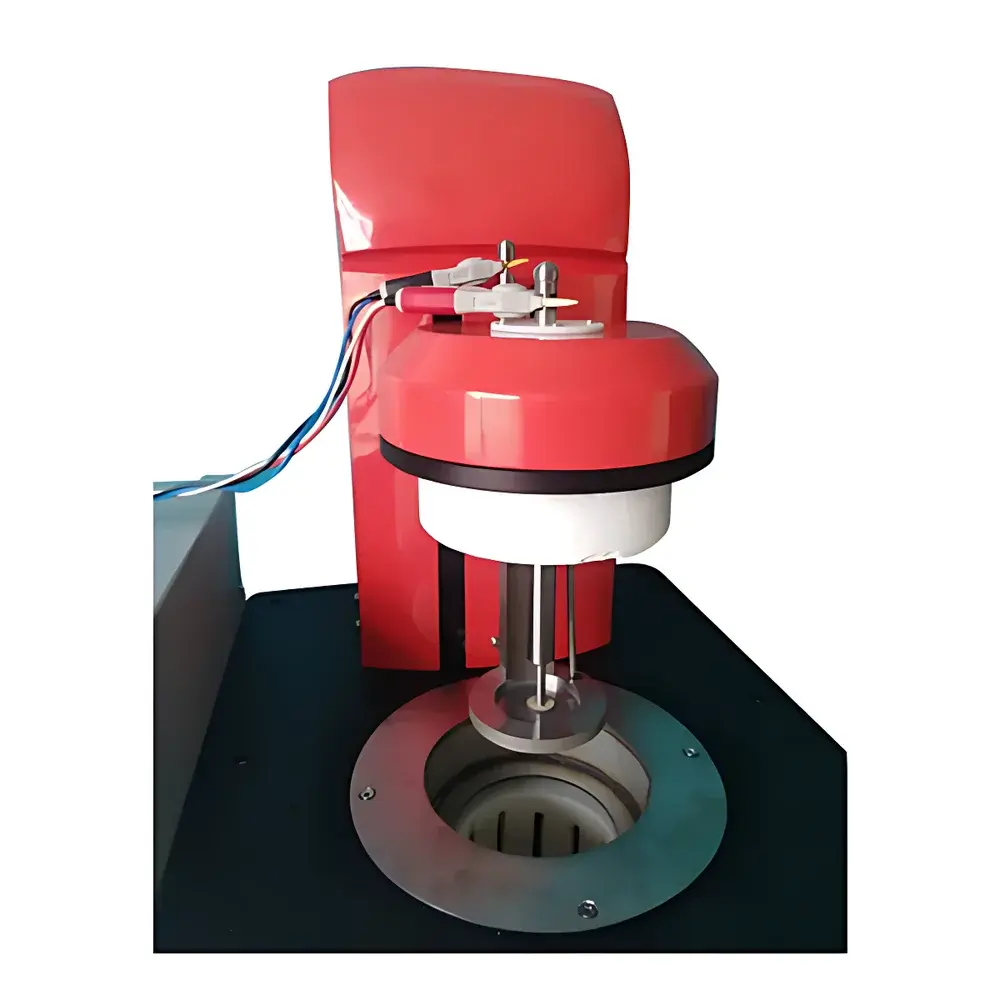
GuanCe Instruments GCWP-A1 Ceramic Dielectric Constant Analyzer
| Brand | GuanCe Instruments |
|---|---|
| Origin | Beijing, China |
| Manufacturer Type | Authorized Distributor |
| Country of Origin | China |
| Model | GCWP-A1 |
| Price | USD 1,280 (FOB Beijing) |
| Electrode Diameter | 6 mm |
| Number of Electrodes | 4 |
| Electrode Shielding | Inner layer — 304 stainless steel |
| Measurement Channels | 4-channel simultaneous testing |
| Frequency Switching | Programmable sample switching interval |
| Operating Modes | Manual and automated test sequences |
| Data Export | Raw impedance/dielectric data (CSV/Excel), real-time Lissajous & Cole–Cole plots, printable ASTM-compliant test reports |
| Measurement Frequency Range | Compatible with Agilent 4294A Precision Impedance Analyzer (40 Hz – 110 MHz) |
| Temperature Range | −180 °C to +500 °C |
| Heating Rate | 0.5–2.5 °C/min (programmable) |
| Signal Cabling | Silver-plated copper low-temperature shielded cables |
| Enclosure Material | Q235 carbon steel chassis with high-temp epoxy powder coating |
| Power Supply | AC 220 V, 50 Hz, 2 kW |
| Reference Impedance Analyzer | Agilent 4294A (or equivalent IEC 60250–compliant bridge) |
| Environmental Requirements | Avoid dusty, high-vibration, direct-sunlight, or corrosive-gas environments |
Overview
The GuanCe Instruments GCWP-A1 Ceramic Dielectric Constant Analyzer is a purpose-built, temperature-controlled impedance spectroscopy system engineered for precise determination of complex permittivity (ε* = ε′ − jε″), loss tangent (tan δ), and AC conductivity in advanced ceramic materials across cryogenic to high-temperature regimes. It operates on the principle of four-terminal (Kelvin) impedance measurement using a calibrated, traceable RF/microwave impedance analyzer—specifically configured to interface with the Agilent 4294A (or equivalent IEC 60250–compliant instrumentation). The system integrates a quadruple-electrode furnace chamber, enabling concurrent, comparative dielectric characterization of up to four identical or dissimilar ceramic specimens under identical thermal and electrical boundary conditions. This architecture eliminates inter-sample thermal hysteresis and ensures high reproducibility in structure–property correlation studies—particularly critical for functional ceramics used in multilayer capacitors, piezoelectrics, solid oxide fuel cell (SOFC) electrolytes, and microwave dielectric substrates.
Key Features
- Four independent, identically dimensioned (6 mm diameter) coaxial electrode stations housed within a single vacuum-compatible, dual-layer shielded chamber (304 stainless steel inner liner + PTFE outer insulation)
- Programmable multi-step thermal profiling with precision control over ramp rate (0.5–2.5 °C/min) and dwell stability (±0.3 °C at 500 °C)
- Automated channel-switching logic synchronized with temperature ramping, allowing sequential or parallel acquisition without manual reconfiguration
- Low-noise signal path utilizing silver-plated copper shielded cables rated for continuous operation down to −180 °C
- Rugged Q235 steel enclosure with high-temperature epoxy powder coating (rated to 600 °C surface tolerance) and integrated EMI/RFI suppression gaskets
- Full compliance with IEEE Std 1752–2021 guidelines for high-temperature dielectric measurement uncertainty quantification
Sample Compatibility & Compliance
The GCWP-A1 accommodates disk-shaped ceramic samples (diameter ≥8 mm, thickness 0.5–3 mm) including alumina (Al₂O₃), zirconia (ZrO₂), barium titanate (BaTiO₃), silicon nitride (Si₃N₄), and lanthanum-doped strontium titanate (LSTO). Electrode contact is achieved via sputtered gold or fired-on silver paste, with optional Pt–Rh reference electrodes for elevated-temperature polarization correction. All measurements adhere to ASTM D150–21 (Standard Test Methods for Dielectric and Resistivity Properties of Solid Electrical Insulating Materials) and ISO 257–3:2022 (Electrical insulating materials — Determination of dielectric constant and dissipation factor — Part 3: Recommended practice for high-temperature measurements). System validation includes NIST-traceable calibration using SRM 1921a (fused quartz) and SRM 1922 (polyimide film).
Software & Data Management
The instrument is controlled via GuanCe’s proprietary GC-Dielectric Suite v3.2—a Windows-based application supporting both local operation and remote SCPI command execution. Software features include real-time Nyquist and Bode plot rendering, automatic Cole–Cole arc fitting, Arrhenius and Vogel–Fulcher–Tammann (VFT) model regression, and batch report generation compliant with GLP audit trails (21 CFR Part 11–ready configuration available upon request). Raw impedance datasets are exported in IEEE Std 1158–2020–formatted .s2p files, ensuring interoperability with Keysight PathWave, MATLAB, and Python-based scikit-rf workflows.
Applications
- Temperature-dependent permittivity mapping of ferroelectric phase transitions in perovskite ceramics
- Interfacial polarization analysis in composite dielectrics (e.g., Al₂O₃–glass systems)
- High-temperature dielectric loss evaluation for SOFC sealant development
- Quality assurance screening of batch-to-batch consistency in MLCC base metal electrode (BME) ceramics
- Relaxation time distribution modeling in relaxor ferroelectrics via broadband impedance spectroscopy
FAQ
What impedance analyzers are compatible with the GCWP-A1?
The system is optimized for integration with the Keysight (formerly Agilent) 4294A Precision Impedance Analyzer (40 Hz – 110 MHz), but supports any IEC 60250–compliant analyzer with GPIB/LAN interface and SCPI command set.
Is liquid nitrogen cooling supported for cryogenic measurements?
Yes—the chamber design includes a dedicated LN₂ inlet port and thermal anchor interface, enabling stable operation at −180 °C when paired with an external cryostat and vacuum pumping system.
Can the GCWP-A1 perform DC conductivity measurements?
No—this is an AC impedance spectroscopy platform operating exclusively in the 40 Hz – 110 MHz range. DC resistivity requires complementary two-probe or four-probe DC resistance instrumentation.
Does the system support third-party software such as LabVIEW or Python?
Yes—full SCPI command documentation and DLL-based API drivers are provided for custom integration with LabVIEW, Python (pyvisa), or MATLAB.
What safety certifications does the GCWP-A1 hold?
The unit complies with IEC 61010–1:2010 (Safety requirements for electrical equipment for measurement, control, and laboratory use) and carries CE marking for EMC Directive 2014/30/EU and Low Voltage Directive 2014/35/EU.



