
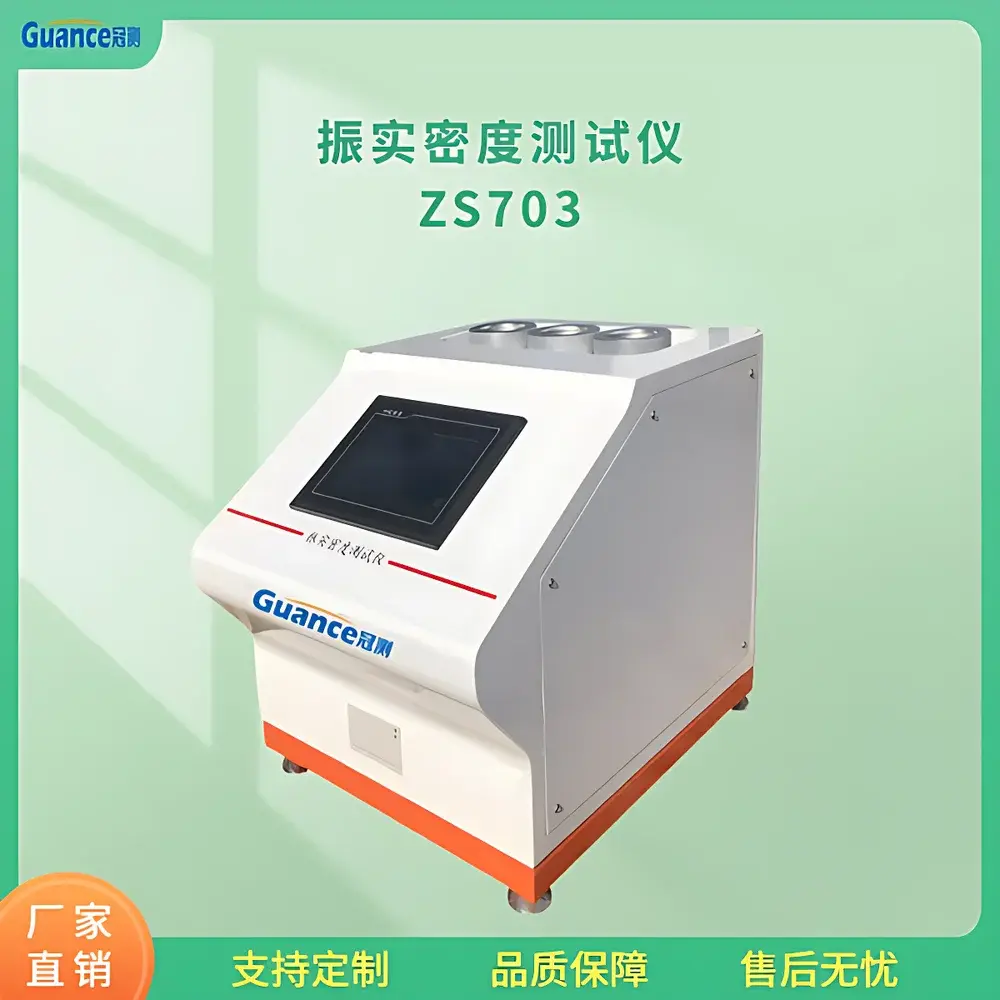
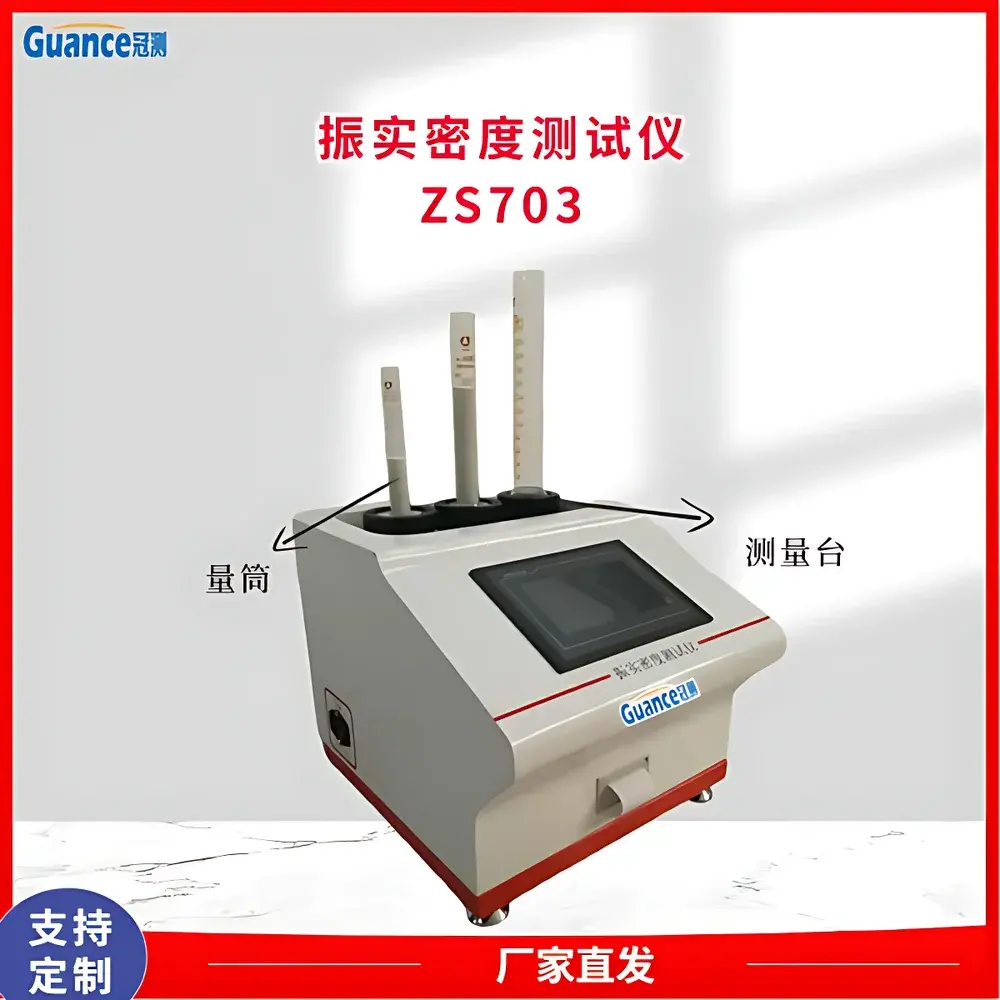
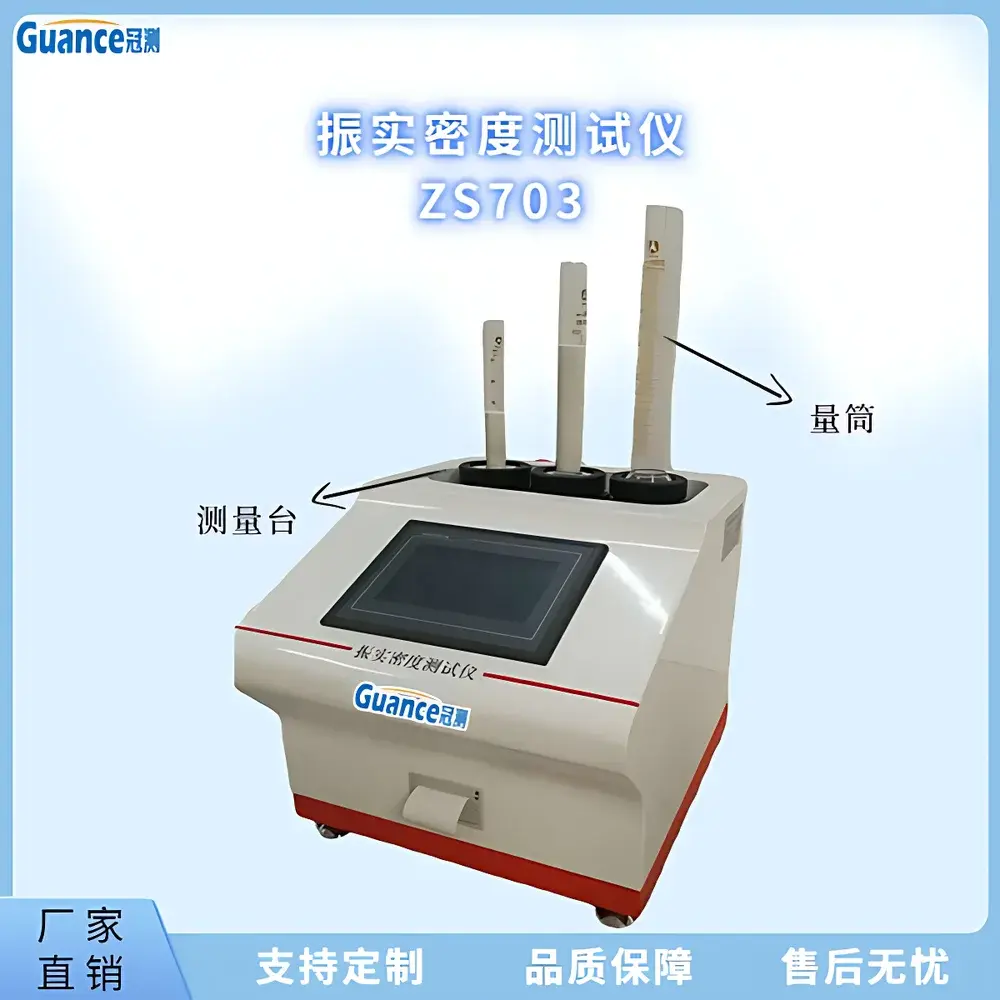
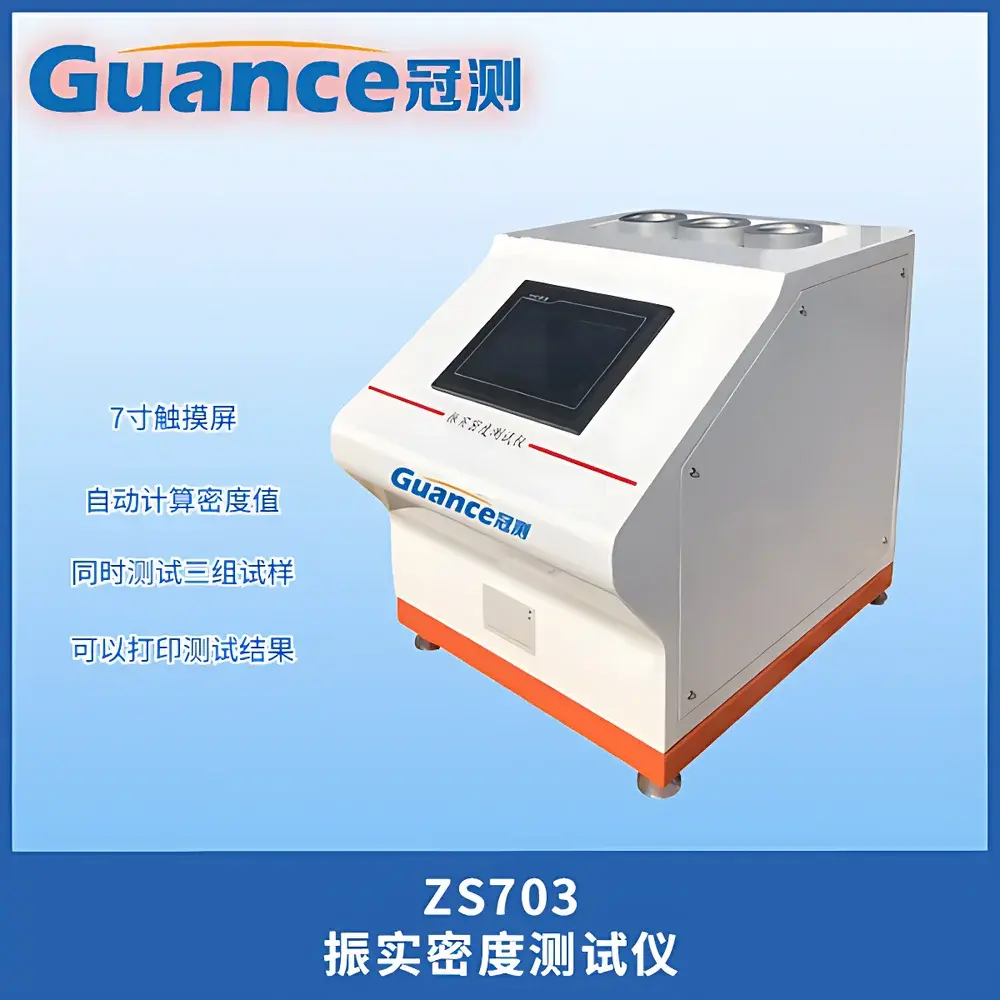
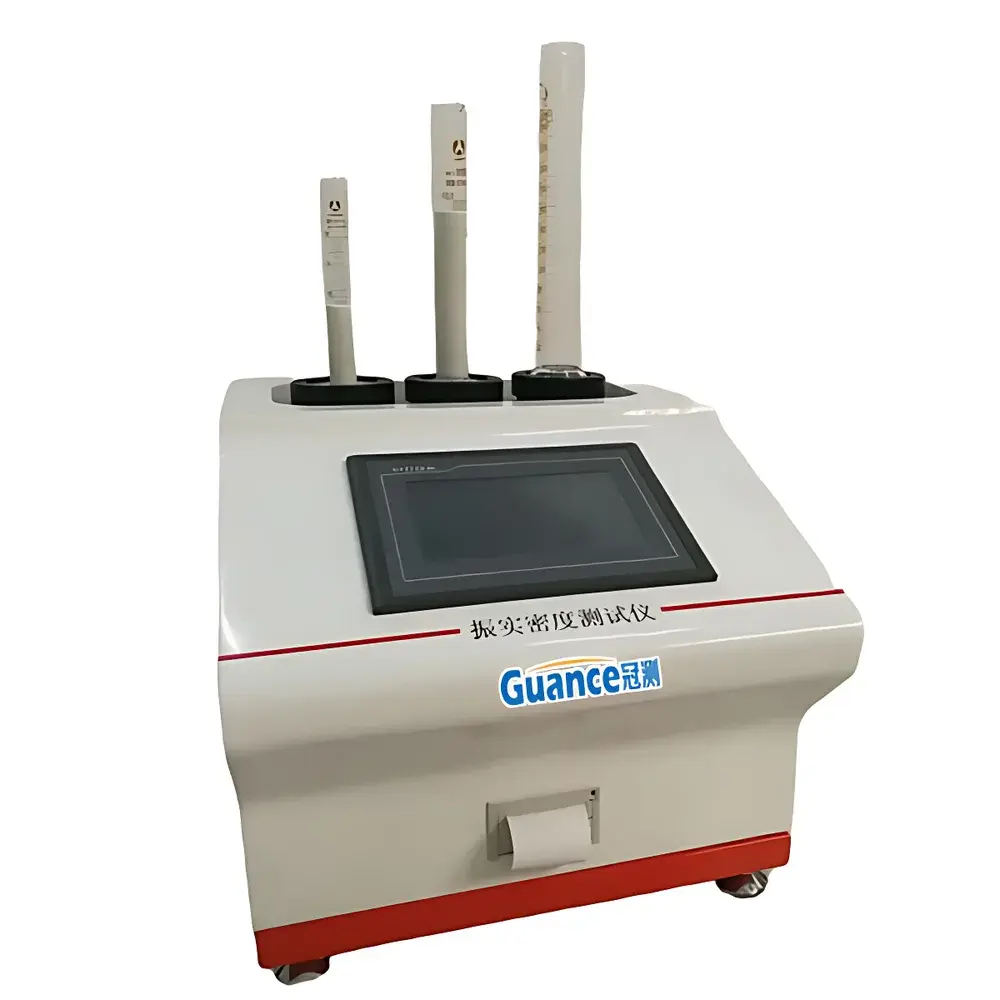
GuanCe Instruments ZS703 Tap Density Tester
| Brand | GuanCe Instruments |
|---|---|
| Origin | Beijing, China |
| Manufacturer Type | Authorized Distributor |
| Country of Origin | China |
| Model | ZS703@ |
| Instrument Type | Tap Density Tester |
| Density Measurement Principle | Volumetric Displacement after Standardized Mechanical Tapping |
| Sample Form | Dry Powders and Granular Solids |
| Maximum Sample Weight | 500.00 g |
| Maximum Sample Volume | 250.00 mL |
| Tapping Frequency | Adjustable (0–14750 taps) |
| Motor Torque | 0.86 N·m |
| Power Supply | AC 220 V, 100 W |
| Display | 7-inch HD Capacitive Touchscreen |
| Repeatability | Compliant with ASTM D1464, ISO 3953, USP <616>, and EP 2.9.34 |
| Enclosure Rating | IP20 |
| Operating Temperature Range | 10–30 °C |
| Relative Humidity | ≤80% RH (non-condensing) |
| Dimensions (W×D×H) | 320 × 320 × 420 mm |
| Net Weight | 22 kg |
Overview
The GuanCe Instruments ZS703 Tap Density Tester is an engineered solution for standardized determination of tap density (also known as tapped density or settled density) of free-flowing powders and granular solids. Based on the principle of volumetric displacement following controlled mechanical tapping—performed under reproducible amplitude, frequency, and stroke length—the instrument quantifies the reduction in bulk volume resulting from gravitational settling under defined mechanical excitation. This measurement is critical in pharmaceutical formulation development, battery cathode/anode material characterization, metal powder sintering process design, and quality control of food, cosmetic, and catalyst powders. Unlike true density analyzers (e.g., gas pycnometers), the ZS703 does not measure skeletal volume; rather, it evaluates packing behavior under standardized consolidation, providing essential data for flowability assessment, container fill optimization, and dosage uniformity prediction.
Key Features
- Programmable tapping sequence: User-defined tap count range from 0 to 14,750 cycles, enabling full compliance with multiple international standards including ASTM D1464 (for pigments), ISO 3953 (for metal powders), USP (for pharmaceutical powders), and European Pharmacopoeia 2.9.34.
- Rotational vibration mechanism: Integrated motor-driven cam system induces both vertical tapping and slight rotational motion (±2°) during compaction, ensuring homogeneous particle redistribution and minimizing wall effects or channeling artifacts.
- Dual-mode operation: Supports fixed-tap-count mode for routine QC and variable-frequency mode for research-grade compaction profiling (e.g., density vs. tap number curves).
- 7-inch high-resolution capacitive touchscreen interface: Intuitive HMI with on-screen calibration prompts, real-time tap counter, elapsed time display, and password-protected method storage (up to 20 user-defined protocols).
- Robust mechanical architecture: Precision-machined aluminum alloy frame, stainless steel sample holder mount, and low-inertia tapping assembly engineered for long-term stability and minimal drift across >100,000 operational cycles.
- Integrated safety logic: Automatic motor cutoff upon lid open detection, thermal overload protection, and emergency stop circuit compliant with IEC 61000-6-2 EMC immunity requirements.
Sample Compatibility & Compliance
The ZS703 accommodates dry, non-cohesive to moderately cohesive powders with particle sizes ranging from 10 µm to 2 mm. It supports standard cylindrical sample cups (internal diameter 25.0 ± 0.1 mm, height ≥100 mm) conforming to ASTM D1464 and ISO 3953 geometries. The maximum allowable sample mass is 500.00 g, and the cup volume capacity is 250.00 mL—sufficient for low-density aerogels and high-density tungsten carbide powders alike. All hardware and firmware are designed to support GLP/GMP-aligned workflows: audit trail logging (timestamped operator ID, method parameters, raw tap count, final volume reading), electronic signature readiness, and compatibility with 21 CFR Part 11-compliant LIMS integration via optional RS-232/USB virtual COM port.
Software & Data Management
The embedded firmware includes a built-in calculation engine that automatically computes tap density (ρt = m / Vf) and percent compressibility (100 × (Vi − Vf) / Vi) using pre-entered initial volume (Vi) and final tapped volume (Vf). Raw data—including tap count, elapsed time, and manual volume entry—is stored locally in CSV format on internal flash memory (≥10,000 test records). Optional PC software (GuanCe LabLink v3.2) enables batch export, statistical process control charting (X̄-R charts), trend analysis across batches, and PDF report generation with embedded digital signatures and calibration certificate references.
Applications
- Pharmaceutical solid dosage development: Quantifying powder compressibility prior to tableting, supporting QbD-based risk assessment per ICH Q5C and Q8(R2).
- Lithium-ion battery electrode manufacturing: Characterizing tap density of NMC, LFP, graphite, and silicon-anode powders to predict coating uniformity and calendering response.
- Additive manufacturing feedstock qualification: Verifying consistency of Ti-6Al-4V, Inconel 718, and stainless steel 316L powders against ASTM F3049 specifications.
- Food ingredient processing: Assessing flow and packing behavior of milk powder, cocoa, starch, and functional blends for silo design and dosing accuracy validation.
- Quality assurance in pigment and ceramic production: Monitoring batch-to-batch variation in zinc oxide, titanium dioxide, and alumina powders per ISO 80000-4 traceability requirements.
FAQ
What standards does the ZS703 comply with for tap density measurement?
ASTM D1464, ISO 3953, USP , EP 2.9.34, and GB/T 5162–2006.
Can the ZS703 measure true density or skeletal density?
No—it measures only tap density (volumetric packing density after mechanical consolidation); true density requires gas pycnometry or helium displacement.
Is calibration verification traceable to national standards?
Yes—calibration certificates include traceability to NIM (National Institute of Metrology, China) via certified reference weights and calibrated volume cylinders.
Does the instrument support automated data transfer to LIMS or ERP systems?
Yes—via ASCII protocol over RS-232 or USB CDC virtual COM port, with configurable delimiter and header settings.
What maintenance is required for long-term accuracy?
Annual verification of tap amplitude (±0.1 mm tolerance) and motor torque (0.86 N·m ±3%) using certified metrology tools; no consumables or lubrication required.



