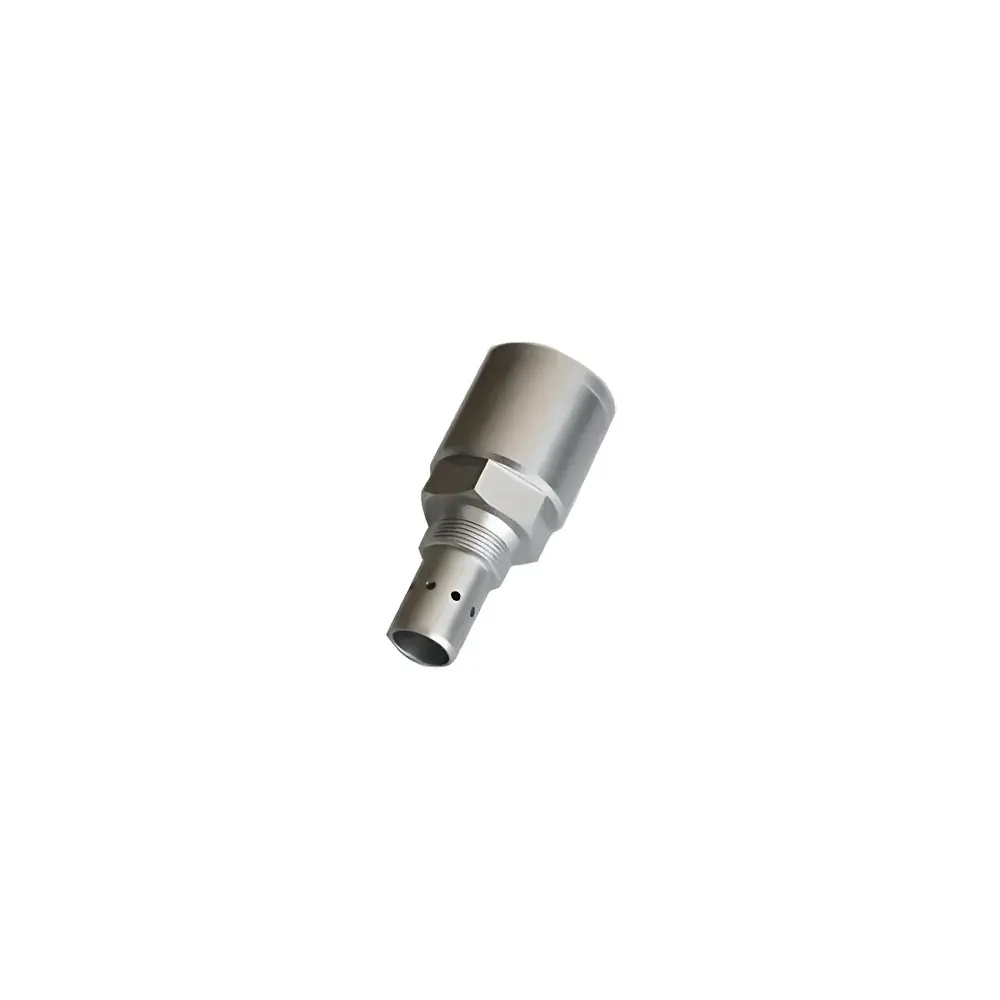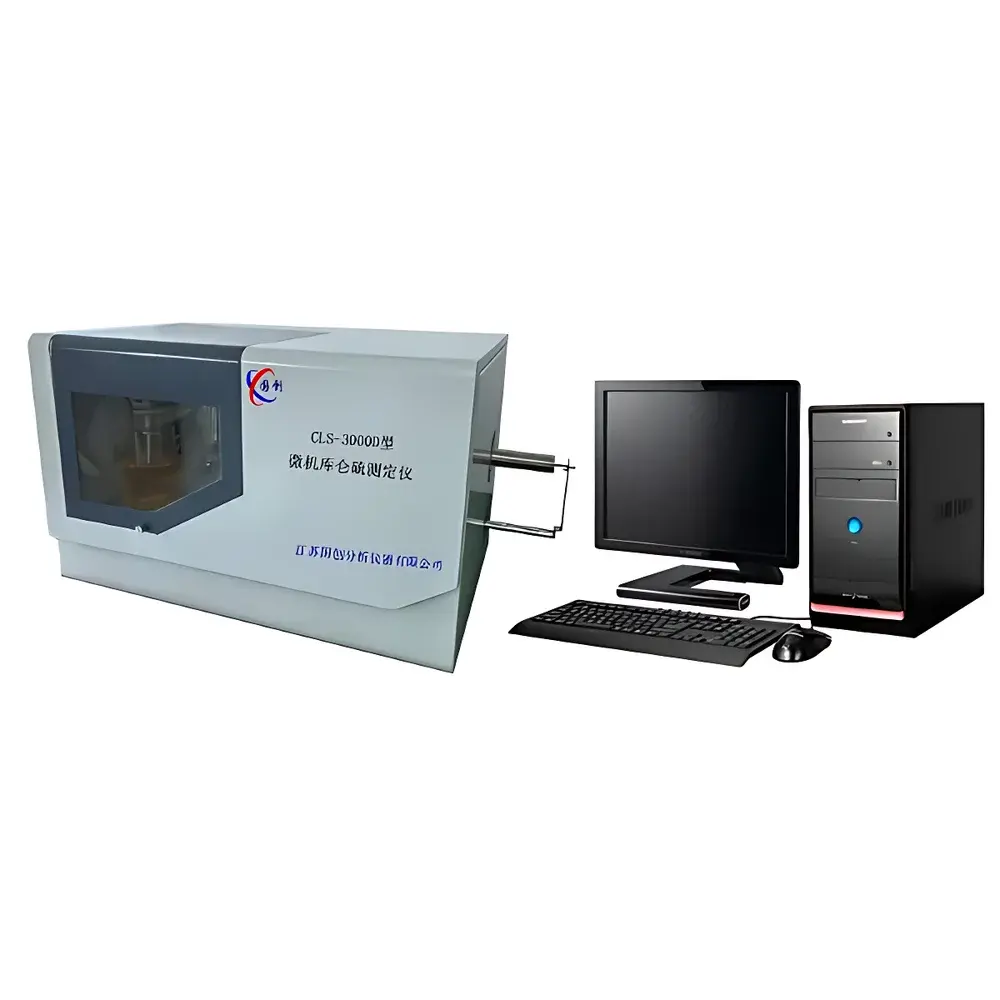
GUOCHUANG CLS-3000 Microcomputer-Controlled Coulometric Sulfur Determinator
| Brand | GUOCHUANG |
|---|---|
| Origin | Jiangsu, China |
| Manufacturer Type | Direct Manufacturer |
| Country of Origin | China |
| Model | CLS-3000 |
| Measurement Principle | Coulometric Titration (Dynamic Coulometry) |
| Measuring Range | 0.005–99.99 wt% S |
| Accuracy | ≤ ±0.0001 wt% (relative to certified reference materials) |
| Temperature Control Range | Ambient to 1300 °C (PID-controlled furnace) |
| Electrolysis Current | ≥350 mA |
| Electrolytic Cell Volume | ≤850 mL |
| Sample Mass | 15–85 mg (weighed to ±0.2 mg) |
| Analysis Time | ~3–5 min per sample |
| Compliance Standards | GB/T 214–2007, GB/T 387–1990, SH/T 0303–1992 |
Overview
The GUOCHUANG CLS-3000 Microcomputer-Controlled Coulometric Sulfur Determinator is a precision analytical instrument engineered for quantitative sulfur determination in solid, liquid, and semi-solid matrices using dynamic coulometric titration—a primary method traceable to Faraday’s laws of electrolysis. The system operates by combusting the sample in a high-temperature quartz tube furnace (up to 1300 °C), converting all sulfur species (including sulfate, sulfite, organic sulfur, and elemental sulfur) into SO2. The evolved gas is carried by purified oxygen into a dual-platinum indicator electrode cell, where SO2 is quantitatively oxidized via controlled electrolysis. The total charge passed (in coulombs) is measured in real time and converted directly to sulfur mass using stoichiometric equivalence (1 mole electrons ≡ 1/4 mole S). This fundamental electrochemical principle ensures inherent linearity, eliminates reliance on multi-point calibration curves, and delivers high reproducibility across the full 0.005–99.99 wt% measurement range.
Key Features
- Integrated PID-controlled high-temperature furnace (ambient to 1300 °C) with optimized thermal insulation and low thermal drift for stable combustion efficiency.
- Dual-platinum indicator electrode system with real-time peak monitoring and automatic endpoint detection—prevents over-titration even at high sulfur concentrations.
- Quartz-glass electrolytic cell with wear-resistant bottom design, extended service life, and integrated sintered glass frit filtration to minimize membrane fouling and enable rapid maintenance.
- “No-disassembly” electrolyte regeneration mode: automated rinse-and-replenish cycle reduces downtime and operator intervention between analyses.
- Sealed PCB architecture with conformal coating for dust, moisture, and acid vapor resistance—critical in coal and petrochemical laboratory environments.
- Windows-based control software with mouse-driven operation of furnace temperature, auto-sampler positioning, stirrer speed, and electrolysis parameters.
- On-screen real-time display of electrolysis current curve, integrated charge plot, and final sulfur result in wt% with four-decimal-place resolution.
Sample Compatibility & Compliance
The CLS-3000 is validated for heterogeneous samples common in energy and petrochemical quality control, including bituminous and anthracite coal, coke, coal ash, mineral ores, crude oil, residual fuel oils, lubricant additives, catalysts, and refinery intermediates. Its robust sample introduction protocol accommodates volatile components through inert carrier gas purging and incorporates ash-trapping filters to prevent particulate carryover into the electrolytic cell. The instrument fully complies with national standards governing sulfur analysis: GB/T 214–2007 (determination of total sulfur in coal), GB/T 387–1990 (sulfur in dark petroleum products), and SH/T 0303–1992 (sulfur in additives). While not inherently 21 CFR Part 11 compliant, its audit-ready data logging—including timestamped raw current traces, sample IDs, operator logs, and calibration history—supports GLP/GMP-aligned workflows when deployed with validated IT infrastructure.
Software & Data Management
The embedded Windows application provides full instrument control, method storage, and secure data handling. Each analysis generates a structured dataset containing furnace temperature profile, electrolysis current vs. time curve, integrated charge value, calculated sulfur content, and metadata (sample ID, weight, date/time, analyst ID). All data are saved in binary+CSV dual format; historical records are searchable by date range, sample batch, or parameter threshold. Export functions support direct integration with LIMS via ODBC or flat-file transfer. Audit trails record all user actions—including method edits, calibration events, and report generation—with immutable timestamps. Optional password-protected user roles (Operator, Supervisor, Administrator) enforce procedural integrity in regulated environments.
Applications
- Quality assurance of coal feedstock in power generation and coking plants per ISO 19579 and ASTM D4294 equivalents.
- Monitoring sulfur removal efficiency in hydrodesulfurization (HDS) units and FCC catalyst evaluation.
- Regulatory compliance testing for marine fuel (IMO 2020), pipeline specification (ASTM D129, D2622), and refinery blending operations.
- Geochemical analysis of sulfur-bearing minerals and exploration core samples.
- R&D of low-sulfur additives and synthetic lubricants where trace-level quantification (<0.01 wt%) is critical.
FAQ
What sulfur species does the CLS-3000 detect?
It quantifies total sulfur—regardless of chemical form—including sulfides, thiophenes, sulfones, sulfate (SO42−), sulfite (SO32−), and elemental sulfur—via complete oxidative conversion to SO2 at 1150–1300 °C.
Is manual calibration required before each analysis?
No. The coulometric principle is absolute and stoichiometric; only periodic verification with SRMs (e.g., NIST 1632E coal, NIST 2722 diesel) is recommended per QA/QC protocols.
Can the instrument analyze viscous or high-ash samples?
Yes. The optional ash-trap module and programmable oxygen flow rate mitigate clogging; sample mass is adjusted within the 15–85 mg range to maintain optimal SO2 signal-to-noise ratio.
How is data integrity ensured during long-term operation?
All raw sensor outputs and derived results are written simultaneously to non-volatile memory and hard disk with CRC-32 checksum validation; file corruption triggers automatic recovery from mirrored backup.
What maintenance intervals are recommended for routine use?
Electrolyte replacement every 40–60 analyses; quartz furnace tube inspection every 500 runs; sintered frit cleaning weekly; full system performance verification quarterly using certified reference materials.