
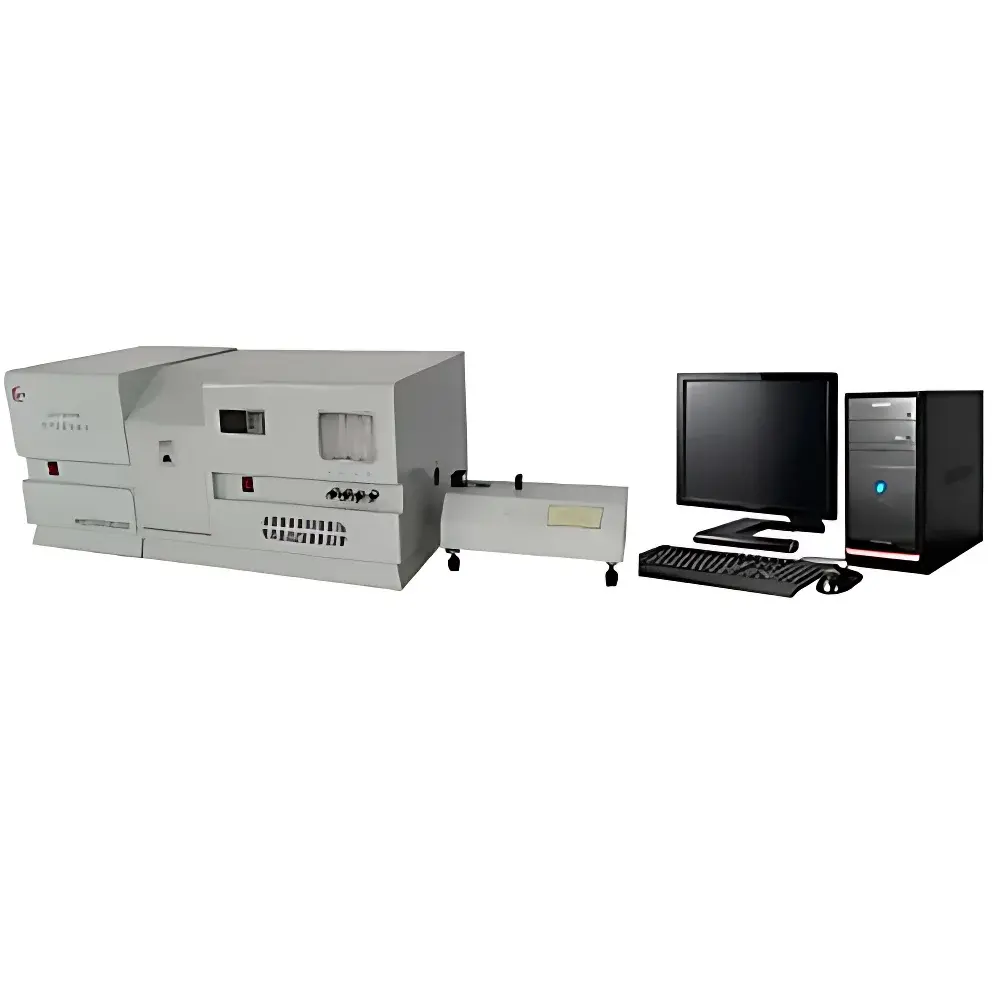
GUOCHUANG GCTNS-3000 Sulfur and Nitrogen Analyzer
| Brand | GUOCHUANG |
|---|---|
| Origin | Jiangsu, China |
| Manufacturer Type | Direct Manufacturer |
| Model | GCTNS-3000 |
| Measured Elements | Sulfur (S), Nitrogen (N) |
| Measurement Principles | UV Fluorescence (S), Chemiluminescence (N) |
| Dimensions (L×W×H) | 920 × 460 × 520 mm |
| Weight | 45 kg |
| Power Supply | AC 220 V ± 22 V, 50 Hz ± 0.5 Hz, 1500 W |
| Combustion Furnace Temperature Range | Ambient to 1300 °C |
| Temperature Control Accuracy | ±1 °C |
| Sample Types | Liquid, Solid, Gas |
| Sample Introduction | Liquid autosampler (standard), optional solid/gas injectors |
| Sulfur Detection Range | 0.05–10,000 mg/L (dilutable for higher concentrations) |
| Nitrogen Detection Range | Equivalent to S range per ASTM D5453/D5762 |
| Detection Limit (S/N) | 0.05 mg/L |
| Analysis Time | ~2 minutes per sample |
| Carrier Gases | High-purity argon (≥99.98%) and oxygen (≥99.98%) |
| Compliance Standards | ASTM D5453, D5762, D4629, D6069, SH/T 0689, GB/T 17930, GB/T 19147, ISO 20846, EN 15486, SH/T 0704, SH/T 0657, NBSHT 0917, ASTM D7551, D6667 |
Overview
The GUOCHUANG GCTNS-3000 Sulfur and Nitrogen Analyzer is a dual-detection elemental analyzer engineered for high-precision, simultaneous quantification of total sulfur and total nitrogen in liquid, solid, and gaseous hydrocarbon matrices. It integrates two orthogonal detection methodologies—ultraviolet fluorescence (UVF) for sulfur and chemiluminescence (CLD) for nitrogen—within a single combustion-based platform. Samples are introduced into a high-temperature quartz combustion furnace (operable from ambient to 1300 °C), where complete oxidative pyrolysis converts all organosulfur and organonitrogen compounds into SO₂ and NO, respectively. The resulting gases pass through selective scrubbers and conditioning modules before entering dedicated optical detection cells: SO₂ is excited by pulsed UV light (190–230 nm), emitting characteristic fluorescence proportional to sulfur concentration; NO reacts with ozone in a reaction chamber to generate excited NO₂*, which emits near-infrared photons upon relaxation—intensity linearly correlates with nitrogen content. This dual-channel architecture eliminates cross-interference, ensures matrix robustness across fuels, lubricants, crude oils, additives, and refinery streams, and delivers trace-level sensitivity without electrolytic cell maintenance.
Key Features
- Modular dual-detector design: Independent UV fluorescence and chemiluminescence optical paths with real-time background subtraction and signal normalization.
- High-temperature combustion system: PID-controlled quartz furnace with thermal stability ≤±1 °C over full operating range (ambient to 1300 °C), ensuring quantitative conversion of refractory species including sulfones, thiophenes, and pyridinic nitrogen.
- Flexible sample introduction: Standard liquid autosampler (5–20 μL); optional solid boat injector (1–20 mg) and gas loop injector (1–25 mL) enable compliance with ASTM D5762 (boat-inlet CLD), D4629 (liquid injection), and D7551 (gas-phase UVF).
- Gas management system: Dual high-purity gas supply (Ar ≥99.98%, O₂ ≥99.98%) with mass flow controllers, pressure regulators, and automated leak-check routines per ISO/IEC 17025 pre-analytical requirements.
- Ruggedized optical components: Sealed UV lamp housing, thermoelectrically cooled photomultiplier tubes (PMTs), and quartz flow cells resistant to thermal shock and chemical corrosion.
- Embedded firmware with Windows-based acquisition software: Supports method validation, calibration curve generation (single-point or multi-point), peak integration with baseline correction, and automatic dilution factor application.
Sample Compatibility & Compliance
The GCTNS-3000 is validated for use across petroleum, petrochemical, biofuel, and energy research laboratories requiring regulatory-grade data integrity. It supports analysis of gasoline (GB/T 17930, ASTM D5453), diesel (GB/T 19147, ISO 20846), jet fuel (ASTM D6069), crude oil (GB/T 17674), lubricant additives (SH/T 0303), ethanol blends (EN 15486), and industrial aromatics (SH/T 1821). All measurement protocols align with internationally recognized standard methods—including ASTM, ISO, EN, GB/T, and SH/T series—and support GLP-compliant audit trails. Data files include timestamped raw signals, processed integrals, calibration metadata, and operator ID—enabling full traceability under FDA 21 CFR Part 11 when configured with electronic signature and access control modules.
Software & Data Management
The instrument operates via GUOCHUANG’s proprietary GCTNS Control Suite v3.x, a Windows-native application supporting Windows 7/10/11 (64-bit). The interface provides real-time chromatogram visualization, interactive peak editing, customizable report templates (PDF/CSV/XLSX), and automated QC flagging (e.g., baseline drift >5%, retention time shift >0.2 s). All analytical sequences are stored with SHA-256 hash verification; raw data files are immutable and retain original acquisition parameters. Integrated database functionality allows historical comparison, statistical process control (SPC) charting, and export to LIMS via ASTM E1384-compliant XML schema. Software validation documentation (IQ/OQ/PQ protocols) and electronic audit trail logs are provided for regulated environments.
Applications
Typical applications include quality control of transportation fuels per Tier 3 sulfur limits (<10 ppm), nitrogen speciation in catalyst feedstocks, monitoring of denitrification efficiency in hydrotreaters, specification testing of aviation turbine fuels (ASTM D1655 Annex A1), sulfur screening in bio-derived esters (ASTM D6751), and R&D studies on heteroatom removal kinetics. The analyzer is routinely deployed in refinery QC labs, independent testing facilities accredited to ISO/IEC 17025, and university research centers investigating fuel formulation and emission chemistry.
FAQ
What detection technologies does the GCTNS-3000 employ for sulfur and nitrogen?
It uses ultraviolet fluorescence (UVF) for sulfur quantification and chemiluminescence detection (CLD) for nitrogen, both following high-temperature oxidative combustion.
Is the system compliant with ASTM D5453 and D5762?
Yes—the optical design, furnace performance, calibration protocols, and data reporting fully satisfy the instrumental and procedural requirements of both standards.
Can the analyzer handle solid samples such as coal or catalyst powders?
Yes, when equipped with the optional solid sample boat injector and optimized combustion ramp profiles per ASTM D3177 and SH/T 0704.
What gas purity specifications are required for reliable operation?
High-purity argon (≥99.98%) and oxygen (≥99.98%) are mandatory; impurities such as moisture, hydrocarbons, or nitrogen oxides must be removed via inline purifiers to prevent quenching effects.
Does the software support 21 CFR Part 11 compliance?
Yes—when deployed with user role management, electronic signatures, and audit-trail-enabled configuration, it meets core Part 11 requirements for electronic records and signatures in pharmaceutical and regulated fuel testing environments.
Related Products






