
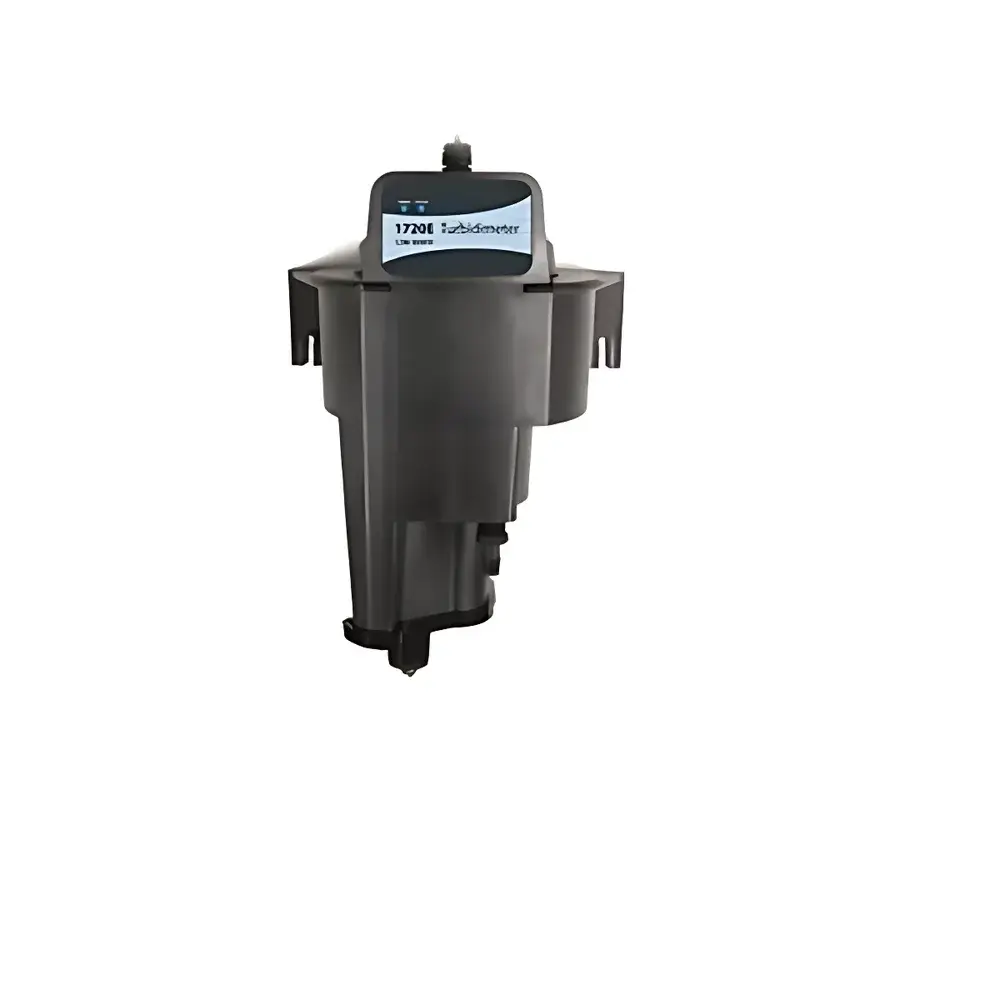
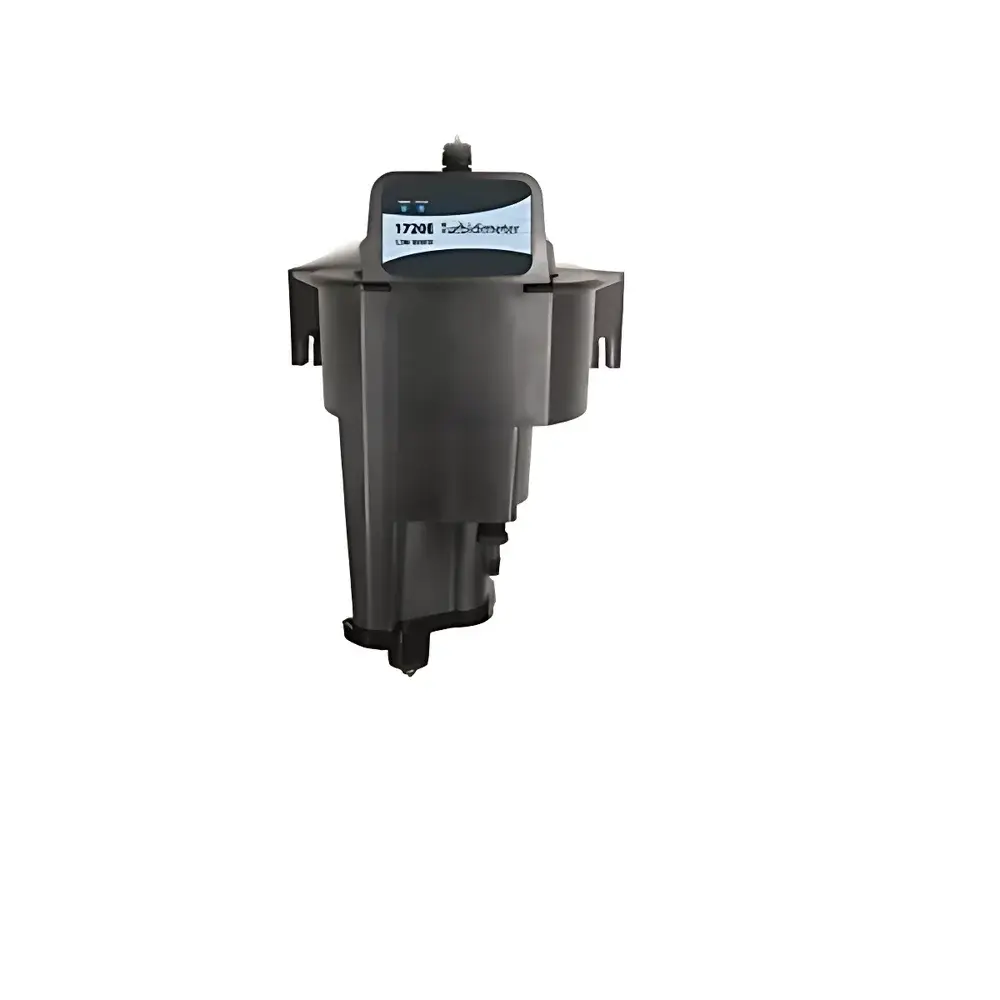
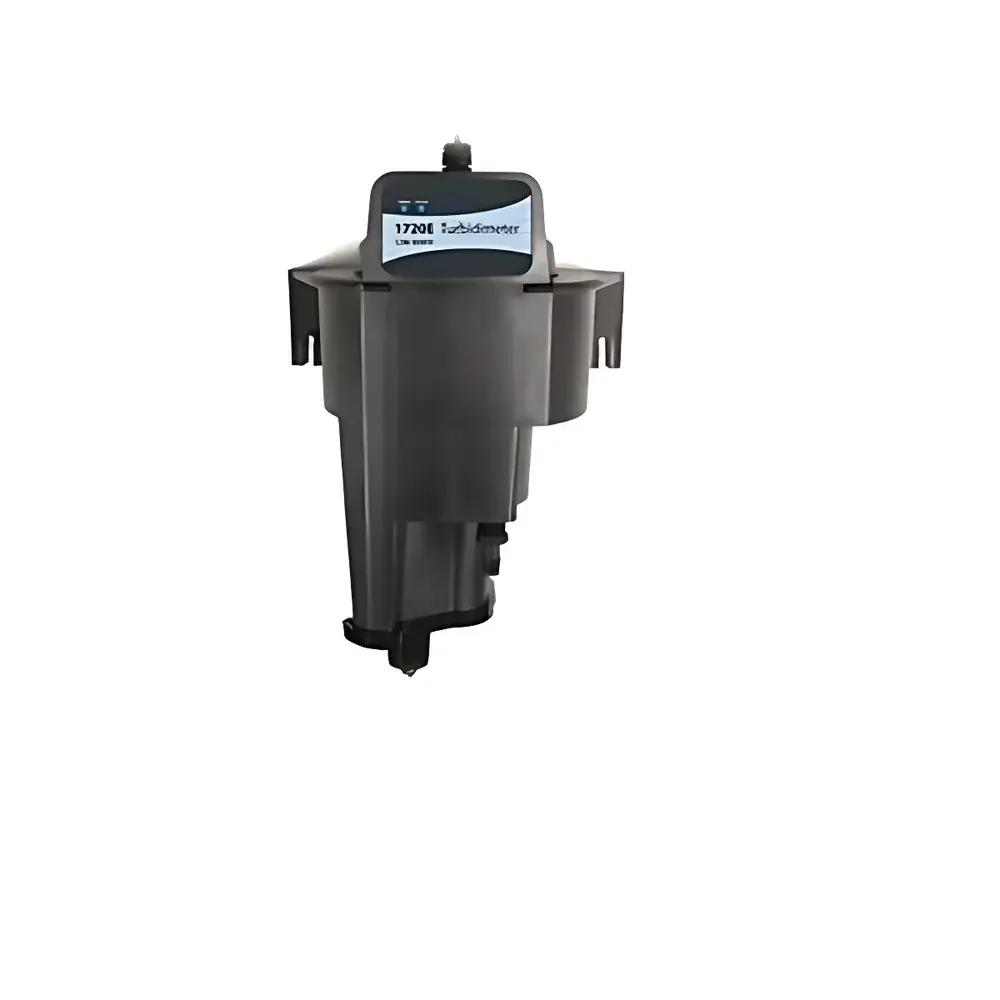
HACH 1720E Low-Range Turbidimeter
| Brand | HACH |
|---|---|
| Origin | USA |
| Model | 1720E |
| Instrument Type | Benchtop Laboratory Turbidimeter |
| Measurement Range | 0.0001–9.9999 NTU and 10.000–99.999 NTU (auto-ranging) |
| Resolution | 0.0001 NTU (0–9.9999 NTU) |
| Accuracy | ±2% or ±0.02 NTU (whichever is greater) for 0–40 NTU |
| Repeatability | Better than ±1.0% of reading or ±0.002 NTU (whichever is greater) |
| Response Time | Step response, initial response ~75 seconds |
| Signal Averaging Options | 6, 30, 60, or 90 seconds (user-selectable |
| Sample Flow Rate | 200–750 mL/min |
| Operating Temperature | 0–50°C (single-sensor configuration) |
| Sample Temperature Range | 0–50°C |
| Analog Output | 0/4–20 mA (programmable over 0–100 NTU range) |
| Relay Outputs | Three SPDT relays (230 VAC, 5 A), configurable for alarm or control setpoints |
| Power Supply | 100–230 VAC, 50/60 Hz (auto-sensing) |
| Inlet Fitting | 1/4" NPT female + 1/4" compression fitting (included) |
| Drain Fitting | 1/2" NPT female + 1/2" hose barb (included) |
| Digital Communication Protocols | MODBUS RTU over RS-485 and RS-232 |
| Compliance Standards | Standard Method 2130B, USEPA Method 180.1, Hach Method 8195 |
| Enclosure Rating | NEMA-4X / IP66 |
| Dimensions (Controller) | 25.4 × 30.5 × 40.6 cm |
Overview
The HACH 1720E Low-Range Turbidimeter is a benchtop laboratory instrument engineered for high-fidelity turbidity measurement in applications demanding sub-NTU resolution and metrological traceability. It operates on the principle of 90° side-scatter detection using a tungsten-halogen light source and a submerged photodetector—fully compliant with Standard Method 2130B and U.S. EPA Method 180.1. The optical path is optimized to minimize stray light interference and maximize signal-to-noise ratio at low turbidity levels (<1 NTU), where particulate scattering is weak and highly susceptible to air bubble artifacts. To eliminate this dominant source of error, the 1720E integrates an in-line deaeration system that removes entrained microbubbles from continuously flowing samples—ensuring stable baseline performance independent of flow rate fluctuations or pressure transients. This architecture makes the 1720E particularly suited for monitoring ultra-low-turbidity water streams such as post-membrane filtrate, granular activated carbon (GAC) effluent, and finished drinking water prior to distribution.
Key Features
- Integrated pneumatic bubble elimination system ensures robustness against flow-induced artifacts without requiring operator intervention or external degassing modules.
- Dual-range auto-ranging optics deliver continuous resolution from 0.0001 NTU (sub-milliturbidity) up to 99.999 NTU, eliminating manual range switching and reducing operator error.
- Calibration flexibility supports both two-point (0 NTU and 20 NTU) and single-point verification across 1–40 NTU—enabling rapid field validation while maintaining traceability to NIST-traceable standards.
- Multi-unit display capability includes NTU, FTU, TE/F, and mg/L (silica equivalent), facilitating cross-laboratory data interpretation and regulatory reporting alignment.
- NEMA-4X/IP66-rated enclosure provides protection against dust ingress, hose-directed water, and corrosive ambient conditions typical of utility control rooms and industrial process areas.
- Configurable signal averaging (6/30/60/90 s) allows users to balance temporal resolution against measurement stability—critical when monitoring transient events such as filter breakthrough or coagulation upsets.
Sample Compatibility & Compliance
The 1720E is validated for use with potable water, wastewater effluent, membrane filtrate, GAC-treated water, and recirculated cooling water—provided sample temperature remains within 0–50°C and suspended solids do not exceed 100 NTU. Its optical design minimizes sensitivity to particle size distribution shifts, delivering consistent response across common drinking water colloids (e.g., clay, iron hydroxides, and microbial aggregates). Regulatory compliance includes full adherence to U.S. EPA Method 180.1 for drinking water analysis and Standard Method 2130B for general water quality laboratories. The instrument supports audit-ready operation under GLP and GMP frameworks via optional time-stamped calibration logs and relay event histories. While not inherently 21 CFR Part 11 compliant, its digital outputs (MODBUS RTU, LonWorks) enable integration into validated SCADA or LIMS environments where electronic record integrity is enforced at the system level.
Software & Data Management
Data acquisition and configuration are managed through the front-panel keypad and LCD interface, with no PC dependency required for routine operation. Analog output (4–20 mA) is fully programmable across 0–100 NTU, supporting direct connection to PLCs, DCS systems, or chart recorders. Digital communication options include MODBUS RTU over RS-485 (standard) and RS-232 (optional), enabling remote polling of real-time turbidity values, status flags, and diagnostic codes. LonWorks integration permits native interoperability with building automation systems in municipal facilities. Relay outputs support configurable high/low alarms and maintenance alerts (e.g., calibration due, sensor fault), with hysteresis settings to prevent chatter during marginal excursions. All configuration parameters—including averaging time, unit selection, and relay thresholds—are retained in non-volatile memory during power loss.
Applications
The 1720E serves as a reference-grade turbidity monitor in critical water quality control points: pre- and post-filtration zones in conventional and membrane-based drinking water treatment plants; effluent streams from dissolved air flotation (DAF) and sedimentation basins; distribution system monitoring stations; and industrial process water loops requiring continuous clarity verification (e.g., pharmaceutical rinse water, semiconductor ultrapure water polishing stages). Its low-end resolution and bubble immunity make it especially valuable for detecting early-stage filter media degradation, assessing coagulant dosing efficacy, and validating membrane integrity during integrity testing protocols. Field deployments include mobile labs conducting source water characterization and third-party verification audits per state primacy requirements.
FAQ
What calibration standards are recommended for the 1720E?
NIST-traceable Formazin or AMCO AEPA-1 standards are recommended. Hach StablCal standards (e.g., 0.1 NTU, 20 NTU) are certified for long-term stability and are widely used for routine verification.
Can the 1720E be used for online continuous monitoring?
Yes—it is designed for continuous flow-through operation with integrated sample conditioning. However, it requires a dedicated sample pump, pressure regulator, and filtration (e.g., 5 µm guard filter) upstream to prevent sensor fouling.
Is temperature compensation automatic?
No—the 1720E does not include built-in temperature compensation. Users must maintain sample temperature within specified limits (0–50°C) and account for known temperature-dependent refractive index effects during method validation.
How often should calibration be performed?
Hach recommends calibration every three months under normal operating conditions. More frequent verification is advised after sensor cleaning, relocation, or exposure to high-turbidity shock loads.
Does the 1720E support digital data logging internally?
No internal storage is provided. Data logging must be implemented externally via MODBUS polling or analog signal capture by a connected historian or PLC.




