
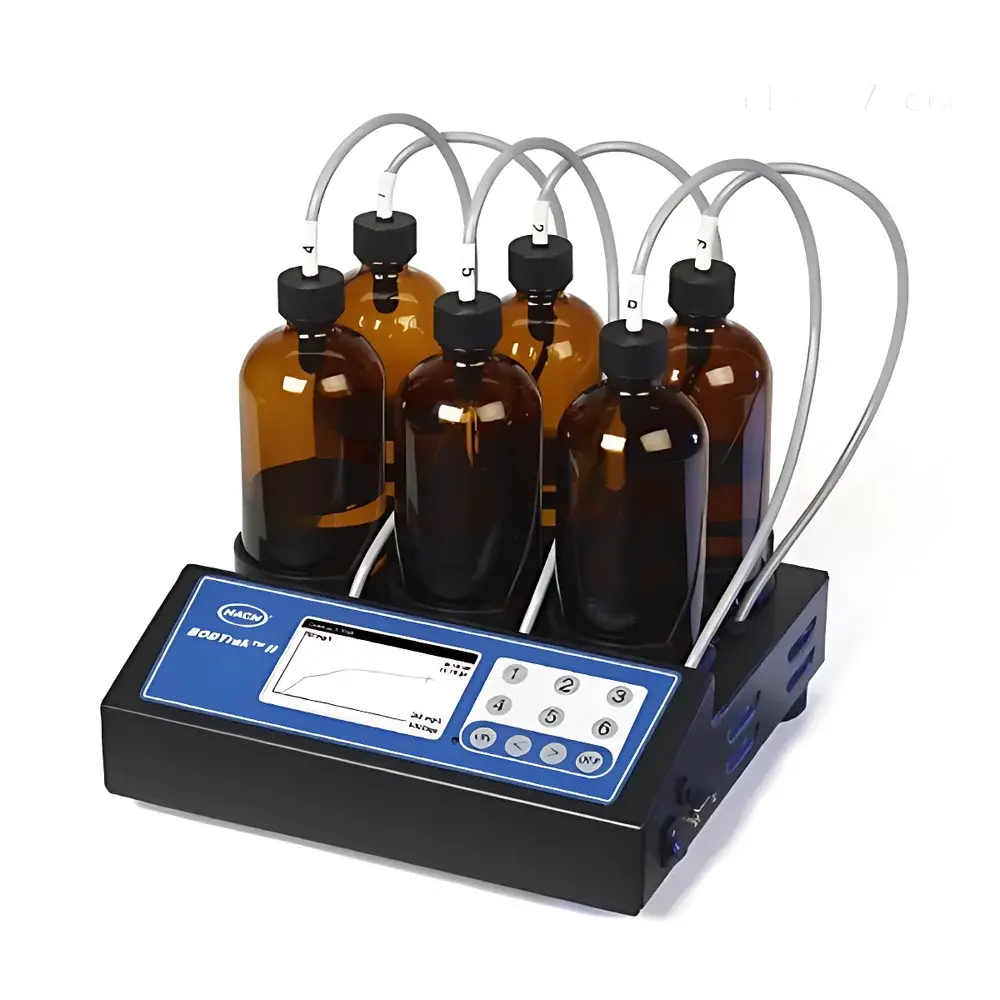
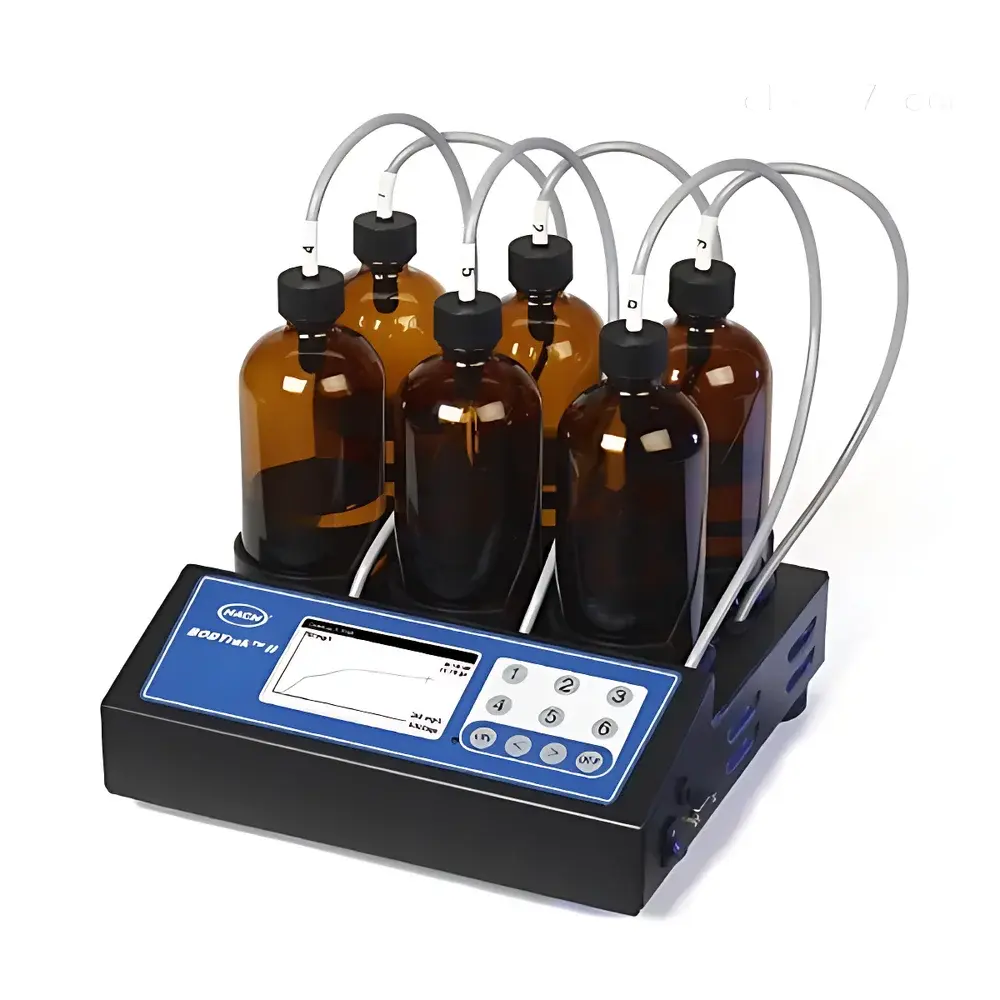
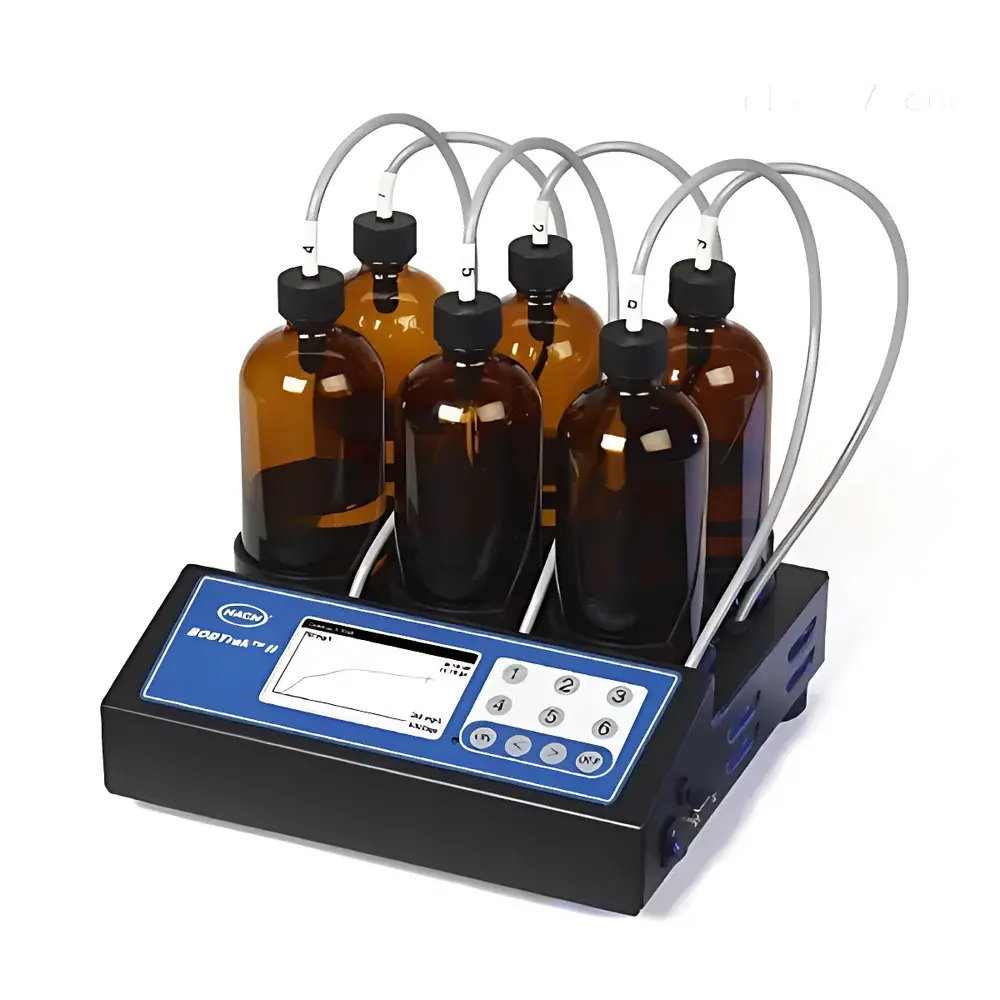
Hach BODTrak II Biochemical Oxygen Demand Analyzer
| Brand | Hach |
|---|---|
| Origin | Shanghai, China |
| Manufacturer Type | Authorized Distributor |
| Origin Category | Domestic (China-manufactured under Hach licensing) |
| Model | BODTrak II |
| Instrument Type | Laboratory BOD Analyzer |
| Measurement Principle | Pressure Differential Method |
| Measurement Ranges | 0–35, 0–70, 0–350, 0–700 mg/L |
| Detection Limit | 1 mg/L |
| Accuracy | ±1 mg/L |
| Incubation Duration | 5–10 days (user-selectable) |
| Incubation Temperature | 20 °C ±0.5 °C |
| Repeatability | 3–5% RSD |
| Sample Throughput | Up to 6 samples simultaneously |
| Data Logging Interval | Every 15 minutes |
| Total Data Points Storage | 480 |
| Software Interface | HachLink™ PC software (Windows-compatible) |
| Compliance | Designed to meet ASTM D5210, ISO 5815-1, and EPA Method 405.1 requirements for BOD₅ determination |
Overview
The Hach BODTrak II is a laboratory-grade biochemical oxygen demand (BOD) analyzer engineered for precision, reliability, and operational efficiency in routine water quality laboratories. It employs the pressure differential measurement principle—a scientifically validated alternative to the classical dilution and seeding method (ASTM D5210, ISO 5815-1). In this method, microbial degradation of biodegradable organic matter consumes dissolved oxygen (DO) in a sealed test vial. As DO is depleted, atmospheric oxygen from the headspace diffuses across the water–air interface to replenish it; concurrently, CO₂ generated during respiration is chemically absorbed by lithium hydroxide (LiOH) embedded in the vial cap. This absorption prevents CO₂ buildup and maintains a direct, linear correlation between the net pressure drop in the headspace and the mass of oxygen consumed—i.e., the BOD value. The instrument’s high-stability pressure transducer continuously monitors this differential, enabling real-time calculation and display of BOD concentration (mg/L) without manual titration or volumetric correction.
Key Features
- Automated, unattended operation over standard incubation periods (5, 7, or 10 days) at a tightly controlled 20 °C ±0.5 °C
- Six independent measurement channels—enabling parallel analysis of up to six samples per run
- Four selectable BOD ranges (0–35, 0–70, 0–350, and 0–700 mg/L), eliminating sample dilution for most municipal and industrial wastewater matrices
- High-resolution pressure sensing with ±1 mg/L accuracy and 3–5% repeatability (RSD) across repeated measurements
- Integrated data logger capturing one reading every 15 minutes—yielding up to 480 time-stamped data points per instrument session
- On-device LCD display showing real-time BOD accumulation, elapsed incubation time, and system status indicators
- Robust mechanical architecture with corrosion-resistant housing and calibrated, field-replaceable sensor modules
Sample Compatibility & Compliance
The BODTrak II is validated for use with raw and treated wastewater, surface water, groundwater, and process streams in environmental monitoring, municipal utilities, food & beverage production, pharmaceutical manufacturing, and academic research. Its design adheres to internationally recognized BOD methodology standards—including ASTM D5210 (Standard Test Method for Determining Biochemical Oxygen Demand of Water), ISO 5815-1:2019 (Water quality — Determination of biochemical oxygen demand after n days — Part 1: BOD₅), and U.S. EPA Method 405.1. While not a GLP/GMP-certified instrument out-of-the-box, its audit-ready data export capability (via HachLink™) supports laboratories implementing 21 CFR Part 11-compliant workflows when paired with appropriate electronic signature and data integrity protocols.
Software & Data Management
HachLink™ software provides secure, bidirectional communication between the BODTrak II and Windows-based laboratory PCs. Users can configure incubation duration, select range settings, initiate runs remotely, and download full datasets—including timestamped pressure values, calculated BOD curves, and statistical summaries (mean, SD, %RSD). Export formats include CSV and Excel-compatible .xls, facilitating integration into LIMS environments or regulatory reporting templates. All stored data retain native instrument metadata (vial ID, start/stop time, operator code if entered), supporting traceability requirements under ISO/IEC 17025-accredited testing programs.
Applications
- Regulatory compliance monitoring for NPDES permits and discharge consent limits
- Performance evaluation of wastewater treatment plant biological processes (e.g., activated sludge, MBR, trickling filters)
- Effluent characterization prior to land application or reuse schemes
- Research on biodegradability kinetics of novel organic compounds or formulation additives
- Quality control of influent and effluent in food processing facilities (e.g., dairy, brewing, meatpacking)
- Teaching laboratories demonstrating fundamental principles of aquatic microbiology and oxygen dynamics
FAQ
Does the BODTrak II require sample dilution?
For samples with expected BOD ≤700 mg/L, no dilution is required. For higher concentrations, dilution must be performed manually prior to loading—consistent with standard BOD practice.
How is CO₂ interference eliminated during measurement?
Each test vial cap contains a pre-loaded LiOH absorbent pad that quantitatively sequesters CO₂, preventing pressure artifacts and ensuring stoichiometric equivalence between O₂ consumption and measured pressure loss.
Can the instrument operate outside a dedicated 20 °C incubator?
No. Accurate BOD₅ determination requires strict thermal control per ISO 5815-1. The BODTrak II must be placed inside a certified, calibrated 20 °C incubator with minimal temperature fluctuation (<±0.5 °C).
Is calibration traceable to national standards?
The pressure sensor is factory-calibrated against NIST-traceable deadweight testers. Field verification is supported using zero-pressure and known-pressure reference checks via Hach-provided calibration kits.
What maintenance is required for long-term reliability?
Routine maintenance includes periodic replacement of LiOH caps (per test cycle), cleaning of vial threads and O-rings, and annual sensor verification. No user-serviceable electronics or fluidic components are present.







