
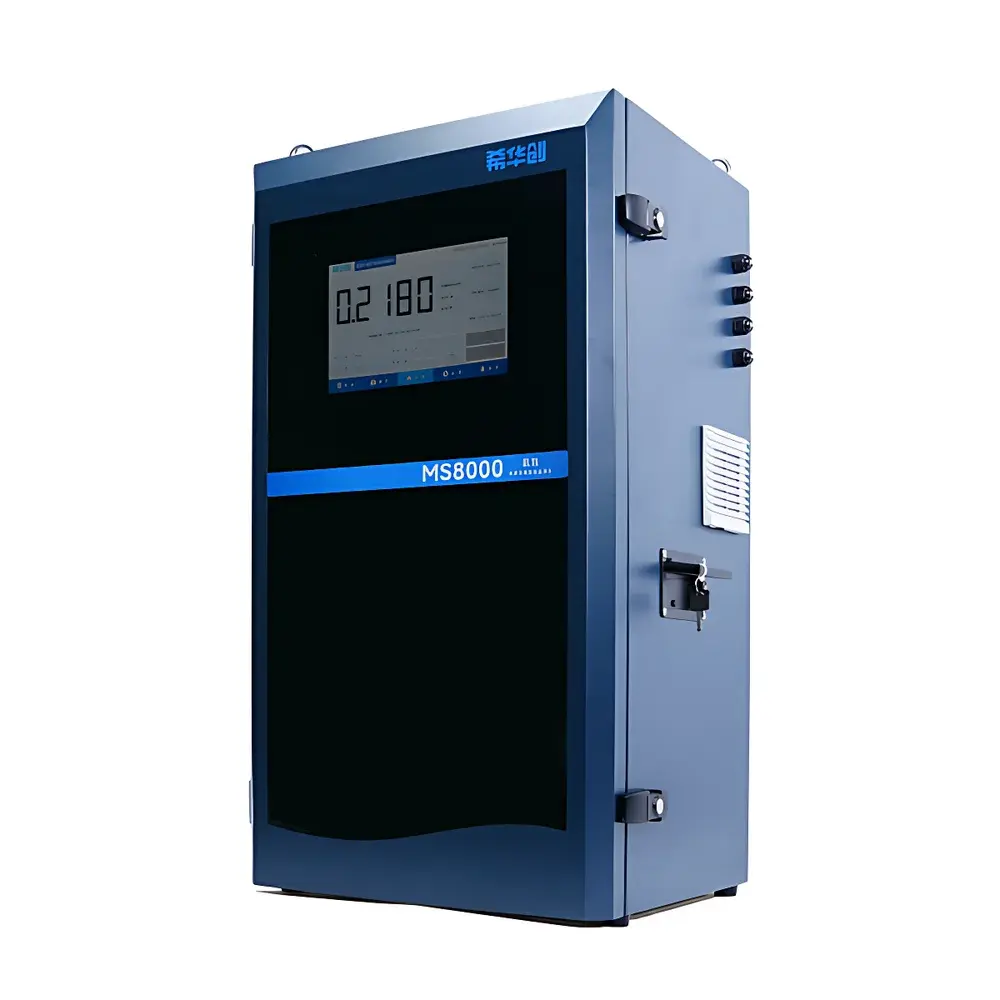
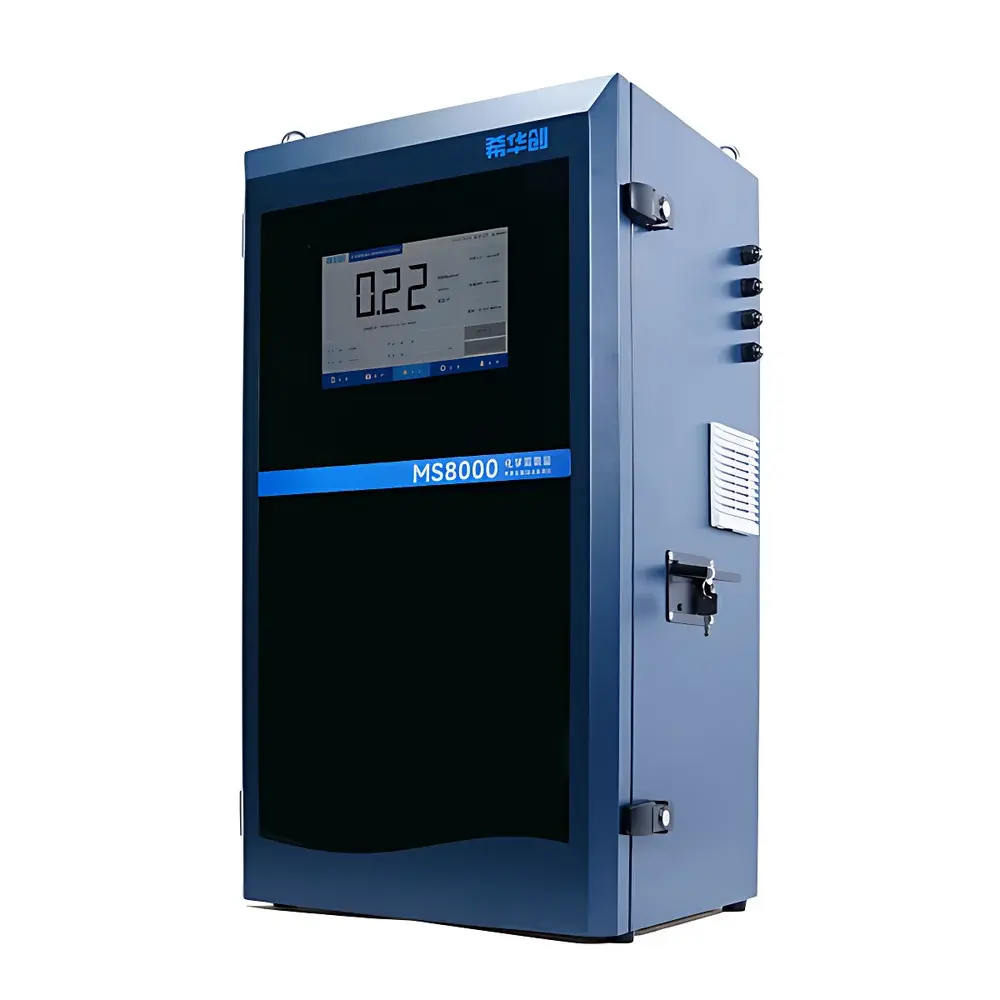
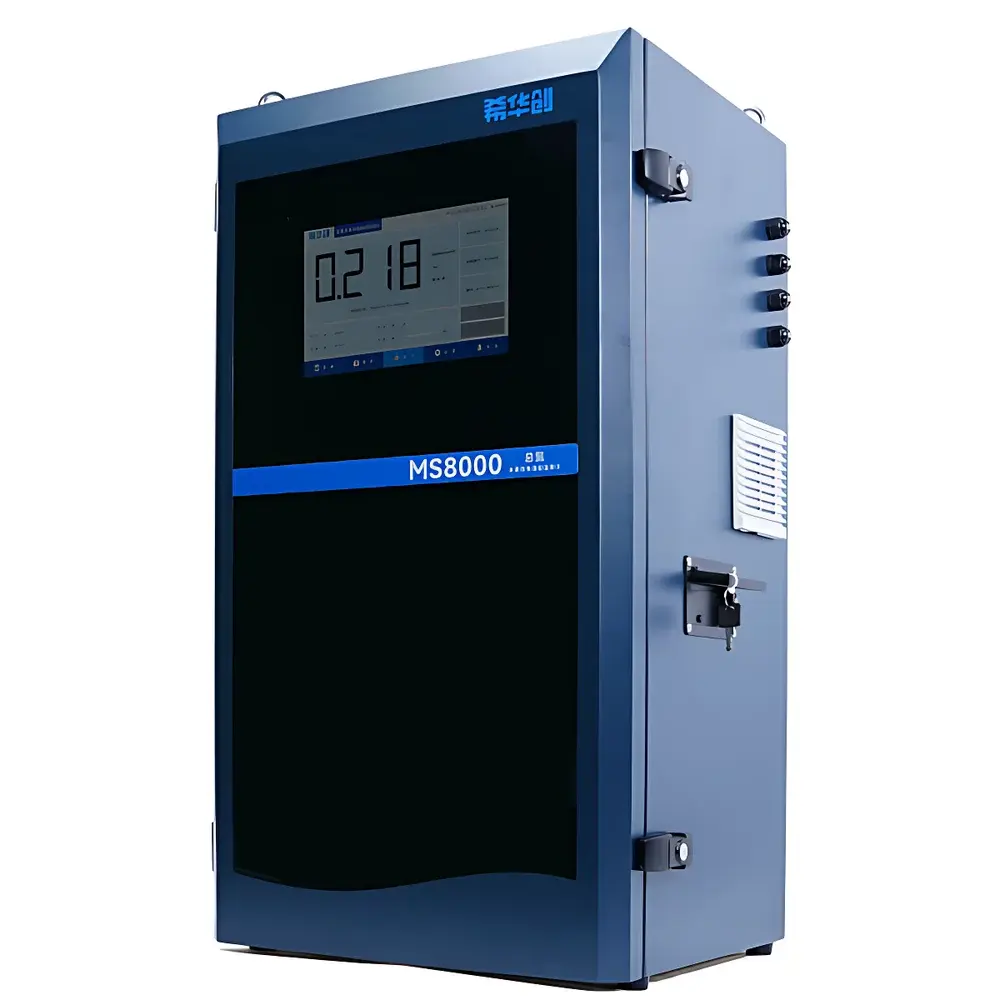
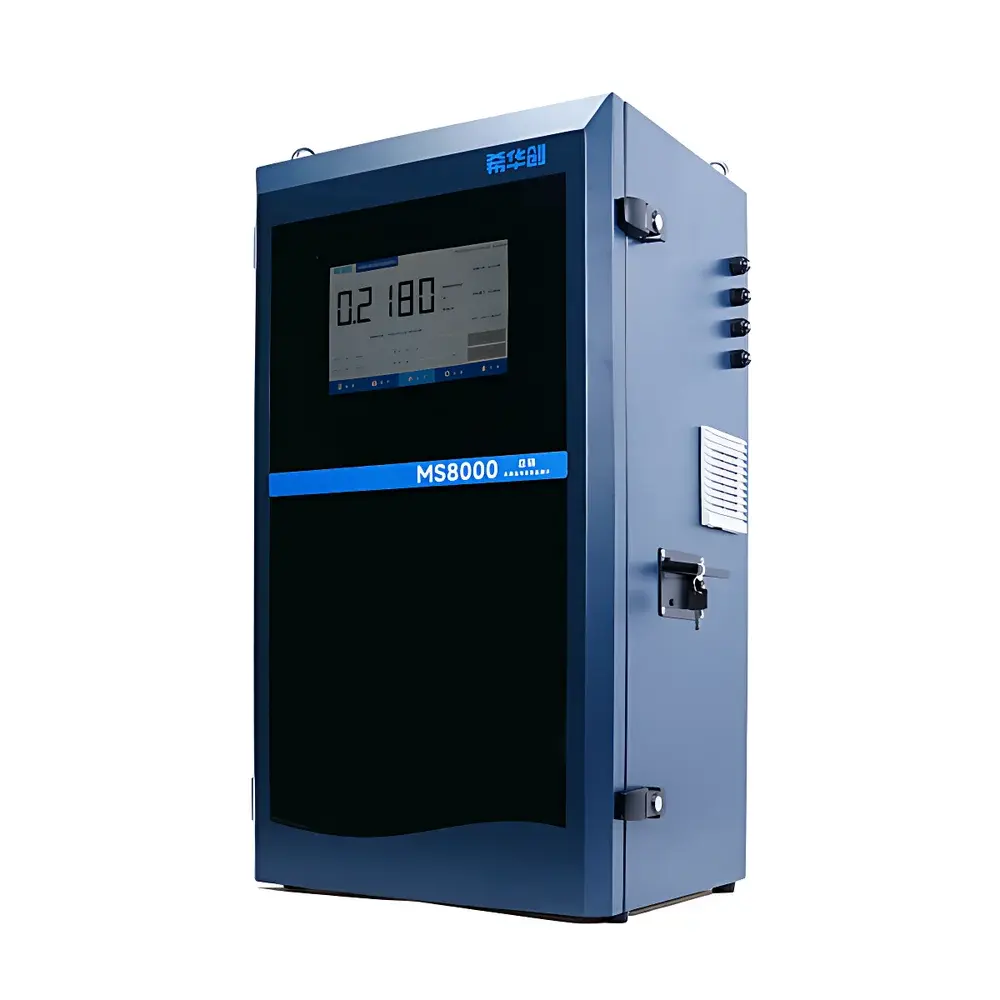
HACH MS8000 Series Online Automatic Water Quality Analyzer
| Brand | HACH |
|---|---|
| Origin | Imported |
| Manufacturer Type | Manufacturer |
| Model | MS8000 Series Online Automatic Water Quality Analyzer |
| Pricing | Upon Request |
Overview
The HACH MS8000 Series Online Automatic Water Quality Analyzer is an integrated, multi-parameter continuous monitoring platform engineered for real-time, unattended analysis of critical water quality parameters in municipal drinking water distribution systems, wastewater treatment effluents, surface water bodies, and industrial process streams. Built upon HACH’s decades of electrochemical, optical, and physical sensing expertise, the MS8000 employs modular sensor architecture with standardized analog and digital (Modbus RTU/TCP, Profibus DP) interfaces to support simultaneous measurement of pH, ORP, conductivity, dissolved oxygen (optical or galvanic), turbidity (nephelometric, 90° scatter), residual chlorine (amperometric or DPD colorimetric), nitrate (UV absorption at 220 nm), and ammonium (ion-selective electrode or UV-Vis). Its design adheres to fundamental principles of environmental metrology—traceable calibration, temperature-compensated signal processing, and flow-controlled sample conditioning—to ensure long-term stability and regulatory-grade data integrity under variable hydraulic and ambient conditions.
Key Features
- Modular sensor chassis with hot-swappable probe bays—enabling configuration flexibility across 6–12 parameter combinations without system downtime
- Integrated sample conditioning unit featuring automatic air purge, self-cleaning wiper mechanism, and programmable flow control (0.5–2.0 L/min) to minimize biofouling and sediment interference
- IP66-rated stainless-steel enclosure with internal temperature stabilization (15–35 °C operating range) for outdoor deployment in harsh climatic zones
- Onboard data logger with 16 GB non-volatile memory supporting 1-minute resolution over ≥12 months; configurable alarm thresholds with relay outputs (SPDT, 250 VAC/3 A)
- Embedded web server with HTTPS-enabled remote access, firmware OTA updates, and dual-role user authentication (operator/administrator)
- Pre-certified compliance with EN 14181 (QAL1/QAL2), ISO 5667-22 (water sampling), and US EPA Method 180.1 (turbidity), with optional QAL3 validation documentation package
Sample Compatibility & Compliance
The MS8000 is validated for use with potable water (0–30 NTU turbidity), secondary-treated wastewater (up to 100 mg/L suspended solids), and natural surface waters (pH 4.0–9.5, conductivity ≤2,000 µS/cm). All wetted components—including flow cells, sensor housings, and tubing—are constructed from FDA-compliant, NSF/ANSI 61-certified materials (e.g., PVDF, 316L SS, borosilicate glass). The system supports both grab-sample verification and continuous online operation, meeting requirements for routine monitoring under EU Water Framework Directive (2000/60/EC), China’s HJ 353–2019 Standard for Online Monitoring of Pollutant Sources, and US Clean Water Act §402 NPDES permit reporting. Audit trails comply with 21 CFR Part 11 when paired with HACH’s DataStream™ software configured for electronic signatures and change control.
Software & Data Management
Data acquisition and visualization are managed via HACH DataStream™ v4.2—a scalable SCADA-compatible platform supporting OPC UA, MQTT, and RESTful API integration. The software provides automated calibration logging (including standard concentration, date/time, operator ID, and drift correction values), trend analysis with statistical process control (SPC) charts (X-bar/R, CUSUM), and export to CSV, PDF, or XML formats compliant with ISO/IEC 17025 laboratory information management system (LIMS) ingestion protocols. Historical datasets retain full metadata (sensor health status, temperature compensation coefficients, diagnostic flags), enabling root-cause analysis during regulatory audits. Optional cloud gateway module enables secure AWS IoT Core or Azure IoT Hub connectivity with TLS 1.2 encryption and device-level certificate authentication.
Applications
- Real-time compliance monitoring at drinking water treatment plant intake and finished water points-of-delivery
- Effluent quality assurance in municipal and industrial wastewater treatment plants prior to discharge
- Early-warning detection of contamination events (e.g., chlorine demand spikes, sudden turbidity surges, DO depletion) in reservoirs and rivers
- Process optimization in cooling towers, boiler feedwater circuits, and semiconductor ultrapure water loops
- Supporting ISO 14001 environmental management system (EMS) objectives through automated KPI dashboards (e.g., % time within spec, alarm frequency per parameter)
FAQ
What certifications does the MS8000 hold for regulatory reporting in the European Union?
The MS8000 meets EN 14181 requirements for automated monitoring systems and carries CE marking under the Measuring Instruments Directive (MID) for turbidity and conductivity modules. Full QAL1 certification reports are available upon request.
Can the MS8000 integrate with existing PLC-based SCADA infrastructure?
Yes—it supports Modbus RTU (RS-485), Modbus TCP (Ethernet), and Profibus DP v1 communication protocols with configurable polling intervals and register mapping aligned to IEC 61850-7-420 profiles.
Is remote calibration possible without on-site technician intervention?
Zero/span calibration may be initiated remotely via DataStream™; however, physical standard introduction and sensor verification require manual access per ISO/IEC 17025 Clause 7.7 and USP guidance for online analyzers.
What is the recommended maintenance interval for the automatic cleaning system?
The wiper cycle is programmable from 15 minutes to 24 hours; typical field practice sets it to 2-hour intervals in high-fouling environments, with quarterly inspection of wiper blade integrity and flow cell optical windows.
Does the MS8000 support GLP/GMP-compliant audit trails?
When deployed with DataStream™ in “Regulatory Mode”, all user actions, calibration events, and configuration changes are timestamped, digitally signed, and immutable—fully traceable per FDA 21 CFR Part 11 Subpart B requirements.







