
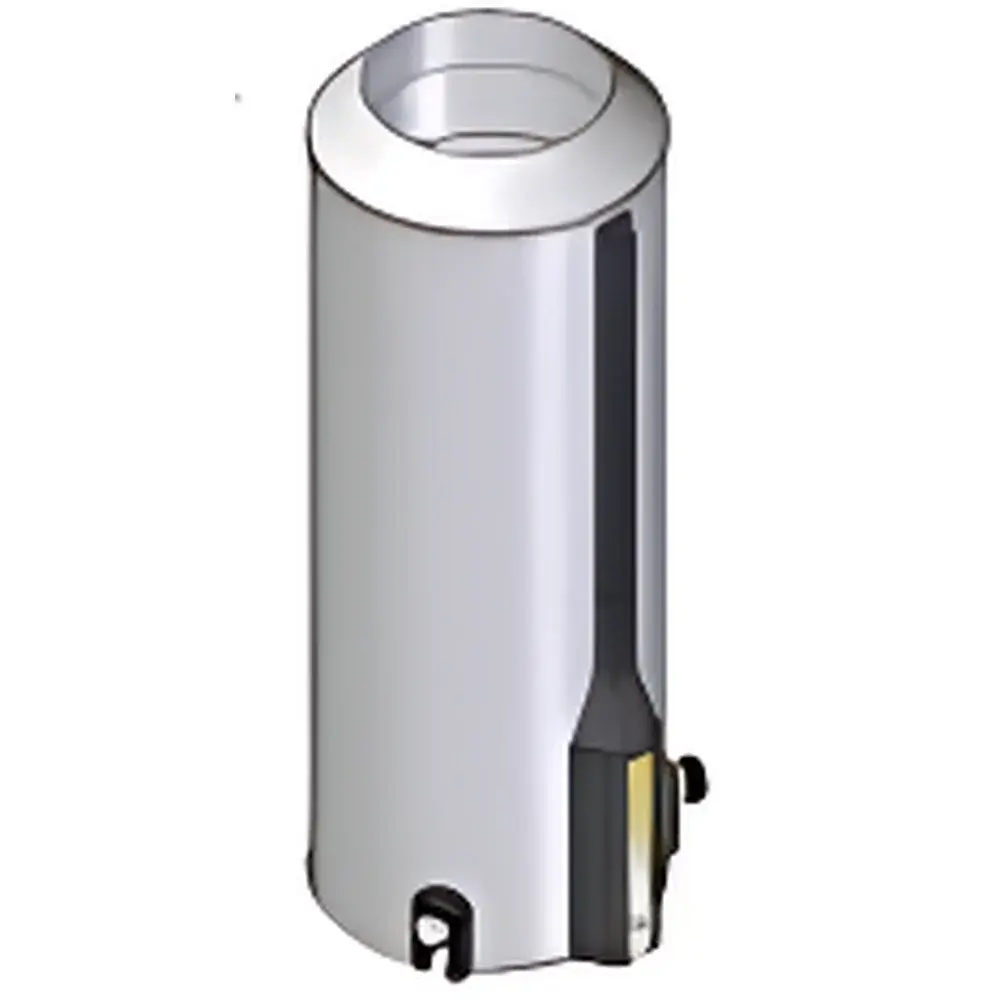
HACH OTT Pluvio2 S All-Weather Weighing Rain Gauge
| Brand | OTT Hydromet |
|---|---|
| Origin | Germany |
| Model | OTT Pluvio2 S |
| Collection Area | 200 cm² |
| Capacity | 450 mm |
| Rainfall Intensity Range | 0.03–3000 mm/h |
| Resolution | 0.01 mm / 0.01 mm/h |
| Accuracy | ±0.1 mm or ±1% |
| Operating Temperature | −40 to +60 °C |
| IP Rating | IP67 (load cell & electronics), IP65 (housing) |
| Power Supply | 5.5–28 VDC (180 mW) |
| Output Interfaces | SDI-12, RS485 (2-/4-wire), Pulse/Contact, USB (configuration & service) |
| MTBF | >100 years |
| Compliance | WMO No. 8 (CIMO Guide), ISO 9001, CE, EMC/EMI EN 61000-4-2/4/5/6 Level 5, EN 61000-4-3 |
Overview
The HACH OTT Pluvio2 S is a high-precision, all-weather weighing rain gauge engineered for continuous, traceable measurement of liquid, solid, and mixed-phase precipitation. Unlike tipping-bucket or optical sensors, the Pluvio2 S employs a calibrated, hermetically sealed load cell operating on the principle of dynamic mass accumulation—measuring real-time weight gain in the collector bucket with microgram-level stability. This gravimetric method ensures metrological integrity across extreme climatic conditions, from sub-zero snowfall to torrential tropical downbursts. Designed to meet the stringent requirements of the World Meteorological Organization (WMO) Guide to Meteorological Instruments and Methods of Observation (CIMO Guide, No. 8), the instrument delivers certified rainfall intensity (mm/h) and cumulative totals (mm) without mechanical wear, hysteresis, or tipping artifacts. Its compact cylindrical form factor (650 × 224 mm, 7 kg) integrates seamlessly into automated weather stations (AWS), hydrological networks, radar calibration sites, and remote environmental monitoring platforms.
Key Features
- Self-Calibrating Load Cell Architecture: Incorporates an embedded temperature-compensated reference mass and adaptive digital signal processing to perform automatic in-situ calibration throughout the instrument’s lifecycle—eliminating long-term drift and field recalibration needs.
- Wide Dynamic Range & High Sensitivity: Measures rainfall intensities from 0.03 mm/h (light drizzle) to 3000 mm/h (extreme convective events) with 0.01 mm resolution and ±0.1 mm or ±1% accuracy—validated per WMO performance criteria for Class A gauges.
- Robust Environmental Hardening: Load cell and electronics housed in IP67-rated stainless steel; external housing rated IP65 with salt-fog resistance. Operates reliably from −40 °C to +60 °C, with optional 24 VDC heating ring (70 W max) for snowmelt and rim freezing mitigation.
- Low-Power, Multi-Protocol Interface: Draws only 180 mW at 12 VDC. Supports SDI-12 (1200 baud), RS485 (2- or 4-wire), pulse output (0.1 mm per pulse, 5/2 Hz selectable), and USB for configuration, diagnostics, and firmware updates.
- Maintenance-Free Design: No moving parts, no lubrication, no periodic zeroing. Field-replaceable pre-calibrated components—including collector bucket (ethylene), load cell assembly, and heater module—enable rapid restoration with documented metrological continuity.
- Long-Term Reliability: Rated MTBF >100 years. Load cell features overvoltage protection (4 kV surge immunity per EN 61000-4-2/4/5/6), EMI shielding (EN 61000-4-3), and mechanical overload safeguards.
Sample Compatibility & Compliance
The Pluvio2 S is validated for quantitative measurement of rain, snow, sleet, graupel, and mixed-phase events without phase discrimination bias—critical for climate-grade precipitation records and radar Z-R relationship derivation. Its 200 cm² orifice complies with WMO-recommended collector geometry, while the 450 mm bucket capacity enables unattended operation during multi-day storm sequences. The system meets international regulatory and quality frameworks including ISO 9001 manufacturing controls, CE marking for EMC and safety, and functional alignment with FDA 21 CFR Part 11 data integrity expectations when deployed with compliant data loggers. Audit-ready diagnostic logs—including heater status, temperature compensation coefficients, and internal self-test results—are timestamped and stored onboard.
Software & Data Management
Configuration, monitoring, and firmware management are performed via USB interface using OTT’s standardized Pluvio Configuration Tool—a Windows-based utility supporting parameter setup (e.g., heating thresholds, averaging intervals, unit selection between metric/imperial), real-time diagnostics, and secure firmware updates. Data output supports both real-time (RT) and non-real-time (NRT) modes: RT provides instantaneous rainfall intensity at 1-minute intervals (18 s latency); NRT delivers accumulated totals and bucket status at user-defined intervals (1–60 min). Raw and processed data streams integrate natively with Campbell Scientific, Delta-T, and other industry-standard dataloggers via SDI-12 or RS485. When paired with a GPRS-enabled logger and small solar panel, the system forms a fully autonomous telemetry node—enabling remote deployment in off-grid hydrological catchments or alpine observatories.
Applications
- Primary and reference-grade precipitation monitoring at national meteorological services and WMO-certified observing stations
- Radar quantitative precipitation estimation (QPE) calibration and ground-truth validation, especially in high-gradient orographic regions
- Hydrological modeling input for flood forecasting, reservoir management, and drought index calculation
- Wildfire risk assessment via real-time soil moisture proxy generation in forested and semi-arid zones
- Railway and highway infrastructure monitoring for landslide and washout early warning systems
- Climate research networks requiring multi-decadal homogeneity and traceability to SI mass standards
FAQ
Does the Pluvio2 S require annual recalibration?
No. Its integrated self-calibration system—leveraging temperature-stable reference mass, thermal drift modeling, and adaptive filtering—maintains metrological traceability throughout its operational life without external intervention.
Can it accurately measure snowfall?
Yes. As a true weighing gauge, it measures total precipitated mass regardless of phase. With optional heater activation and wind shield (Alter or Tretyakov type), it achieves WMO-recommended undercatch correction for solid precipitation.
What power sources are compatible?
It operates on unregulated DC supply from 5.5 to 28 VDC (180 mW typical). The heater requires dedicated 24 VDC (70 W peak). Solar-battery hybrid configurations are field-proven for remote installations.
Is the data output compliant with WMO BUFR or NetCDF standards?
The gauge itself outputs raw sensor values (mass, temperature, status flags). BUFR/NetCDF encoding is implemented at the data logger or central server level using standard conversion libraries—fully supported by major environmental data platforms.
How is wind-induced undercatch mitigated?
Through combination of aerodynamic collector geometry, optional Alter/Tretyakov wind shield (sold separately), and proprietary software algorithms that apply empirically derived wind-speed-dependent correction factors to raw mass accumulation rates.
Related Products







