
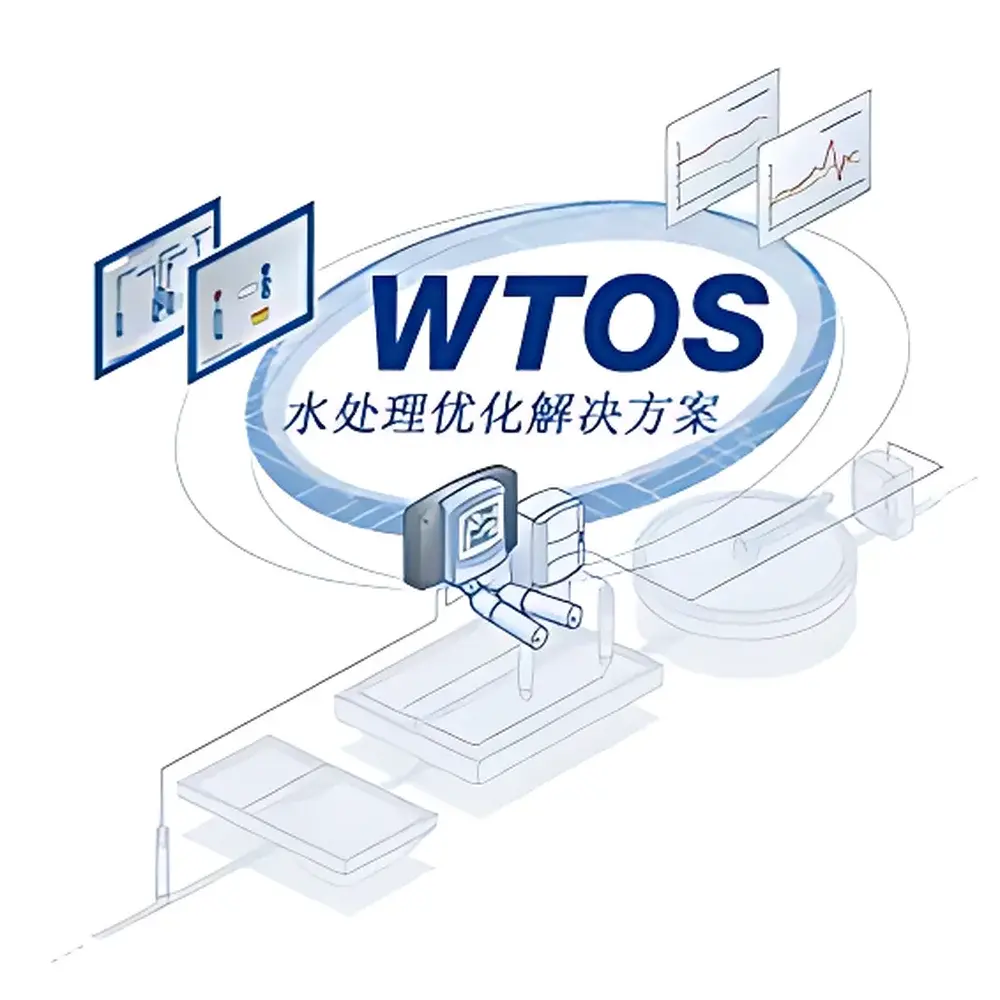
HACH WTOS Water Treatment Optimization Solution
| Brand | HACH |
|---|---|
| Origin | Imported |
| Manufacturer Type | Manufacturer |
| Model | WTOS- |
| Pricing | Upon Request |
Overview
The HACH WTOS Water Treatment Optimization Solution is an integrated, real-time process control platform engineered for municipal and industrial wastewater treatment plants seeking energy efficiency, regulatory compliance, and operational resilience. Built upon first-principles process modeling and adaptive feedback control logic, WTOS dynamically adjusts critical unit operations—including nitrification, denitrification, phosphorus removal, and sludge management—based on continuously measured water quality parameters. Unlike static setpoint-based automation systems, WTOS employs multi-variable, model-assisted control algorithms that respond to real-time influent load fluctuations (e.g., NH₄⁺-N, NO₃⁻-N, PO₄³⁻-P, COD, flow rate), enabling predictive rather than reactive process management. Its architecture supports 24/7 unattended operation under variable hydraulic and organic loading conditions, with fail-safe redundancy mechanisms ensuring continuity of treatment performance even during sensor drift or single-point instrument failure.
Key Features
- Real-time Nitrification Control Module (N-RTC): Calculates optimal dissolved oxygen (DO) setpoints by correlating influent ammonium load and effluent ammonium concentration; integrates feedforward–feedback DO control using upstream and downstream DO sensors to maintain nitrification efficiency under shock loads.
- Real-time Denitrification Control Module (DN-RTC): Regulates external carbon source (e.g., methanol) dosing or internal nitrate recirculation flow based on real-time effluent nitrate concentration, minimizing carbon consumption while meeting total nitrogen (TN) discharge limits per EU Urban Wastewater Directive or US EPA NPDES requirements.
- Real-time Phosphorus Removal Control Module (P-RTC): Implements open-loop or closed-loop chemical dosing control for metal salt coagulants (e.g., FeCl₃, Al₂(SO₄)₃) using online orthophosphate (PO₄-P) measurement, reducing precipitant over-dosing and associated sludge volume generation.
- System Health Monitoring (SHM): Proprietary diagnostic layer validates sensor integrity, signal plausibility, and communication latency across all connected HACH analyzers (e.g., DR3900, SC1000, 5086/5087 ammonia/nitrate analyzers), triggering automated alerts prior to data corruption or control deviation.
- Seamless DCS/SCADA Integration: Native Modbus TCP, Profibus DP, and OPC UA interfaces enable plug-and-play integration with existing plant automation systems without requiring middleware or custom protocol gateways.
- Fail-Safe Operational Continuity: Predefined fallback strategies—including rule-based override modes and historical setpoint interpolation—activate automatically upon module deactivation or analyzer fault, preserving minimum treatment standards during maintenance or calibration windows.
Sample Compatibility & Compliance
WTOS is validated for continuous monitoring and control of secondary and tertiary wastewater streams, including activated sludge, MBR, and oxidation ditch processes. It complies with ISO 5667-3 (water sampling), ISO 15839 (performance criteria for on-line analyzers), and EN 14181 (QA/QC for automated monitoring systems). All embedded control logic adheres to IEC 61511 (functional safety for SIS) principles where applied in safety-critical loops. Data handling meets GLP/GMP traceability expectations through audit-trail-enabled event logging, and optional FDA 21 CFR Part 11 compliance is available via HACH’s LIMS-integrated software package.
Software & Data Management
The WTOS Control Engine runs on a hardened Linux-based industrial controller with deterministic real-time scheduling. Configuration, tuning, and diagnostics are performed via the web-based HACH WTOS Engineering Portal, supporting role-based access control (RBAC), version-controlled control strategy deployment, and comparative performance benchmarking across multiple time horizons (hourly, daily, monthly). All process variables, control actions, and system health events are timestamped with microsecond precision and stored locally (≥18 months) with optional cloud backup. Export formats include CSV, PDF reports, and OPC-HDA-compliant historical data retrieval for third-party analytics platforms.
Applications
- Energy optimization of aerobic basins: Proven 18% reduction in blower energy consumption in full-scale WWTPs (e.g., UK South Coast facility serving 250,000 PE).
- Carbon source minimization in denitrification: 44% reduction in methanol dosage observed when DN-RTC operates synergistically with N-RTC under diurnal load variation.
- Phosphate compliance assurance: Maintains effluent PO₄-P < 0.1 mg/L in stringent discharge regimes (e.g., German LAWA guidelines) while cutting coagulant use by up to 30%.
- Sludge retention time (SRT) stabilization: Integrates with MLSS and OUR measurements to prevent filamentous bulking and optimize wasting schedules.
- Regulatory reporting readiness: Automatically generates compliance summaries aligned with ISO 14001 environmental management system documentation requirements.
FAQ
Does WTOS require replacement of existing instrumentation?
No—WTOS is designed for retrofit integration. It leverages data from legacy or new HACH analyzers (e.g., 5086 NH₄-N, 5087 NO₃-N, 5088 PO₄-P) via standard industrial protocols.
Can WTOS operate without internet connectivity?
Yes—the core control engine runs autonomously on-site. Cloud connectivity is optional and used only for remote diagnostics, firmware updates, and centralized fleet monitoring.
How is control logic validated before commissioning?
HACH provides factory acceptance testing (FAT) using dynamic simulation models calibrated against site-specific pilot data, followed by site acceptance testing (SAT) with 72-hour parallel operation against manual control.
Is cybersecurity addressed in the architecture?
Yes—WTOS controllers comply with IEC 62443-3-3 SL2 requirements, featuring encrypted communications, secure boot, and regular vulnerability patching cycles certified under HACH’s ISO/IEC 27001 ISMS.
What training and support options are available?
HACH offers certified operator training, control engineer certification programs, and 24/7 technical support with SLA-governed response times for critical alarms.
Related Products







