
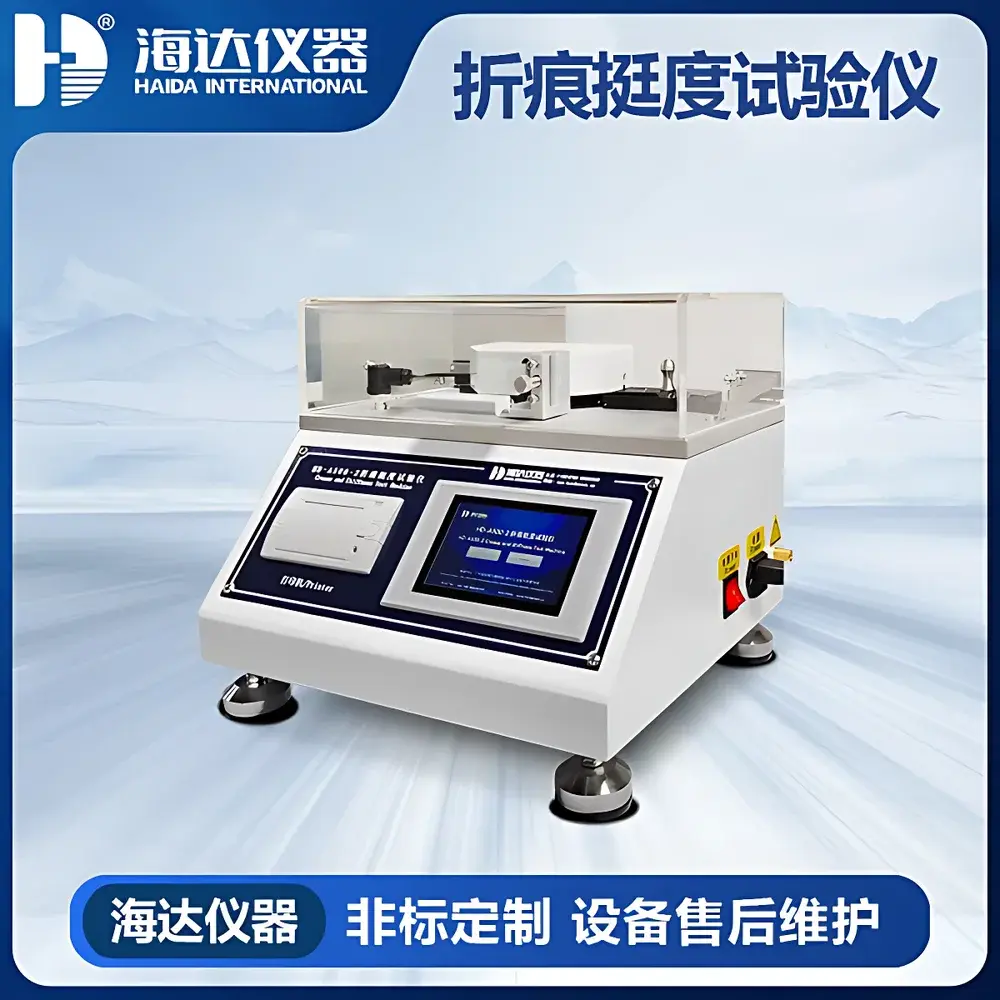
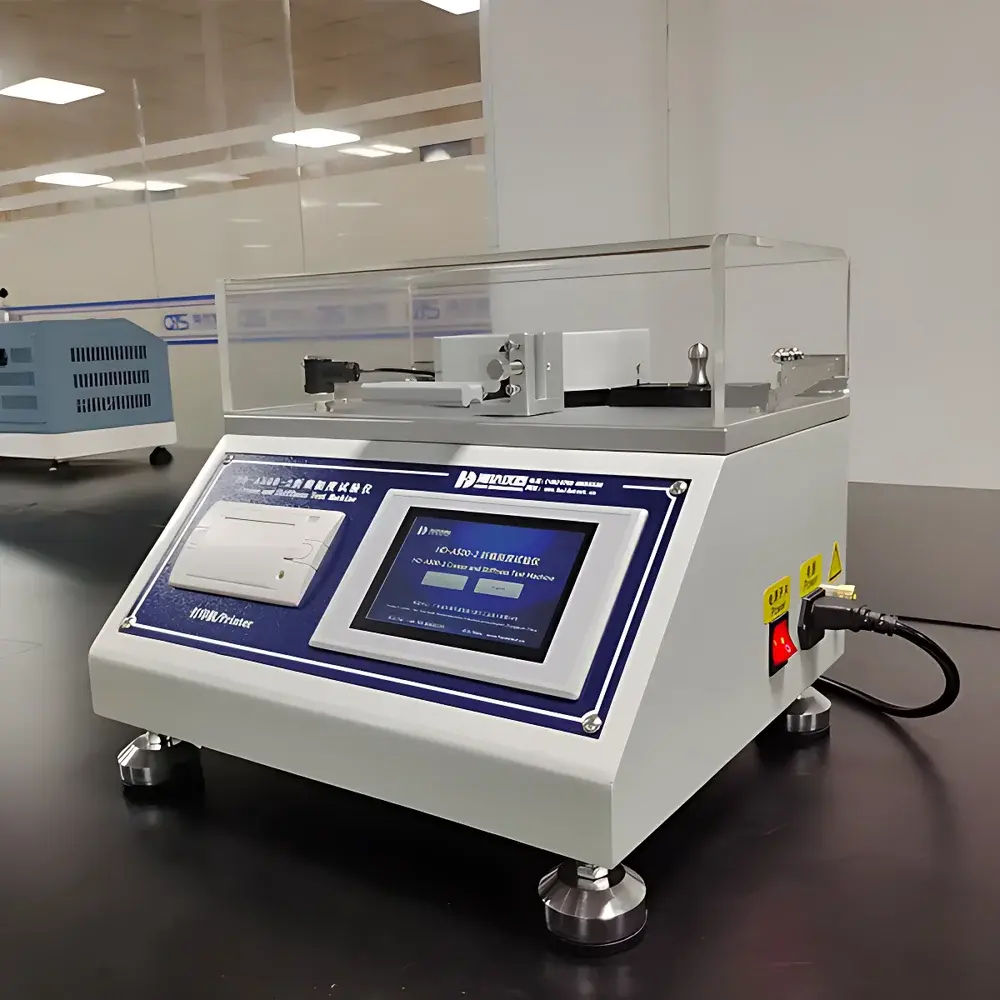
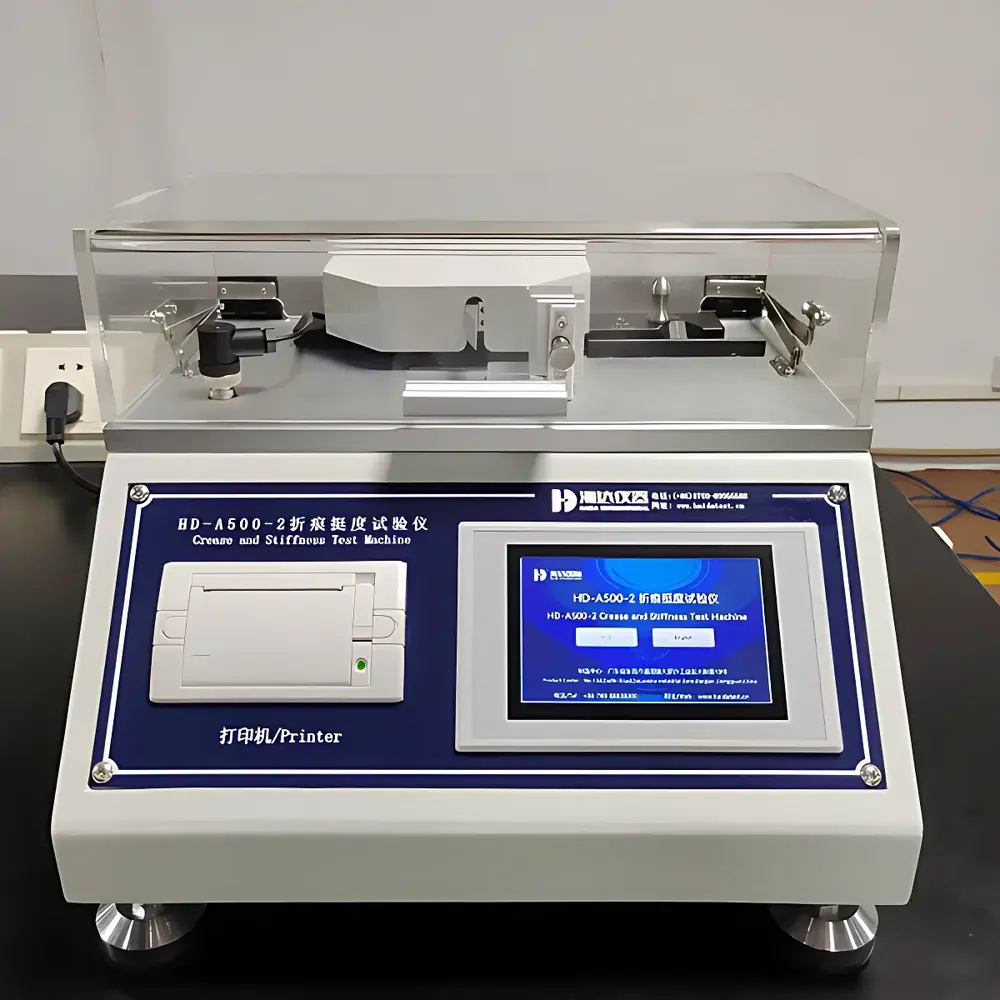
HAIDA HD-A500-2 Crease Stiffness Tester
| Brand | HAIDA INTERNATIONAL |
|---|---|
| Origin | Guangdong, China |
| Manufacturer Type | Direct Manufacturer |
| Product Category | Domestic (China-Made) |
| Model | HAIDA HD-A500-2 Crease Stiffness Tester |
| Quotation | Upon Request |
| Maximum Test Force | 0.001 N – 9.8 N (equivalent bending moment: 1–500 mN·m) |
| Angular Loading Speed | 5 ± 0.5 °/s (up to 1000 °/min) |
| Relative Indication Error | ±0.001 N |
| Display | 5-inch Touchscreen Interface |
| Specimen Dimensions | Length 80 mm, Crease Length 50 mm, Width 38 ± 0.2 mm |
| Knife Edge Length | 16 ± 1 mm |
| Clamp Travel | 0.1–4.5 mm (suitable for specimens with stiffness range 20–10,000 mN·m) |
| Clamp Length | 22 ± 0.2 mm |
| Clamp Width | 39 mm |
| Stiffness Test Stroke Options | 5, 10, 15, 20, 25, 30, 40, 50 mm (±0.1 mm adjustable) |
| Crease Test Stroke | 13 ± 0.2 mm |
| Test Angles | 7.5° ± 0.3°, 15° ± 0.3°, 90° ± 0.3°, or continuous 0°–90° adjustment |
| Angular Accuracy | ±0.1° |
| Force Resolution | 0.001 N |
| Data Output | Integrated thermal printer module |
| Overall Dimensions (L×W×H) | ≈360 × 320 × 290 mm |
| Net Weight | ≈27 kg |
| Power Consumption | ≈140 W |
Overview
The HAIDA HD-A500-2 Crease Stiffness Tester is a precision-engineered instrument designed for the quantitative evaluation of bending resistance—commonly referred to as “stiffness” or “crease stiffness”—in thin, sheet-like non-metallic materials. It operates on the principle of controlled angular deflection under constrained boundary conditions: a standardized specimen is clamped at one end while a knife edge applies a defined angular displacement (e.g., 7.5°, 15°, or 90°) at a specified distance from the clamp. The resulting reaction force is measured in real time via a high-resolution load cell, and converted into bending moment (mN·m) using geometric calibration constants defined by international standards. This method enables direct correlation with material structural integrity, fiber orientation, coating uniformity, and calendering effects—critical parameters for packaging cartons, corrugated board liners, specialty papers, and laminated composites.
Key Features
- High-precision stepper motor drive system ensures repeatable angular positioning with ±0.1° accuracy and stable rotational speed control across the full range (5 ± 0.5 °/s standard; up to 1000 °/min maximum).
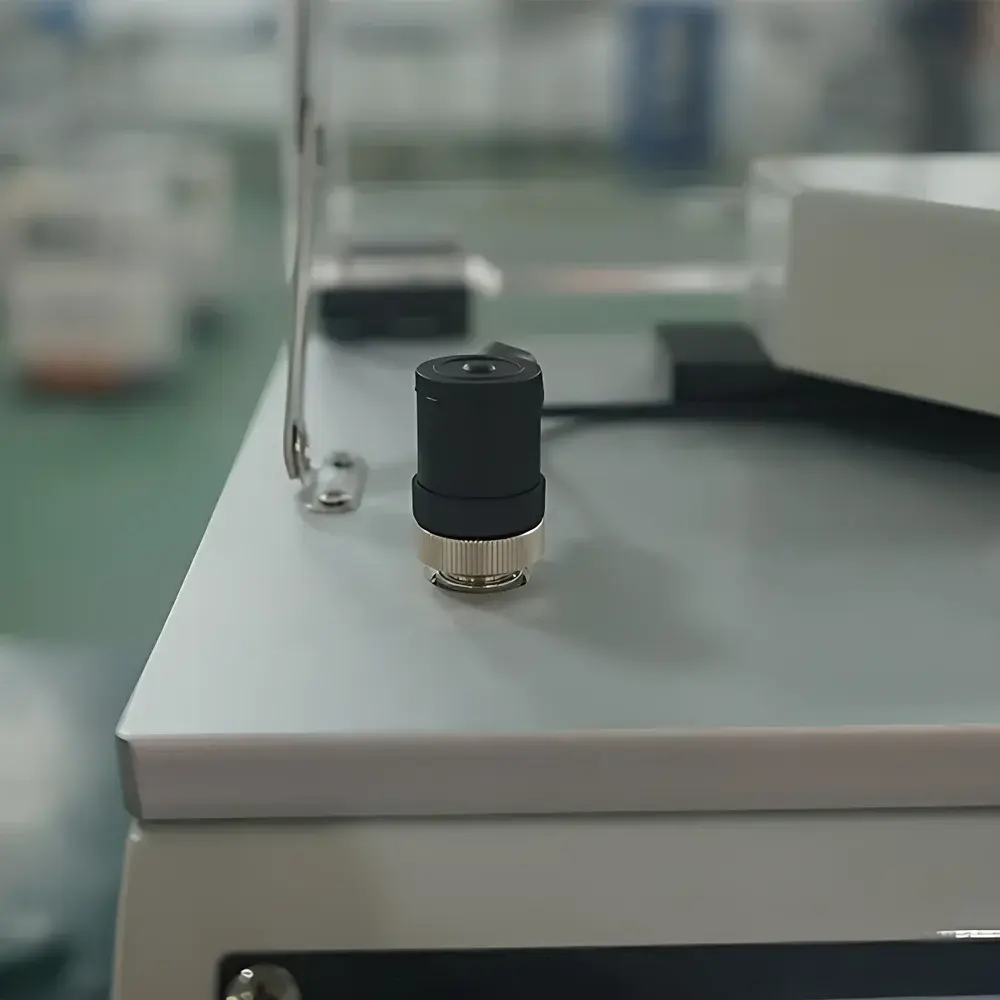
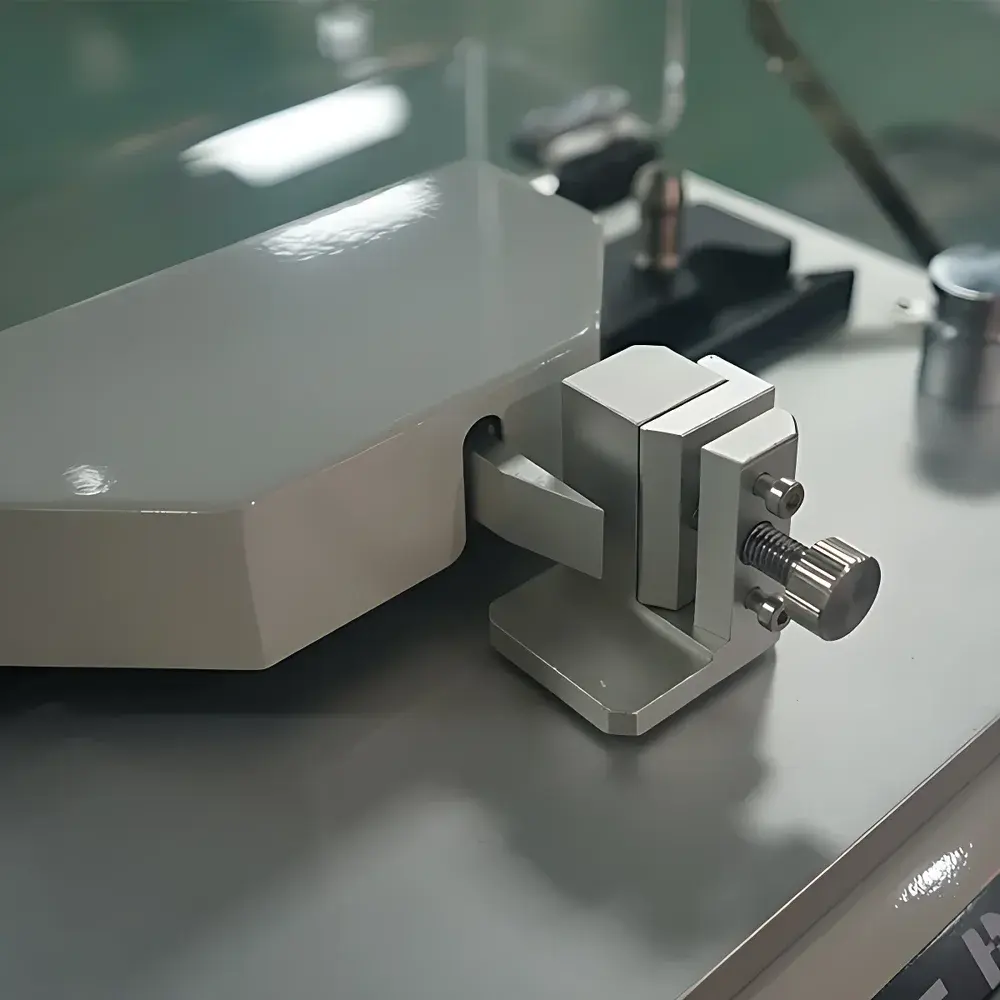
- Dual-bearing clamp assembly minimizes mechanical hysteresis and torsional play, delivering smooth, low-friction rotation essential for high reproducibility in low-force regimes (down to 0.001 N).
- Imported calibrated load cell with 0.001 N resolution and ±0.001 N linearity error provides traceable force measurement aligned with ISO/IEC 17025 metrological requirements.
- Modular thermal printer integrated into the instrument housing enables immediate hard-copy output of test results—including date/time stamp, specimen ID, angle, stroke, peak force, and calculated bending moment—without external peripherals.
- 5-inch industrial-grade capacitive touchscreen interface supports intuitive parameter setup, real-time curve visualization, and multi-step programmable test sequences compliant with GLP documentation practices.
- Robust powder-coated steel chassis (27 kg mass) dampens environmental vibration and ensures long-term dimensional stability during routine QC testing in production labs.
Sample Compatibility & Compliance
The HD-A500-2 accommodates specimens up to 4 mm in thickness and 80 mm in length, with standardized width (38 ± 0.2 mm) and crease length (50 mm). Its modular clamp geometry and adjustable knife-edge positioning support consistent application of ASTM D6858 (for folding endurance), ISO 2493:2010 (paper and board stiffness by bending moment), ISO 5628:2012 (bending resistance of paper and board), DIN 53121:2014 (stiffness of paper and cardboard), BS 6965 (rigidity of paper and board), GB/T 22364–2018 (Chinese national standard for paper stiffness), and GB/T 23144–2008 (test methods for folding endurance). All mechanical and software routines are structured to meet audit-ready compliance for ISO 9001-certified quality systems and FDA-regulated packaging validation protocols where physical property verification is required.
Software & Data Management
The embedded firmware implements a deterministic real-time control loop synchronized with force acquisition at ≥1 kHz sampling rate. Test data—including raw force vs. angle curves, peak values, slope-derived flexural modulus approximations, and pass/fail thresholds—are stored internally with timestamped metadata. Export options include CSV via USB port for integration with LIMS or statistical process control (SPC) platforms. Audit trail functionality logs all user actions (e.g., parameter changes, calibration events, print commands) with operator ID and timestamp—supporting compliance with 21 CFR Part 11 requirements when paired with appropriate access controls and electronic signature workflows.
Applications
- Quality assurance of folding cartons, beverage carriers, pharmaceutical blister packaging, and retail display boards.
- R&D evaluation of pulp refining degree, filler content, surface sizing efficiency, and polymer coating adhesion effects on sheet rigidity.
- Comparative analysis of recycled fiber blends versus virgin pulp stiffness retention after multiple processing cycles.
- Validation of crease line integrity in digitally printed and die-cut packaging prototypes prior to commercial scale-up.
- Supporting ISO 12647-2 (process control for offset lithography) and TAPPI T 543 (folding endurance) related stiffness correlation studies.
FAQ
What standards does the HD-A500-2 comply with?
It conforms to ISO 2493:2010, ISO 5628:2012, DIN 53121:2014, BS 6965, GB/T 22364–2018, and GB/T 23144–2008.
Can the instrument test materials thicker than 4 mm?
No—the design envelope and clamp travel are optimized for specimens ≤4 mm; exceeding this may compromise angular fidelity and force linearity.
Is calibration traceable to national metrology institutes?
Yes—load cell calibration certificates are provided with NIST-traceable reference standards; annual recalibration is recommended per ISO/IEC 17025 guidelines.
Does the system support automated batch reporting?
Yes—programmable test sequences allow up to 99 specimens per batch with auto-incremented IDs and consolidated CSV export.
What maintenance is required for long-term accuracy?
Routine inspection of knife-edge wear, clamp alignment, and motor belt tension every 6 months; sensor zero-check before each shift is advised.



