
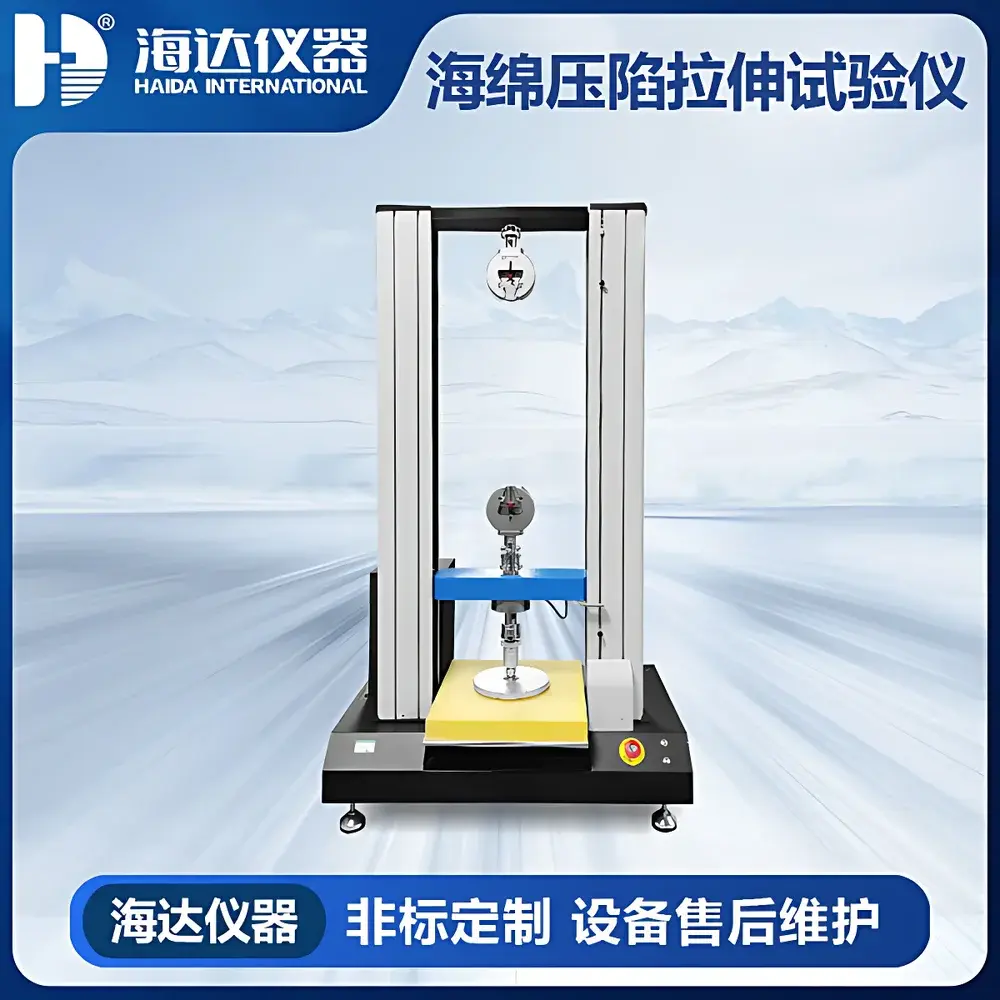
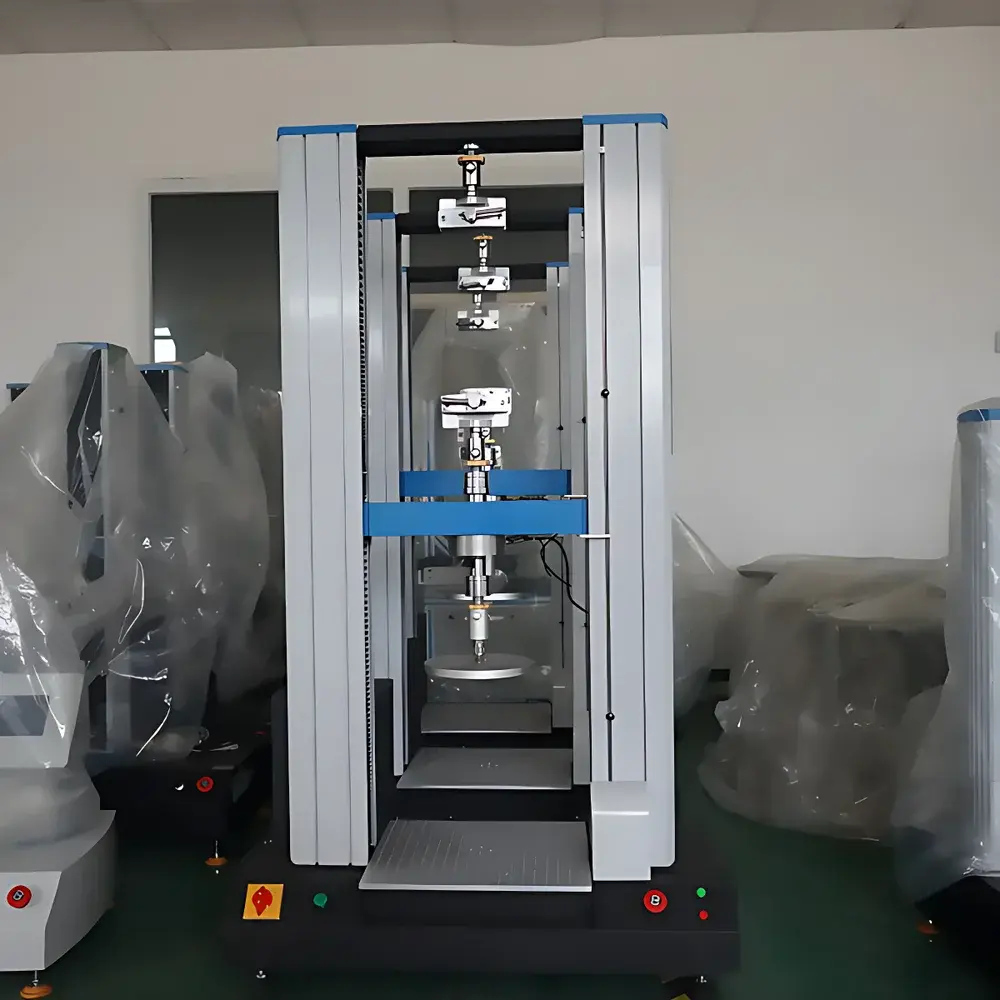
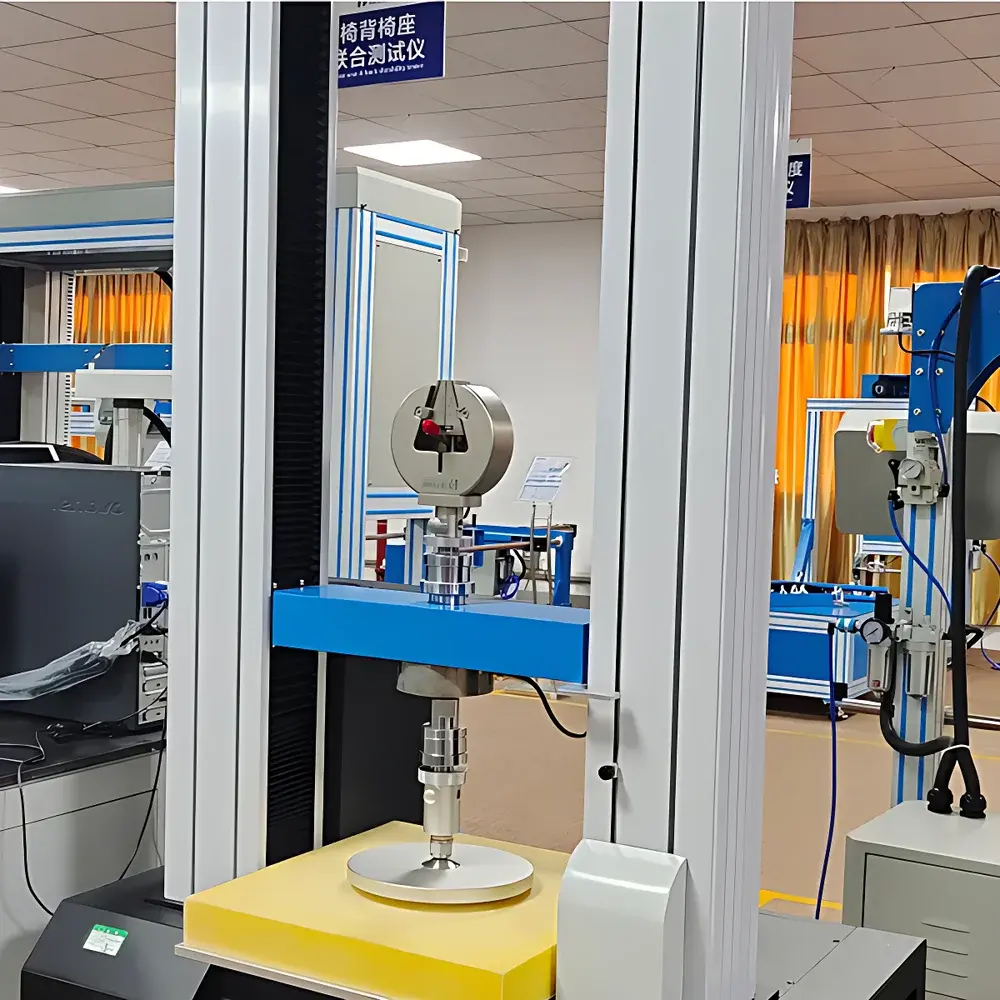
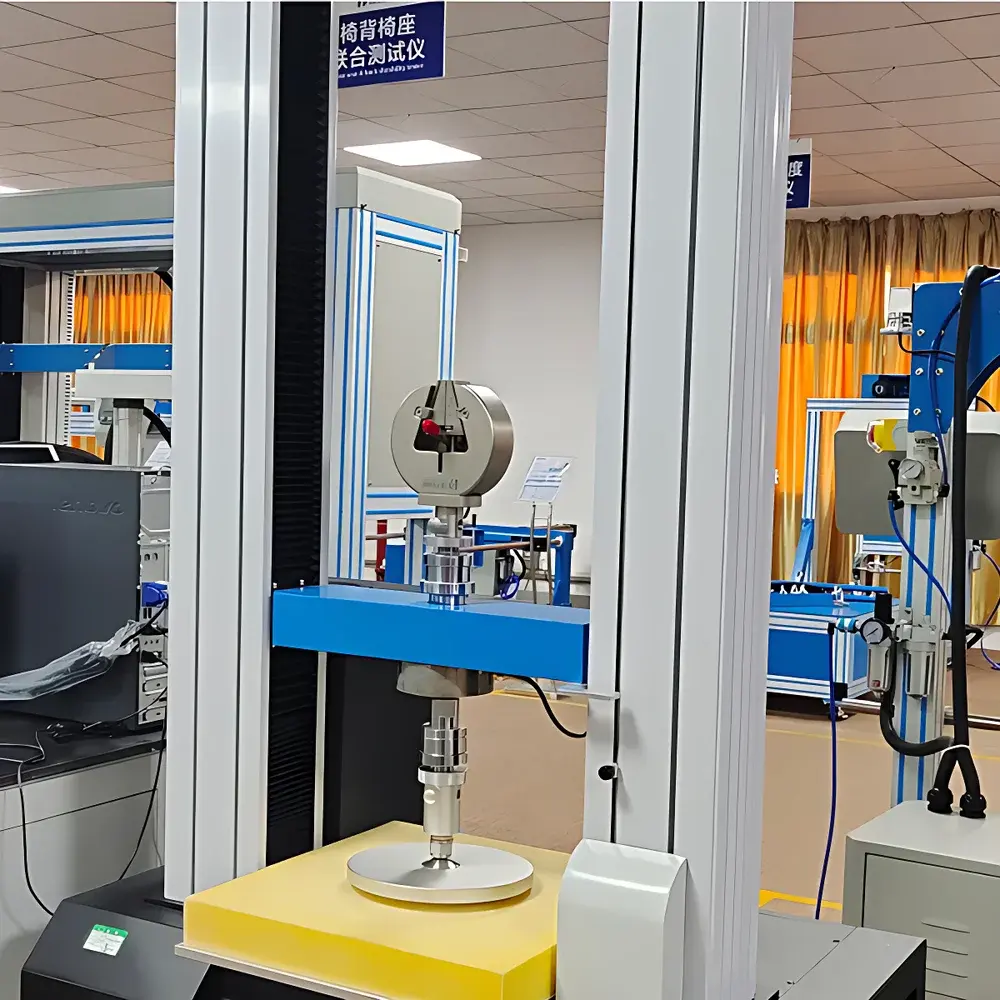
HAIDA HD-F750A Dual-Mode Foam Indentation & Tensile Testing Machine
| Brand | HAIDA INTERNATIONAL |
|---|---|
| Origin | Guangdong, China |
| Manufacturer Type | Direct Manufacturer |
| Product Category | Domestic (China-Made) |
| Model | HAIDA HD-F750A Dual-Mode Foam Indentation & Tensile Testing Machine |
| Instrument Type | Electro-Hydraulic Servo Fatigue Testing Machine |
| Maximum Test Load | 500 kg Load Cell (Spoke-Type) |
| Speed Range | 0.1–500 mm/min (Computer-Controlled Adjustable) |
| Host Weight | Approx. 150 kg |
Overview
The HAIDA HD-F750A Dual-Mode Foam Indentation & Tensile Testing Machine is a precision-engineered universal testing system designed specifically for the mechanical characterization of flexible porous materials—primarily polyurethane foams, viscoelastic sponges, and elastomeric cushioning composites. It operates on the principle of controlled displacement-driven force measurement, utilizing high-resolution load sensing and closed-loop servo control to execute standardized indentation, compression, tensile, and compressive loading protocols per international material testing conventions. Unlike general-purpose universal testers, the HD-F750A integrates dual mechanical configurations—switchable between top-mounted S-type load cell (for tensile and low-force indentation) and integrated spoke-type 500 kg load cell (for high-force compression and fatigue cycling)—enabling seamless transition between ASTM D3574 foam indentation hardness (IFD), ISO 2439 compression set, GB/T 10807 indentation deflection, and ISO 527/GB/T 1040 tensile property evaluation—all within a single platform. Its architecture supports both static and quasi-dynamic loading regimes, making it suitable for R&D labs, QC departments in foam manufacturing, and third-party certification bodies requiring traceable, repeatable mechanical data under GLP-aligned workflows.
Key Features
- High-accuracy 500 kg spoke-type load cell with ≤0.5% full-scale error and 1/250,000 internal resolution—certified per ISO 7500-1 Class 0.5
- Dual-load-cell configuration: Interchangeable mounting for S-type 5 kg sensor (5 g–5 kg range) and main 500 kg spoke sensor—optimized for low-force foam tensile and high-force indentation
- Panasonic 400 W AC servo motor coupled with precision ground ball screw drive—ensuring smooth, backlash-free motion across full speed range (0.1–500 mm/min)
- Computer-controlled operation via Windows-based proprietary software with real-time load-displacement curve acquisition and synchronized data logging at ≥100 Hz sampling rate
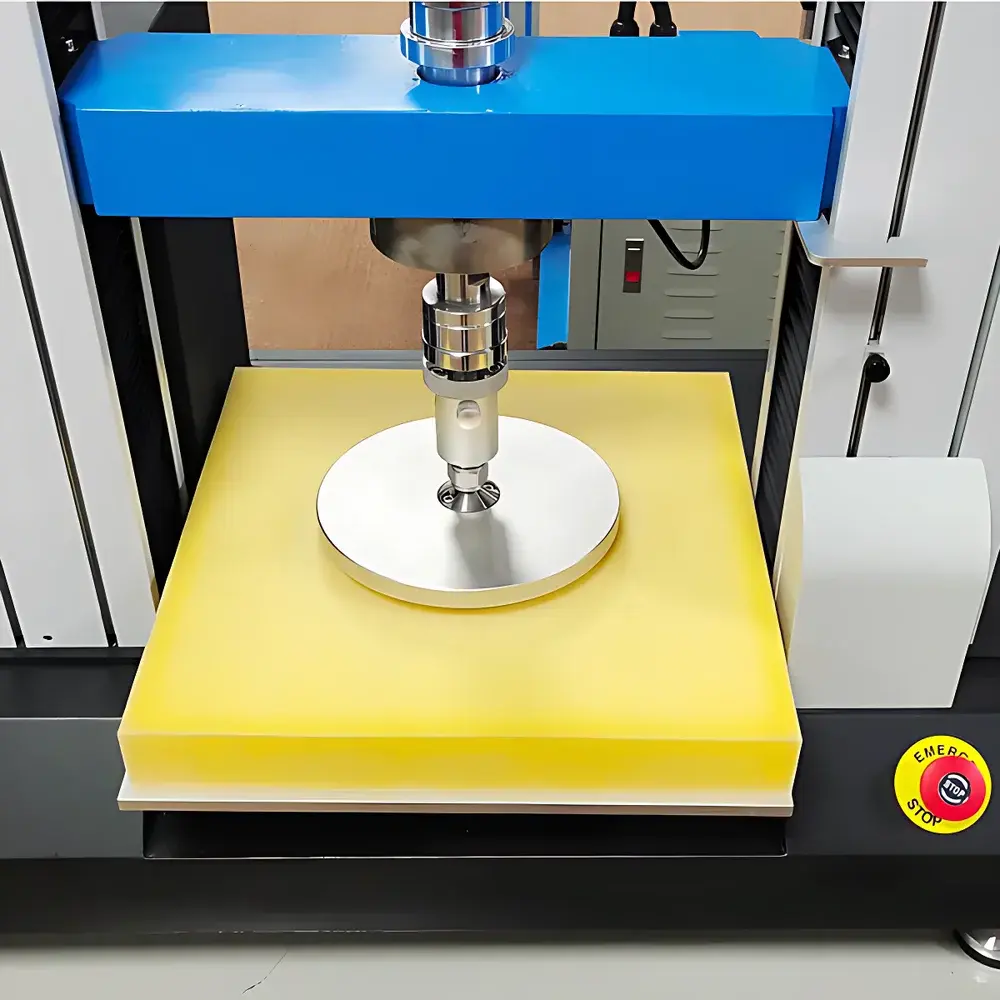
- Modular fixture system: Includes φ200 mm upper compression platen, 400 × 390 mm lower base plate with φ6 mm vent holes (ASTM D3574 compliant), and customizable tensile grips for specimen centering and axial alignment
- Comprehensive safety architecture: Mechanical stroke limit switches, electronic overload protection (110% FS cutoff), earth-leakage circuit breaker, and emergency stop circuit meeting IEC 60204-1 requirements
- Multi-mode control logic: Supports constant-rate displacement, constant-rate stress, constant-strain, stress-rate ramping, and strain-rate ramping—each selectable and switchable during test execution
Sample Compatibility & Compliance
The HD-F750A accommodates standard foam specimens per ASTM D3574 (150 × 150 × 50 mm), ISO 2439 (100 × 100 × 50 mm), and GB/T 10807 (380 × 380 × 50 mm), as well as tensile bars conforming to ISO 527-2 Type 1BA or GB/T 1040.1 Type I. The machine’s open crosshead design (max. span ≤400 mm) and 1200 mm effective travel allow for large-format cushioning samples and layered composite assemblies. All test routines are pre-configured to comply with mandatory clauses of ASTM D3574 (foam indentation force deflection), GB/T 10807-2006 (soft foam hardness), GB/T 1040.2 (plastics tensile properties), GB/T 10654 (high-elastic sponge tensile strength), and ISO 1798 (flexible cellular polymeric materials). Raw data output includes timestamped force, displacement, time, and calculated parameters (e.g., IFD25, IFD65, tensile strength, elongation at break, compression modulus)—structured for direct import into LIMS or statistical process control (SPC) platforms.
Software & Data Management
The embedded Windows-compatible software provides ISO/IEC 17025-aligned data integrity features: user-level access control (admin/operator/guest), electronic signature capability, full audit trail (including parameter changes, test start/stop events, and calibration history), and automatic metadata tagging (operator ID, sample ID, environmental conditions if linked to external sensors). Test reports are exportable in PDF (with embedded digital signature), CSV, and XML formats compliant with FDA 21 CFR Part 11 requirements for electronic records. The software supports batch processing of up to 99 specimens per sequence, automatic pass/fail flagging against user-defined specification limits, and comparative overlay of up to eight curves for inter-lot or supplier qualification analysis. USB 2.0 and Ethernet interfaces enable secure network integration and remote diagnostics without compromising firewall integrity.
Applications
- Indentation hardness testing of automotive seat foams (IFD25, IFD65, IFD250 per ASTM D3574 Method A)
- Compression set and recovery behavior assessment of memory foam mattresses (ISO 1856 / GB/T 6670)
- Tensile strength and elongation at break evaluation of open-cell elastomeric sponges used in medical packaging
- Creep and stress relaxation profiling under constant load (optional add-on module)
- Quality conformance verification for ISO 9001:2015 and IATF 16949-certified foam suppliers
- Raw material qualification for furniture, bedding, and transportation interior OEMs requiring traceable mechanical datasets
FAQ
What standards does the HD-F750A support out-of-the-box?
ASTM D3574 (all methods), GB/T 10807-2006, GB/T 1040.2, GB/T 10654, ISO 2439, ISO 527-2, and ISO 1798—preloaded as executable test templates with auto-calculated pass/fail thresholds.
Can the system perform cyclic fatigue testing on foam materials?
Yes—the electro-hydraulic servo architecture supports programmable waveform generation (sinusoidal, trapezoidal, block) with frequency stability ±0.1% over 0.01–5 Hz range; maximum cycle count: 10⁶ cycles with real-time hysteresis loop tracking.
Is the software compliant with FDA 21 CFR Part 11 for regulated industries?
Yes—audit trail, electronic signatures, role-based permissions, and data immutability controls are fully implemented and validated per Part 11 Annex A guidelines.
What is the maximum specimen thickness that can be tested in compression mode?
With standard platens, maximum initial specimen height is 50 mm (per ASTM D3574); optional extended-height fixtures accommodate up to 120 mm using calibrated spacer blocks.
Does HAIDA provide calibration certificates traceable to NIM or NIST?
Yes—each unit ships with a factory calibration certificate traceable to China’s National Institute of Metrology (NIM); NIST-traceable calibration kits and third-party validation services are available upon request.



