
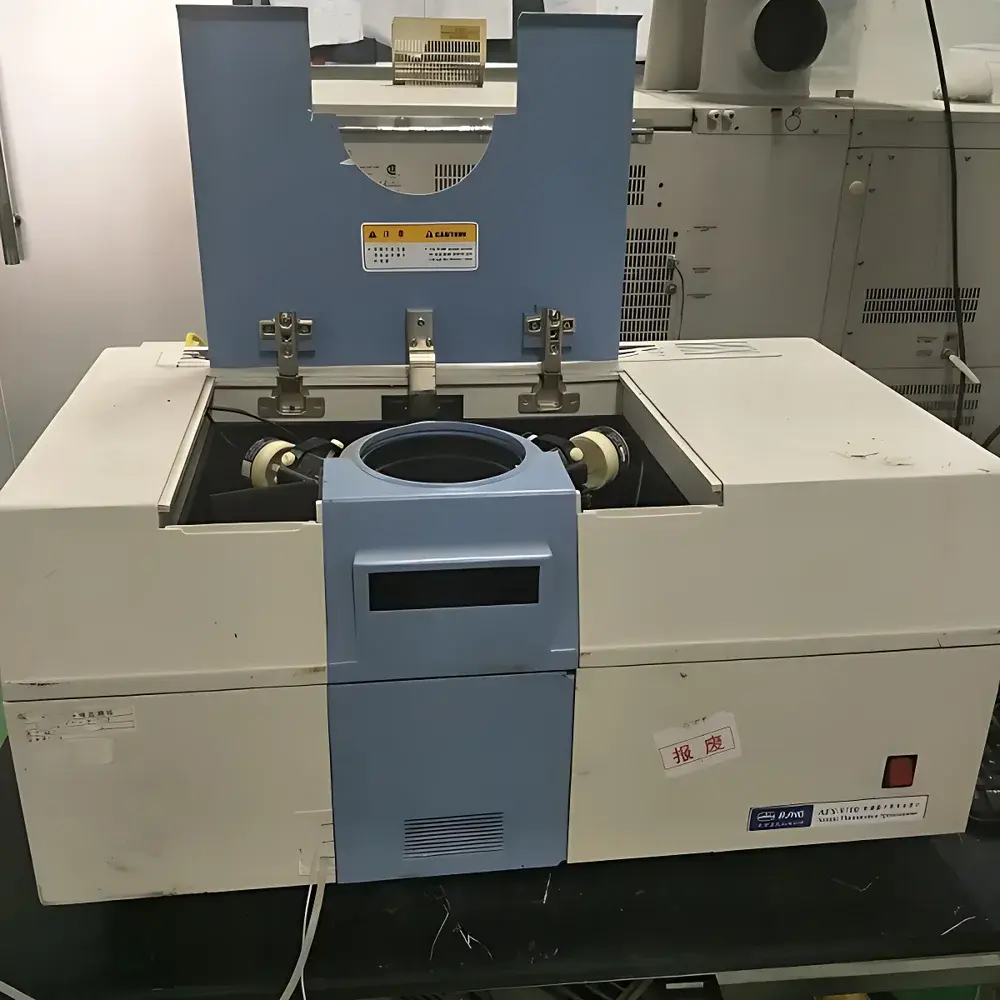
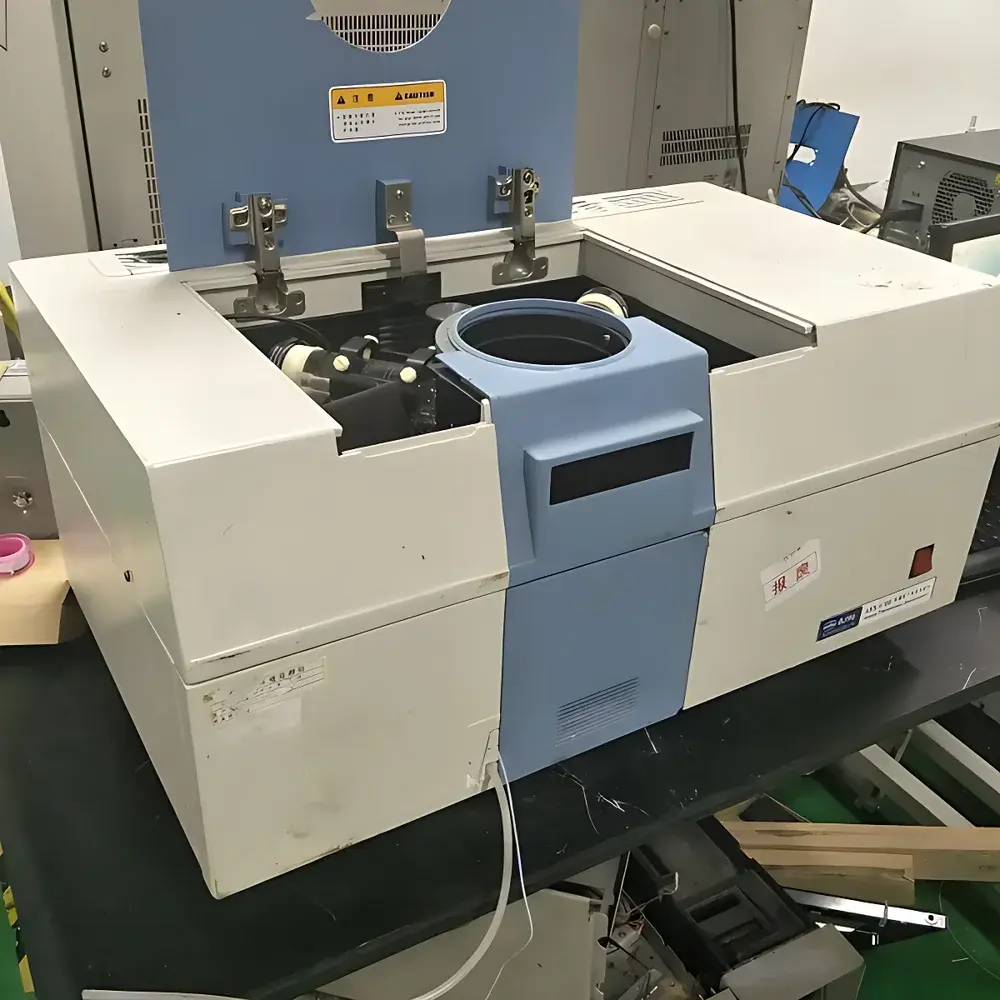
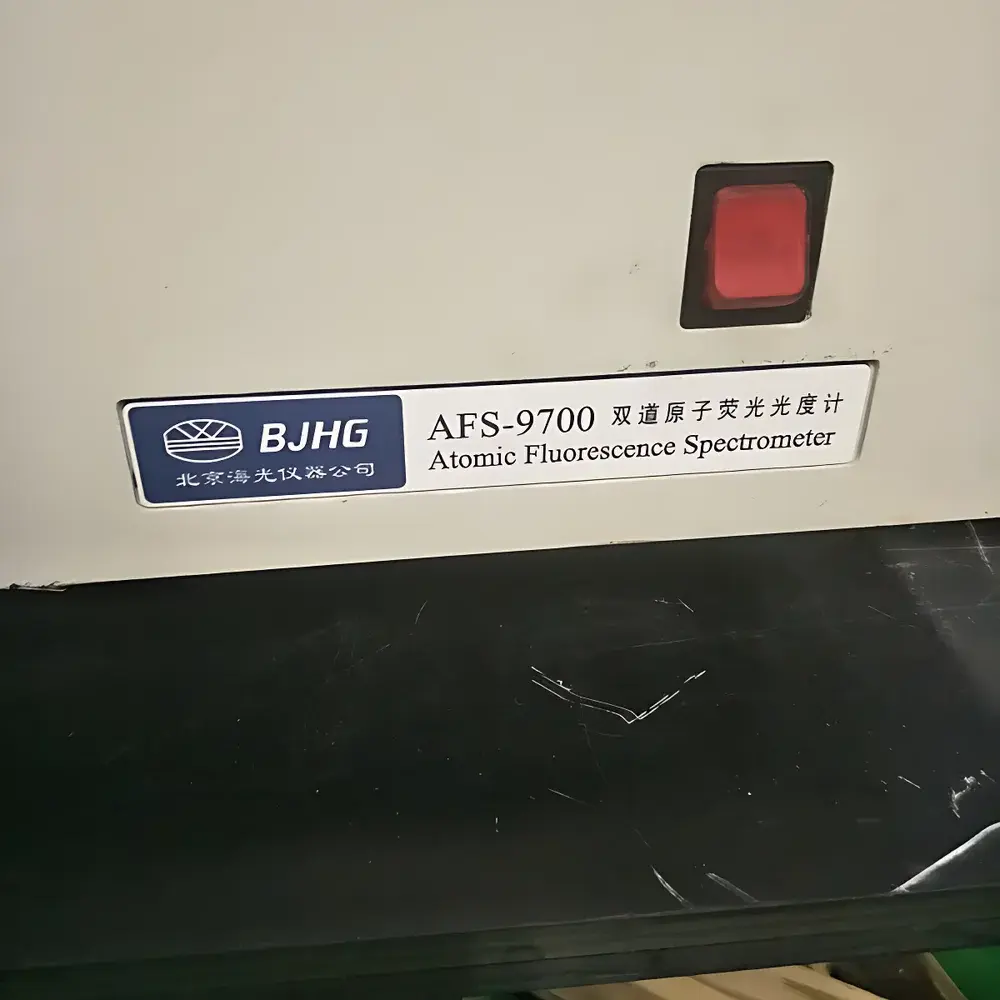
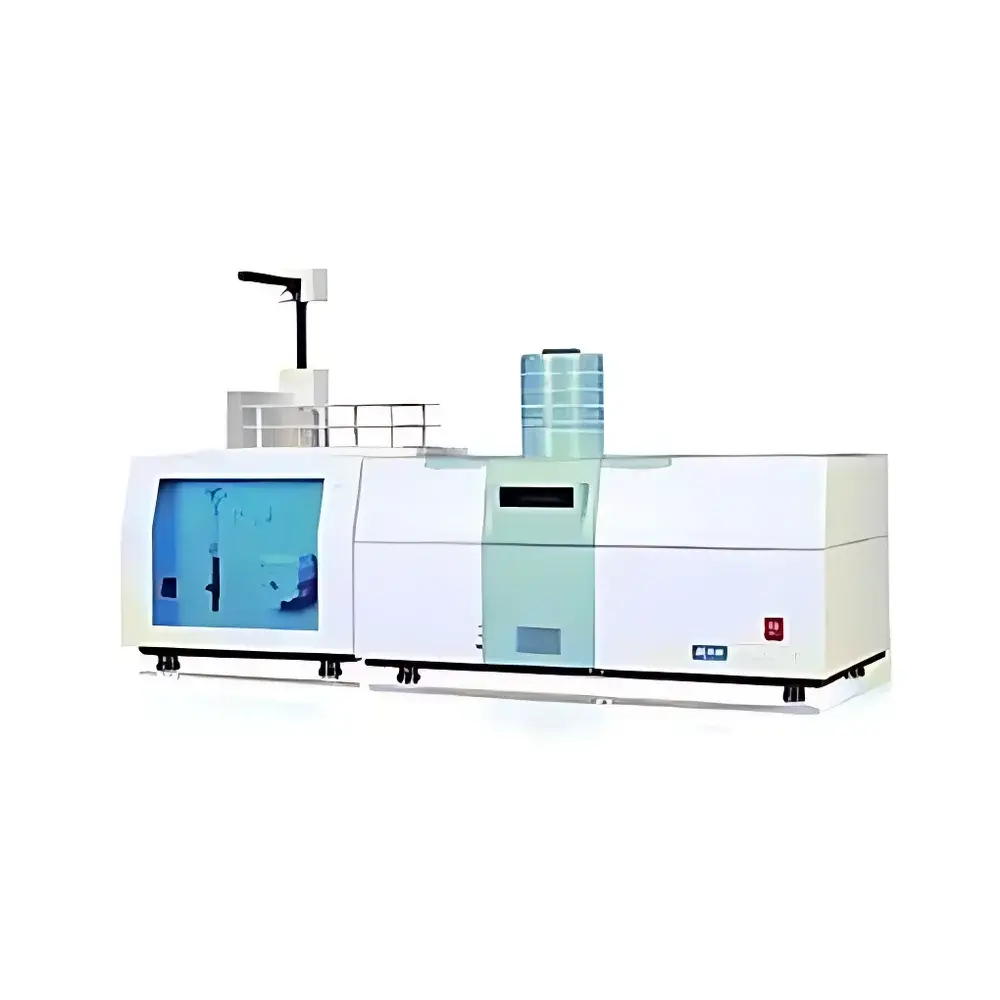
Haiguang AFS-9700 Multi-Channel Atomic Fluorescence Spectrometer
| Brand | Haiguang Instrument |
|---|---|
| Origin | Beijing, China |
| Model | AFS-9700 |
| Instrument Type | Multi-channel Atomic Fluorescence Spectrometer |
| Sample Introduction | Single Sequential Injection Pump |
| Detectable Elements | As, Pb, Se, Bi, Sn, Sb, Te, Hg, Cd, Ge, Zn, Au |
| RSD | <1.0% |
| Linear Dynamic Range | >3 orders of magnitude |
| Detection Limits | As/Pb/Se/Bi/Sn/Sb/Te/Hg < 0.01 µg/L |
Overview
The Haiguang AFS-9700 is a multi-channel atomic fluorescence spectrometer engineered for trace-level elemental analysis in environmental, pharmaceutical, food safety, and geochemical laboratories. It operates on the principle of hydride generation atomic fluorescence spectroscopy (HG-AFS), where target analytes—including arsenic, mercury, selenium, antimony, bismuth, tin, tellurium, and lead—are chemically reduced to volatile hydride species or cold vapor (for Hg/Cd), atomized in a quartz cell, and excited by high-intensity hollow cathode lamp radiation. The resulting atomic fluorescence emission is measured at characteristic wavelengths with photomultiplier tube detection. This technique delivers exceptional sensitivity and selectivity for Group IV–VI elements, especially in complex aqueous matrices where spectral interferences are minimized compared to ICP-OES or AAS.
Key Features
- Multi-channel simultaneous detection capability for up to 12 elements (configured per application), enabling rapid sequential or parallel analysis without hardware reconfiguration.
- Single sequential injection pump system ensures precise, reproducible reagent and sample delivery—critical for maintaining stoichiometric control during hydride generation and minimizing memory effects.
- Integrated quartz-trap atomizer with optimized gas–liquid separation design enhances atomization efficiency and signal stability.
- Dual-channel monochromator with adjustable slit width and high-transmission optics provides wavelength selectivity and background correction for improved signal-to-noise ratio.
- Automated lamp alignment and intensity stabilization reduce operator dependency and improve long-term measurement reproducibility.
- Rugged optical bench with temperature-stabilized housing minimizes thermal drift, supporting stable baseline performance over extended acquisition periods.
Sample Compatibility & Compliance
The AFS-9700 is validated for direct analysis of acid-digested water, soil extracts, biological tissues, and food homogenates following EPA Method 200.9, ISO 17294-2, and GB/T 22105.2–2008. Its detection limits meet or exceed regulatory requirements for drinking water (e.g., WHO and EU Directive 98/83/EC for As and Hg), wastewater discharge monitoring (EPA 1631E), and heavy metal screening in agricultural commodities (Codex Alimentarius GL 27). The instrument architecture supports GLP-compliant operation when paired with audit-trail-enabled software; all method parameters, calibration records, and raw data files are timestamped and user-annotated to satisfy FDA 21 CFR Part 11 readiness requirements in regulated QA/QC environments.
Software & Data Management
Control and data acquisition are managed via Haiguang’s proprietary AFS-Studio v4.x software, compatible with Windows 10/11 (64-bit). The interface supports method development with customizable reaction delay times, carrier gas flow profiles, and integration window settings. Quantitative workflows include external calibration, standard addition, and internal standard correction (e.g., using Bi as internal standard for As determination). All spectra, peak tables, and QC reports (including RSD, recovery %, LOD/LOQ verification) are exportable in CSV, PDF, and XML formats. Raw data files retain full metadata—including lamp current, PMT voltage, and injection sequence logs—for retrospective review and regulatory submission.
Applications
- Environmental monitoring: Quantification of arsenic speciation (AsIII/AsV) in groundwater and surface water after selective pre-reduction.
- Pharmaceutical quality control: Residual catalyst metal screening (e.g., Pd, Pt) in active pharmaceutical ingredients using modified hydride generation protocols.
- Food safety testing: Mercury and cadmium determination in fish tissue and rice flour via microwave-assisted digestion followed by cold vapor AFS.
- Geochemical exploration: Rapid field-deployable screening of Au in leach solutions using thiosulfate-based reduction chemistry.
- Regulatory compliance labs: Routine analysis under CNAS-accredited methods for national food surveillance programs (e.g., China’s GB 5009.11–2023).
FAQ
Is the AFS-9700 compliant with international regulatory standards such as EPA or ISO?
Yes—the instrument meets the performance criteria outlined in EPA Method 200.9 and ISO 17294-2 for hydride-generating elements. Full validation documentation, including linearity, precision, and spike recovery data, is provided with each refurbished unit.
What maintenance is required for long-term operational reliability?
Routine maintenance includes quarterly quartz cell cleaning, annual PMT gain calibration, and biannual replacement of peristaltic pump tubing and gas–liquid separator membranes. Haiguang-certified service technicians perform post-refurbishment preventive maintenance and issue a Certificate of Performance Verification.
Can the AFS-9700 be integrated into an existing LIMS environment?
Yes—via ODBC-compliant database export and configurable ASCII output templates. Optional OPC UA gateway modules enable real-time instrument status and result streaming to enterprise LIMS platforms.
Does the system support automated speciation analysis?
Not natively—but when coupled with a low-pressure HPLC module (e.g., Haiguang LC-AFS interface kit), it enables As/Se/Hg species separation and quantification per EPA Method 1638.





