
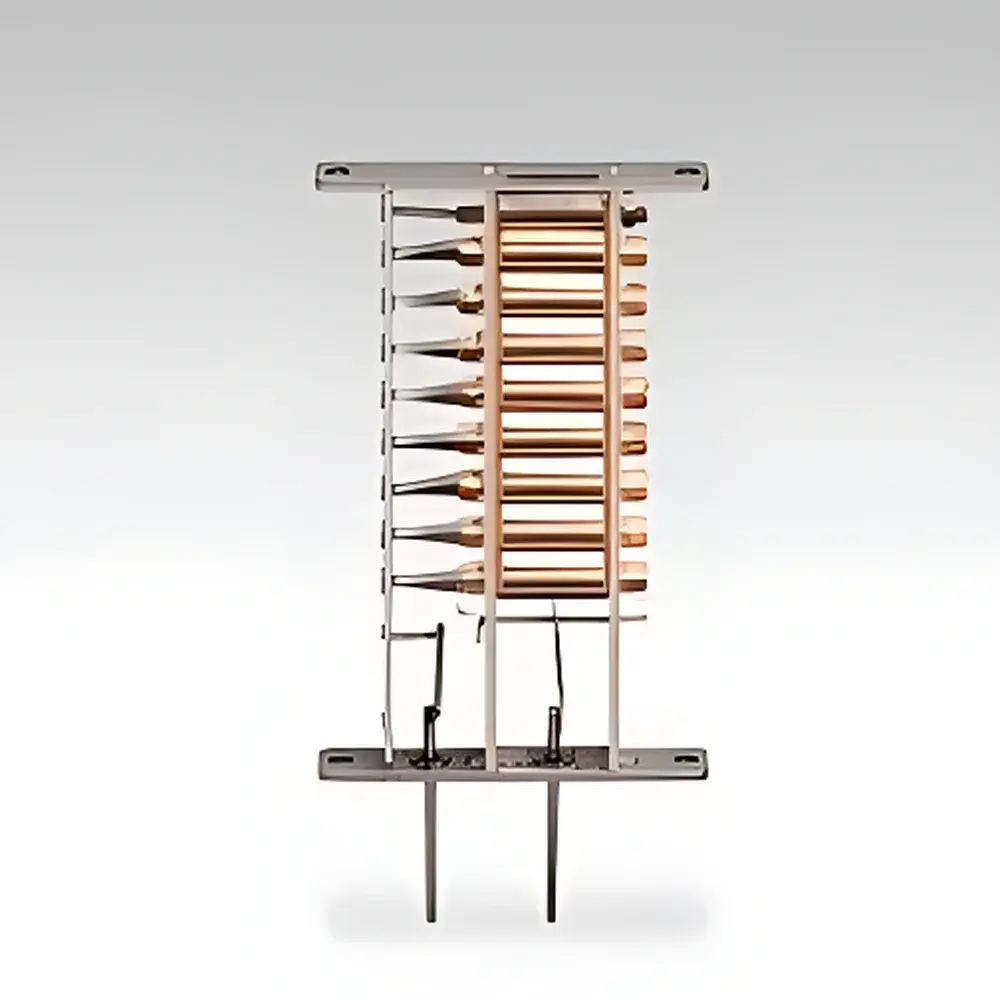
Hamamatsu Electron Multiplier R4-9
| Brand | Hamamatsu |
|---|---|
| Origin | Japan |
| Manufacturer Type | Original Equipment Manufacturer (OEM) |
| Import Status | Imported |
| Model | R4-9 |
| Pricing | Available Upon Request |
Overview
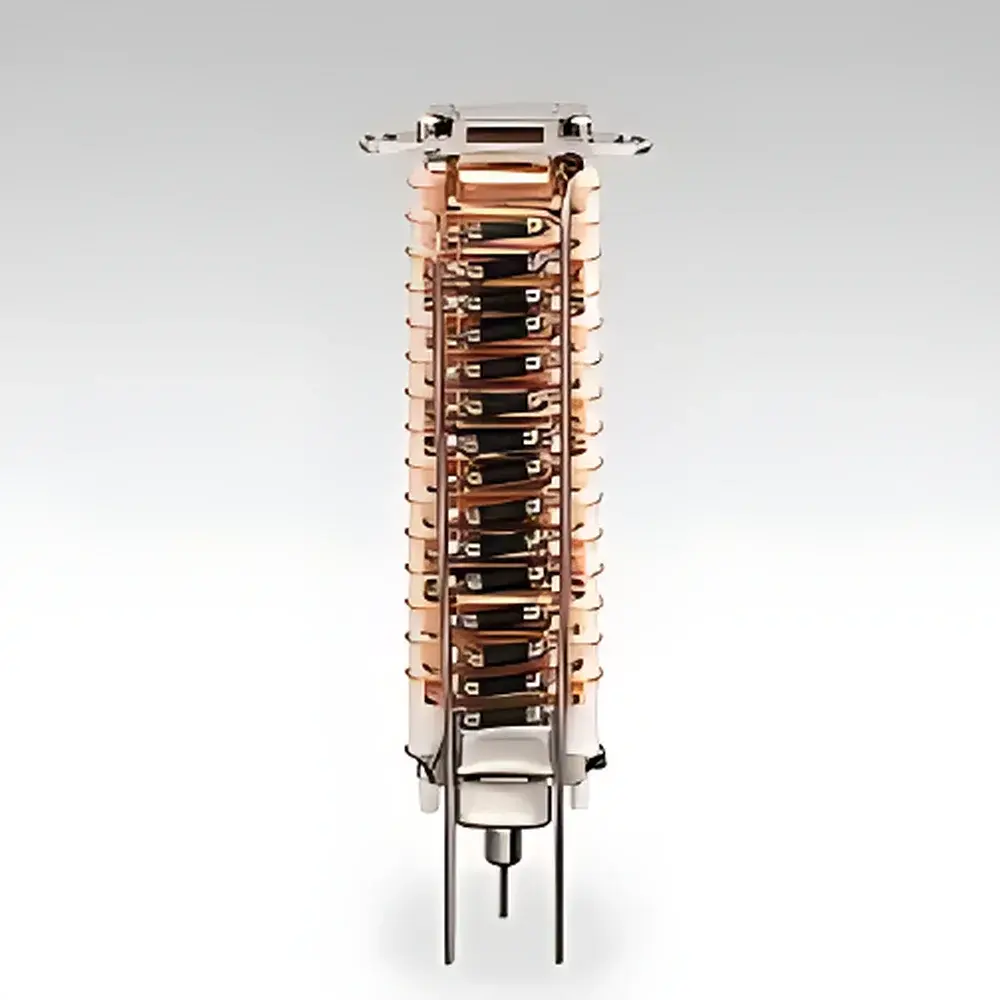
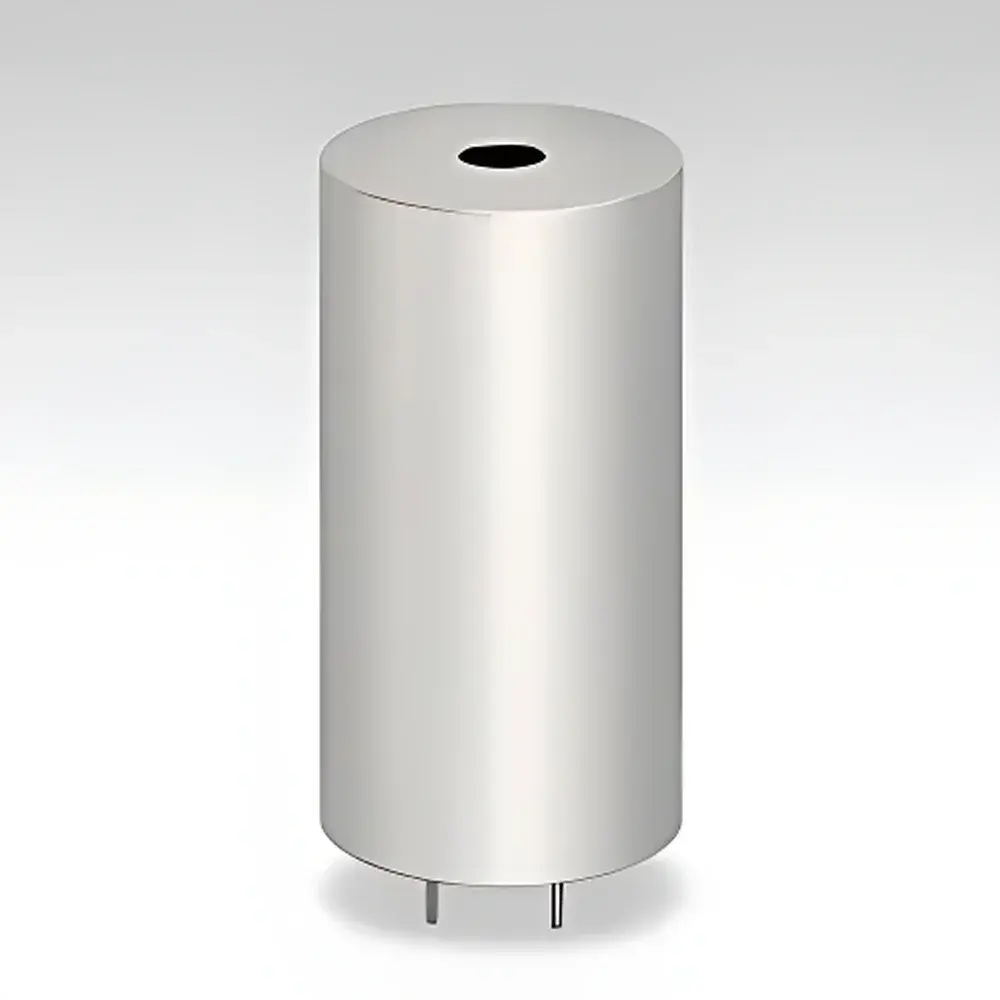
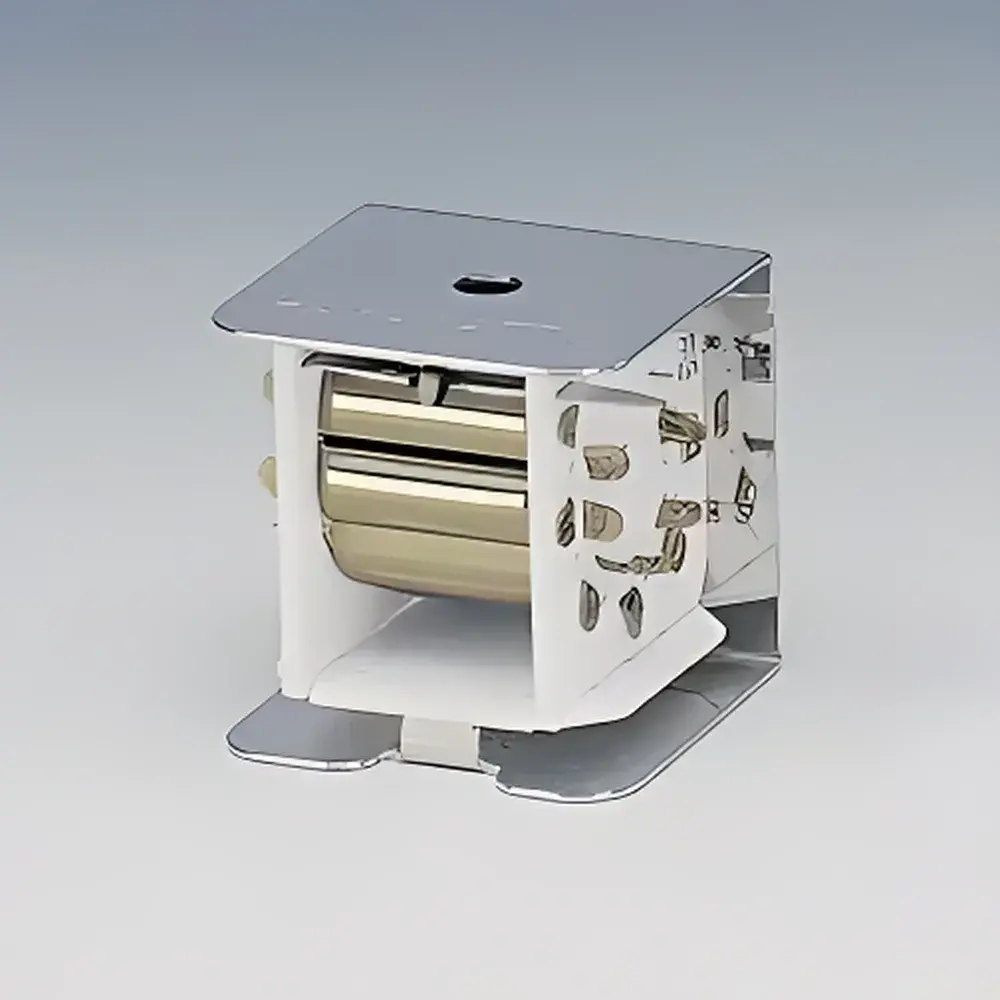
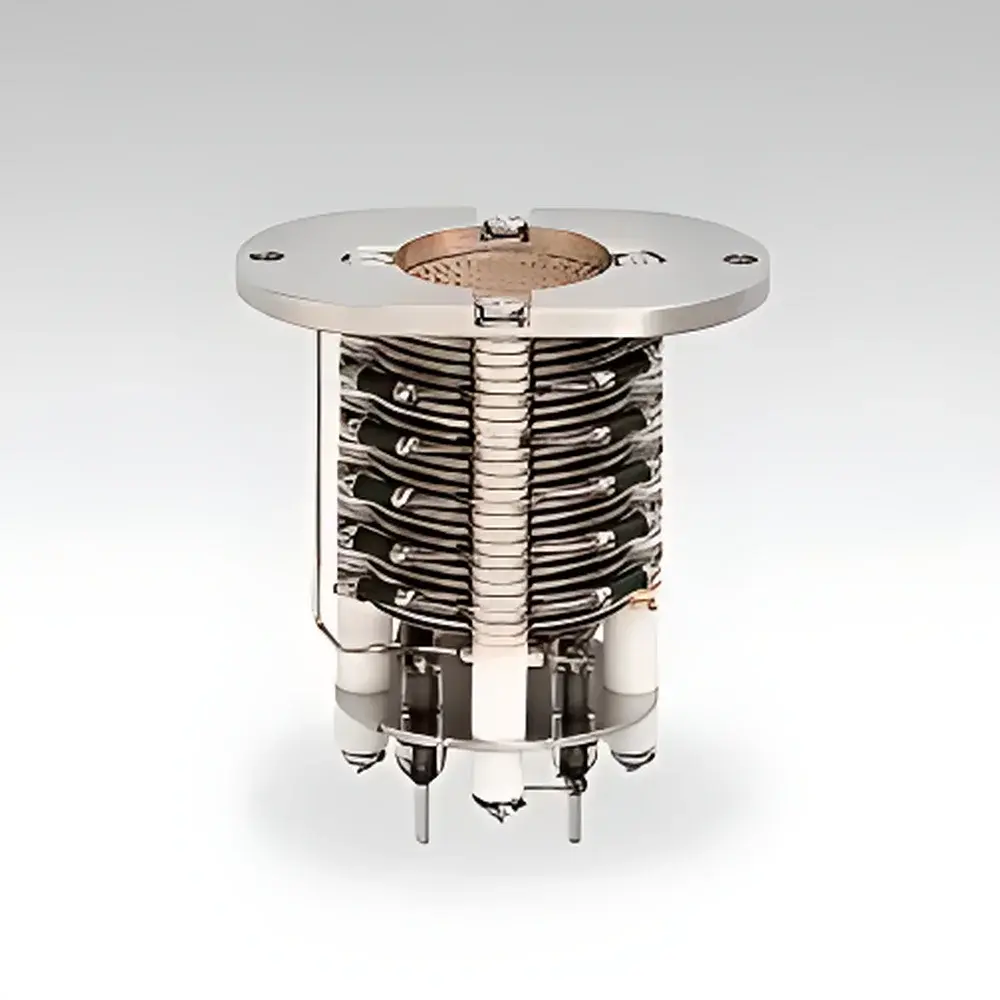
The Hamamatsu Electron Multiplier R4-9 is a high-gain, discrete-dynode electron multiplier designed for ultra-sensitive detection of low-intensity charged particle signals in vacuum environments. Operating on the principle of secondary electron emission, the R4-9 amplifies incident electrons or positive ions through a cascade multiplication process across 16 precisely aligned dynode stages. Each dynode is biased at progressively higher potentials, enabling stable gain up to 10⁷–10⁸ under typical operating conditions (−1.8 kV total inter-dynode voltage). Its compact cylindrical geometry—featuring an 8 mm × 6 mm rectangular entrance aperture and optimized electrode spacing—ensures rapid signal response with minimal transit time spread. The device is engineered for integration into mass spectrometers, residual gas analyzers, surface science instrumentation, and space-borne particle detectors where high signal-to-noise ratio, low dark current (<1 pA at rated voltage), and long-term operational stability are critical performance requirements.
Key Features
- Discrete-dynode architecture with 16-stage electron multiplication for consistent gain linearity and pulse-height uniformity
- Rectangular entrance aperture (8 × 6 mm) optimized for efficient ion/electron collection from orthogonal beam geometries
- Typical rise time of 9.3 ns—enabling time-of-flight (TOF) compatible operation in pulsed ion detection systems
- Hermetically sealed ceramic-metal housing with baked-out UHV-compatible construction (base pressure <1×10⁻⁹ Pa)
- Low outgassing rate (<5×10⁻¹² Pa·m³/s) certified per ISO 14753, supporting clean vacuum chamber integration
- High secondary emission yield dynode material (Cu-Be alloy) with >95% quantum efficiency for 1 keV electrons
- Integrated high-voltage feedthrough rated for continuous operation up to −2.5 kV
Sample Compatibility & Compliance
The R4-9 is compatible with detection of primary electrons, singly and multiply charged atomic/molecular ions (e.g., H⁺, O₂⁺, C₆₀⁺), and metastable species generated in electron impact (EI), chemical ionization (CI), and matrix-assisted laser desorption/ionization (MALDI) sources. It exhibits no measurable saturation below 10⁵ counts per second under standard biasing. The device complies with IEC 61326-1 for electromagnetic compatibility in laboratory instrumentation and meets RoHS Directive 2011/65/EU for hazardous substance restrictions. For regulated analytical workflows, its design supports traceable calibration against NIST-traceable electron sources and conforms to the mechanical and electrical interface specifications outlined in ASTM E1943–22 (Standard Guide for Mass Spectrometer Performance Verification).
Software & Data Management
While the R4-9 operates as a hardware detector without embedded firmware, it interfaces seamlessly with industry-standard data acquisition systems including National Instruments PXI platforms, Keysight DAQ modules, and custom FPGA-based timing electronics. When paired with compliant analog-to-digital converters (e.g., 12-bit, 100 MS/s), the output pulse train supports real-time centroiding, peak deconvolution, and dead-time correction algorithms required for quantitative TOF-MS and ion imaging applications. Audit trails for HV settings, gain calibration history, and detector bias logs can be maintained within LIMS or ELN systems adhering to FDA 21 CFR Part 11 requirements when integrated via validated instrument drivers (e.g., IVI-COM or SCPI-compliant protocols).
Applications
- Time-of-flight mass spectrometry (TOF-MS) for proteomics and polymer characterization
- Residual gas analysis (RGA) in semiconductor process chambers and accelerator vacuum systems
- Surface analysis techniques including Auger electron spectroscopy (AES) and secondary ion mass spectrometry (SIMS)
- Space instrumentation for planetary atmospheric composition monitoring (e.g., ESA JUICE mission heritage)
- Ultrafast electron diffraction (UED) beam diagnostics requiring sub-nanosecond temporal resolution
- Ion trap and quadrupole mass filter signal amplification in GLP-compliant QC laboratories
FAQ
What is the recommended operating voltage range for the R4-9?
The nominal inter-dynode voltage gradient is −1.8 kV total; individual stage voltages are factory-set and not user-adjustable. Operation outside −1.5 kV to −2.2 kV may compromise gain stability or accelerate dynode fatigue.
Is the R4-9 suitable for continuous DC ion current measurement?
No—it is optimized for pulsed or low-duty-cycle detection. For analog current measurement, Hamamatsu recommends Faraday cup detectors or channeltrons with integrated current-to-voltage conversion.
Can the R4-9 be baked out in situ?
Yes—the ceramic-metal package permits bakeout at ≤250 °C for ≤24 hours under vacuum, provided all external cabling and connectors are rated for equivalent temperatures.
Does Hamamatsu provide NIST-traceable gain calibration certificates?
Yes—calibration services (including gain vs. voltage curves and pulse-height distribution analysis) are available upon request under ISO/IEC 17025-accredited procedures.
What vacuum compatibility standards does the R4-9 meet?
It satisfies UHV requirements per ISO 14753 and has been tested for compatibility with turbomolecular-pumped systems operating down to 1×10⁻¹⁰ mbar base pressure.





