
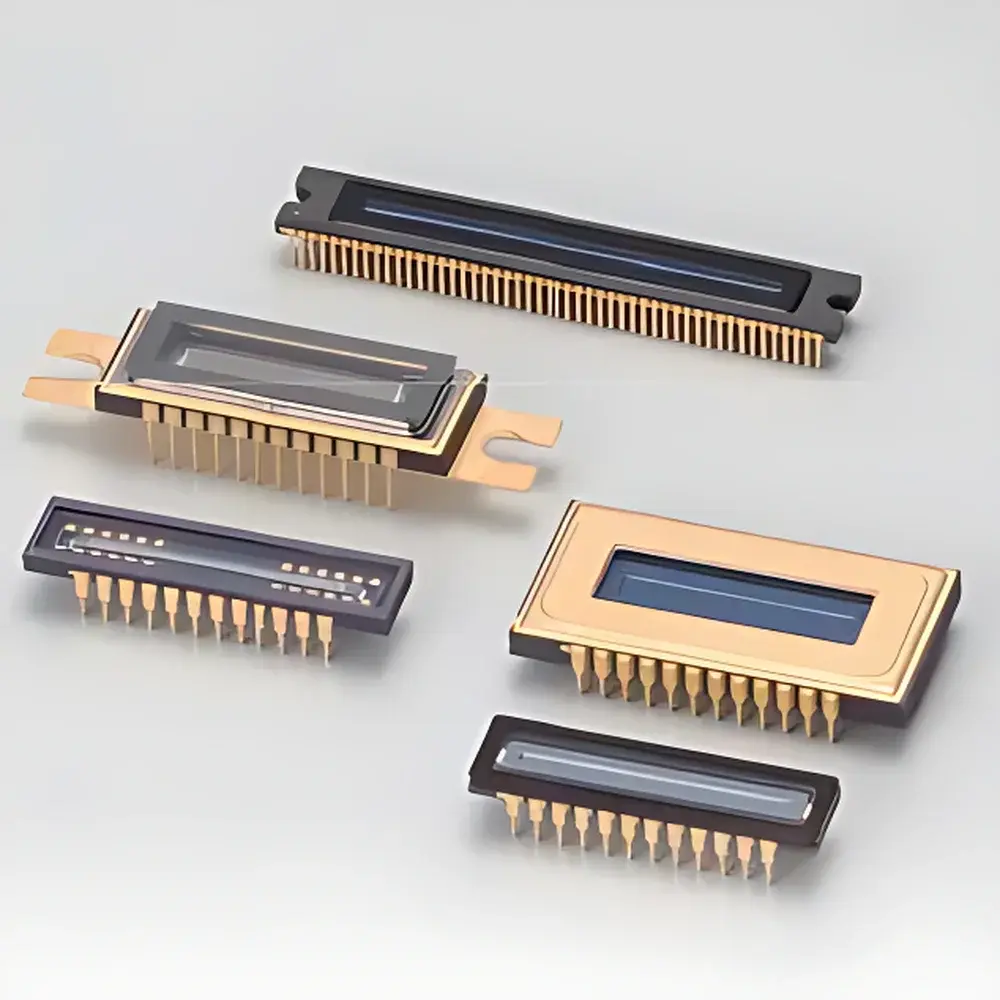
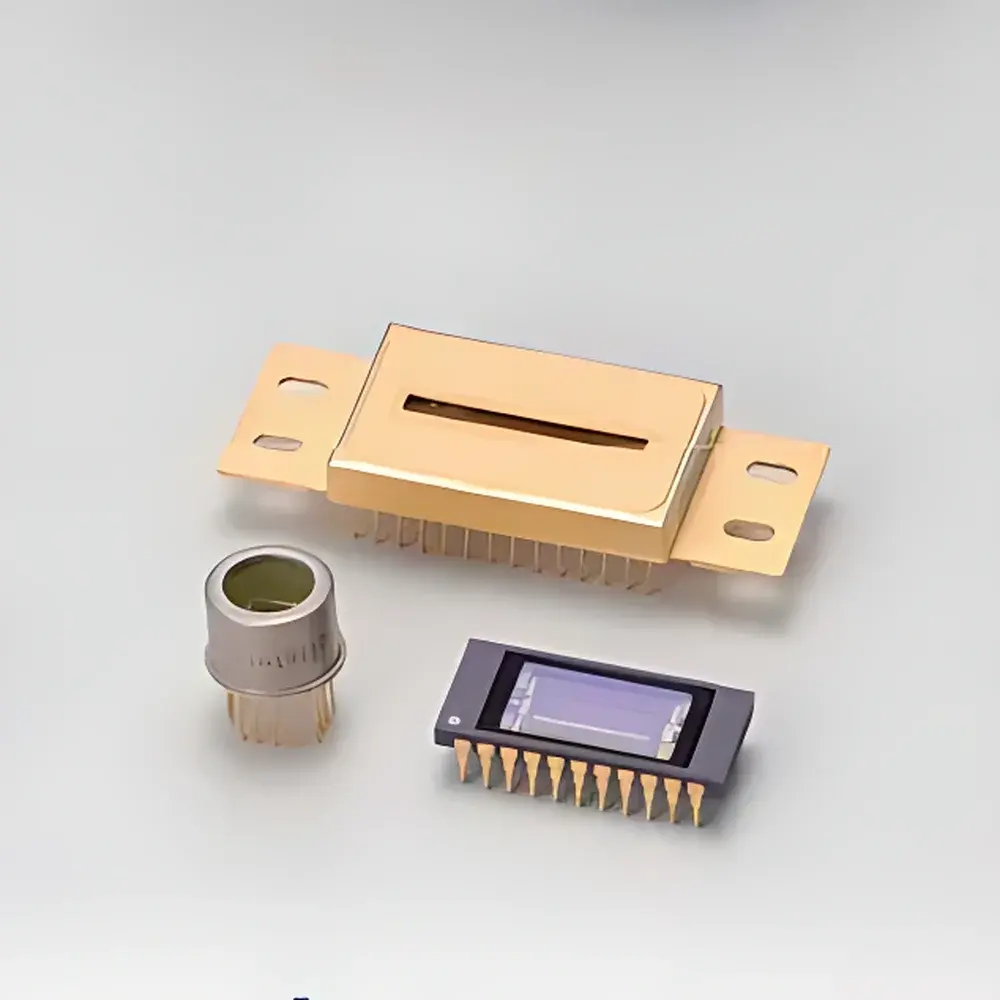
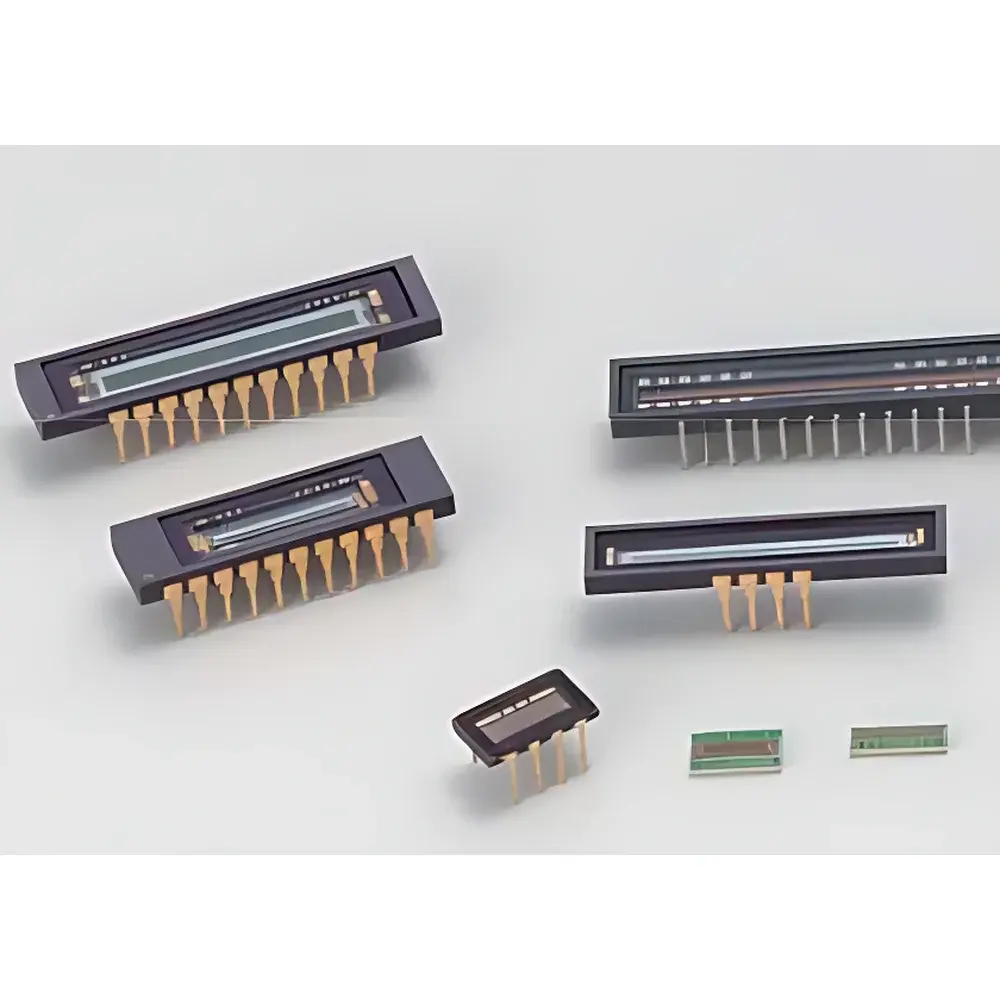
Hamamatsu Image Sensor Portfolio
| (在此处输出精准翻译� | �纯英文产品名称。极其重要:仅输出一行名称,严禁输出备选名、严禁换行重复、严禁包含任何中文字符) |
|---|---|
| [Brand | Hamamatsu |
| Origin | Japan |
| Manufacturer Type | Original Equipment Manufacturer (OEM) |
| Product Category | Imported Optical Component |
| Model Series | T-Series |
| Price Range | USD 1,200 – 3,600 (FOB Yokohama) |
| Component Type | Optical Sensor Device] |
Overview
The Hamamatsu Image Sensor Portfolio represents a comprehensive family of optoelectronic detection devices engineered for scientific imaging, spectral analysis, and precision photometric measurement across ultraviolet (UV), visible (VIS), near-infrared (NIR), vacuum ultraviolet (VUV), and soft X-ray spectral regions. These sensors are not standalone instruments but core detection modules—designed for integration into OEM systems including spectrometers, ellipsometers, particle analyzers, beam profilers, and industrial inspection platforms. Unlike generic imaging sensors, Hamamatsu’s portfolio emphasizes photon-level performance metrics: quantum efficiency (QE) optimization across wavelength bands, low readout noise, high linearity (>99.9%), and controlled dark current behavior under calibrated thermal conditions. The underlying detection principles vary by architecture—CCD sensors rely on charge transfer and accumulation in potential wells; CMOS sensors implement pixel-level amplification and parallel readout; InGaAs detectors exploit lattice-matched semiconductor bandgaps for extended NIR response; and X-ray imagers combine scintillation conversion with optical coupling to silicon-based arrays. All devices are fabricated in Hamamatsu’s ISO 9001-certified cleanrooms in Japan and undergo wafer-level testing per JEDEC JESD22-A114 reliability standards.
Key Features
- Multi-Spectral Coverage: Devices span 115 nm (VUV) to 2600 nm (SWIR), with back-illuminated CCDs achieving >90% peak QE at 600 nm and InGaAs arrays delivering >80% QE from 900–1700 nm.
- Architectural Diversity: Includes full-frame and interline-transfer CCDs (FFT-CCD design with 100% fill factor), rolling-shutter and global-shutter CMOS linear/area sensors, NMOS photodiode arrays with ultra-linear analog output, and hybrid X-ray detectors integrating CsI(Tl) or Gd₂O₂S scintillators with optical fiber tapers.
- OEM-Ready Integration: Standardized ceramic or metal-ceramic packages (e.g., TO-8, CERDIP, LCC) with hermetic sealing options; configurable clocking protocols (LVDS, CMOS), trigger inputs, and analog/digital output interfaces (16-bit ADC onboard for select models).
- Thermal & Stability Engineering: Thermoelectrically cooled variants (–20 °C to –60 °C operation) available for low-noise spectroscopy; all sensors characterized for gain stability (<0.1% drift/°C) and dark current uniformity (σ < 5% across array).
- Calibration Traceability: NIST-traceable spectral responsivity data provided per device lot; optional factory calibration certificates compliant with ISO/IEC 17025 requirements.
Sample Compatibility & Compliance
These image sensors are compatible with standard optical bench configurations using F-mount, C-mount, or custom flange interfaces. They operate within ambient temperature ranges of –20 °C to +60 °C (uncooled) or –40 °C to +50 °C (TE-cooled variants), with humidity tolerance up to 85% RH non-condensing. All devices comply with RoHS Directive 2011/65/EU and REACH Regulation (EC) No. 1907/2006. For regulated environments—including pharmaceutical analytical instrumentation and aerospace-grade test systems—Hamamatsu provides documentation supporting FDA 21 CFR Part 11 electronic record integrity, IEC 61000-4 electromagnetic compatibility, and ISO 13485 quality system alignment where applicable. Device-level qualification includes HTOL (High-Temperature Operating Life) testing at 125 °C for 1,000 hours and TC (Temperature Cycling) from –55 °C to +125 °C over 500 cycles.
Software & Data Management
Hamamatsu supplies the HCImage Live SDK (Windows/Linux/macOS) for rapid driver integration, supporting GenICam-compliant configuration, ROI selection, frame buffering, and real-time histogram analysis. Raw sensor data is delivered in IEEE 754 32-bit float or 16-bit integer format, enabling direct import into MATLAB, Python (NumPy/PIL), LabVIEW, or Igor Pro for quantitative radiometric processing. The SDK includes APIs for synchronized multi-sensor triggering, exposure ramping, and dark frame subtraction—essential for GLP/GMP-compliant spectral acquisition workflows. Audit trail logs capture timestamped parameter changes, firmware versions, and user-initiated calibrations, satisfying traceability requirements under ISO/IEC 17025 Clause 7.7 and ASTM E2500-13 guidelines for analytical instrument qualification.
Applications
- Spectroscopic analysis in UV-VIS-NIR benchtop and portable spectrometers (e.g., plasma emission monitoring, LED spectral characterization)
- Time-resolved fluorescence lifetime imaging (FLIM) and phosphorescence decay studies using gated CCD/CMOS sensors
- In-line process control in semiconductor lithography tools and flat-panel display manufacturing
- Non-destructive testing (NDT) via digital radiography using X-ray coupled CCD/photodiode array modules
- Vacuum ultraviolet reflectometry in synchrotron beamlines and space-borne solar observation payloads
- Quantitative chemiluminescence detection in microplate readers and ELISA platforms
FAQ
Are Hamamatsu T-series image sensors suitable for vacuum-compatible applications?
Yes—selected models (e.g., S14230 series CCDs) feature Kovar or ceramic housings rated for UHV environments (<1×10⁻⁹ mbar) with bake-out capability up to 150 °C.
What is the typical spectral calibration uncertainty for VUV-optimized sensors?
For devices calibrated at Hamamatsu’s VUV metrology lab (115–200 nm), expanded uncertainty (k=2) is ±2.5% relative spectral responsivity, traceable to PTB’s synchrotron radiation source.
Can these sensors be integrated into FPGA-based real-time processing systems?
Yes—the LVDS output interface and programmable timing registers support direct connection to Xilinx Zynq or Intel Cyclone FPGA platforms with sub-microsecond trigger latency.
Do you provide radiation damage data for X-ray detector modules?
Radiation hardness data (10 krad(Si) total ionizing dose tolerance, displacement damage threshold >1×10¹⁴ n/cm²) is available upon request for qualified lots.
Is there a minimum order quantity (MOQ) for custom spectral filter integration?
Custom interference filter deposition on sensor windows is supported from 10 units; lead time is 12 weeks from design approval.



