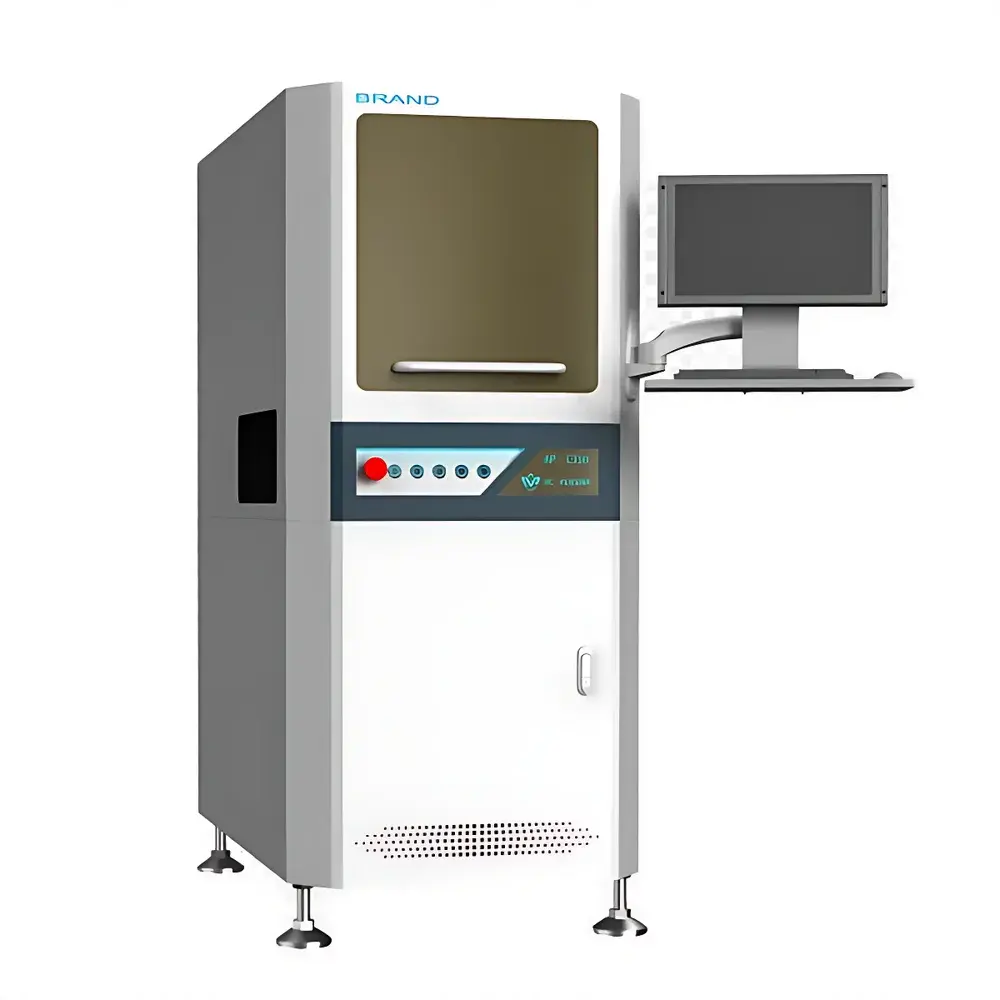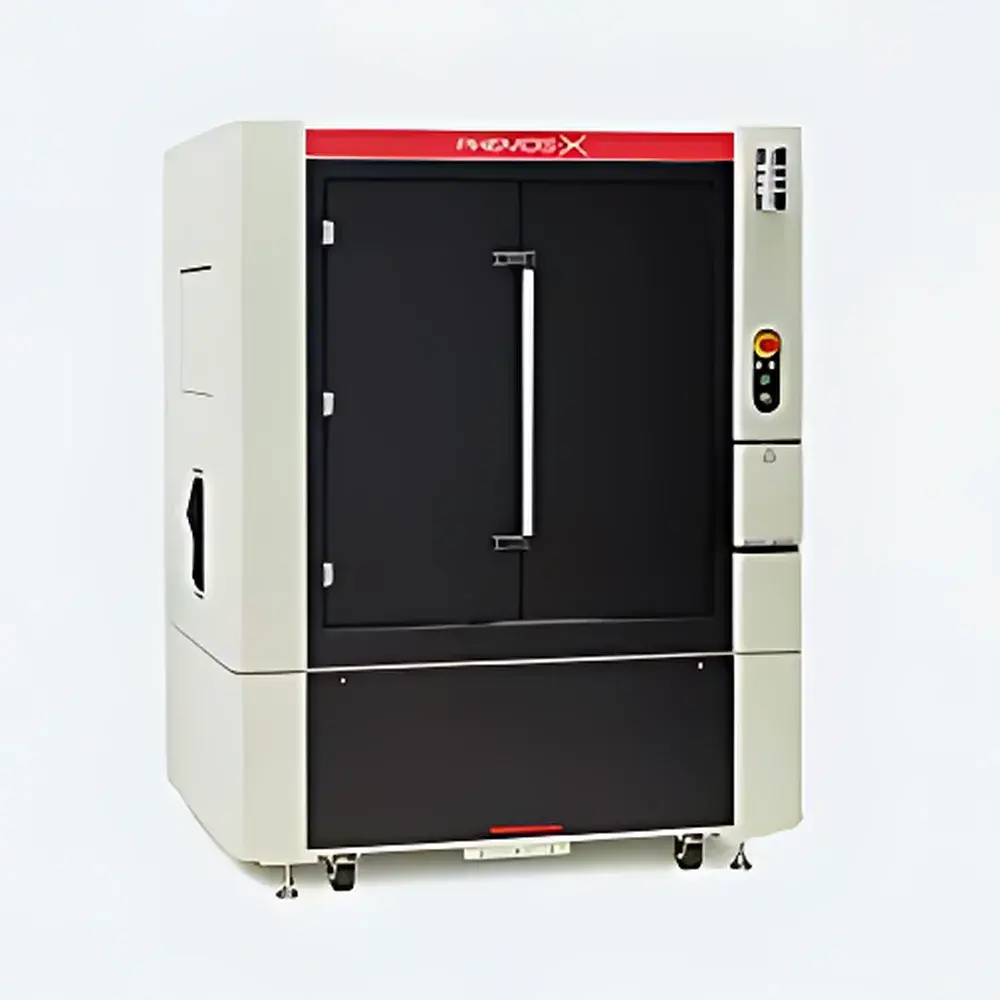
Hamamatsu PHEMOS®-X Micro-Light Emission Microscope C15765-01
| Brand | Hamamatsu |
|---|---|
| Origin | Japan |
| Manufacturer | Hamamatsu Photonics K.K. |
| Type | Imported Instrument |
| Model | C15765-01 |
| Pricing | Upon Request |
Overview
The Hamamatsu PHEMOS®-X Micro-Light Emission Microscope (Model C15765-01) is a purpose-built failure analysis instrument engineered for high-precision localization of electrical defects in advanced semiconductor devices. It operates on the principle of photon emission microscopy (PEM), detecting ultra-low-intensity visible and near-infrared light—emitted during localized current leakage, gate oxide breakdown, or junction thermal effects—under bias or transient stress conditions. Complementing PEM, the system supports thermally induced emission detection via infrared-sensitive imaging, enabling correlative failure analysis across optical and thermal modalities. Designed specifically for front-end and back-end process development, reliability testing, and yield enhancement labs, the PHEMOS-X integrates seamlessly into semiconductor failure analysis workflows compliant with JEDEC JESD22, AEC-Q100, and ISO/IEC 17025-accredited environments.
Key Features
- Dual high-sensitivity camera configuration: Supports simultaneous or sequential acquisition using two independently mounted EMCCD or InGaAs detectors—optimized for spectral ranges spanning 400–1000 nm (for electroluminescence) and 1000–1700 nm (for thermal emission and OBIRCH/DALS signals).
- Multi-source optical stimulation module: Accommodates up to seven interchangeable laser and LED sources—including 850 nm, 1064 nm, and 1310 nm lasers—for OBIRCH (Optical Beam Induced Resistance Change), DALS (Delay Analysis by Laser Stimulation), EOP (Electro-Optical Probing), and laser-assisted defect marking.
- High-accuracy motorized XYZ stage: Features ±20 mm X/Y travel and +80 mm Z-axis range with sub-micron repeatability; compatible with probe station integration and NanoLens optical enhancement modules (stage performance subject to mechanical constraints imposed by auxiliary fixtures).
- Real-time image overlay and contrast enhancement: Registers micro-light emission frames onto high-resolution mask-aligned optical images using hardware-synchronized pattern recognition algorithms; contrast optimization employs adaptive histogram equalization and multi-scale noise suppression without pixel interpolation artifacts.
- Annotation and metrology toolkit: Enables on-image placement of calibrated scale bars (user-definable segment lengths), orthogonal grid overlays, directional arrows, text comments, and region-of-interest markers—all preserved in audit-trail metadata per image capture.
Sample Compatibility & Compliance
The PHEMOS-X accommodates wafers up to 300 mm diameter and packaged ICs (QFN, BGA, WLCSP) with standard probe station interface compatibility (e.g., Cascade Summit, FormFactor Triton). Sample handling conforms to SEMI S2/S8 safety standards and cleanroom Class 100 (ISO 5) operational requirements. System software architecture supports 21 CFR Part 11-compliant electronic signatures, audit trail logging, and user-access role management—validated for GLP and GMP-aligned failure analysis laboratories. All optical components meet IEC 61000-4 electromagnetic immunity specifications, and vacuum-assisted sample chamber operation (≥80 kPa) ensures stable thermal and electrostatic conditions during extended acquisition sequences.
Software & Data Management
Control and analysis are executed via Hamamatsu’s proprietary PHEMOS Control Suite v5.x, a Windows-based application supporting script-driven automation (Python API), batch processing of multi-condition datasets, and export to industry-standard formats (TIFF, HDF5, CSV). Image metadata includes full instrument configuration logs (laser power, exposure time, filter position, stage coordinates), timestamped with NTP-synchronized UTC, and embedded in EXIF-compliant headers. Data integrity is enforced through SHA-256 checksum validation at ingestion, and raw acquisitions are stored in a hierarchical folder structure mirroring FA lab workflow stages (e.g., /Raw/PreStress/, /Processed/Overlay/, /Report/Annotated/). Optional integration with JMP Pro or MATLAB enables statistical parametric mapping of emission hotspots across die arrays.
Applications
- Localization of gate oxide shorts, latch-up sites, and ESD-induced junction damage in FinFET and GAA transistor architectures.
- Dynamic failure mapping under AC/DC bias stress, including IDDQ leakage screening and burn-in anomaly correlation.
- OBIRCH-based resistance change profiling for interconnect voids, electromigration-induced thinning, and Cu diffusion barriers.
- Thermal hotspot identification in power ICs and SiC/GaN HEMTs using wavelength-resolved IR emission analysis.
- Correlation of emission signatures with FIB cross-section sites for root-cause verification in advanced packaging (2.5D/3D IC, TSV stacks).
FAQ
What vacuum level is required for stable operation?
The system requires a minimum vacuum pressure of ≥80 kPa (absolute) in the sample chamber to suppress air convection and minimize thermal drift during long-exposure micro-light imaging.
Is the PHEMOS-X compatible with automated probe stations?
Yes—the XYZ stage controller provides standard GPIB and Ethernet/IP interfaces for bidirectional synchronization with commercial probe stations (e.g., MPI, Cascade Microtech), enabling fully automated wafer-level FA mapping.
Can emission data be exported for third-party statistical analysis?
All acquired images and metadata are exportable in TIFF (with embedded EXIF tags) and HDF5 formats; coordinate-transformed hotspot lists are available as CSV with traceable uncertainty values per measurement.
Does the system support remote diagnostics and firmware updates?
Remote maintenance is enabled via TLS-encrypted VNC sessions with dual-factor authentication; firmware updates are delivered through Hamamatsu’s secure customer portal with SHA-256 verified package signing.
What is the typical acquisition time for a single hotspot localization sequence?
Under standard conditions (1 µm/pixel resolution, 30 s total integration), full PEM+OBIRCH correlation typically completes within 4–6 minutes per site, depending on signal-to-noise ratio and laser dwell time configuration.