
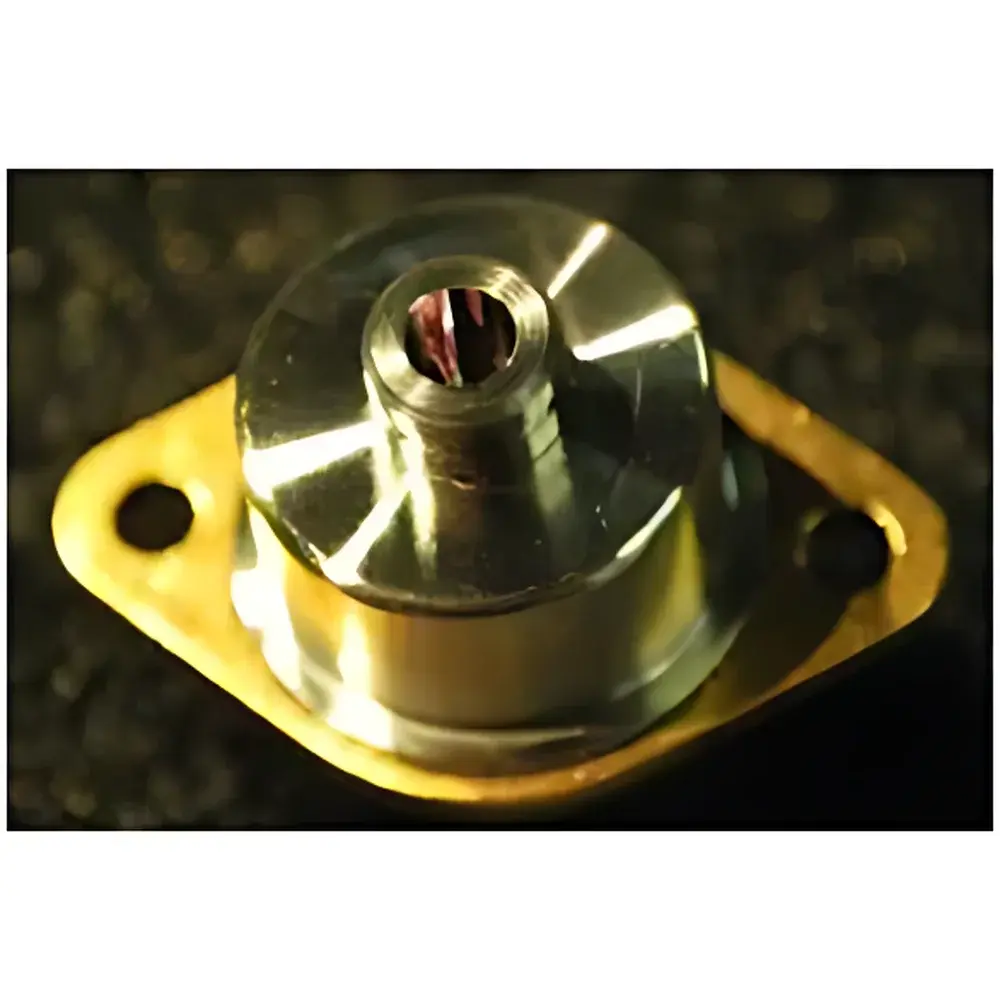
Hamamatsu QCL DFB Laser Module for Mid- to Long-Wave Infrared Spectroscopy
| Origin | Switzerland |
|---|---|
| Manufacturer Type | Authorized Distributor |
| Origin Category | Imported |
| Model | QCL DFB LASER |
| Component Category | Optical Component |
| Operating Wavelength Range | 4–15 µm (2500–667 cm⁻¹) |
| Tuning Range | Up to 10 cm⁻¹ (CW & Pulsed) |
| Cooling | Thermoelectric (TEC) or Cryogenic (80–300 K) |
| Packaging Options | LLH, HHL, TO-3 |
Overview
The Hamamatsu QCL DFB Laser Module is a precision quantum cascade laser source engineered for high-resolution mid- to long-wave infrared (MWIR–LWIR) spectroscopy, gas sensing, and trace molecular detection. Based on distributed feedback (DFB) grating technology, it delivers single-mode, narrow-linewidth emission across the 4–15 µm spectral band (2500–667 cm⁻¹), corresponding to fundamental vibrational absorption features of key analytes including CO, NO, CH₄, NH₃, H₂O, VOCs, and explosives precursors. Unlike broadband Fabry–Pérot (FP) QCLs, DFB variants employ monolithically integrated surface gratings to enforce longitudinal mode selection—enabling wavelength stability better than ±0.01 cm⁻¹ under active temperature and current control. The module operates in continuous-wave (CW), pulsed, or cryogenic modes, with thermal tuning ranges up to 10 cm⁻¹ and fine current-tuning resolution < 0.002 cm⁻¹/mA. Its design complies with core requirements for laboratory-grade optical metrology, including low relative intensity noise ( 30 dB, and reproducible output power stability over 8-hour drift tests.
Key Features
- Single-frequency DFB architecture with integrated Bragg grating for intrinsic wavelength selectivity and mode-hop-free tuning
- Three operational configurations: CW-DFB (–30 °C to +50 °C), pulsed-DFB (–30 °C to +15 °C), and cryogenic DFB (80–190 K) for extended LWIR coverage up to 15 µm
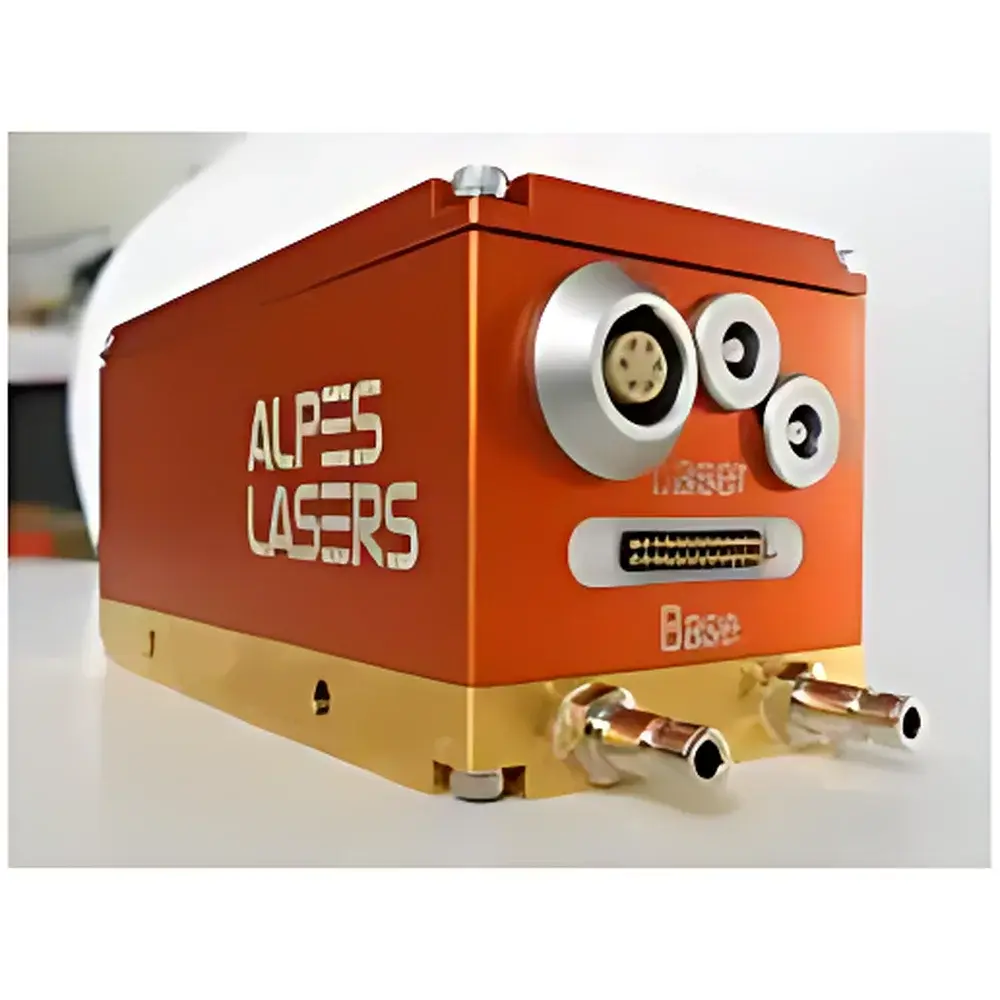
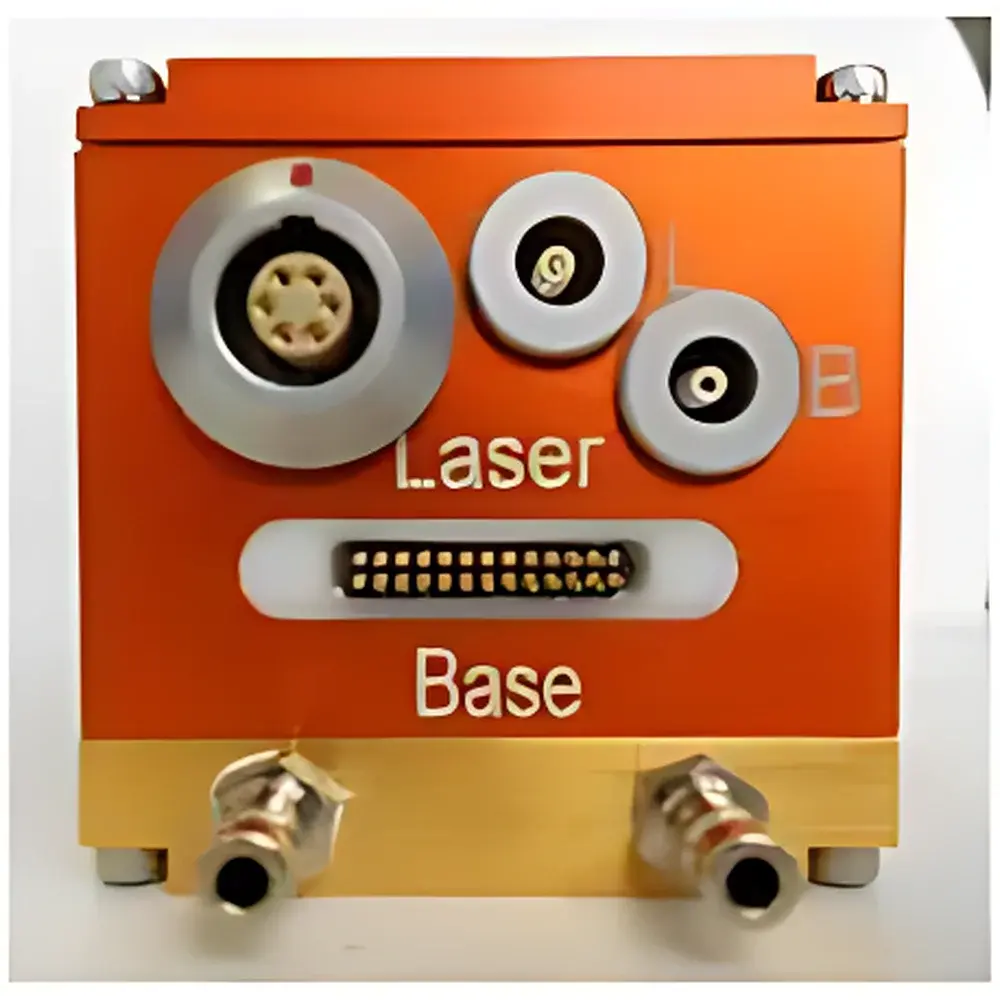
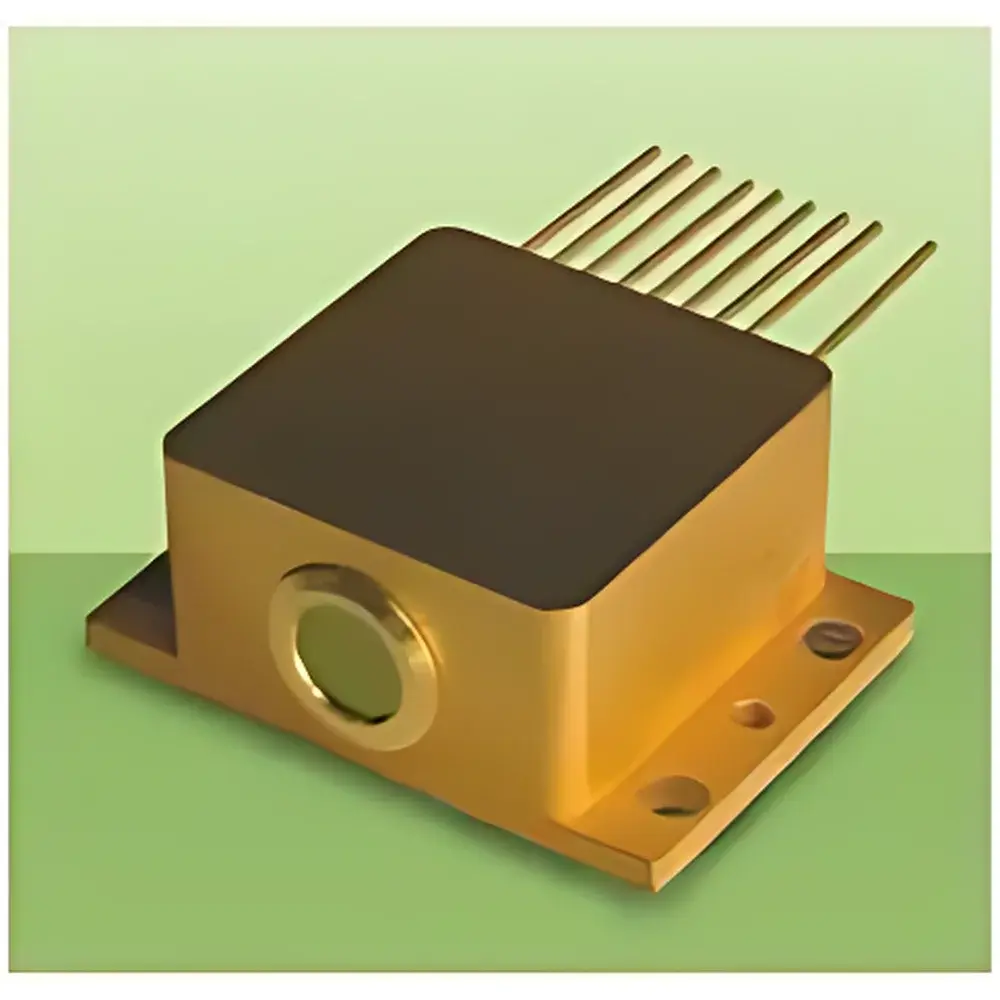
- Multiple packaging options optimized for system integration: Laboratory Laser Housing (LLH) with TEC and Pt100 sensor; High Heat Load (HHL) sealed housing with copper-baseplate conduction cooling; TO-3 package with AR-coated ZnSe window and collimated output (pulse-only)
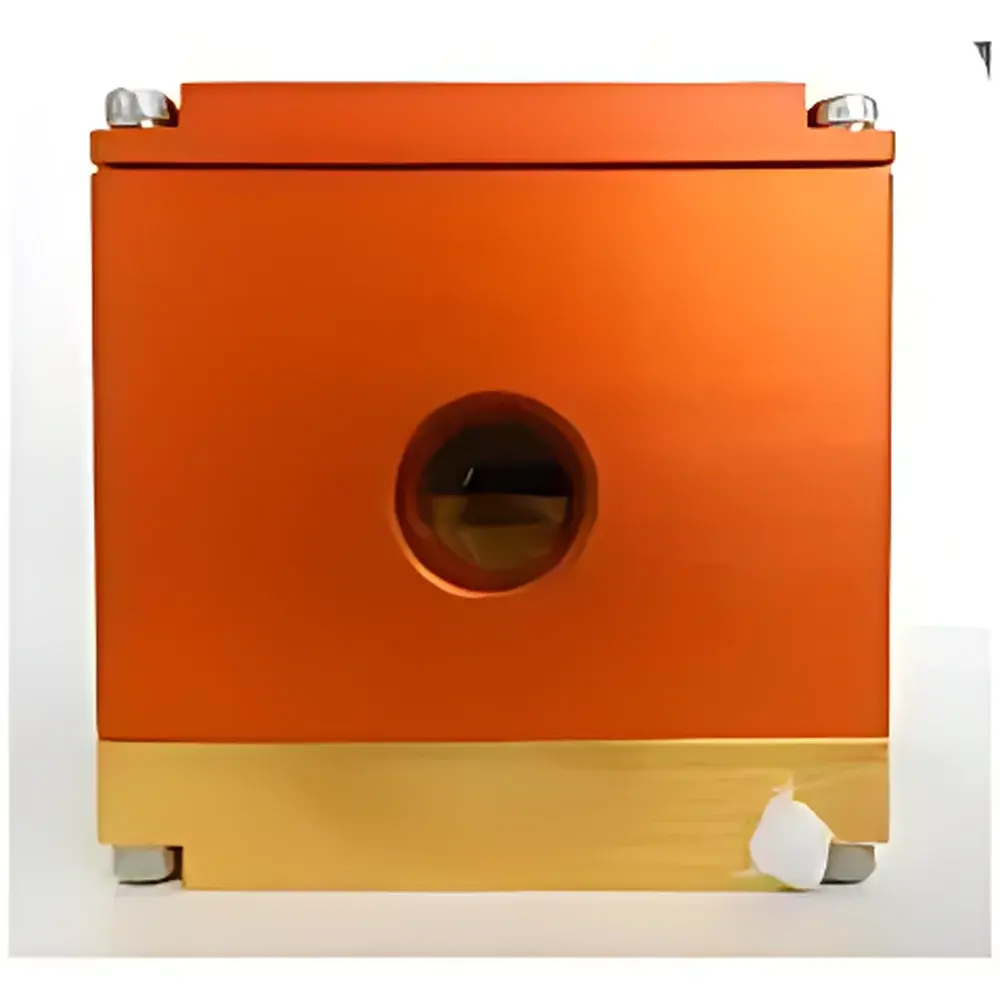
- Collimated beam delivery via chalcogenide glass lens and anti-reflection (AR)-coated ZnSe output window (R < 0.5% @ 4–12 µm)
- Compliant with RoHS and REACH directives; hermetically sealed housings meet MIL-STD-883H environmental robustness criteria
Sample Compatibility & Compliance
The QCL DFB Laser Module is compatible with standard FTIR spectrometers, photoacoustic cells, multipass gas cells (e.g., Herriott, White), and external cavity QCL systems. It supports both direct absorption and wavelength modulation spectroscopy (WMS-2f) protocols per ISO 14687 (hydrogen purity), ASTM D6245 (CO₂ in ambient air), and EPA Method 320 (vapor-phase organics). All units undergo factory calibration traceable to NIST SRM 2034 (blackbody reference) and are supplied with individual spectral characterization reports—including center wavenumber, linewidth (FWHM < 0.003 cm⁻¹), output power vs. current/voltage curves, and thermal tuning coefficients. For regulated environments, firmware-enabled audit trails, user-access logging, and configurable lockout modes support compliance with FDA 21 CFR Part 11 and GLP/GMP documentation requirements.
Software & Data Management
The laser integrates with Hamamatsu’s QCL Control Suite v4.2—a Windows-based application supporting real-time wavelength sweep programming, PID temperature stabilization, pulse timing synchronization (TTL/RS-422), and dual-channel analog monitoring (current & photodiode feedback). Export formats include CSV, HDF5, and .spc (JCAMP-DX compliant). API libraries (C/C++, Python, LabVIEW) enable OEM integration into automated analytical platforms. All firmware updates follow IEC 62443-3-3 security guidelines, with signed binaries and secure boot verification. Data logs retain timestamped metadata (ambient T/P, drive current, TEC voltage, photodiode signal) required for ISO/IEC 17025 accreditation.
Applications
- High-sensitivity trace gas analysis in environmental monitoring (e.g., urban NOₓ, industrial CH₄ leaks, landfill emissions)
- Process analytical technology (PAT) for pharmaceutical drying, fermentation, and solvent recovery
- Isotopic ratio measurements (e.g., ¹³CO₂/¹²CO₂) in climate research using dual-laser referencing
- Standoff detection of hazardous compounds via backscattered IR radiation (up to 100 m range)
- Calibration source for Fourier-transform infrared (FTIR) spectrometers and tunable diode laser absorption spectrometers (TDLAS)
FAQ
What is the typical spectral linewidth of the CW-DFB variant?
Measured full-width at half-maximum (FWHM) is ≤ 0.003 cm⁻¹ under stabilized operating conditions (±0.01 °C, constant current).
Can this laser be used in an external cavity configuration?
Yes—DFB modules are compatible with Littrow- and Littman-type external cavities; however, only Broadgain FP-QCLs are recommended for wide-range (>50 cm⁻¹) continuous tuning.
Is cryogenic operation required for wavelengths beyond 12 µm?
For stable CW output above 12 µm (≤ 833 cm⁻¹), operation at 80–100 K is necessary to suppress non-radiative decay pathways and maintain threshold current below 500 mA.
What is the maximum average optical power available in pulsed mode at 9.1 µm?
Up to 50 mW average power is achievable at 9.1 µm (1097 cm⁻¹) with 100 ns pulses, 1 MHz repetition rate, and –30 °C heatsink temperature.
Does the TO-3 package support continuous-wave operation?
No—the TO-3 housing lacks sufficient thermal dissipation capacity for CW operation; it is qualified exclusively for pulsed duty cycles (duty factor ≤ 1%).





