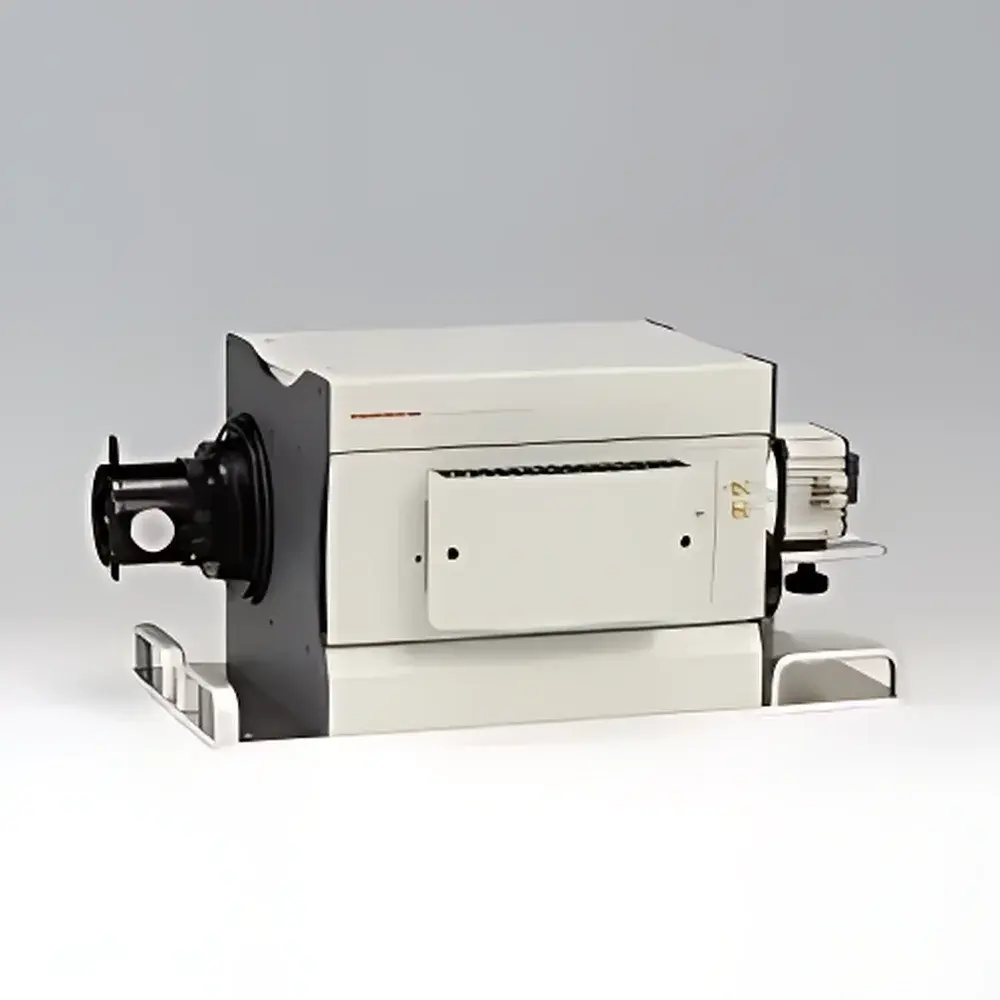
Hamamatsu Streak Camera
| Brand | Hamamatsu |
|---|---|
| Origin | Japan |
| Manufacturer Type | Original Equipment Manufacturer (OEM) |
| Product Origin | Imported |
| Model Category | Streak Camera Series |
| Pricing | Available Upon Request |
Overview
Hamamatsu streak cameras are ultrafast optical diagnostic instruments engineered for time-resolved photonic measurement at picosecond to femtosecond temporal scales. Based on the principle of spatial–temporal mapping—where incident photons strike a photocathode, generate photoelectrons accelerated through a time-varying deflecting electric field, and are subsequently focused onto a phosphor screen or CCD/CMOS detector—the system converts temporal intensity profiles into spatially resolved line images. This electro-optical architecture enables single-shot acquisition of transient light events without repetitive triggering, making it indispensable for non-repetitive, irreversible, or low-probability phenomena in plasma physics, laser–matter interaction, ultrafast spectroscopy, and synchrotron/XFEL beam diagnostics.
Key Features
- Modular architecture supporting interchangeable streak tubes, sweep generators, and readout detectors tailored to specific temporal resolution and spectral response requirements.
- Time resolution spanning 0.5 ps (X-ray streak cameras) to 200 fs (FESCA-200 series), with calibrated sweep linearity exceeding 99.5% across full dynamic range.
- Cryogenically cooled photocathodes (e.g., −100 °C operation in NIR models) to suppress thermionic emission and achieve shot-noise-limited detection in near-infrared (700–1700 nm) spectral bands.
- High-dynamic-range configuration delivering >10,000:1 linear intensity response—enabling distortion-free single-shot waveform capture under high-flux illumination where conventional streak systems exhibit saturation or blooming.
- Ruggedized vacuum-integrated tube assembly manufactured in Hamamatsu’s ISO 9001-certified cleanroom facilities, ensuring long-term gain stability and inter-unit reproducibility after >35 years of continuous process refinement.
Sample Compatibility & Compliance
Streak camera configurations support direct coupling to fiber optics, free-space beam paths, and vacuum-compatible X-ray ports (for 10 eV–10 keV photon energy range). Photocathode materials include S20 (visible), GaAs (NIR), and CsI (soft X-ray), each selected per application-specific quantum efficiency and dark current specifications. All systems comply with IEC 61000-6-3 (EMC emission standards) and meet mechanical shock/vibration requirements per MIL-STD-810G. For regulated environments, optional audit-trail-enabled firmware supports ALCOA+ data integrity principles and aligns with GLP/GMP documentation workflows.
Software & Data Management
Hamamatsu provides proprietary acquisition and analysis software (e.g., HCImage Live, Streak Analysis Toolkit) compatible with Windows 10/11 (64-bit), supporting real-time frame buffering, multi-channel time-base synchronization, and export to HDF5, TIFF, and ASCII formats. Software modules include automated streak calibration (spatial–temporal dispersion correction), background subtraction, line-profile integration, and FFT-based temporal deconvolution. Full API access (C/C++, Python bindings) enables integration into LabVIEW, MATLAB, or custom Python-based control frameworks. Data provenance—including detector temperature, sweep voltage ramp parameters, and trigger latency timestamps—is embedded in metadata headers compliant with FAIR (Findable, Accessible, Interoperable, Reusable) principles.
Applications
- Laser-induced breakdown spectroscopy (LIBS) with single-pulse temporal gating for plasma decay kinetics.
- Femtosecond pump–probe experiments tracking carrier relaxation in 2D materials and perovskite photovoltaics.
- X-ray pulse characterization at synchrotron beamlines and compact laser-plasma X-ray sources.
- Ballistic photon imaging in turbid media using time-gated detection windows <1 ps wide.
- Ultrafast fluorescence lifetime mapping in biological tissues under multiphoton excitation.
- Diagnostics of inertial confinement fusion implosions via self-emission X-ray streak records.
FAQ
What is the minimum detectable signal level for the NIR-streak configuration?
Signal-to-noise ratio ≥10:1 is achievable for single-photon-level events at 1550 nm when operated at −100 °C with 10 ms integration and optimized phosphor-readout gain.
Can the streak camera be synchronized with external laser systems operating at 1 kHz repetition rate?
Yes—via TTL/PECL-compatible trigger input with jitter <2 ps RMS; optional RF-synchronized sweep generators support phase-locked operation to master oscillator signals.
Is vacuum maintenance required by the end user?
No—all streak tubes are permanently sealed during factory processing and rated for >10-year operational lifetime without user-accessible vacuum service.
Does Hamamatsu provide NIST-traceable calibration certificates?
Yes—traceable temporal calibration (using mode-locked Ti:sapphire laser reference pulses) and spectral responsivity certification are available as optional deliverables per ISO/IEC 17025-accredited procedures.
Are custom streak tube geometries supported for specialized beamline integration?
Yes—Hamamatsu offers OEM design collaboration including non-standard port angles, magnetic shielding, and radiation-hardened envelope variants for accelerator facility deployment.