Hamilton MICROLAB® 530B Dilution Workstation
| Brand | Hamilton |
|---|---|
| Origin | Switzerland |
| Model | MICROLAB® 530B |
| Liquid Handling Principle | Positive Displacement Pipetting |
| Volume Range | 1 µL – 25 mL |
| Accuracy & Precision | NIST-Traceable |
| Programmable Methods | 21 stored protocols |
| Interface | Touchscreen LCD with Footswitch Control |
| Compliance | Designed for GLP/GMP environments, supports audit-ready documentation |
Overview
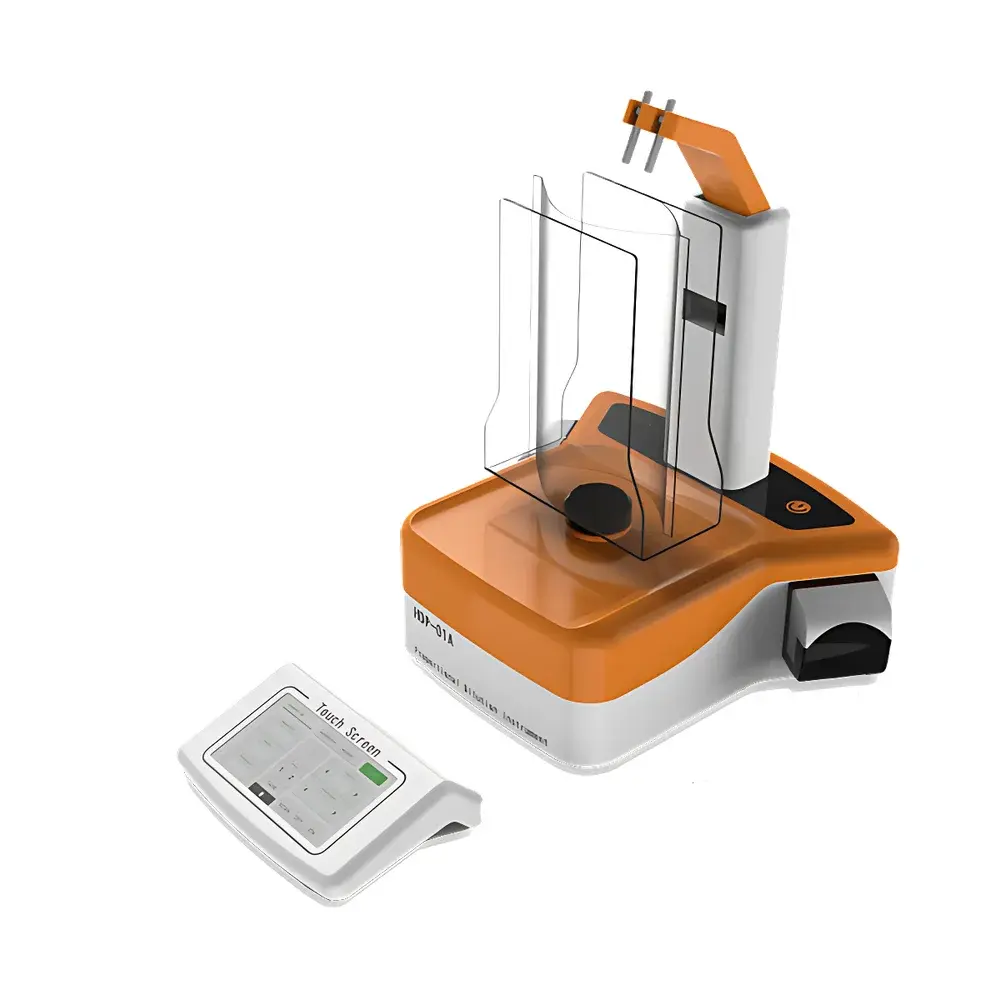
The Hamilton MICROLAB® 530B Dilution Workstation is a precision-engineered, semi-automated liquid handling system designed for reproducible, traceable dilution and preparation of analytical standards and samples. Built upon Hamilton’s proprietary positive displacement pipetting technology—distinct from air displacement systems—the MICROLAB® 530B eliminates variability caused by vapor pressure, surface tension, or temperature-induced volume drift. This architecture ensures metrological integrity across the full operational range (1 µL to 25 mL), with accuracy and precision certified against NIST-traceable reference standards. The instrument is optimized for routine dilution workflows in regulated laboratories where method consistency, operator independence, and documentation fidelity are critical—particularly in environmental testing, clinical chemistry, pharmaceutical QC, and contract research organizations supporting ISO/IEC 17025 or FDA 21 CFR Part 11 compliance.
Key Features
- Positive displacement syringe-based fluidics delivering high reproducibility for viscous, volatile, or low-surface-tension liquids—including organic solvents, acids, and biological buffers.
- Full-range volumetric capability: precise aspiration and dispensing from 1 µL to 25 mL without hardware reconfiguration or tip changes.
- Integrated 21-step programmable memory enabling rapid recall of validated dilution sequences (e.g., 1:4, 1:10, 1:25, 1:50, 1:100) and multi-step serial dilutions.
- Large-format touchscreen interface with intuitive icon-driven navigation, real-time status feedback, and on-screen method editing.
- Dedicated footswitch activation for hands-free dispensing control—reducing repetitive motion stress and enhancing workflow ergonomics during high-throughput operations.
- Direct dispensing into autosampler vials (down to final volumes as low as 1000 µL), eliminating intermediate transfer steps and minimizing sample loss or contamination risk.
- Optional thermal printer support for hard-copy generation of method parameters, timestamps, user IDs, and volume logs—facilitating manual recordkeeping in non-networked labs.
Sample Compatibility & Compliance
The MICROLAB® 530B accommodates a broad spectrum of sample matrices, including aqueous standards, acidic digestates (e.g., ICP-MS sample prep), organic extracts (GC analysis), and HPLC calibration solutions. Its chemically resistant PTFE- and sapphire-sealed syringes tolerate aggressive solvents (acetonitrile, methanol, hydrochloric acid up to 6 M) and minimize carryover via automated rinse cycles. From a regulatory standpoint, the system supports ALCOA+ data integrity principles: all user actions, parameter changes, and execution events are timestamped and attributable. While the base unit does not include electronic signature or audit trail software, its architecture is compatible with third-party LIMS integration and qualifies as a “computerized system” under Annex 11 and USP when deployed within documented SOPs and periodic performance verification protocols.
Software & Data Management
The MICROLAB® 530B operates via embedded firmware with no external PC dependency. All method definitions—including source/diluent positions, target volumes, mixing cycles, and pause points—are configured and stored locally. Each executed run generates a session log containing operator ID (entered manually), start/stop time, selected protocol number, and actual dispensed volumes (derived from calibrated syringe position encoders). These logs may be exported via RS-232 or printed for archival. For laboratories requiring electronic records, Hamilton provides optional connectivity kits enabling integration with laboratory information management systems (LIMS) or chromatography data systems (CDS) through ASCII-based command protocols—supporting automated metadata injection and reducing transcription errors.
Applications
- Preparation of certified reference material (CRM) dilutions for AA, ICP-OES, and ICP-MS quantitation.
- Generation of multi-level calibration curves for HPLC-UV, GC-FID, and LC-MS/MS assays.
- Standard addition workflows in environmental testing labs processing soil leachates or wastewater extracts.
- QC batch release testing where volumetric accuracy directly impacts specification compliance (e.g., USP , EP 2.2.45).
- Reduction of solvent consumption in high-cost assay development—enabling 100 µL final dilutions instead of traditional 1 mL preparations while maintaining ≤2% CV at 10 µL transfers.
FAQ
Does the MICROLAB® 530B require calibration certification prior to use?
Yes. Initial installation qualification (IQ) and operational qualification (OQ) must be performed using Hamilton-certified calibration standards. Routine performance verification is recommended per ASTM E2758 or internal SOPs—at minimum before each shift when used in GLP environments.
Can the instrument handle viscous samples such as glycerol or serum?
Yes. Positive displacement mechanics eliminate reliance on air cushioning, enabling accurate handling of fluids up to 1000 cP without volume deviation or bubble formation.
Is method validation support available from Hamilton?
Hamilton provides IQ/OQ documentation templates and technical notes aligned with ISO 8655-6 and USP . Full method validation (including precision, accuracy, linearity, and robustness) remains the responsibility of the end-user laboratory.
What maintenance is required to sustain long-term accuracy?
Syringe seals should be inspected quarterly; replacement intervals depend on usage frequency and chemical exposure. Daily cleaning with deionized water and weekly ethanol flushes are advised for organic solvent applications.