
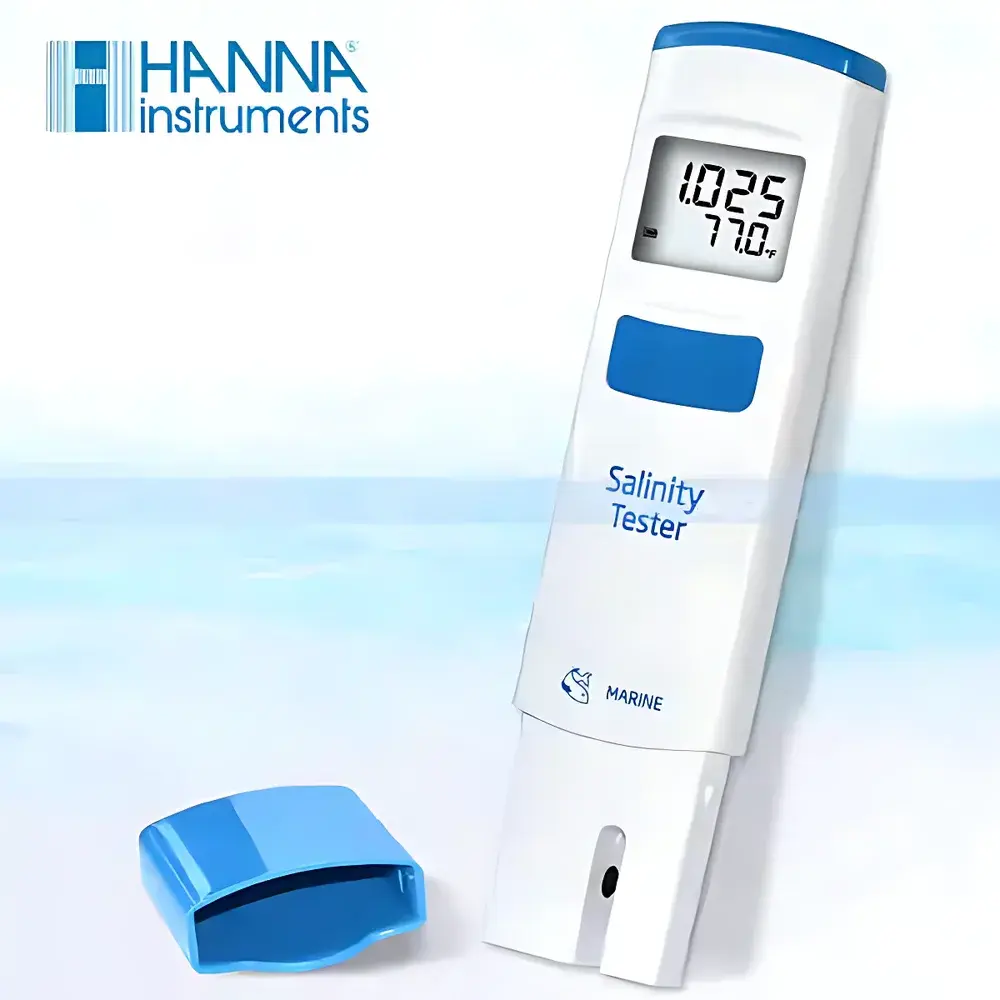
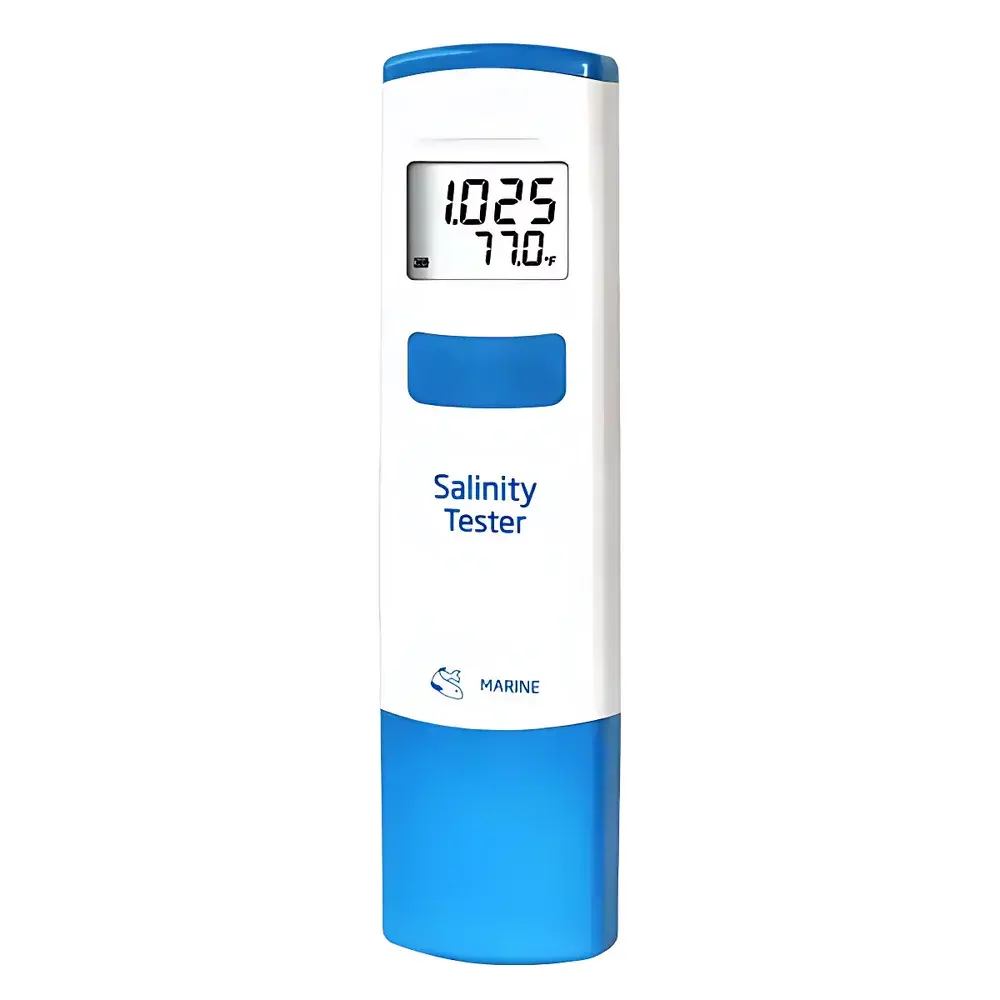
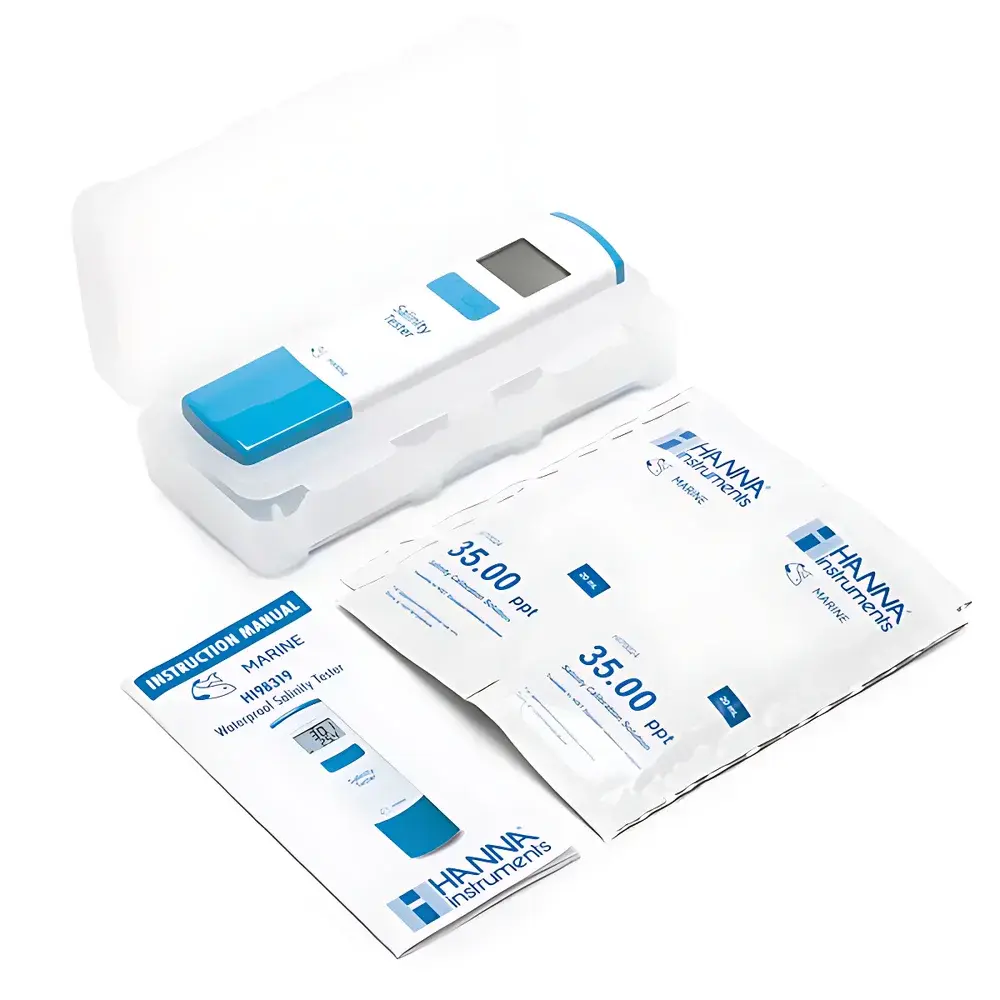
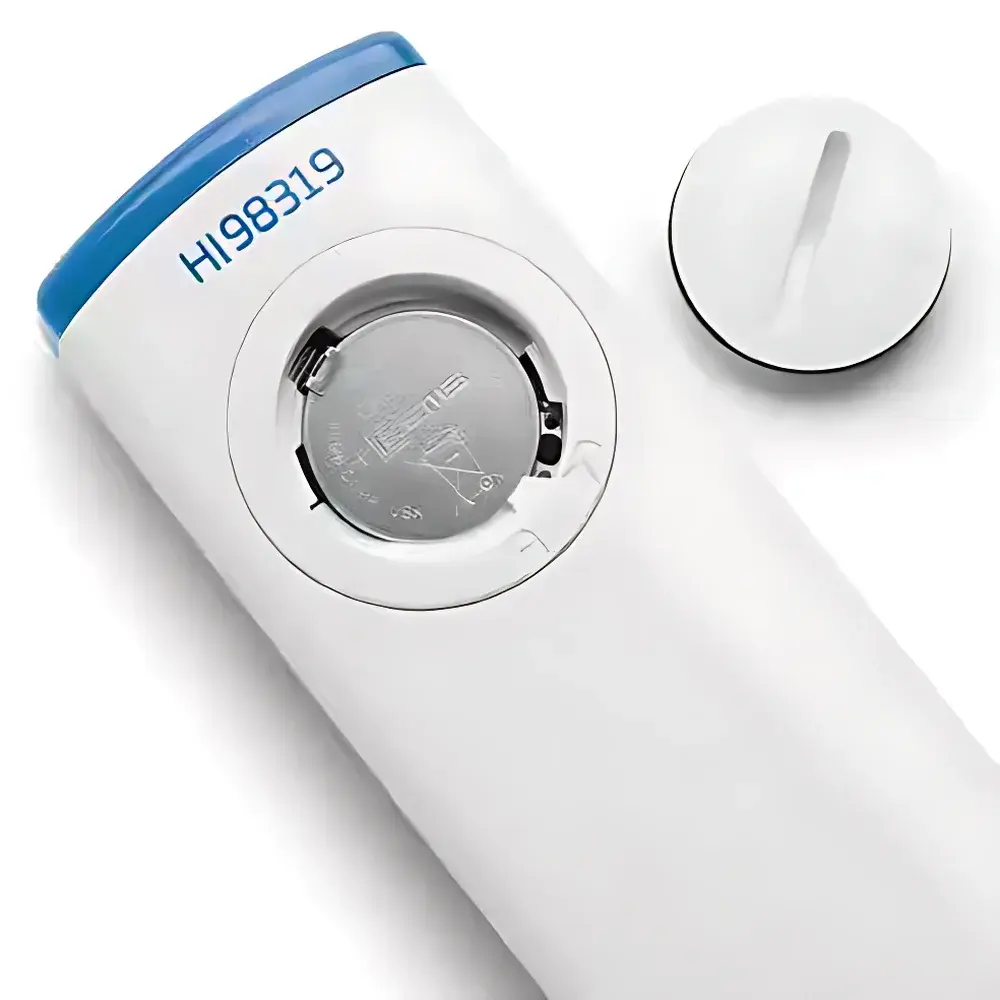
Hanna HI98319 Portable Seawater Salinity Meter
| Brand | Hanna |
|---|---|
| Origin | Italy |
| Model | HI98319 |
| Detection Parameter | Single-parameter (Salinity) |
| Portability | Pen-style |
| Intended Use | Laboratory & Aquarium |
| Salinity Range | 0.0 to 70.0 ppt (g/L) |
| Accuracy | ±1 ppt (0.0 to 40.0 ppt), ±2 ppt (>40.0 ppt) |
| Resolution | 0.1 ppt (g/L), 0.1 PSU, 0.001 S.G., 0.1 °C/°F |
| Temperature Compensation | Automatic (0.0 to 50.0 °C) |
| Calibration | Auto-recognizing single-point at 35.00 ppt (HI70024P standard) |
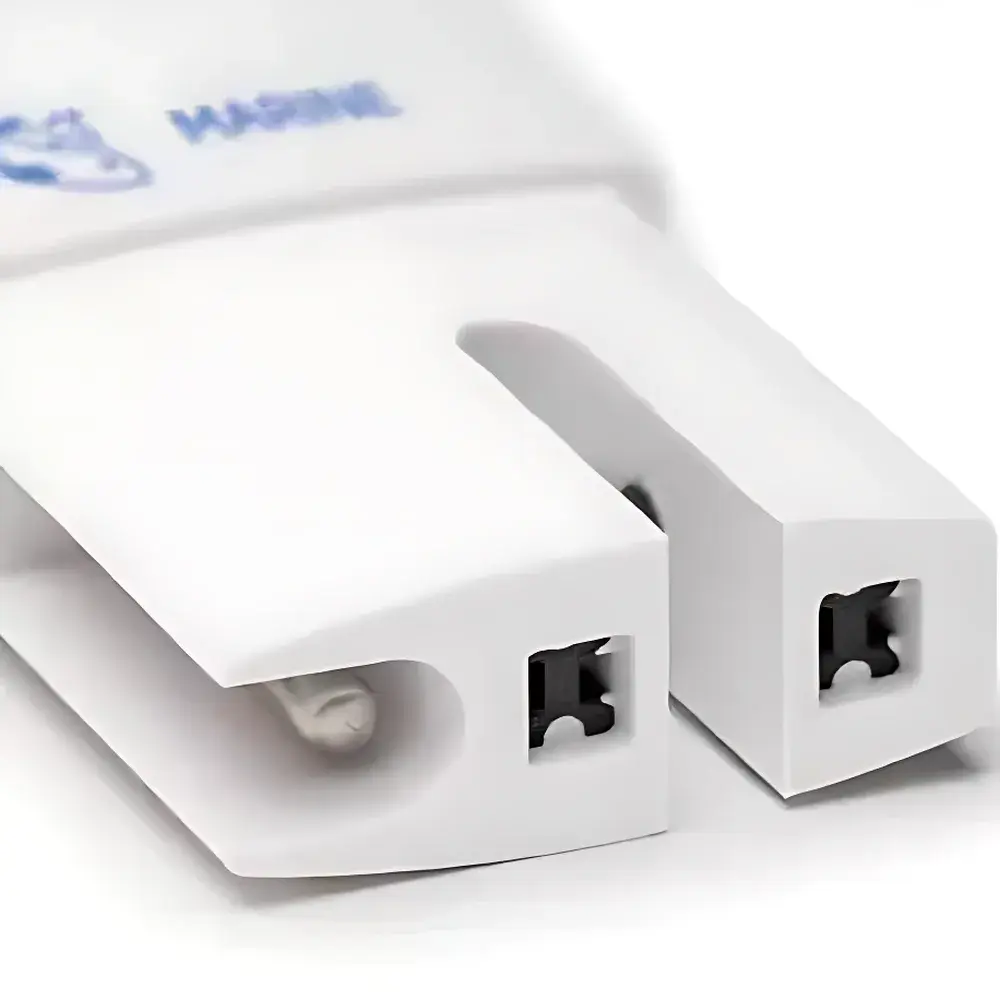
| Electrode Material | Graphite |
| Power Source | CR2032 lithium coin cell |
| IP Rating | IP67 |
| Dimensions | 160 × 40 × 17 mm |
| Weight | 68 g |
Overview
The Hanna HI98319 is a precision-engineered, pen-style portable salinity meter designed for reliable, field- and lab-grade measurement of seawater and brackish solutions. It operates on the principle of conductivity-based salinity determination—converting measured electrical conductivity (EC) into salinity values using internationally accepted algorithms aligned with the Practical Salinity Scale (PSS-78) and ASTM D1125–22. Unlike traditional stainless-steel electrode meters susceptible to polarization and drift, the HI98319 employs a robust graphite electrode pair that ensures stable polarization resistance, high reproducibility, and long-term electrochemical stability across repeated measurements. Its integrated temperature sensor—exposed for rapid thermal equilibration—enables automatic temperature compensation (ATC) across 0.0 to 50.0 °C, eliminating manual correction and minimizing thermal hysteresis errors. The instrument simultaneously reports salinity in three standardized units: parts per thousand (ppt), Practical Salinity Units (PSU), and specific gravity (S.G.), facilitating direct comparison with marine biology, aquaculture, and environmental monitoring protocols.
Key Features
- Graphite electrode system engineered to eliminate polarization effects common in stainless-steel probes, delivering consistent repeatability (<±0.3 ppt RSD over 20 consecutive readings at 35.00 ppt)
- Auto-recognizing single-point calibration at 35.00 ppt using certified standard solution HI70024P—no manual entry or adjustment required
- Large backlit LCD display showing real-time salinity (ppt/PSU/S.G.), temperature, battery status, and dynamic stability indicator (hourglass icon)
- Three programmable auto-off intervals (8 min, 60 min, or disabled) to balance power conservation and operational flexibility
- IP67-rated housing with sealed, tool-free battery compartment—fully submersible up to 1 m for 30 minutes; suitable for humid laboratory benches, wet aquarium sumps, and coastal field use
- CR2032 lithium coin cell provides >2,000 measurements per battery (typical usage); battery level displayed as percentage at startup and during operation
- Dual-button interface: dedicated power toggle and calibration trigger—minimizes accidental mode changes and supports glove-compatible operation
Sample Compatibility & Compliance
The HI98319 is validated for aqueous saline matrices ranging from freshwater (0.0 ppt) to hypersaline brines (70.0 ppt), including natural seawater, artificial reef tank water, saltwater aquaculture effluents, and desalination process streams. It complies with methodological requirements outlined in Standard Methods for the Examination of Water and Wastewater (2510B, conductivity-based salinity) and adheres to ISO 7888:2015 (water quality — determination of electrical conductivity). While not intended for GMP-regulated production environments, its calibration traceability (via NIST-traceable HI70024P standard), audit-ready calibration log (stored internally per measurement session), and stable endpoint detection support GLP-aligned documentation practices in academic, aquarium management, and environmental testing labs.
Software & Data Management
The HI98319 operates as a standalone instrument with no onboard data logging or USB connectivity. All measurement data remain on-screen only—intentionally designed for immediate read-and-record workflows typical in routine aquarium maintenance and educational labs. However, its calibrated output is fully compatible with external digital recording systems: users may manually transcribe values into LIMS platforms, Excel-based QA/QC spreadsheets, or cloud-based aquarium monitoring dashboards (e.g., Reef-Pi, Neptune Systems). The built-in ATC algorithm follows the UNESCO International Equation of State of Seawater (EOS-80), ensuring cross-platform consistency when comparing results with benchtop conductivity/salinity analyzers or CTD profilers.
Applications
- Marine aquarium husbandry: daily verification of salinity stability in reef tanks, protein skimmer effluent checks, and new water preparation
- Academic teaching labs: hands-on instruction in oceanographic principles, conductivity–salinity relationships, and sensor calibration fundamentals
- Coastal environmental monitoring: rapid assessment of estuarine mixing zones, tidal pool salinity gradients, and stormwater runoff impact studies
- Aquaculture facility QC: incoming seawater intake validation, larval rearing tank salinity profiling, and harvest-stage osmoregulation checks
- Calibration verification: secondary reference for validating higher-tier benchtop salinometers or multiparameter sondes prior to deployment
FAQ
What calibration standard is required for the HI98319?
The meter is factory-configured to auto-recognize HI70024P (35.00 ppt NaCl standard, certified traceable to NIST SRM 999b). No other standards are supported for automatic calibration.
Does the HI98319 measure conductivity directly?
No—it reports salinity exclusively. Conductivity is measured internally as an intermediate parameter but is not displayed or accessible to the user.
Can this meter be used in hot hydrothermal vent simulations?
No. The operating temperature limit is 50.0 °C; sustained exposure above this threshold may damage the graphite electrode and compromise ATC accuracy.
Is the graphite electrode replaceable?
Yes—the probe tip assembly (HI76319) is a user-serviceable consumable part available separately; replacement requires no tools and takes <60 seconds.
How does the HI98319 handle high-viscosity or particulate-laden samples?
It is not recommended for slurries, algae-rich water, or viscous brines. Particulates may coat the graphite surface; rinse thoroughly with DI water after each use and store dry.
Related Products






