
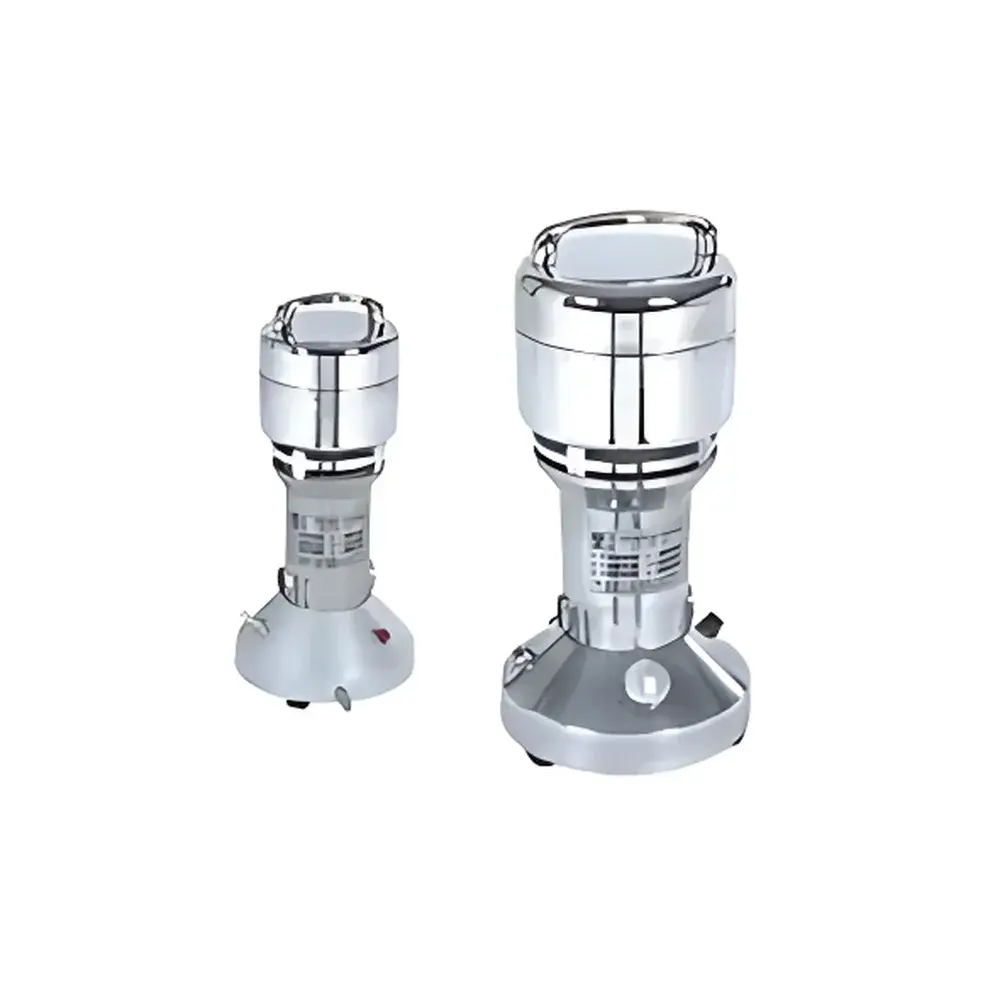
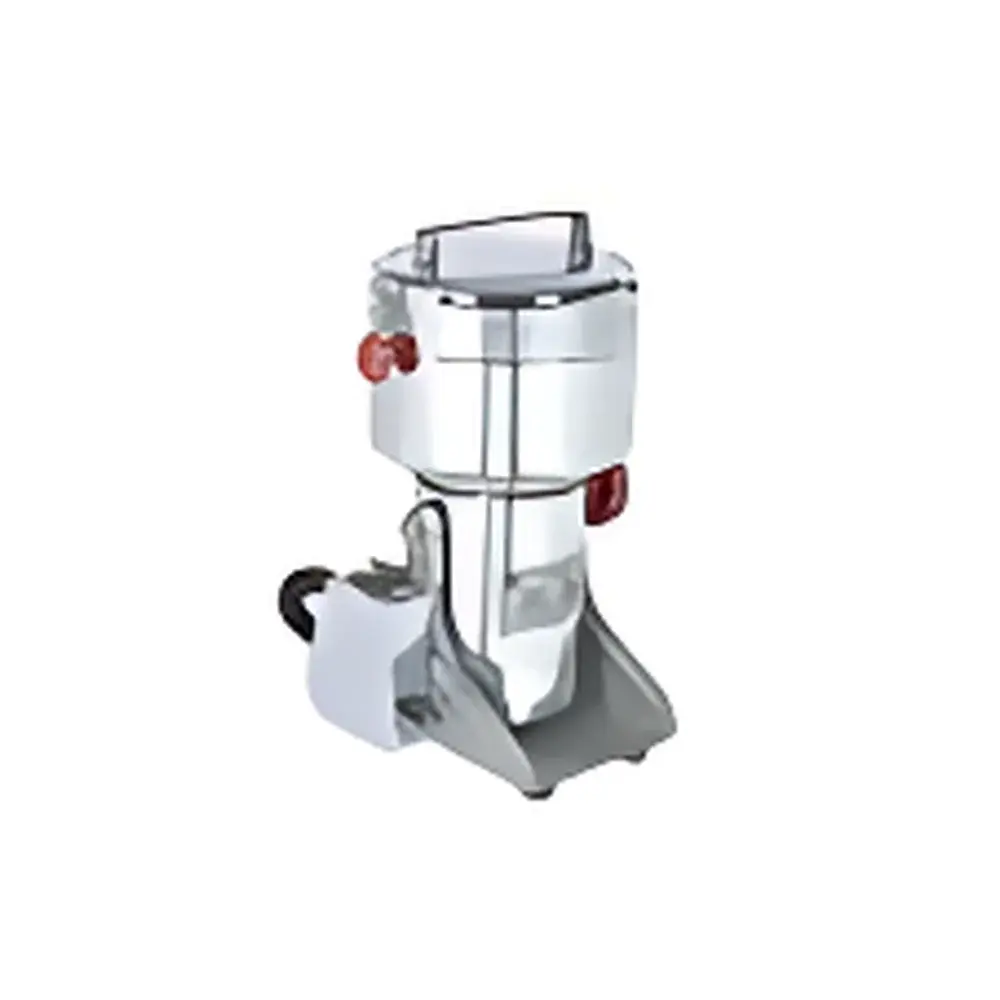
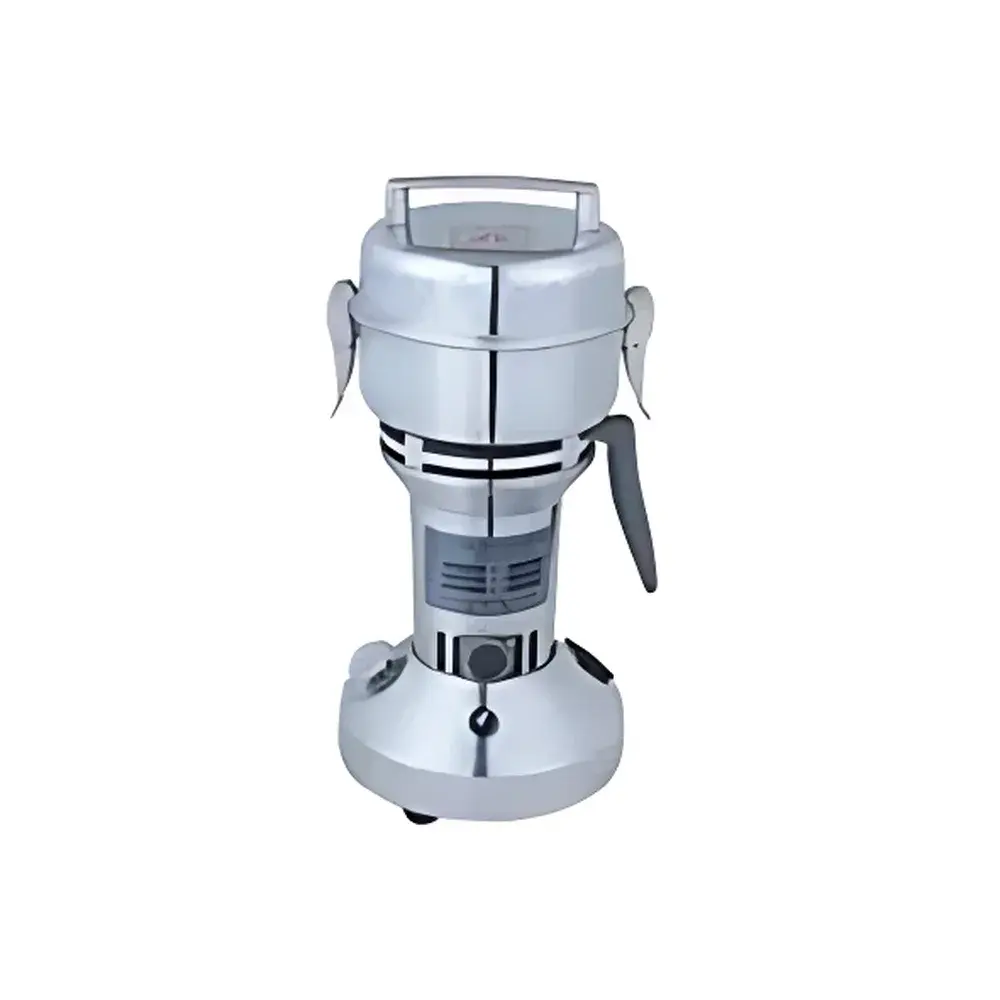
Hanuo DFT-200A Portable High-Speed Laboratory Grinder
| Brand | Hanuo |
|---|---|
| Origin | Shanghai, China |
| Model | DFT-200A |
| Instrument Type | Benchtop Portable Grinder |
| Sample Applicability | Hard and Brittle Materials |
| Feed Size | ≤15 mm |
| Output Particle Size | ≤0.01 mm (≥200 mesh) |
| Batch Capacity | 100 g |
| Motor Power | 900 W |
| Rated Speed | 25,000 rpm |
| Dimensions | 16×16×30 cm |
| Construction | Stainless Steel Grinding Chamber & Blades |
| Compliance | CE-marked for laboratory use under IEC 61000-4 EMC standards |
Overview
The Hanuo DFT-200A is a compact, high-speed portable laboratory grinder engineered for rapid, reproducible size reduction of hard, brittle, and fibrous solid samples in research, quality control, and herbal medicine preparation workflows. It operates on the principle of high-velocity rotor–stator impact grinding: a precision-balanced stainless steel blade rotates at 25,000 rpm within a sealed, corrosion-resistant grinding chamber, subjecting feed material to repeated mechanical shearing, impact, and attrition forces. This design ensures efficient comminution without thermal degradation—critical for heat-sensitive botanicals (e.g., ginseng, lingzhi, or pearl powder) and pharmaceutical excipients. Unlike planetary ball mills or cryogenic grinders, the DFT-200A delivers sub-10 µm particle size distribution (≤0.01 mm, ≥200 mesh) in 3–120 seconds per batch, with minimal operator intervention and no external cooling required. Its portability, low footprint (16×16×30 cm), and integrated safety interlock make it suitable for fume hood integration, mobile lab deployment, or multi-station QC environments.
Key Features
- High-efficiency 900 W brushless motor with thermal overload protection and noise-dampened housing (<65 dB(A) at 1 m)
- Food-grade 304 stainless steel grinding chamber and dual-edge rotating blade—fully autoclavable and resistant to oxidation, acid, and organic solvents
- Consistent particle size control: achieves ≤200 mesh (74 µm) nominal output; validated down to 10 µm median (D50) for brittle botanicals via laser diffraction analysis
- No cross-contamination design: single-use chamber configuration with zero dead volume; blade geometry prevents material retention between batches
- Ergonomic handheld operation with non-slip silicone grip and integrated start/stop momentary switch; optional bench clamp kit available for hands-free use
- Compliant with IEC 61000-4 electromagnetic compatibility standards and RoHS Directive 2011/65/EU for laboratory electrical safety
Sample Compatibility & Compliance
The DFT-200A is validated for dry grinding of hard, low-moisture (<10% w/w) samples including mineral-based materials (e.g., pearl, calcined gypsum), dried herbs (astragalus, notoginseng, sea horse), resins (frankincense), and animal-derived substances (collagen-rich gelatin, dried placenta). It is unsuitable for wet, oily, fibrous (e.g., cellulose-rich stems), or thermoplastic materials. All contact surfaces meet ISO 8573-1 Class 4 purity requirements for particulate contamination. The unit carries CE marking per Machinery Directive 2006/42/EC and conforms to EN 61000-6-2 (immunity) and EN 61000-6-4 (emission) standards. For GLP/GMP-regulated labs, audit-ready documentation—including factory calibration certificates and material traceability reports—is available upon request.
Software & Data Management
The DFT-200A is a standalone electromechanical instrument with no embedded microprocessor or digital interface. Operation is analog and manual: time-controlled grinding via built-in mechanical timer (0–120 s, ±1 s accuracy) with audible end-of-cycle signal. No software installation, firmware updates, or data export capabilities are provided—intentionally designed to eliminate validation overhead in regulated environments where electronic records require 21 CFR Part 11 compliance. Process parameters (batch ID, sample name, grinding duration, operator initials) are documented manually in lab notebooks or LIMS-integrated paper logs. Optional barcode-labeled chamber kits support traceability in multi-user facilities.
Applications
- Pre-analytical sample homogenization prior to HPLC, ICP-MS, or XRF elemental analysis of traditional Chinese medicinal materials
- Routine QC grinding of reference standards and pharmacopoeial test samples (e.g., USP Disintegration, EP 2.9.12 Particle Size Distribution)
- Preparation of uniform powders for tablet formulation development and dissolution testing
- Field-deployable comminution in agricultural extension labs for soil amendment or seed coat analysis
- Teaching laboratories demonstrating mechanical size reduction principles in material science and pharmaceutics courses
FAQ
What is the maximum feed particle size the DFT-200A can accept?
Feed particles must be ≤15 mm in largest dimension; oversized material must be pre-crushed using a mortar or jaw crusher to avoid blade jamming.
Can the DFT-200A grind samples with moisture content above 15%?
No—excess moisture causes agglomeration, reduces grinding efficiency, and risks motor stalling. Samples must be oven-dried to ≤10% w/w prior to processing.
Is the grinding chamber compatible with organic solvents for cleaning?
Yes—304 stainless steel construction allows immersion in ethanol, acetone, or isopropanol; air-drying is mandatory before reuse.
Does the unit include validation documentation for ISO 17025-accredited labs?
Factory calibration certificates (torque, rotational speed verification) and material composition reports are supplied; full IQ/OQ protocols are available as optional service.
What maintenance intervals are recommended for sustained performance?
Blade sharpening every 200 operating hours; full chamber inspection and fastener torque verification every 6 months per ISO 5840-3 maintenance guidelines.



