
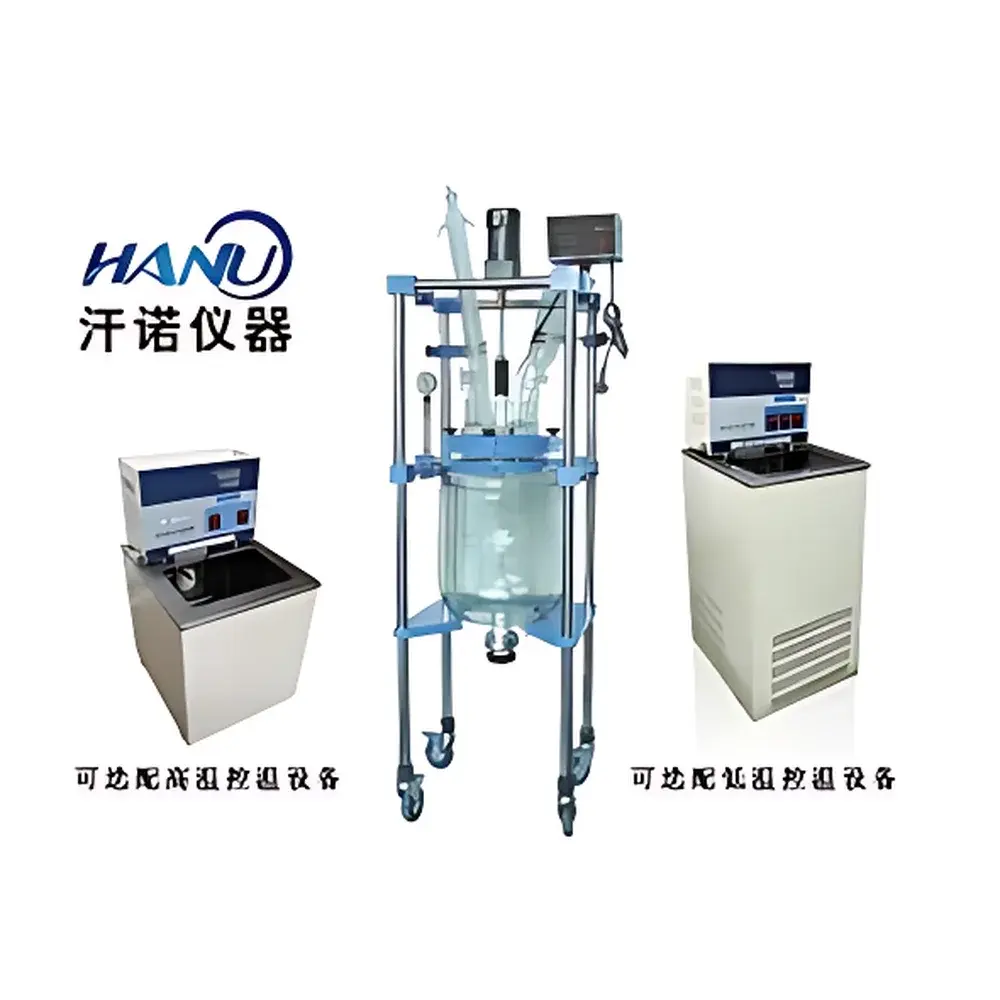
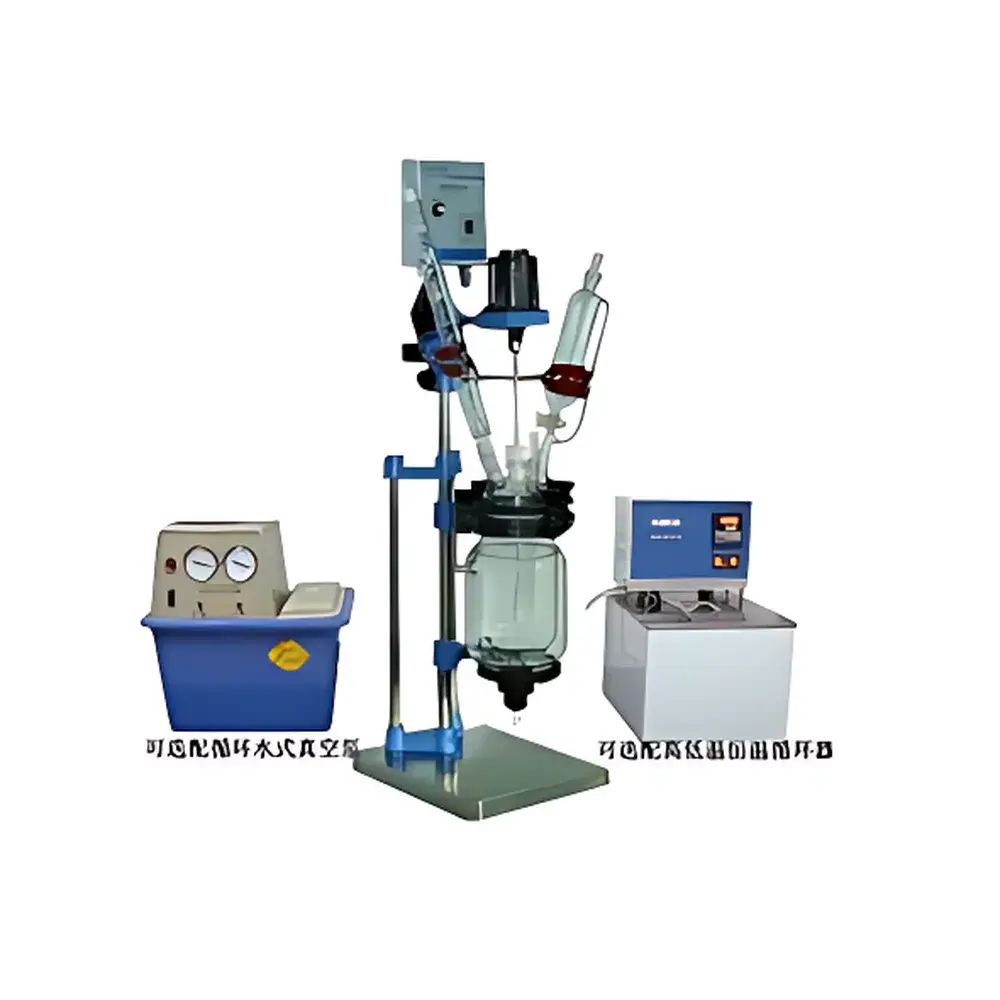
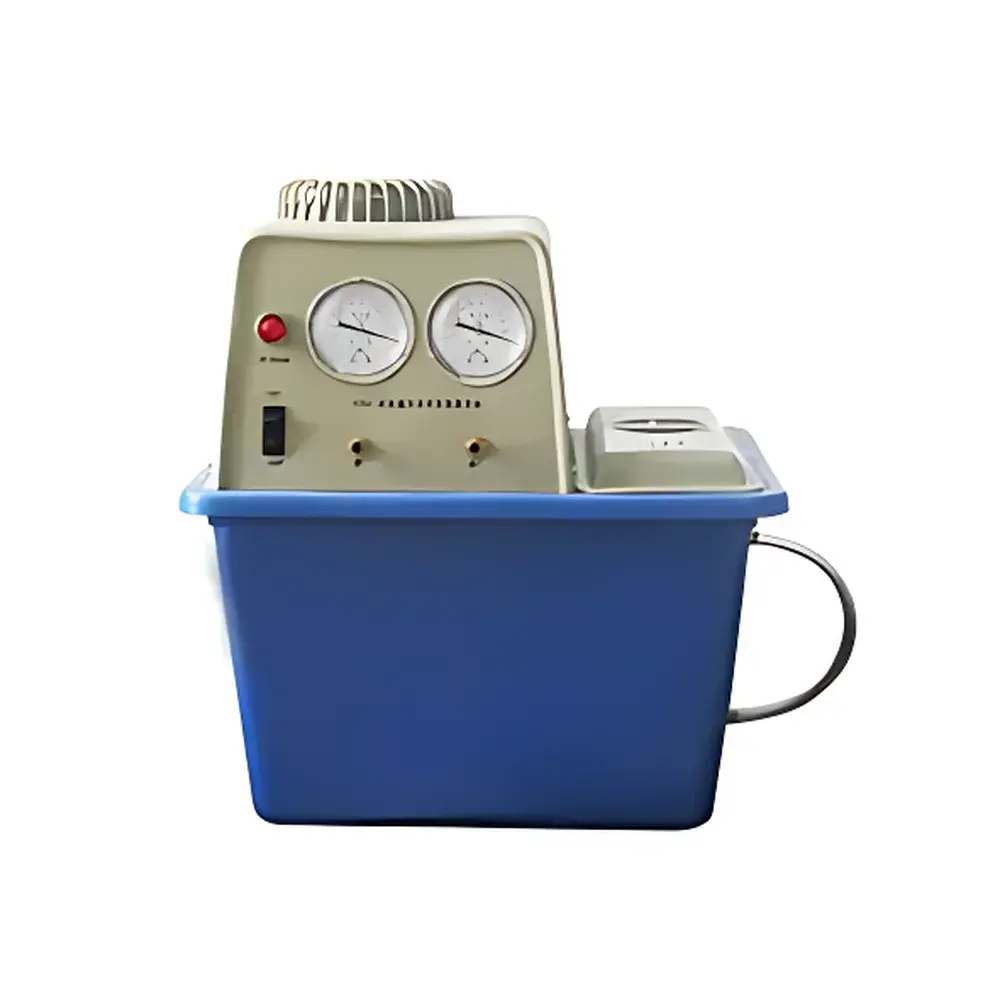
Hanuo HN-20L Double-Jacketed Glass Reactor
| Brand | Hanuo |
|---|---|
| Origin | Shanghai, China |
| Manufacturer Type | Authorized Distributor |
| Origin Category | Domestic (China) |
| Model | HN-20L |
| Price Range | USD 2,800 – 7,000 |
| Usable Volume | 20 L (Medium-Scale) |
| Construction Material | Borosilicate Glass 3.3 (DIN ISO 3585) |
| Operating Pressure Range | Up to 0.1 MPa (gauge) / Vacuum Down to −0.098 MPa (absolute) |
| Thermal Jacket Interface | Dual-port DN25 FKM-sealed ports |
| Stirring System | AC Gear Motor with Torque Output 300 N·cm |
| Speed Control | 50–600 rpm, Stepless Electronic Regulation |
| Temperature Sensor | Pt100 Class A (IEC 60751), ±0.15 °C accuracy |
| Sealing | Alloy Steel Mechanical Seal with PTFE Bellows & Rotating Face |
| Frame | Stainless Steel 304 Mobile Column Structure |
| Lid Configuration | Five-Neck Standard Ground-Glass Joint (NS29/32, NS24/29) |
| Bottom Discharge | DN25 Flanged Outlet with PTFE Plug Valve |
| Optional | Explosion-Proof Motor (ATEX II 2G Ex d IIB T4 Gb / IECEx Certified) |
| Compliance | Designed per GB/T 25913–2010 (Laboratory Glass Reactors), Compatible with GLP/GMP Lab Infrastructure |
Overview
The Hanuo HN-20L Double-Jacketed Glass Reactor is a precision-engineered laboratory-scale chemical reactor designed for controlled synthesis, catalytic studies, polymerization, and process development under variable thermal and pressure conditions. Its core architecture employs a dual-wall borosilicate glass vessel—inner reaction chamber and outer thermal jacket—enabling simultaneous containment of reactive media and independent temperature regulation via external circulators. The system operates across a broad thermodynamic envelope: from cryogenic cooling (−80 °C with ethylene glycol/liquid nitrogen chillers) to high-temperature heating (up to +200 °C with silicone oil or thermal fluid), all while maintaining vacuum integrity down to −0.098 MPa (absolute). This capability supports reflux, distillation, solvent removal, and gas-phase reactions in a single platform—making it suitable for R&D scale-up, pilot batch production, and quality-controlled synthetic workflows in pharmaceutical, agrochemical, and advanced materials laboratories.
Key Features
- Borosilicate glass 3.3 (Schott Duran®-equivalent) construction ensures exceptional thermal shock resistance (ΔT ≥ 120 °C), chemical inertness toward acids, alkalis, and organic solvents, and optical clarity for real-time visual monitoring.
- Integrated five-neck ground-glass lid (standard NS29/32 joints) accommodates condenser, thermometer, dropping funnel, inert gas inlet, and mechanical stirrer—configured per ASTM E2654-21 lab setup guidelines.
- High-torque AC gear motor (300 N·cm) delivers stable, low-noise agitation across viscosity ranges—from water-like solutions to viscous polymer melts—without stalling or thermal drift.
- Pt100 Class A temperature probe embedded in the reactor wall provides traceable, linear feedback for PID-controlled external circulators, minimizing thermal lag and ensuring ±0.3 °C process stability over extended runs.
- Mechanical seal assembly features stainless steel housing, FKM-elastomer secondary seals, and PTFE-faced rotating components—validated for continuous operation at full vacuum and elevated temperatures per ISO 21049.
- Mobile 304 stainless steel support frame includes height-adjustable column, leveling feet, and integrated cable management—designed for ISO 14644-1 Class 7 cleanroom-compatible installation.
- Bottom discharge valve with full-bore PTFE plug and flanged DN25 connection enables complete, residue-free transfer—critical for GMP-compliant API intermediate handling per ICH Q7 Annex 11 requirements.
Sample Compatibility & Compliance
The HN-20L reactor accommodates homogeneous and heterogeneous reaction mixtures—including slurries, suspensions, and gas-liquid systems—without risk of leaching or catalytic interference. Its all-glass wetted path complies with USP , EP 3.2.1, and ISO 10993-1 for extractables profiling in early-phase pharmaceutical synthesis. Vacuum performance meets EN 1591-1 leakage class B for static sealing integrity. When equipped with optional ATEX-certified motor and intrinsically safe controller, the unit satisfies IEC 60079-0 and IEC 60079-1 for use in Zone 1 hazardous areas. Documentation packages include Factory Acceptance Test (FAT) reports, material certificates (EN 10204 3.1), and calibration records traceable to NIM (China National Institute of Metrology).
Software & Data Management
While the base configuration operates via analog front-panel controls, optional digital integration supports RS485 Modbus RTU communication with SCADA or LIMS platforms. Third-party temperature controllers (e.g., Huber Unistat, LAUDA Proline) can be configured for automated ramp-soak-hold profiles with audit-trail logging compliant with FDA 21 CFR Part 11 when paired with validated electronic signatures. All sensor outputs—including torque, temperature, and vacuum level—are timestamped and exportable as CSV for trend analysis and regulatory submission (e.g., IMPD, CMC sections).
Applications
- Controlled exothermic nitration, sulfonation, and Grignard reactions requiring precise thermal management.
- Multi-step API synthesis involving hydrogenation (under H₂ atmosphere), esterification, and crystallization under vacuum.
- Functional polymer synthesis (e.g., polyacrylates, polyurethanes) with in-situ viscosity tracking via torque correlation.
- Nanomaterial preparation (quantum dots, MOFs) requiring oxygen/moisture exclusion and inert gas purging via Schlenk-line compatible ports.
- Green chemistry process optimization using solvent-free or low-solvent conditions under reduced pressure.
FAQ
What is the maximum allowable operating temperature for the glass vessel?
The borosilicate glass body is rated for continuous service up to +200 °C; however, thermal cycling above +150 °C requires pre-conditioning and gradual ramp rates (<5 °C/min) to prevent microfracture.
Can the reactor be used for hydrogenation under 5 bar H₂ pressure?
No—the standard configuration is rated for vacuum to +0.1 MPa (gauge). For pressurized hydrogenation, a certified pressure-rated autoclave (e.g., Parr 4848) is required.
Is the Pt100 sensor calibrated and certified?
Yes—each unit ships with a NIST-traceable calibration certificate (±0.15 °C at 0 °C and 100 °C), valid for 12 months under normal lab conditions.
How is vacuum integrity verified during commissioning?
A helium leak test is performed at factory; users may repeat verification using a calibrated digital vacuum gauge per ISO 27874 within 24 hours of initial installation.
Does the system support GLP-compliant data archiving?
When integrated with validated third-party controllers (e.g., Eurotherm 3508), full electronic records—including setpoints, actuals, alarms, and operator IDs—are generated in accordance with OECD GLP Principles Section 2.12.



