
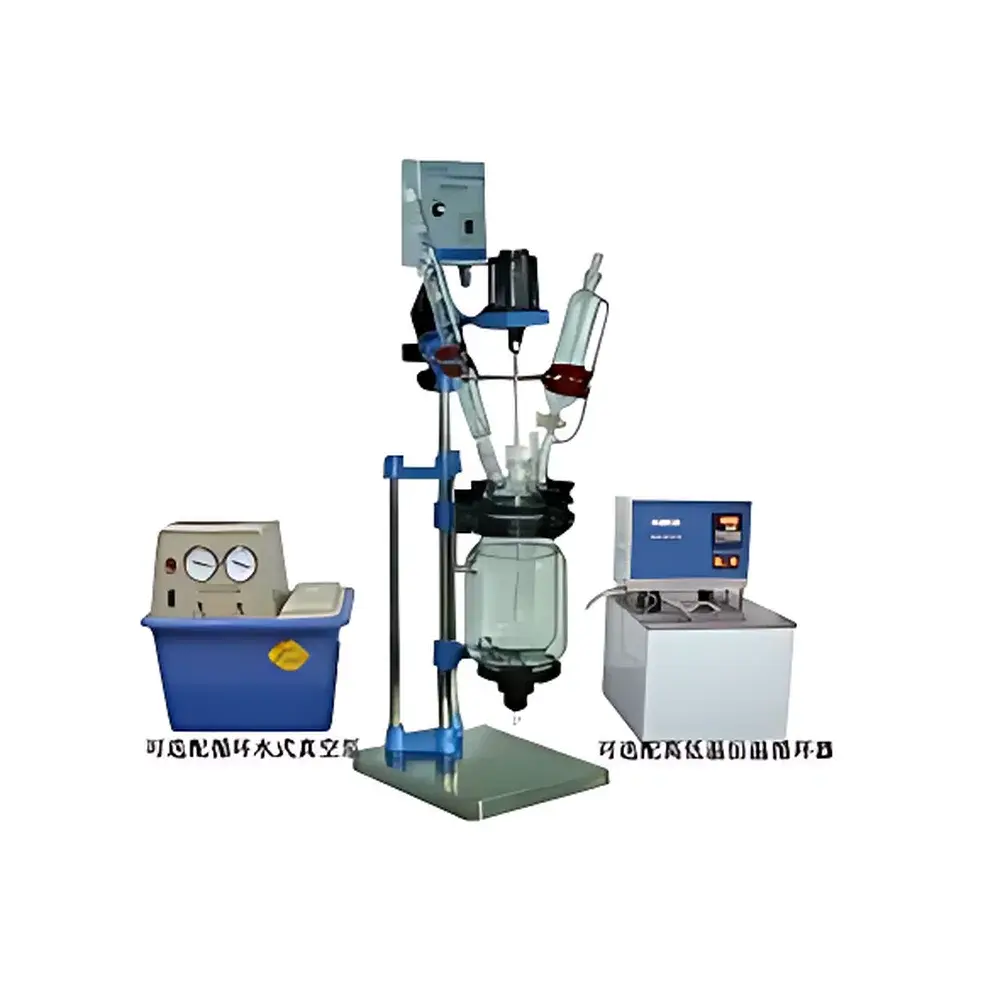
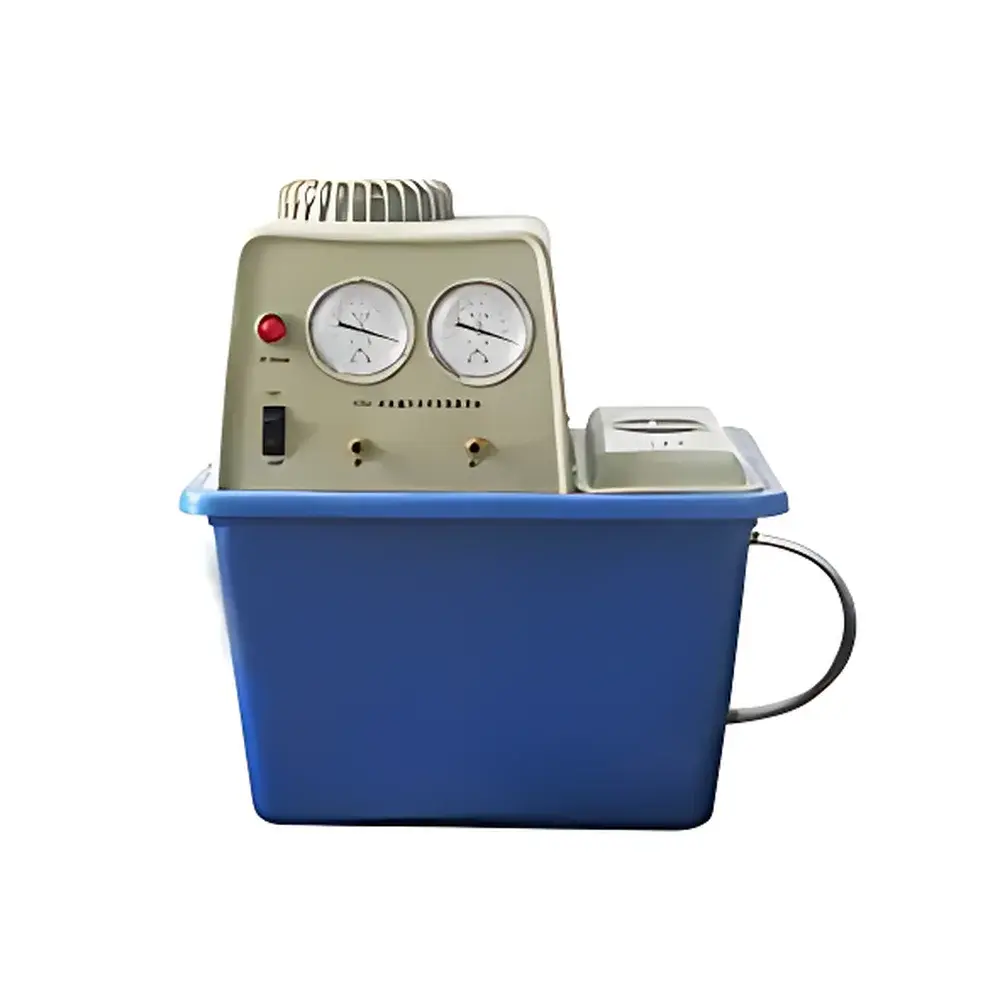
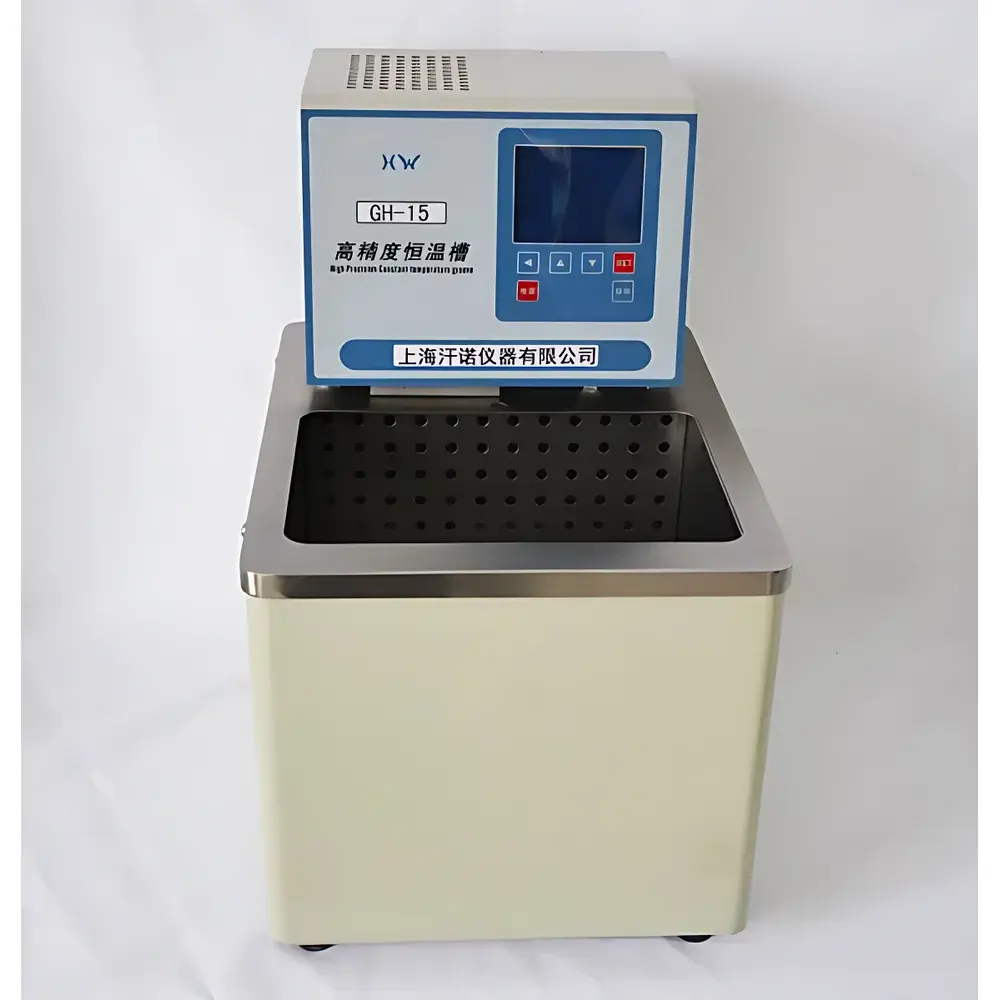
Hanuo HN-5L Dual-Jacketed Glass Reactor
| Brand | Hanuo |
|---|---|
| Origin | Shanghai, China |
| Manufacturer Type | Authorized Distributor |
| Origin Category | Domestic (China) |
| Model | HN-5L |
| Price | USD 2,780 (FOB Shanghai) |
| Usable Volume | 5 L |
| Vessel Material | High-Borosilicate Glass (3.3) |
| Operating Pressure Range | Atmospheric to -0.098 MPa (gauge) |
| Jacket Inlet/Outlet | Standard 1/2" NPT |
| Temperature Range (Jacket) | -80 °C to +200 °C (with compatible heat transfer fluid) |
| Stirring Motor | AC Gear Motor, 180 W, 50–600 rpm, 300 N·cm max torque |
| Temperature Sensor | Pt100 RTD, ±0.3 °C accuracy |
| Sealing | Mechanical Seal with PTFE Stator/Rotor, DIN/ISO-compliant face seal design |
| Frame | Stainless Steel (304), Mobile Column-Type Support with Locking Casters |
| Lid Configuration | 5-Port Standard Ground-Glass Joint (NS29/32 & NS24/29) |
| Bottom Discharge | PTFE Plug Valve with ISO-KF Flange Interface |
| Vacuum Compatibility | Validated for continuous operation at ≤ –0.098 MPa (≤ 2 mbar abs) |
| Optional | ATEX-certified Explosion-Proof Motor (IECEx / CNEx certified) |
Overview
The Hanuo HN-5L Dual-Jacketed Glass Reactor is an engineered laboratory-scale synthesis platform designed for controlled chemical reaction, temperature-sensitive catalysis, solvent reflux, and vacuum-assisted distillation. Built upon the Couette flow principle—where precise rotational shear is applied to reaction media via a centrally driven impeller—the system enables reproducible mixing under defined thermal and pressure conditions. Its double-walled borosilicate glass vessel (DIN ISO 3585, Pyrex®-equivalent) provides full visual process monitoring while maintaining structural integrity across a wide thermal gradient (–80 °C to +200 °C jacket range). The reactor operates safely in ambient, pressurized (up to 0.2 MPa gauge with optional pressure-rated lid), or high-vacuum modes (down to 2 mbar absolute), making it suitable for air/moisture-sensitive chemistry, low-boiling-point solvent recovery, and crystallization studies.
Key Features
- High-borosilicate glass (BSG 3.3) construction ensures exceptional thermal shock resistance (ΔT ≥ 150 °C), low thermal expansion (3.3 × 10⁻⁶/K), and broad chemical compatibility—including resistance to concentrated acids, alkalis, and organic solvents per ASTM E438 Type I, Class A.
- Integrated Pt100 platinum resistance thermometer with digital readout (0.1 °C resolution) mounted directly in the reaction zone enables real-time, traceable temperature feedback—critical for kinetic studies and exothermic reaction control.
- PTFE-coated dual-blade impeller (standard) delivers uniform radial and axial flow profiles across viscosity ranges from 1 mPa·s (water-like) to >50,000 mPa·s (polymer melts), minimizing vortex formation and dead zones.
- Hermetic mechanical seal assembly features graphite-faced stationary ring and PTFE-impregnated rotating ring, rated for continuous operation at –0.098 MPa and 150 °C—validated per ISO 21049 (API 682) Category 1 criteria.
- Modular 5-port ground-glass lid (NS29/32 × 3, NS24/29 × 2) accommodates condenser, addition funnel, thermometer sleeve, inert gas inlet, and vacuum line—enabling Schlenk-line integration and strict anaerobic protocols.
- Stainless steel (AISI 304) mobile frame includes height-adjustable column, leveling feet, and industrial-grade casters with brake locks—designed for stable placement on fume hood benches or dedicated reactor islands.
Sample Compatibility & Compliance
The HN-5L supports heterogeneous, homogeneous, and catalytic reactions involving organic, inorganic, organometallic, and biopolymer systems. Its transparent vessel allows direct observation of phase separation, precipitate formation, color change, and emulsion stability. All wetted surfaces comply with USP and EP 3.1.1 for glassware used in pharmaceutical development. Vacuum performance meets ISO 2859-1 sampling plans for leak integrity verification; mechanical seal longevity is validated per ASTM D3763 impact testing. When equipped with optional ATEX/IECEx-certified motor (Category 2G, Zone 1), the system conforms to EU Directive 2014/34/EU for use in potentially explosive atmospheres.
Software & Data Management
While the base configuration operates via analog controls (digital RPM display, manual thermostat), optional RS485 Modbus RTU interface enables integration with LabVIEW™, DeltaV™, or custom SCADA platforms. Temperature and agitation data can be logged at 1 Hz intervals with timestamping compliant with FDA 21 CFR Part 11 requirements when paired with validated third-party acquisition software. Audit trails, user access levels, and electronic signatures are supported through compatible LIMS extensions—ensuring GLP/GMP traceability during method development and tech transfer.
Applications
- Fine chemical synthesis: Grignard reactions, lithium–halogen exchange, hydrogenations (with Pd/C or Raney Ni under H₂ blanket)
- Pharmaceutical intermediate production: Crystallization optimization, polymorph screening, API salt formation under controlled supersaturation
- Materials science: Sol–gel processing of silica nanoparticles, conductive polymer emulsion polymerization, MOF synthesis under reflux/vacuum
- Agrochemical R&D: Formulation stability testing, hydrolysis kinetics under accelerated aging (40–60 °C, pH-controlled)
- Academic research: Reaction calorimetry (via jacket ΔT monitoring), residence time distribution analysis using tracer dyes
FAQ
What is the maximum allowable jacket temperature when using silicone oil as heat transfer fluid?
Silicone oil (e.g., Dow Corning 200 Fluid, 50 cSt) permits continuous operation up to +200 °C in the jacket; however, glass thermal stress limits recommend maintaining ΔT between jacket and contents below 120 °C.
Can this reactor be used for hydrogenation with palladium on carbon under 3 bar H₂ pressure?
No—the standard HN-5L is rated only for vacuum and atmospheric pressure. For pressurized hydrogenation, a reinforced SS-clad variant with ASME Section VIII Div. 1 certification and magnetic coupling drive is required.
Is the Pt100 probe calibrated and supplied with a certificate of calibration?
Yes—each unit ships with a factory-calibrated Pt100 sensor traceable to NIST standards; a UKAS-accredited calibration certificate is available upon request (additional lead time applies).
How is cleaning validation performed for multi-product use in GMP environments?
The fully drainable design (zero-dead-leg bottom valve + smooth internal contours) supports rinse efficacy studies per ICH Q5C; residue detection limits are verified using TOC or HPLC-UV methods following EMA Guideline on Setting Health-Based Exposure Limits.
Related Products



