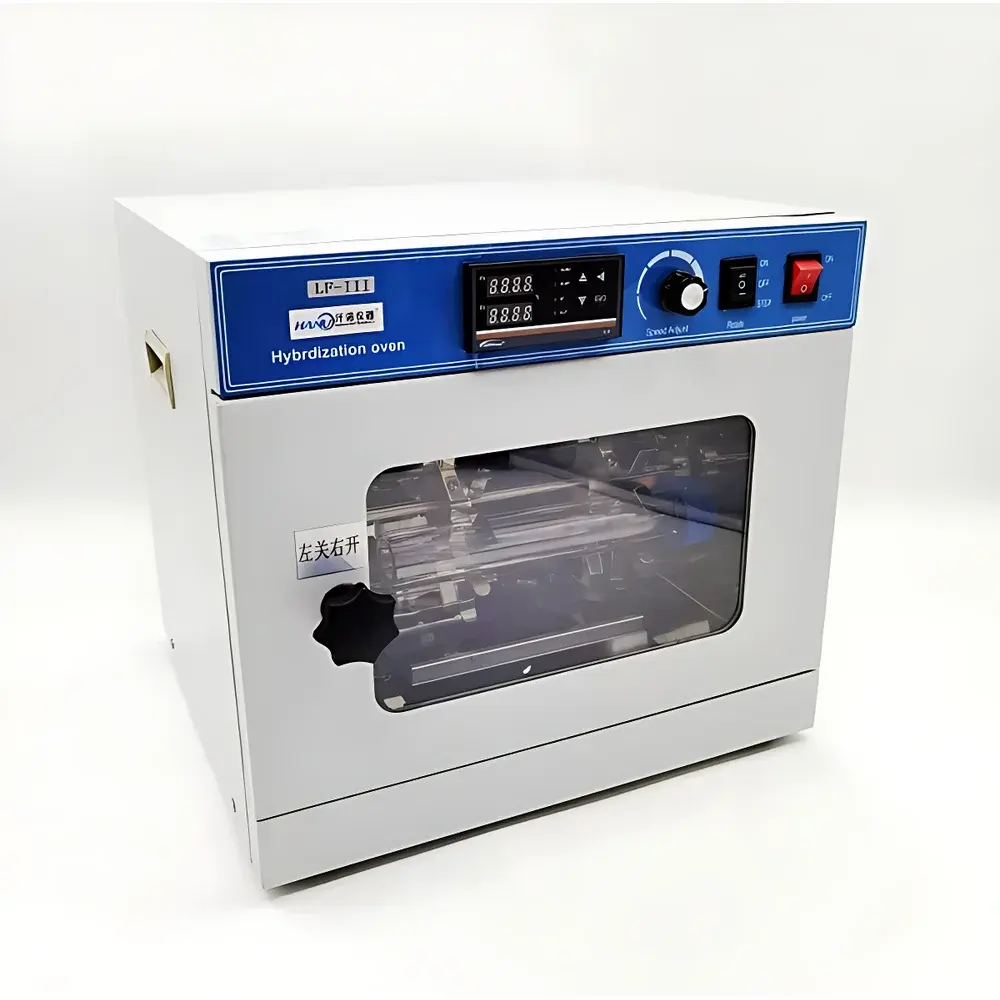
Hanuo LF-III Molecular Hybridization Instrument
| Brand | Hanuo |
|---|---|
| Origin | Shanghai, China |
| Manufacturer Type | Authorized Distributor |
| Product Category | Domestic |
| Model | LF-III |
| Instrument Type | Nucleic Acid Molecular Hybridization Instrument |
| Temperature Control Range | Room Temperature + 5 °C to 100 °C |
| Temperature Uniformity | ±0.03 °C |
| Rotational Speed | 5–20 rpm (continuously adjustable) |
| Capacity | 6 membranes/slides/plates |
| Buffer Volume Compatibility | Not applicable (tube-based hybridization) |
| Temperature Accuracy | ±0.5 °C |
| Temperature Resolution | 0.1 °C |
| Thermal Equilibration Time | <20 min |
| Tube Dimensions | Ø35 × 220 mm (optional) |
| Dimensions (L×W×H) | 420 × 380 × 380 mm |
| Power Supply | 220 VAC, 50 Hz |
| Power Consumption | <600 VA |
| Net Weight | 21 kg |
Overview
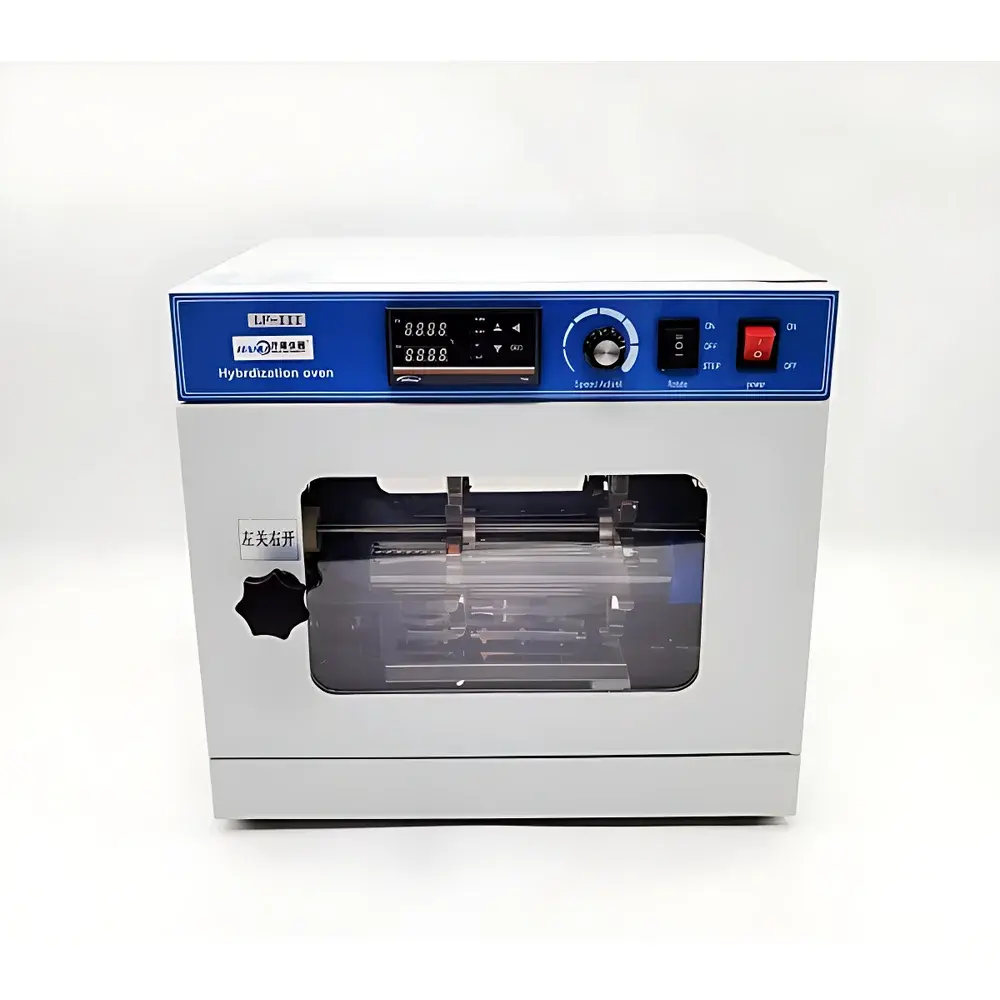
The Hanuo LF-III Molecular Hybridization Instrument is an engineered platform designed for precise, reproducible nucleic acid hybridization under controlled thermal and mechanical conditions. It operates on the fundamental principle of nucleic acid annealing—where complementary DNA or RNA strands form stable duplexes through Watson–Crick base pairing—under optimized temperature, time, and agitation parameters. Unlike static incubation systems, the LF-III employs gentle, continuous rotation to ensure uniform reagent contact across solid-phase supports (e.g., nylon or nitrocellulose membranes, glass slides, or microtiter plates), minimizing edge effects and enhancing hybridization efficiency and signal-to-noise ratio. Its architecture supports both classical Southern/Northern blotting workflows and modern applications such as in situ hybridization (ISH) probe incubation, antibody-based detection steps in ELISA-like assays, and post-PCR hybridization for allele-specific or pathogen-targeted diagnostics.
Key Features
- Programmable temperature control from room temperature +5 °C to 100 °C with ±0.5 °C accuracy and exceptional uniformity (±0.03 °C across the chamber), ensuring consistent denaturation, annealing, and stringent wash conditions.
- Gentle, continuously adjustable rotational speed (5–20 rpm) optimized to prevent membrane displacement while maximizing buffer exchange kinetics and probe accessibility—critical for low-abundance target detection.
- Simultaneous processing of up to six hybridization substrates (membranes, slides, or microplates), supporting parallel assay development and high-throughput validation studies.
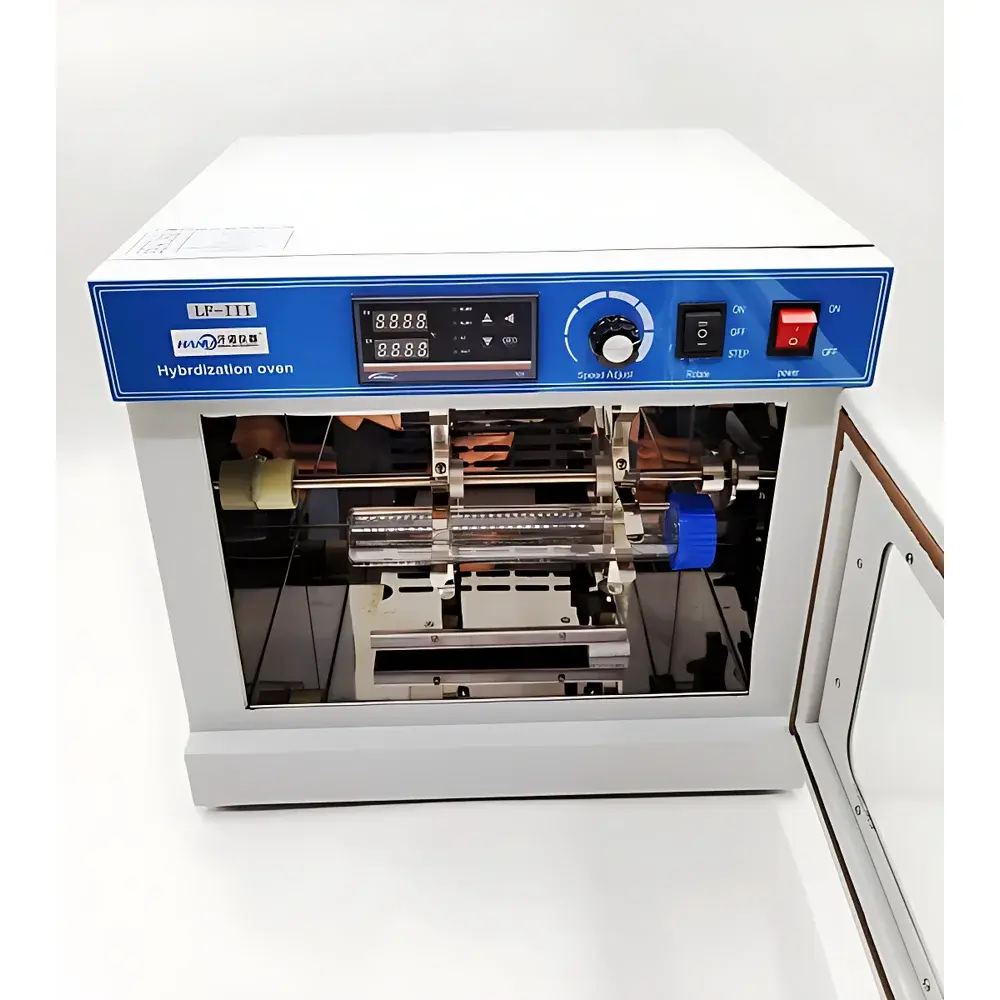
- Robust stainless-steel chamber and precision-machined rotor assembly engineered for 24-hour unattended operation, validated for long-duration hybridization protocols (e.g., overnight prehybridization or extended probe binding).
- Intuitive digital interface with real-time temperature display (0.1 °C resolution), programmable ramp rates, and timer-based endpoint control—enabling full protocol traceability in GLP-compliant environments.
- Compact footprint (420 × 380 × 380 mm) and low power draw (<600 VA) make it suitable for standard laboratory benchtop deployment without dedicated HVAC or electrical infrastructure.
Sample Compatibility & Compliance
The LF-III accommodates standard hybridization tubes (Ø35 × 220 mm, optional), flat-bed membranes (up to 20 × 20 cm), microscope slides (1″ × 3″), and 96-well microplates—supporting widely adopted formats in clinical molecular diagnostics and academic research. Its thermal performance meets ASTM E2251-22 requirements for laboratory incubation equipment verification, and its operational stability aligns with ISO/IEC 17025:2017 criteria for method validation in accredited testing laboratories. While not a regulated medical device, the instrument’s design facilitates compliance with CLIA, CAP, and ISO 15189 quality management systems when integrated into validated nucleic acid testing workflows—particularly for viral load quantification (e.g., HBV, HCV, HIV) and bacterial pathogen identification (e.g., Mycobacterium tuberculosis complex).
Software & Data Management
The LF-III operates via embedded firmware with no external PC dependency; however, its parameter logs—including setpoint, actual temperature, elapsed time, and rotation speed—are timestamped and retained in non-volatile memory for manual review. For laboratories requiring electronic records per FDA 21 CFR Part 11, integration with third-party LIMS or ELN platforms can be achieved via RS-232 serial output (optional adapter). All user-defined protocols are password-protected and support audit trail generation, satisfying core GLP/GMP documentation requirements for assay reproducibility and instrument qualification (IQ/OQ/PQ).
Applications
- High-stringency DNA–DNA and DNA–RNA hybridization in Southern and Northern blotting.
- Probe incubation for fluorescence in situ hybridization (FISH) and chromogenic in situ hybridization (CISH).
- Blocking and antibody incubation steps in enzyme-linked immunoassays (ELISA) and immunoblotting workflows.
- Post-PCR hybridization for line probe assays (LiPA) used in drug resistance genotyping (e.g., M. tuberculosis rpoB mutations).
- Development and optimization of rapid nucleic acid lateral flow assays requiring controlled thermal activation.
- Quality control of labeled probes and oligonucleotide arrays prior to commercial use.
FAQ
What types of hybridization substrates are supported?
The LF-III accepts standard nitrocellulose/nylon membranes (up to 20 × 20 cm), standard microscope slides (1″ × 3″), 96-well microplates, and optional Ø35 × 220 mm hybridization tubes.
Is the instrument compatible with stringent wash protocols after hybridization?
Yes—the precise temperature control and uniform chamber environment allow direct integration of post-hybridization wash steps at elevated temperatures (e.g., 65 °C with 0.1× SSC/0.1% SDS), eliminating the need for transfer to external water baths.
Does the LF-III support temperature ramping or multi-step programs?
It supports single-setpoint incubation with programmable duration; multi-step gradients require external sequencing via timed manual intervention or integration with programmable environmental controllers.
Can the rotation speed be calibrated or verified independently?
Rotation speed is factory-calibrated using optical tachometry and documented in the instrument’s Certificate of Conformance; users may verify performance using a handheld digital tachometer aligned with the rotor shaft.
What maintenance is required for long-term reliability?
Routine cleaning of the chamber interior and rotor surface with 70% ethanol; annual verification of temperature uniformity and accuracy using NIST-traceable PT100 probes is recommended for regulated environments.
Related Products