
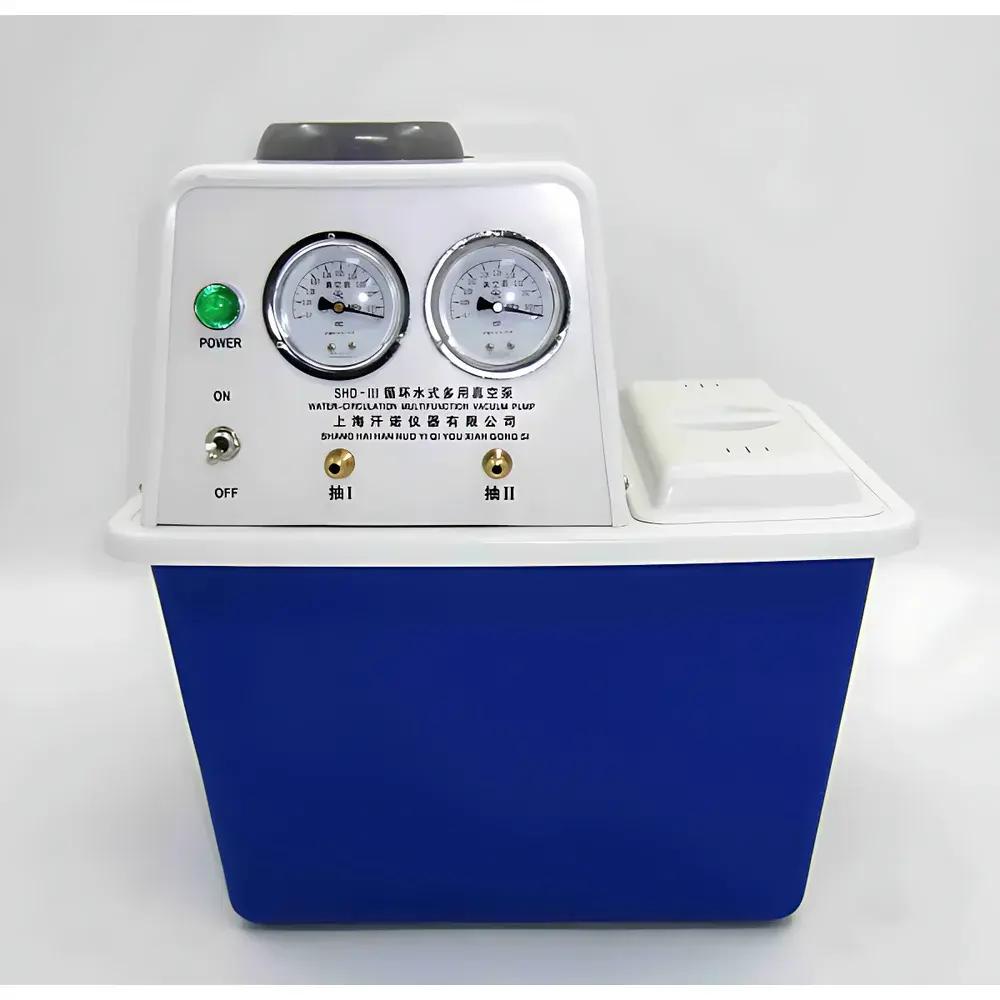
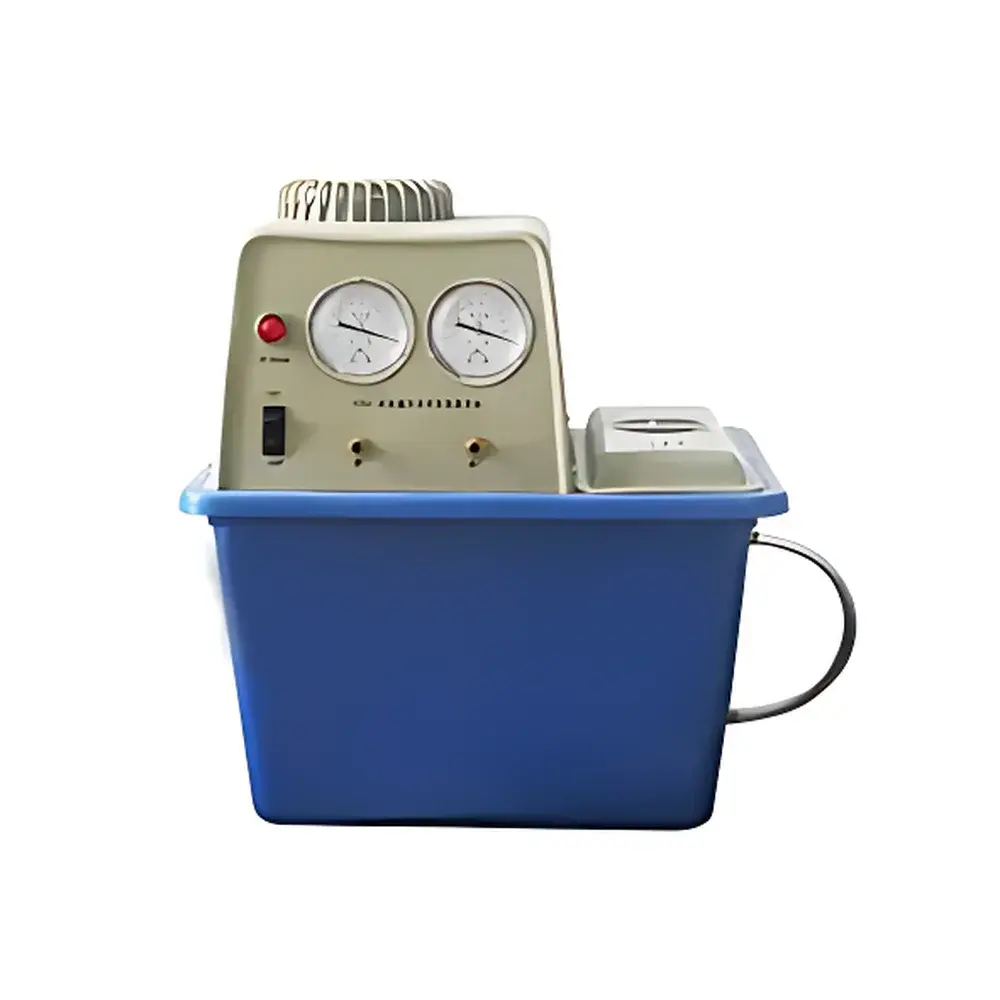
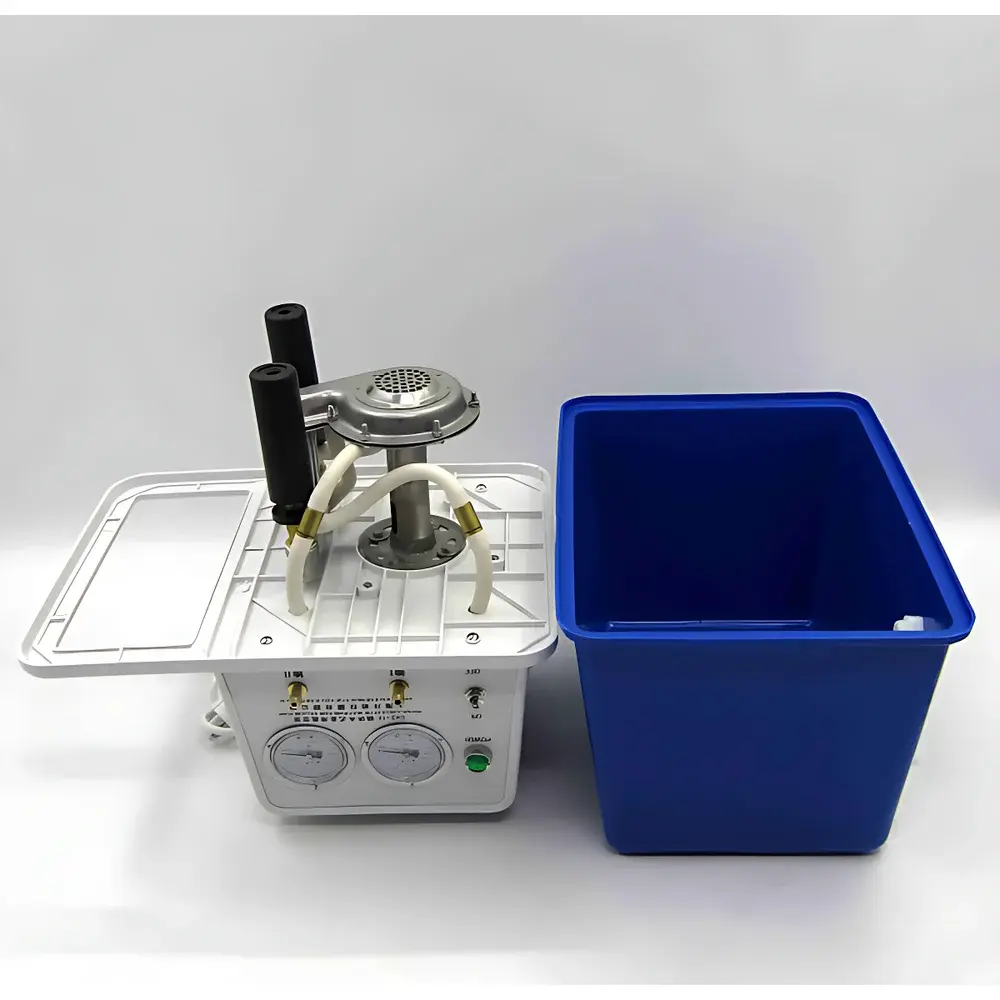
Hanuo SHD-III Circulating Water Vacuum Pump
| Brand | Hanuo |
|---|---|
| Origin | Shanghai, China |
| Manufacturer Type | Authorized Distributor |
| Country of Origin | China |
| Model | SHD-III |
| Instrument Type | Circulating Water Vacuum Pump |
| Product Type | Oil-Free Vacuum Pump |
| Air Displacement Rate | 15 L/min |
| Ultimate Vacuum | 0.098 MPa |
| Single-Head Flow Rate | 10 L/min |
| Water Reservoir Capacity | 15 L |
| Circulation Flow Rate | 80 L/min |
| Pump Head | 12 m |
| Motor Power | 180 W |
| Housing Material | Corrosion-Resistant Engineering Plastic |
| Power Supply | 220 V / 50 Hz |
| Noise Reduction | Integrated Fluid Silencer |
| Optional Accessory | Vacuum Regulating Valve |
Overview
The Hanuo SHD-III Circulating Water Vacuum Pump is an oil-free, water-sealed vacuum source engineered for stable, low-noise operation in laboratory environments where chemical compatibility and operational reliability are critical. It operates on the principle of water-ring vacuum generation: rotating impellers displace water within a cylindrical chamber to create sealed cavities that expand and contract, thereby drawing gas from connected apparatus (e.g., rotary evaporators, vacuum filtration manifolds, or distillation setups) and expelling it through the exhaust port. Unlike mechanical or diaphragm pumps, the SHD-III eliminates hydrocarbon contamination risk and avoids lubricant degradation when exposed to organic vapors—making it especially suitable for solvent-intensive applications such as rotary evaporation of ethanol, acetone, or ethyl acetate. Its ultimate vacuum capability of 0.098 MPa (equivalent to ~20 mbar absolute pressure) meets standard requirements for most benchtop concentration and purification workflows under ambient conditions.
Key Features
- Dual independent vacuum ports with individual pressure gauges—enabling simultaneous operation of two instruments or staged vacuum control via optional regulating valve.
- Stainless steel impeller and pump core housed within a corrosion-resistant engineering plastic chassis—providing long-term resistance to acidic, alkaline, and organic media commonly encountered in chemistry labs.
- Integrated fluid silencer design minimizes turbulence-induced noise during water circulation, reducing operational sound pressure to <52 dB(A) at 1 m distance—critical for shared lab spaces and QA/QC environments.
- 15 L polypropylene-based reservoir with integrated ice-chilling port—supports temperature-sensitive vacuum applications by enabling direct addition of ice packs or chilled coolant to maintain sub-25 °C water temperature and improve vapor pressure stability.
- High-efficiency 180 W motor delivering 80 L/min circulation flow and 12 m hydraulic head—ensuring consistent water velocity across multi-port configurations without flow starvation or thermal drift.
- Modular construction with non-slip rubber feet and integrated carry handle—facilitating repositioning between fume hoods, glove boxes, or mobile lab carts without tools or disassembly.
Sample Compatibility & Compliance
The SHD-III is compatible with all standard ground-glass jointed vacuum apparatus (e.g., BUCHI, IKA, and Heidolph rotary evaporators) via 6 mm or 8 mm ID tubing connections. Its water-sealed architecture inherently prevents cross-contamination between samples, satisfying GLP-aligned sample integrity protocols. While not certified to ISO 8573 (compressed air purity) or FDA 21 CFR Part 11 (as it lacks digital data logging), its mechanical design conforms to IEC 61000-6-3 (EMC emission limits) and IEC 60335-1 (general safety requirements for household and similar electrical appliances). For regulated environments, users may integrate external vacuum sensors and data loggers compliant with ASTM D896-22 (standard test method for vacuum stability in rotary evaporation systems).
Software & Data Management
The SHD-III is a standalone analog device with no embedded firmware, touchscreen interface, or network connectivity. All operational parameters—including vacuum level, flow status, and motor runtime—are monitored manually via dual Bourdon-tube vacuum gauges (0–0.1 MPa range, ±1.5% FS accuracy) and visual water-level indicators. This analog architecture ensures electromagnetic immunity in high-RF environments (e.g., adjacent NMR or microwave synthesis units) and eliminates cybersecurity or firmware update dependencies. For laboratories requiring audit-ready records, third-party pressure transducers (e.g., Keller PA-23Y) and USB data loggers (e.g., Omega OM-DAQPRO-5300) can be installed upstream to capture time-stamped vacuum profiles compliant with internal SOPs or ISO/IEC 17025 documentation standards.
Applications
- Routine solvent removal using rotary evaporators in synthetic organic chemistry and natural product isolation.
- Vacuum-assisted gravity filtration of crystalline precipitates or catalyst residues in pharmaceutical development labs.
- Controlled degassing of polymer precursor solutions prior to casting or electrospinning.
- Low-pressure drying of heat-labile biomolecules (e.g., peptides, oligonucleotides) in lyophilization pre-chamber staging.
- Supporting vacuum-jacketed condensers in fractional distillation assemblies for high-boiling-point compound purification.
- Providing primary vacuum for small-scale vacuum ovens (<50 L volume) used in moisture content validation per USP <921>.
FAQ
What is the maximum permissible inlet temperature for the circulating water?
The SHD-III is rated for continuous operation with inlet water temperatures between 5 °C and 30 °C. Exceeding 30 °C reduces vapor pressure margin and may compromise ultimate vacuum performance.
Can the SHD-III be used with aggressive solvents such as chloroform or THF?
Yes—the stainless steel impeller and PP/ABS composite housing resist swelling and stress cracking when exposed to halogenated and ether-based solvents, provided condensation traps are installed upstream to prevent liquid backstreaming.
Is periodic water replacement required during extended operation?
Yes. To maintain stable vacuum and prevent mineral buildup or microbial growth, replace reservoir water every 8–12 hours of continuous use—or more frequently if operating above 25 °C ambient temperature.
Does the SHD-III meet CE or UL safety certification?
It complies with GB 4706.1–2005 (Chinese national standard equivalent to IEC 60335-1), but does not carry CE or UL marks. Users in EU or North America must verify local regulatory acceptance prior to installation.
How is vacuum level adjusted when using dual heads?
Vacuum is inherently shared across both ports. For independent control, install inline vacuum regulators (e.g., Swagelok VCR-type valves) on each outlet line—calibrated against the built-in gauges for reproducible setpoints.



