
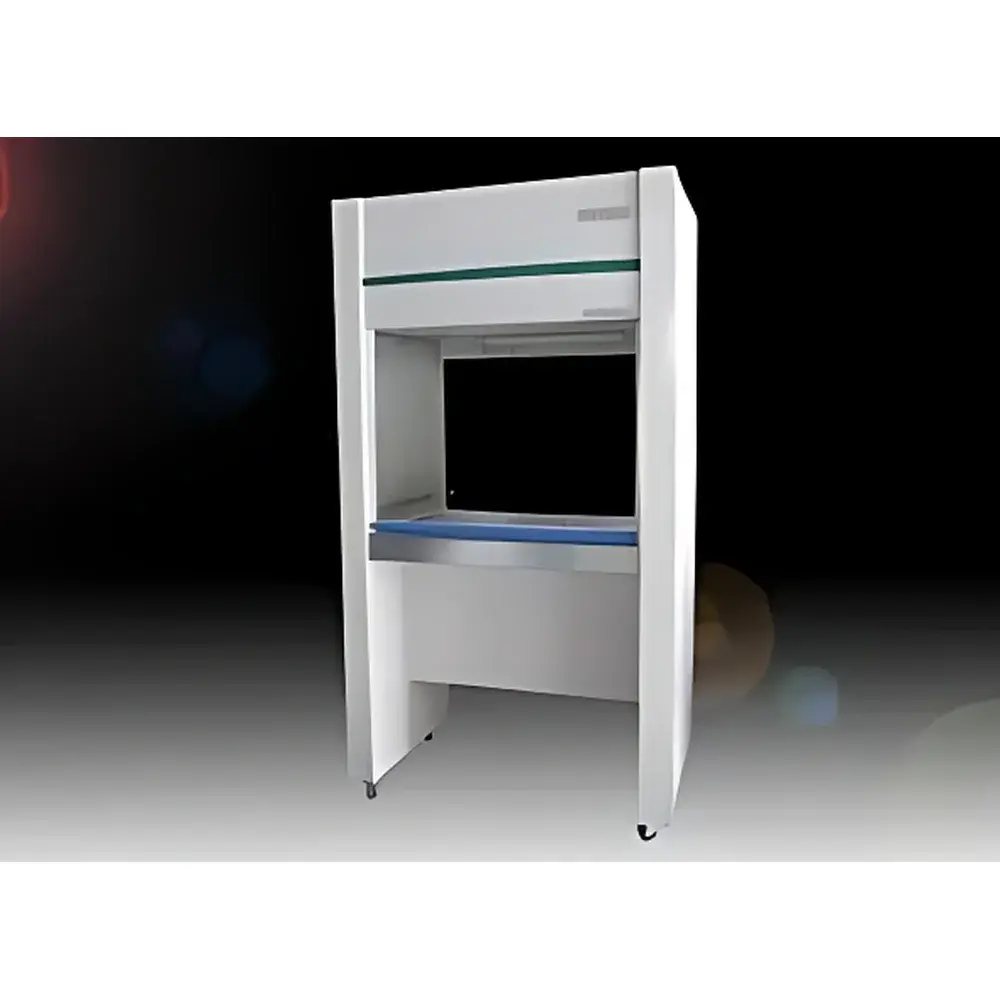
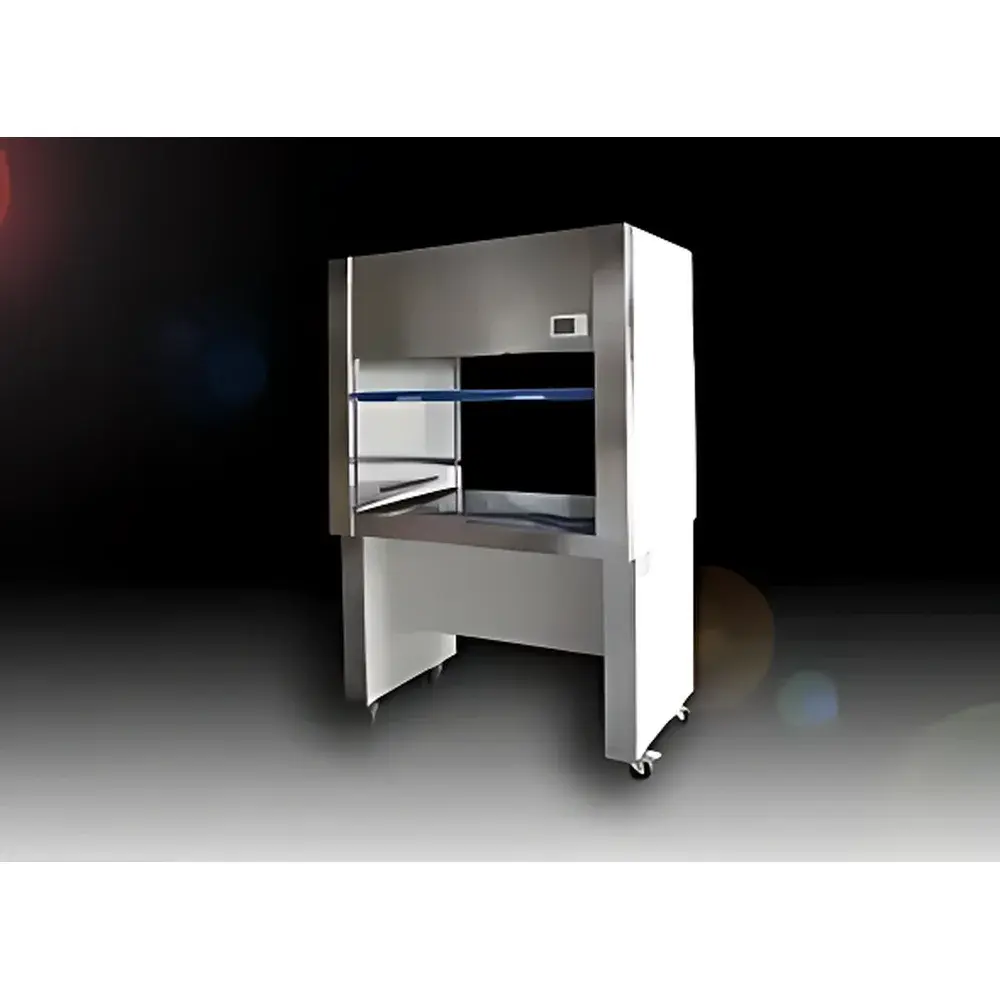
Hanuo SW-CJ-1D Vertical Flow Clean Bench
| Brand | Hanuo |
|---|---|
| Origin | Shanghai, China |
| Model | SW-CJ-1D |
| Instrument Category | Vertical Flow Clean Bench |
| Cleanliness Class | ISO Class 5 (equivalent to Fed. Std. 209E Class 100 @ ≥0.5 µm) |
| Microbial Count | ≤0.5 CFU/plate·hour (90 mm Petri dish) |
| Average Air Velocity | 0.3–0.6 m/s (adjustable) |
| Noise Level | ≤58 dB(A) |
| Illumination | ≥300 lx |
| Vibration Half-Peak | ≤3 µm |
| Power Supply | AC 220 V / 50 Hz |
| Power Consumption | 0.4 kW |
| Work Area Dimensions | 870 × 680 × 520 mm (W × D × H) |
| User Capacity | Single-operator, single-face configuration |
| Airflow Pattern | Vertical downflow |
Overview
The Hanuo SW-CJ-1D is a vertically oriented laminar flow clean bench engineered for localized particulate and microbial control in non-sterile but contamination-sensitive laboratory environments. It operates on the principle of unidirectional vertical laminar airflow—filtered through a high-efficiency particulate air (HEPA) filter (typically H14, ≥99.995% efficiency at 0.3 µm)—to deliver ISO Class 5 (Fed. Std. 209E Class 100) air quality within the work area. Unlike biological safety cabinets, this unit provides product protection only—not personnel or environmental protection—as it lacks recirculation containment and negative pressure design. Its primary function is to maintain a low-particulate microenvironment for aseptic handling of non-hazardous samples in applications such as cell culture preparation, reagent dispensing, optical component assembly, and pharmaceutical formulation staging.
Key Features
- Vertically downward laminar airflow ensures consistent particle removal from the work surface, minimizing turbulence-induced cross-contamination.
- Adjustable airflow velocity (0.3–0.6 m/s) via multi-stage electronic fan control, enabling optimization for varying procedural requirements—including heat-sensitive operations or volatile solvent use.
- Front sash with semi-enclosed tempered glass design reduces external air intrusion while permitting operator access and visual monitoring; integrated LED status indicators provide real-time operational feedback.
- Stainless steel 304 work surface and interior chamber walls ensure corrosion resistance, ease of decontamination, and compliance with routine cleaning protocols using ethanol, isopropanol, or quaternary ammonium agents.
- Dedicated 2 kW power outlet (10 A, grounded) located within the work area supports concurrent use of auxiliary equipment such as pipette controllers, centrifuges, or small incubators without external extension cords.
- Low-noise operation (≤58 dB[A]) and ≥300 lx illumination meet standard ergonomic benchmarks for extended daily use in shared laboratory spaces.
Sample Compatibility & Compliance
The SW-CJ-1D is suitable for handling non-pathogenic, non-toxic, and non-volatile materials across disciplines including microbiology, molecular biology, semiconductor packaging, and precision optics assembly. It complies with ISO 14644-1:2015 for cleanroom performance classification and aligns with the airflow and filtration requirements specified in ISO 14644-3:2019 for cleanbench validation. While not certified for biosafety level (BSL) containment, its ISO Class 5 performance is routinely verified per ISO 14644-2:2015 using particle counters and viable air sampling (e.g., settle plates per ISO 14698-1). The unit satisfies general Good Laboratory Practice (GLP) infrastructure expectations for non-sterile aseptic technique support and may be included in facility qualification documentation for ISO/IEC 17025-accredited testing laboratories.
Software & Data Management
This clean bench operates as a standalone mechanical system with no embedded firmware, network interface, or digital data logging capability. All controls—including fan speed selection and lighting activation—are executed via infrared remote or front-panel tactile switches. As such, it requires no software validation, cybersecurity configuration, or electronic audit trail. Its simplicity supports regulatory flexibility in environments where electronic record integrity (e.g., FDA 21 CFR Part 11) is not mandated for ancillary infrastructure. Routine maintenance logs—including HEPA filter replacement dates, airflow verification results, and disinfection records—must be maintained manually per institutional SOPs.
Applications
- Preparation of sterile media, buffers, and diluents prior to autoclaving or filtration.
- Aseptic transfer of bacterial or fungal cultures during routine identification workflows.
- Assembly and inspection of microelectronic components under low-particulate conditions.
- Handling of sensitive optical elements (e.g., lenses, filters, laser diodes) to prevent dust adhesion.
- Non-hazardous chemical weighing and volumetric preparation in QC/QA labs adhering to USP environmental guidelines for low-risk compounding.
- Supporting ISO 8573-1 Class 3 compressed air testing setups where ambient particulate interference must be minimized.
FAQ
Does the SW-CJ-1D provide protection against biohazards or toxic vapors?
No. This unit offers product-only protection and must not be used for handling infectious agents, radioactive materials, or volatile organic compounds.
What HEPA filter standard does it use?
It employs an H14-class HEPA filter compliant with EN 1822-1:2019, providing ≥99.995% particle capture efficiency at the most penetrating particle size (MPPS) of 0.3 µm.
How often should the HEPA filter be replaced?
Filter service life depends on ambient air quality and usage frequency; typical replacement intervals range from 12 to 24 months, confirmed by annual airflow and particle count validation.
Can it be installed in a room without HVAC supply air?
Yes—but ambient room air must meet minimum ISO Class 8 (100,000) cleanliness to avoid premature HEPA loading; excessive dust or humidity will reduce filter lifespan and compromise performance.
Is electrical certification provided for international markets?
The unit carries CCC certification for the Chinese market; CE marking or UL listing is not included and must be arranged separately for export deployment.



