
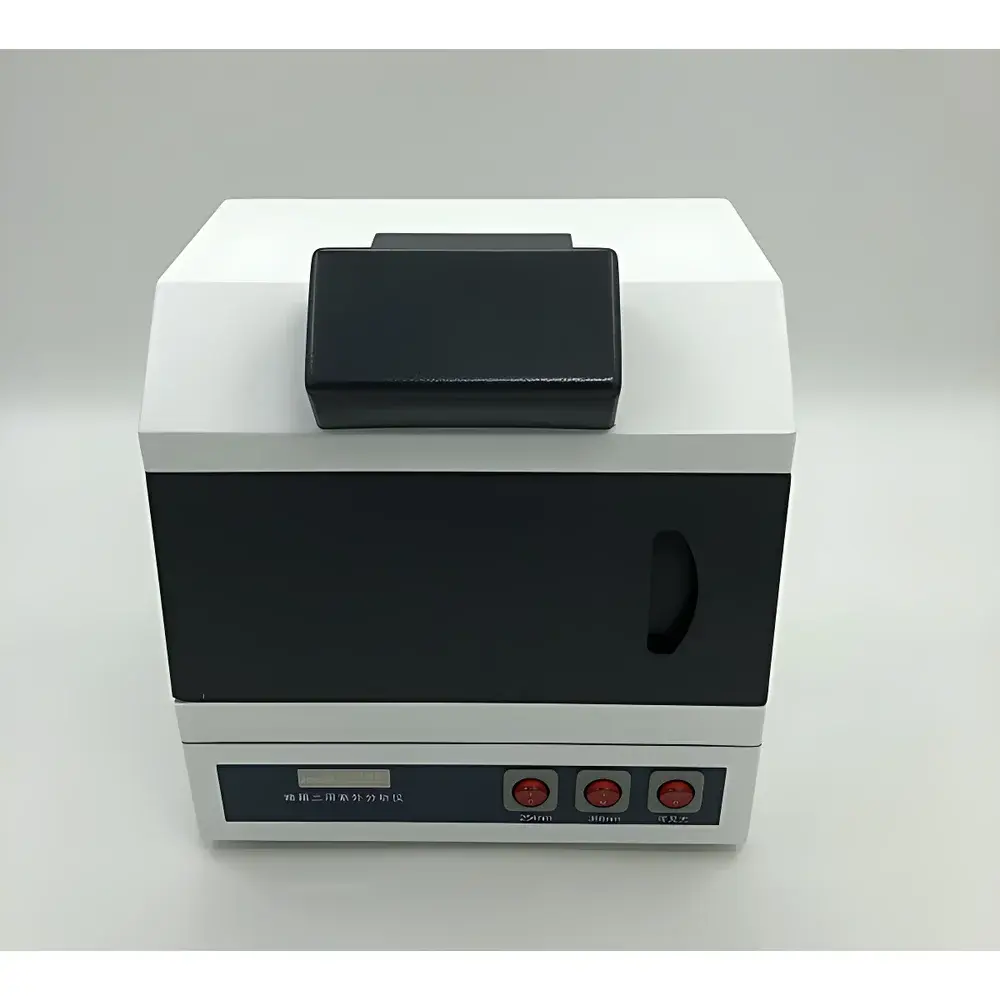
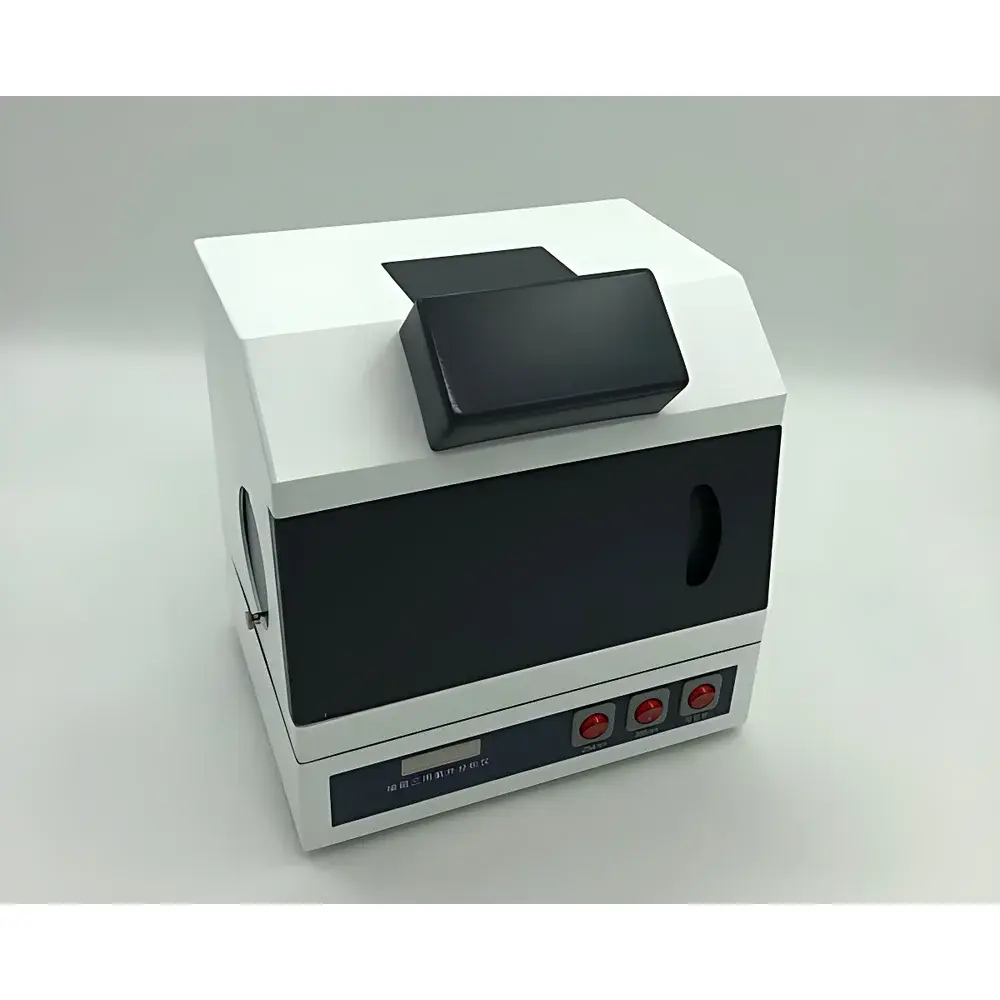
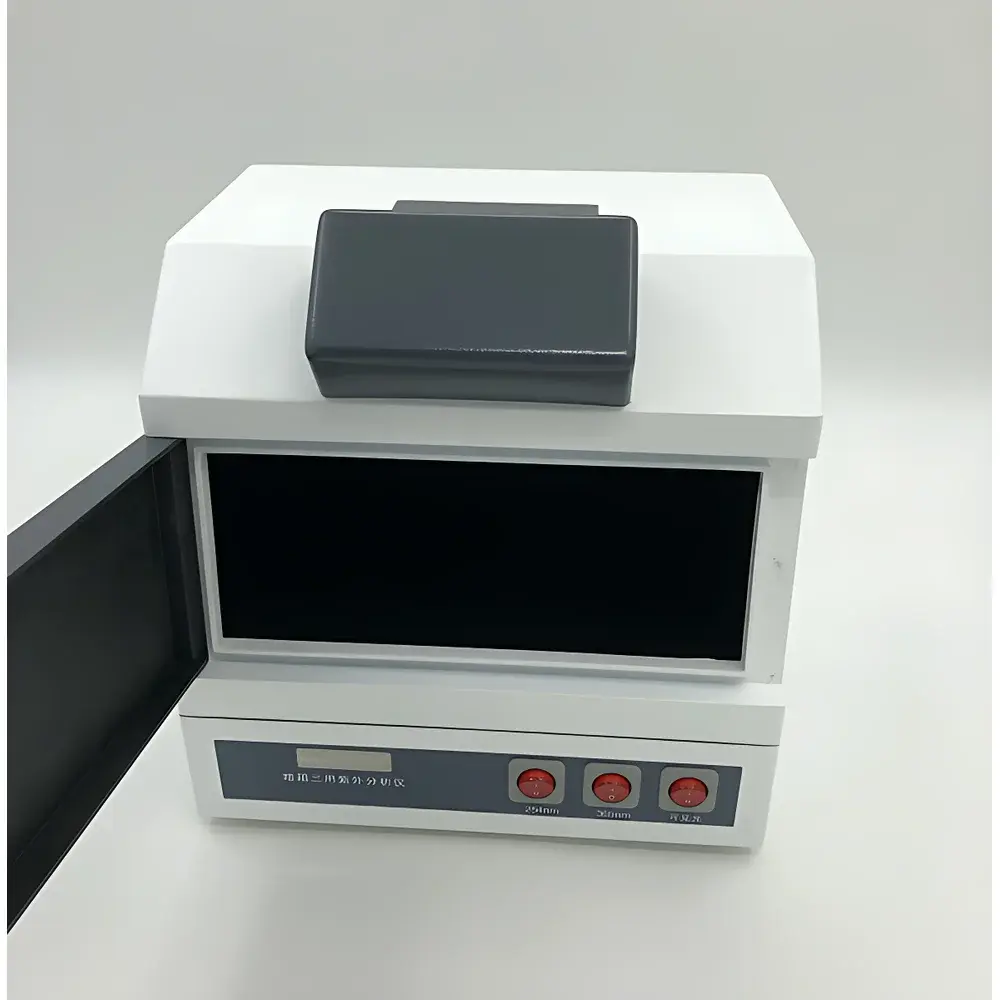
Hanuo ZF-1B Darkroom-Style Triple-Wavelength UV Transilluminator
| Brand | Hanuo |
|---|---|
| Origin | Shanghai, China |
| Model | ZF-1B |
| Instrument Type | Darkroom-style transilluminator |
| Wavelength Modes | 254 nm (short-wave UV), 365 nm (long-wave UV), and visible light (400–700 nm) |
| UV Lamp Configuration | 6 lamps (3 × 254 nm, 3 × 365 nm) |
| Power Rating | 50 W total (254 nm: 18 W |
| 365 nm | 18 W |
| visible | 14 W) |
| UV Filter Glass Dimensions | 200 × 50 mm |
| UV Blocking Efficiency | >95% attenuation of incident UV radiation by front protective window |
Overview
The Hanuo ZF-1B Darkroom-Style Triple-Wavelength UV Transilluminator is a benchtop analytical instrument engineered for safe, high-contrast visualization of nucleic acids, proteins, and fluorescent compounds in life science laboratories. It operates on the principle of ultraviolet-induced fluorescence excitation—where target molecules (e.g., ethidium bromide–stained DNA or SYBR Safe–labeled RNA) absorb UV photons at specific wavelengths and re-emit visible light, enabling real-time detection during gel electrophoresis analysis. Unlike open-frame transilluminators requiring external darkrooms, the ZF-1B integrates a fully enclosed darkroom housing with a UV-blocking viewing window (≥95% attenuation across 200–400 nm), eliminating ambient light interference while protecting users from direct UV exposure. Its triple-wavelength capability—254 nm (optimal for DNA visualization and UV crosslinking), 365 nm (ideal for low-photodamage imaging and TLC plate scanning), and broad-spectrum visible light (for Coomassie- or Ponceau S–stained gels)—provides functional versatility without hardware switching.
Key Features
- Integrated darkroom design with polycarbonate front window incorporating UV-absorbing dopants, compliant with IEC 62471 photobiological safety guidelines for Class 1 UV equipment.
- Modular lamp array: three 254 nm low-pressure mercury lamps (6 W each) and three 365 nm long-wave UV lamps (6 W each), independently switchable to minimize sample photobleaching and optimize signal-to-noise ratio.
- Uniform illumination field achieved via reflective aluminum interior surfaces and optimized lamp spacing—validated by ISO/IEC 17025-accredited calibration protocols for irradiance homogeneity (>85% uniformity across 200 × 50 mm active area).
- Low-heat operation: aluminum heat-sink chassis and passive convection cooling maintain stable lamp output over extended use (rated for continuous operation up to 8 hours).
- Ergonomic hinged lid with gas-assisted lift mechanism ensures smooth access and secure closure; interlock circuit deactivates UV emission when lid is open, meeting EN 61000-6-4 EMC immunity requirements.
Sample Compatibility & Compliance
The ZF-1B supports standard electrophoretic formats including agarose gels (0.5–3.0% w/v), polyacrylamide gels (8–20% T), TLC plates (silica gel 60 F254, aluminum-backed), and paper chromatography sheets. It accommodates common fluorescent dyes (ethidium bromide, GelRed, SYBR Gold, fluorescein, rhodamine B) and native fluorophores (NADH, flavins, chlorophyll). All optical components comply with ISO 10993-5 cytotoxicity standards for lab equipment contact surfaces. The instrument meets CE marking requirements under Directive 2014/30/EU (EMC) and 2014/35/EU (LVD), and its UV output profile aligns with ASTM E2550–21 for UV transilluminator performance verification.
Software & Data Management
While the ZF-1B is a standalone hardware unit without integrated digital imaging, it is fully compatible with third-party documentation systems—including CCD-based gel documentation stations (e.g., Bio-Rad ChemiDoc, Azure Biosystems cSeries) and smartphone-based capture workflows using neutral-density filters. Its consistent spectral output enables reproducible image acquisition across platforms. For GLP/GMP-regulated environments, users may pair the unit with validated image analysis software (e.g., ImageLab, Quantity One) that supports 21 CFR Part 11 audit trails when connected via USB-controlled shutter interfaces (optional accessory).
Applications
- Nucleic acid analysis: rapid post-electrophoresis visualization of DNA/RNA bands in agarose and PAGE gels; estimation of fragment size and concentration via comparative band intensity.
- Thin-layer chromatography (TLC): detection and Rf calculation of pharmaceutical actives (steroids, alkaloids, vitamins), pesticides, and metabolites under 254 nm (quenching) or 365 nm (fluorescence enhancement).
- Quality control in food safety: screening for aflatoxin B1 (fluoresces blue-white at 365 nm on silica plates) and detection of unauthorized fluorescent whitening agents in grains, oils, and dairy products.
- Forensic serology: visualization of latent biological stains (e.g., semen, saliva) treated with alternative light sources and fluorescent reagents such as luminol or leuco crystal violet.
- Materials science: identification of polymer additives (UV stabilizers, antioxidants) and differentiation of synthetic vs. natural fibers based on characteristic fluorescence signatures.
FAQ
Is the ZF-1B suitable for UV crosslinking applications?
Yes—the 254 nm output provides sufficient irradiance for nucleic acid crosslinking to nylon or PVDF membranes (typical dose: 120 mJ/cm²), though dedicated crosslinkers offer higher precision dosimetry.
Can the unit be used with ethidium bromide alternatives like SYBR Safe?
Yes—its 365 nm mode minimizes DNA damage while maintaining high sensitivity for SYBR Safe, GelGreen, and other next-generation dyes.
Does the instrument include calibration documentation?
Factory calibration certificates for lamp intensity and spectral output are available upon request (ISO/IEC 17025 traceable to NIM, China).
What safety certifications does the ZF-1B hold?
CE-marked per EU directives; UV shielding validated per IEC 62471; electrical safety tested to EN 61010-1.
Is replacement filter glass available separately?
Yes—original-specification 200 × 50 mm UV-blocking glass (part no. ZF-FG20050) is stocked and supplied with spectral transmission data sheet.




