
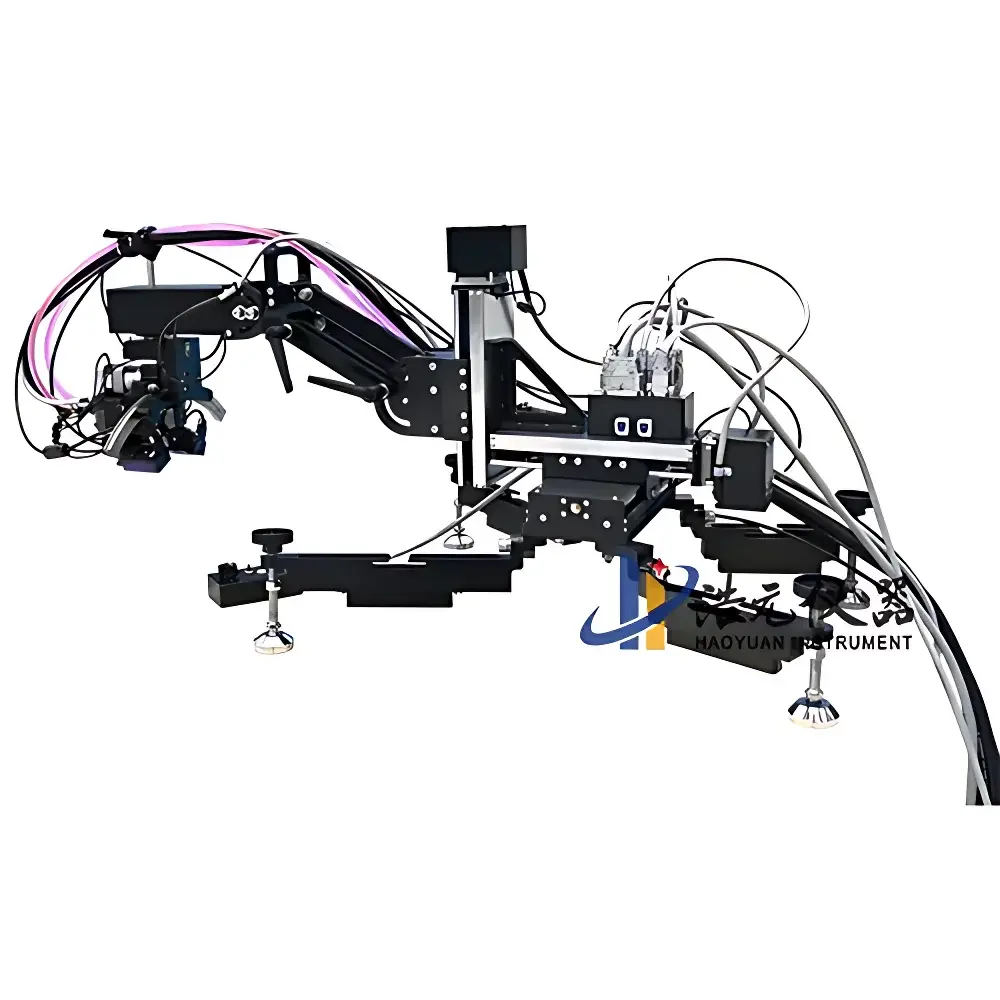
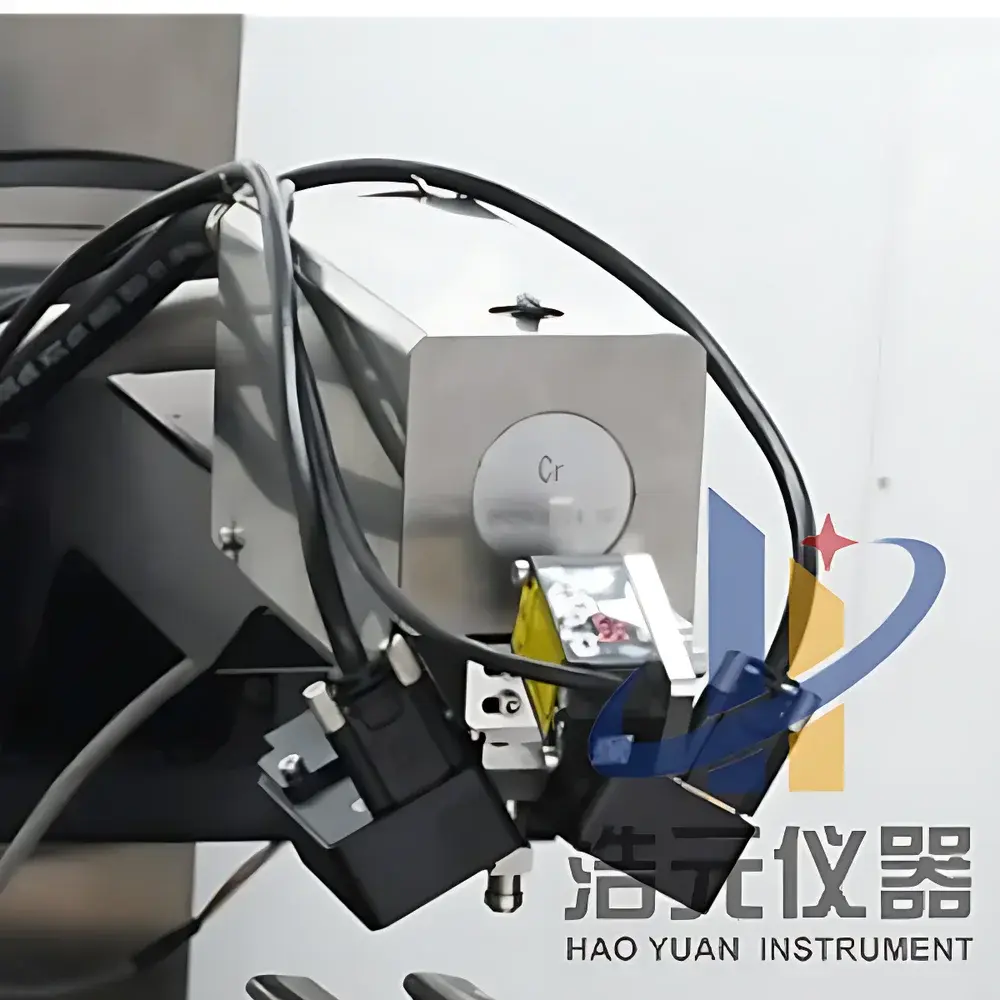
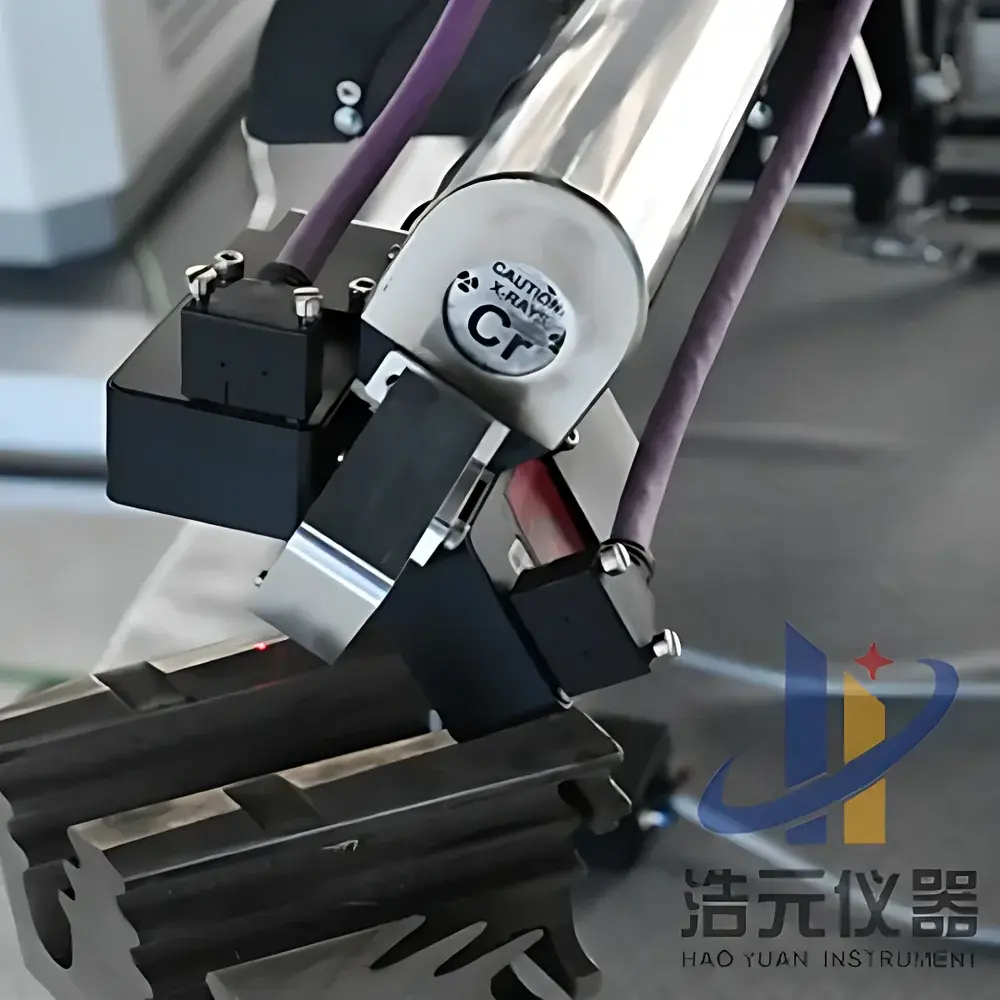
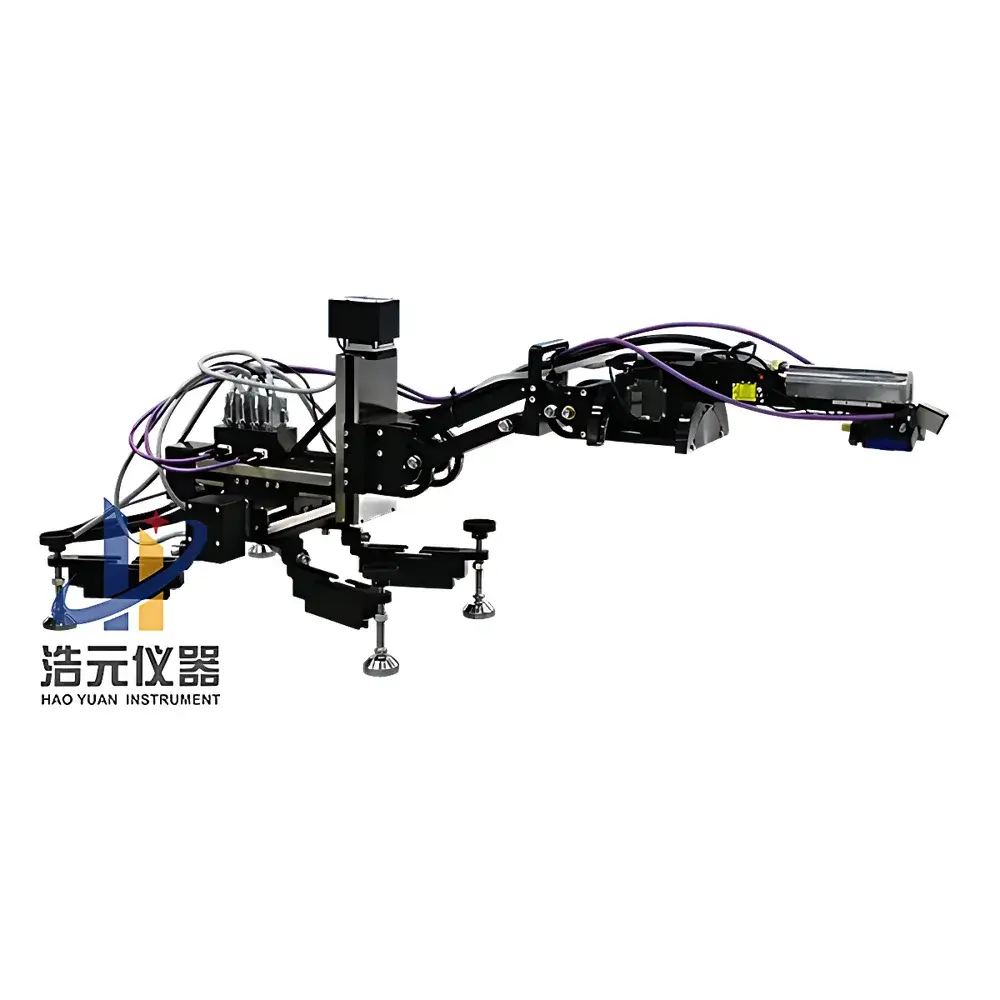
Haoyuan DS-21P Portable X-Ray Stress Analyzer
| Brand | Haoyuan |
|---|---|
| Origin | Liaoning, China |
| Manufacturer Type | Manufacturer |
| Origin Category | Domestic |
| Model | DS-21P |
| X-ray Tube Power | 300 W |
| 2θ Angular Range | 105°–170° (continuously adjustable) |
| ψ Angular Range | −45° to +45° |
| Available Anode Target Materials | Cr, Cu, Mn, Ti, Co, V, Fe |
Overview
The Haoyuan DS-21P Portable X-Ray Stress Analyzer is an engineered solution for non-destructive residual stress and retained austenite quantification in industrial and research environments. Based on the fundamental principles of X-ray diffraction (XRD), the instrument applies the sin²ψ method—compatible with both side-inclination and co-inclination geometries—to determine full stress tensors (σ₁₁, σ₂₂, σ₃₃, and τ₁₂) from lattice strain measurements in polycrystalline metallic materials. Its portable architecture—total system mass ≤20 kg including goniometer and standard tripod—enables deployment directly on shop floors, in-field infrastructure inspections (e.g., welded joints, turbine blades, rail tracks), and laboratory-based validation studies without requiring fixed shielding rooms or high-power electrical infrastructure.
Key Features
- Integrated dual linear semiconductor array detectors, each covering a 35° 2θ range with linear count rate >10⁹ cps—eliminating pulse pile-up and ensuring high-fidelity peak acquisition under variable exposure conditions.
- Motorized ψ-tilt stage with precise angular positioning from −45° to +45°, supporting automated multi-angle data collection (≥9 ψ positions per measurement point) for robust tensor calculation.
- Patented metal-ceramic X-ray tube (300 W nominal power) featuring enhanced thermal stability, mechanical shock resistance, and tool-free anode replacement (<5 minutes), significantly reducing downtime during field operations.
- Laser displacement sensor for real-time diffraction surface height registration and rapid spatial alignment—critical for repeatable measurements on curved or irregular surfaces.
- Modular motion system: manually or motorized X-axis (300 mm travel), Y-axis (200 mm travel), and Z-axis (300 mm vertical extension) enable principal stress mapping and automated stress field imaging across large components.
- Articulated snake-arm mounting allows full 3D orientation of the goniometer without repositioning the base tripod—ideal for accessibility-constrained locations such as pipe welds, aircraft fuselage sections, or heavy machinery housings.
Sample Compatibility & Compliance
The DS-21P supports stress analysis of ferrous and non-ferrous alloys—including steels, titanium, nickel-based superalloys, and aluminum—using selectable anode targets (Cr, Cu, Mn, Co, Fe, V, Ti) optimized for Kα radiation matching material-specific diffraction angles and minimizing absorption effects. Retained austenite quantification is performed via single-exposure Rietveld-style integrated intensity ratio analysis. The system complies with ASTM E915-2010 (Standard Test Method for Verifying the Alignment of X-Ray Diffraction Instrumentation for Residual Stress Measurement), EN 15305:2008 (Non-destructive testing — Test method for residual stress analysis by X-ray diffraction), and GB/T 7704–2016 (Chinese national standard for X-ray diffraction residual stress measurement). All calibration and measurement procedures support traceability to NIST-traceable reference powders and are compatible with GLP/GMP documentation workflows.
Software & Data Management
The proprietary stress analysis software implements ISO/IEC 17025-aligned data handling protocols, including full audit trail logging (user actions, parameter changes, calibration events) compliant with FDA 21 CFR Part 11 requirements where configured. Peak fitting employs Gaussian, Lorentzian, Pearson VII, and parabolic functions; both linear and elliptical regression models are available for sin²ψ plots—with the elliptical method solving the complete stress tensor without assuming zero shear stress. Output includes principal stresses, shear stress components, full-width-at-half-maximum (FWHM), integrated intensity, peak position uncertainty (±0.002° 2θ), and statistical confidence intervals derived from repeated measurements. Raw diffraction patterns, processed spectra, and stress maps are exportable in ASCII, CSV, and HDF5 formats for integration into LIMS or enterprise QA/QC platforms.
Applications
- Residual stress mapping of welded structures (pipelines, pressure vessels, ship hulls) to assess distortion risk and fatigue life prediction.
- In-process verification of shot peening, laser shock peening, and deep rolling treatments in aerospace and automotive manufacturing.
- Quality control of additive-manufactured metal parts—detecting build-direction anisotropy and post-build heat treatment efficacy.
- Field assessment of rail track welds and turnout components for rolling contact fatigue mitigation.
- Retained austenite content monitoring in case-hardened gears, bearings, and tool steels to correlate microstructural state with wear performance.
- Research-grade stress evolution studies under thermal cycling or mechanical loading using time-resolved sequential scanning modes.
FAQ
What standards does the DS-21P comply with for residual stress measurement?
ASTM E915-2010, EN 15305:2008, and GB/T 7704–2016 are fully supported through hardware geometry, calibration routines, and reporting templates.
Can the system measure both normal and shear stress components simultaneously?
Yes—using the elliptical sin²ψ fitting algorithm and dual-detector acquisition, the DS-21P calculates all six independent stress tensor components without assuming τ = 0.
Is the X-ray tube replaceable in the field without specialized tools?
Yes—the metal-ceramic tube features quick-release mechanical and electrical interfaces, enabling full replacement in under five minutes by trained personnel.
How is measurement repeatability validated?
Using certified unstressed iron powder, the system achieves ≤ ±5 MPa standard deviation over five consecutive measurements at identical ψ angles.
Does the software support automated stress cloud mapping?
Yes—when coupled with optional motorized XY stages, the software controls coordinated point-by-point scanning and generates color-coded principal stress distribution maps with user-defined resolution and interpolation methods.




