
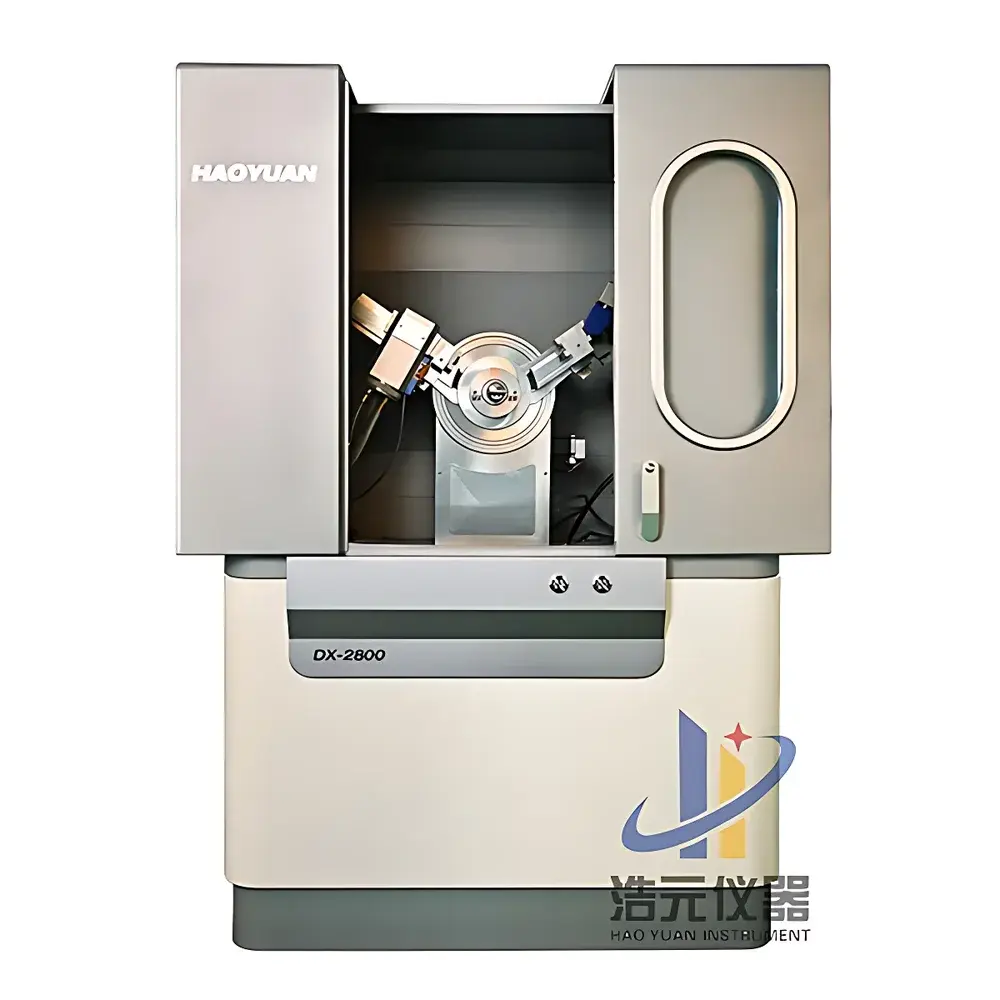
Haoyuan DX-2800 High-Resolution Powder X-ray Diffractometer
| Brand | Haoyuan |
|---|---|
| Origin | Liaoning, China |
| Manufacturer Type | Direct Manufacturer |
| Instrument Type | Powder X-ray Diffractometer |
| Configuration | Floor-Standing |
| Angular Resolution | 0.001° |
| Angular Accuracy | ±0.0001° |
| Peak Resolution (FWHM) | SiO₂ ≤ 60% |
| Detector | High-Performance Semiconductor Array Detector |
| X-ray Source | Stabilized Cu Kα Sealed-Tube Source |
| Calibration Standard Compliance | NIST-traceable Si & α-Al₂O₃ reference materials (full-pattern angular deviation ≤ ±0.01°) |
Overview
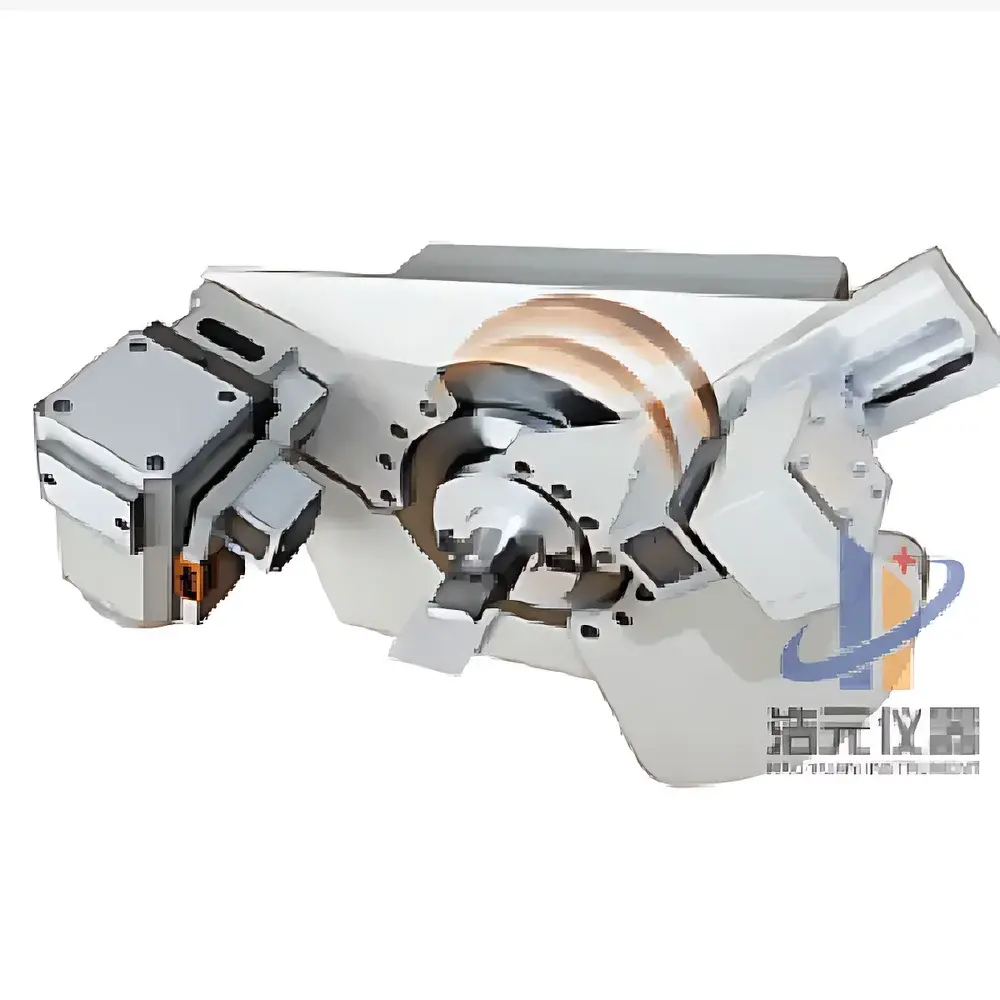
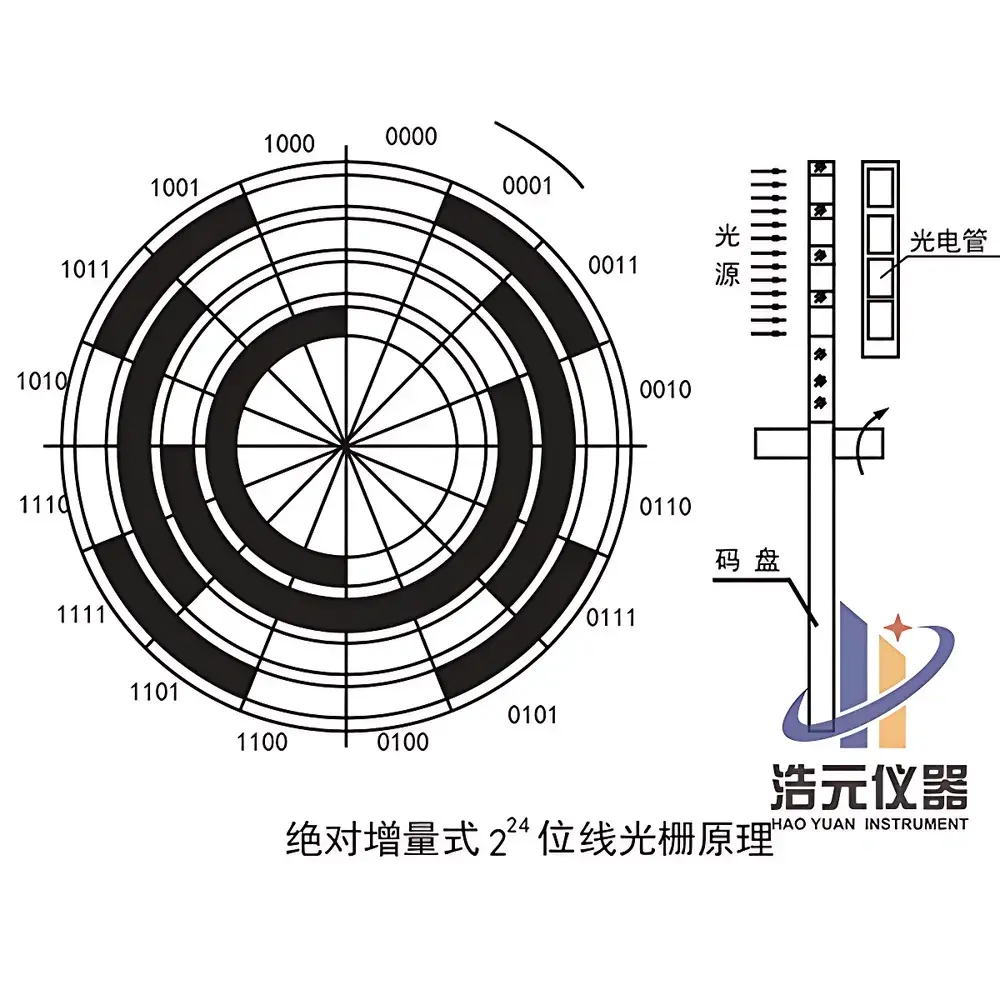
The Haoyuan DX-2800 is a floor-standing, high-resolution powder X-ray diffractometer engineered for precise crystallographic characterization of solid-state materials. It operates on the fundamental principle of Bragg diffraction, where monochromatic Cu Kα radiation (λ = 1.5418 Å) interacts with periodic atomic planes in crystalline samples to produce intensity maxima at angles satisfying nλ = 2d sinθ. The instrument employs a goniometric θ–2θ scanning geometry with a direct-read, absolute incremental 224-bit optical encoder mounted coaxially on the detector arm—eliminating mechanical backlash, gear error, and thermal drift from angle measurement. This architecture ensures long-term angular fidelity without periodic recalibration. Designed for research-grade phase identification, quantitative phase analysis (QPA), lattice parameter refinement, microstrain and crystallite size determination (via Scherrer and Williamson–Hall methods), and Rietveld structure solution, the DX-2800 delivers metrological traceability to international reference standards.
Key Features
- Direct-angle measurement via 224-bit optical linear encoder—no interpolation or gear-driven dependency; angular reproducibility < ±0.0001° over full 2θ range (5°–120°)
- Stabilized sealed-tube Cu anode X-ray source with high-voltage regulation (< 0.01% ripple) and real-time tube current/temperature monitoring
- High-efficiency semiconductor array detector with >95% quantum efficiency at Cu Kα, enabling rapid data acquisition without compromising signal-to-noise ratio
- Full-pattern angular calibration verified against NIST-traceable Si (SRM 640e) and α-Al₂O₃ (corundum) standards; all major peaks exhibit ≤ ±0.01° deviation across entire 2θ range
- Rugged floor-standing mechanical design with vibration-damped granite base and precision-ground bearing surfaces for long-term geometric stability
- Integrated beam optics including soller slits, incident beam monochromator (graphite), and anti-scatter collimators to minimize background and improve peak resolution
Sample Compatibility & Compliance
The DX-2800 accommodates diverse sample forms: loose powders (with zero-background silicon or quartz holders), pressed pellets, bulk solids, thin films (in reflection or grazing-incidence geometry), and micro-region samples using optional motorized XYZ stage. It supports standard ASTM E975 (XRD Phase Analysis), ISO 17882 (Crystallite Size by XRD), and USP (Polymorph Identification in Pharmaceuticals). Data acquisition and processing workflows comply with GLP/GMP documentation requirements, including electronic audit trails, user access control, and raw-data immutability—fully compatible with 21 CFR Part 11–compliant LIMS integration when paired with validated software modules.
Software & Data Management
The system ships with Haoyuan XRD Studio v3.2—a modular, Windows-based platform supporting real-time acquisition, interactive pattern indexing (using ICDD PDF-4+ database), Rietveld refinement (TOPAS engine integration optional), whole-pattern fitting, and crystallite size/microstrain modeling. All raw scans (.raw, .xy) and processed reports (.pdf, .csv) are stored with embedded metadata (operator ID, timestamp, instrument configuration, calibration history). Software includes built-in validation protocols for IQ/OQ/PQ documentation and supports automated report generation compliant with ISO/IEC 17025 laboratory accreditation criteria.
Applications
- Quantitative mineralogical analysis in cement, clays, and geological specimens
- Polymorph screening and stability assessment of active pharmaceutical ingredients (APIs)
- Crystallinity evaluation of polymer blends and nanocomposites
- Lattice parameter mapping in alloy development and thermal aging studies
- Thin-film texture analysis and epitaxial quality assessment in semiconductor and photovoltaic R&D
- Asbestos and hazardous mineral identification in environmental dust and occupational hygiene monitoring
FAQ
What is the minimum detectable crystallite size using the DX-2800?
The practical lower limit depends on sample absorption and instrumental broadening but typically ranges from ~2 nm to 5 nm under optimized conditions using Scherrer analysis with Cu Kα radiation.
Does the system support in-situ or non-ambient measurements?
Yes—optional stages for heating (RT–1200°C), cooling (–180°C to 500°C), humidity control, and tensile stress application are mechanically and software-integrated.
Is the detector interchangeable with other XRD platforms?
No—the semiconductor array detector is custom-engineered for the DX-2800’s goniometer geometry and data throughput; replacement requires factory recalibration and firmware alignment.
How often does the instrument require angular recalibration?
None—angular accuracy is maintained throughout the service life due to the absolute optical encoder architecture; only annual verification against reference standards is recommended per ISO 17882 Annex B.
Can the software generate reports compliant with regulatory submissions (e.g., FDA, EMA)?
Yes—when deployed with validated configuration and electronic signature modules, XRD Studio supports ALCOA+ data integrity principles and generates audit-ready reports for regulatory filings.





